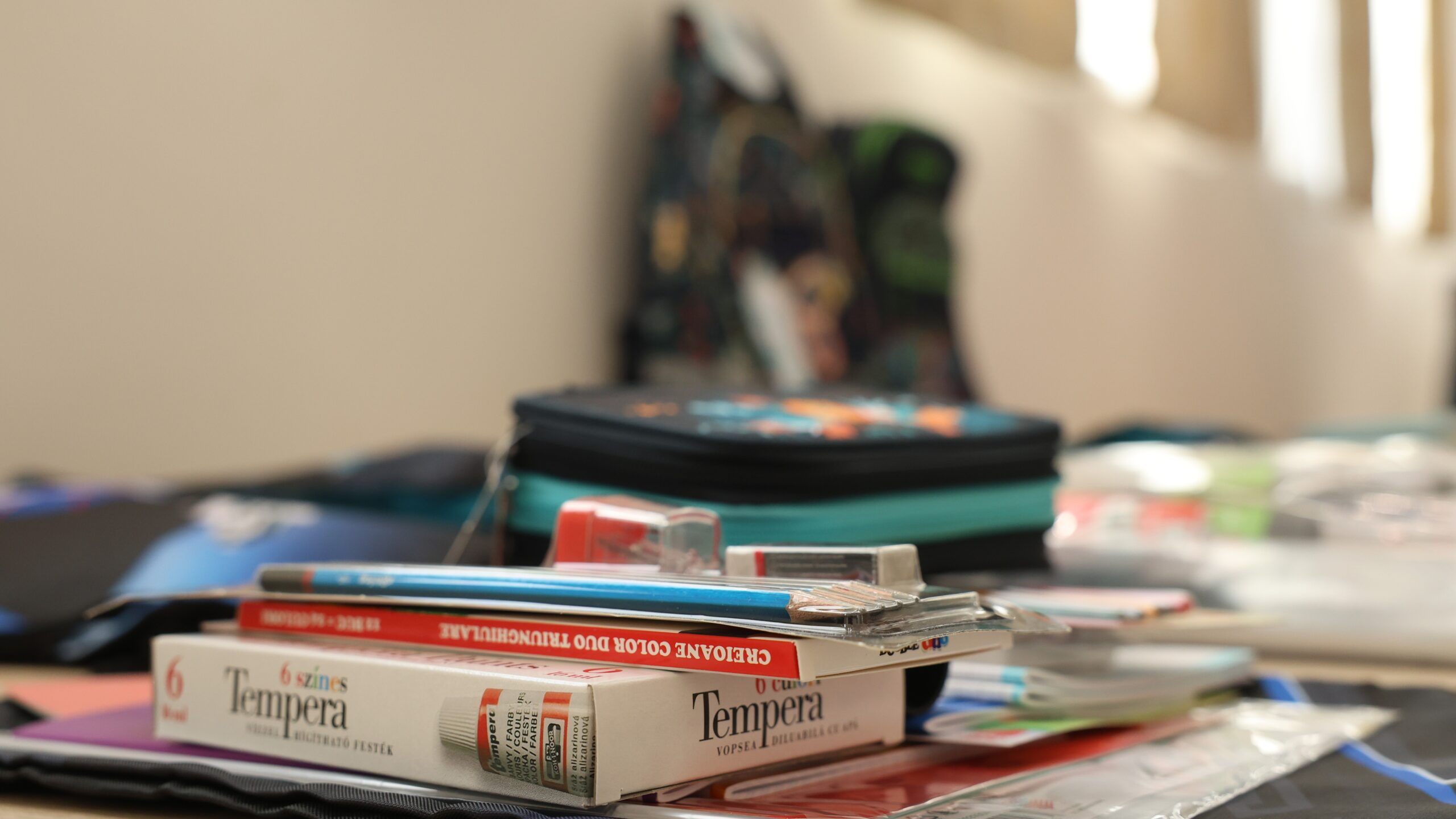
Preparing for the new school year remains one of the biggest annual expenses for Hungarian families, with households spending an average of 107,539 forints on back-to-school purchases and 66,928 forints per child, according to a new PwC survey.
The company said in a statement on Monday that traditional stationery and school supplies remain the most common purchases. Some 76.1 per cent of families with school-age children plan to buy notebooks, pens, and other learning materials. 56.9 per cent of families plan to purchase clothing and sports equipment, while 44.2 per cent plan to spend on other school equipment.
Fewer families purchase electronic devices specifically for the new school year, as these products generally last several years but cost significantly more. Some 10.1 per cent of families with children plan to buy a laptop or computer, 6 per cent a tablet, 3.8 per cent a printer, and 2.4 per cent a mobile phone.
Average back-to-school spending per child varies by age group. Families plan to spend 70,055 forints on average for primary school pupils in lower grades, 69,282 for pupils in upper grades, 62,532 for secondary school students, and 80,795 forints for students in higher education.
Among school-age children and students in higher education, 75.5 per cent have a mobile phone, 61.9 per cent have a laptop, and 45.1 per cent have a tablet. Some 31.5 per cent have access to a desktop computer, 33.6 per cent to a printer, and 18.4 per cent to a smartwatch.
Paid AI services are used by 15 per cent of households, while another 48.6 per cent use free AI solutions. Some 31.4 per cent of respondents said their households do not use AI tools at all.
Among families that use AI, children primarily rely on it to search for information, a use cited by 74.2 per cent of respondents. Some 52.2 per cent use AI to explain study material, 46.6 per cent for brainstorming, and 39.4 per cent to help with homework.
Most back-to-school purchases are concentrated in August. Some 61.1 per cent of families buy the necessary products during the month, while 15.1 per cent begin preparing in July. Only 9.9 per cent postpone major purchases until September. At the same time, almost one-quarter of parents, or 24.2 per cent, spread their purchases over a longer period.
Traditional shops remain important despite the widespread use of online channels. Some 32 per cent of parents shop exclusively in physical stores, while just 3.3 per cent make all their purchases online. However, 68 per cent of families now use online channels in some form.
Physical shopping is particularly popular for school supplies. Some 62.8 per cent of parents prefer to select these products in shops, while almost half say it remains important to handle products before buying them.
More than half of families, 51.3 per cent, expect to spend roughly the same amount on this year’s back-to-school preparations as last year. Some 18.1 per cent plan to reduce their spending, while 12.5 per cent expect to increase their outlays.
Families planning to spend less mainly cite the fact that previously purchased equipment is still usable. Among those expecting higher expenses, inflation and rising prices are by far the main reasons.
Related articles:
At a time when public debate is increasingly polarized and superficial, Hungarian Conservative remains committed to depth, intellectual honesty, and independent conservative thought.
Producing high-quality journalism requires resources. Your contribution helps us expand our coverage, reach new audiences, and keep our content accessible.

Please consider supporting our mission.