Hungary commemorates the 500th anniversary of the Battle of Mohács against the Ottoman Empire today, 29 August 2026. The date is crucial to Hungarian history and identity. But what exactly happened there that makes it so important?
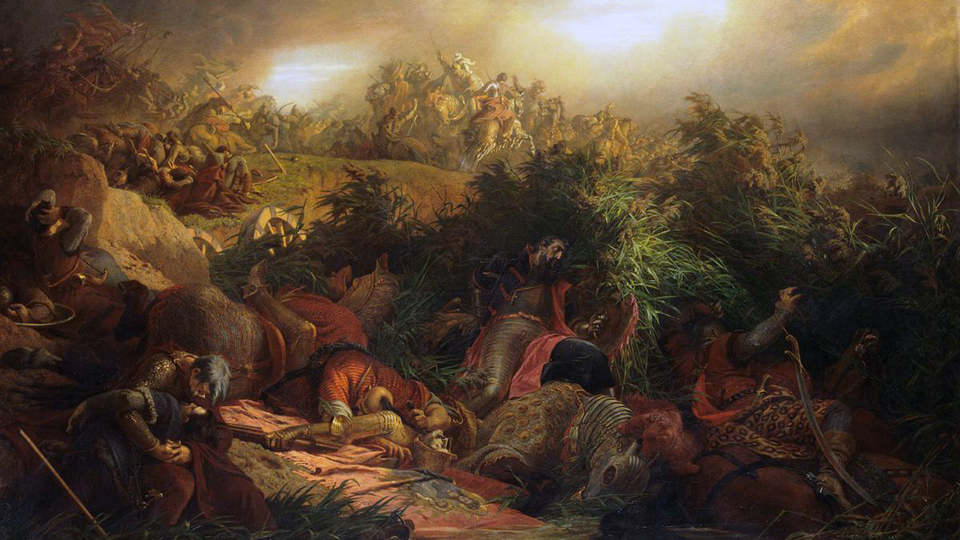
The oversimplified version of history is as follows. Caught in the path of the Ottoman Empire’s northward expansion under Suleiman the Magnificent, the army of the Kingdom of Hungary, led by Louis II, faced the Ottoman forces in a decisive battle on 29 August 1526.
The Ottoman superiority in numbers and in firepower was victorious against the Hungarians, who suffered disastrous losses, among them their king drowning in a nearby swamp while in flight. Many prisoners were executed; Croatia, Southern and Central Hungary were ravaged, among them the Renaissance palace district of Buda by the victorious Ottomans.
King Louis’s death marked the end of Jagellonian rule in Hungary, and a long war of succession followed, in which the Ottomans backed János Szapolyai, the former voivode of Transylvania, against the Austrian Habsburgs. In the process, the Szapolyai family ended up holding an Ottoman vassal state in the east of the country called the Principality of Transylvania; the Ottomans captured the southern and central parts, and the Habsburgs held on to the north and west. Approximately one and a half centuries of frontier warfare followed, in which much of Hungary was depopulated and its societal landscape destroyed. Following the spectacular defeat of the Ottomans at the end of the Siege of Vienna in 1683, much of Hungary was reclaimed by the Habsburgs by 1699, except for the Temesvár district (present-day Timisoara in Romania), which followed in 1716.
What did this defeat and its consequences mean, then, alongside the innumerable losses? First, it fundamentally shaped how Hungary entered the modern age. The Battle of Mohács meant Hungary entered the early modern period amid a profound crisis that led to its long-term peripheralization in European politics. With Mohács, the Kingdom of Hungary exited the scene as a midsize power, once independently capable of meddling in the affairs of the Holy Roman Empire, Polish, and Italian states. With this process, it shares (maybe a bit surprisingly) certain historical commonality with Eurasian Turkic nations of the steppe, whose lands the Russians started to encroach on in the 16th century; South- and Mesoamerican nations whose empires were toppled by Spaniards; or Indian Ocean merchant empires disrupted by the arrival of the Portuguese, all in the 16th century. This is not meant to engage in some kind of lazy historical grievance contest, but to situate Hungary’s historical trajectory within the broader global landscape.
It is also notable that it was not the Battle of Mohács. First, it was not a unique calamity; without it, Hungary’s historical trajectory would certainly have followed a different path. In East Central Europe, hemmed between the German power centres, the Ottomans, and the Russians (as Hungarians sometimes aptly say, Köztes Európa, In-Between Europe), no independent major power emerged from its medieval kingdoms into modernity. Even mighty Poland suffered total anarchy and eventual aggressive dissection by foreign occupiers by the end of the 18th century. While Central European nations constituted parts of important and flourishing empires by the coming of the 20th century, they were either integrated into one of the two German-led empires or the Russian Empire. The Battle of Mohács of 1526 meant that Hungary had a peculiar and relatively early entry into this multi-century peripherisation of Central Europe.
Second, Mohács was not the start of an all-nation crusade against Islam until the full Reconquista. Of course, frontier warfare against the Ottomans also contributed to the idea of Hungary as the Antemurale Christianitatis, the Redoubt of Christianity, but it developed mostly in the 19th century. Gárdonyi Géza’s seminal 19th-century novel Egri Csillagok (published as Eclipse of the Crescent Moon in English), about the heroic defence of the fortress of Eger against the attacking Ottoman army in 1552, essentializes this view of the Ottoman age. In contrast, most Hungarian power groups throughout the 150-year Ottoman period, at least for a time, entertained the idea of some kind of cooperation with the Ottomans. The Ottoman period intersected with the Reformation in Hungary. While the Reformed groups would happily claim to defend Christianity in Hungary, they would add that the war was ‘against two pagans’, that is, the Muslim Ottoman and the Catholic Habsburg.
‘Mohács was not the start of an all-nation crusade against Islam until the full Reconquista’
The notion of ‘two pagans’ leads us back to another real-world effect of the Ottoman period, one that happened much later, in the 19th century, and concerns the understanding of peripheralization. The Ottoman age was often seen as the start of an unending series of calamities hitting the Hungarian nation, with the Ottomans just the first in a line of occupiers, their place taken over by the Habsburgs, who also encroached on Hungarian sovereignty. In this view, Hungary was not an important part of an otherwise well-to-do and relatively liberal Habsburg empire, but an eternal victim of an unending series of calamities. This narrative called for an entirely sovereign, Budapest-centred Hungary without any ‘foreign’ ties, thus calling the long-running and, in some sense, fruitful Hungarian–Austrian cohabitation unorganic. History, in the end, arranged for a much less bellicose, but no less traumatic, decoupling of Vienna and Budapest after the First World War—but that is the topic of another essay.
Overall, maybe the single most important message of Mohács for today is that history is instructive for historical trajectories, but is not destiny. Interestingly and luckily, Hungary and Türkiye rediscovered each other in the late 19th century as nations both striving for sovereignty and independent development, with a common history not just in the Ottoman period but also in the early medieval steppe world, where Finnic and Turkic tribes cohabited for centuries. This mutual affection and cultural ties endure today.
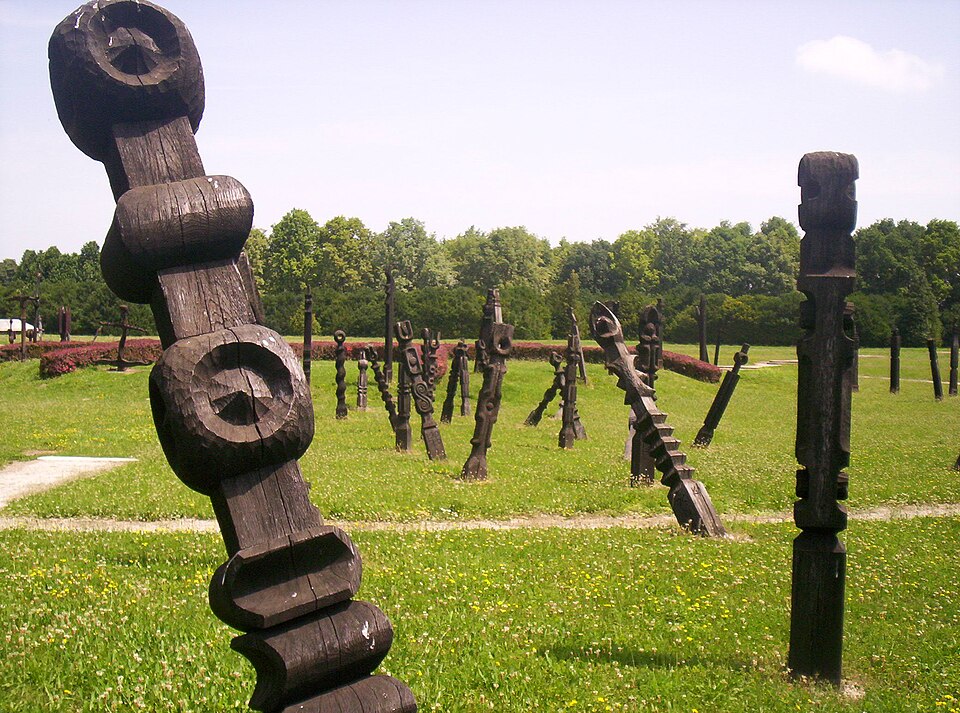
One of the most apt representations of this interesting turn of historical memory is the memorial for the Ottoman-era battle of Szigetvár. In 1566 Suleiman the Magnificent, the victor of the field of Mohács, led his last campaign, besieging this inauspicious fort in present-day Baranya county. The Hungarian Croatian commander of the fort, Count Miklós Zrínyi (for Croatians, Nikola Zrinski), ended the drawn-out siege by leading a desperate charge of the decimated garrison out of the fort gate into the mass of the Ottoman army, where he, with his comrades, was killed. His head was cut off to be raised on a pole by the victorious Ottomans. By this day, Suleiman was also dead in the siege camp—from old age. In the present, the bronze portraits of victor and vanquished, Muslim and Christian, Sultan and Count, stand alongside each other near the fort, in the village of Csertő, as central installations of the Turkish–Hungarian Parque of Friendship, erected by the Turkish state.
When we mark the anniversary of Mohács today, we can say that what happened was a crucial historical turning point that defined centuries of Hungarian history and profoundly shaped Hungarian ideas about the nation and its destiny. But it is not something that all of us, descendants of all the nations that stood on the field of battle on that hot and dusty 29 August, cannot remember together in friendship and good understanding.
Related articles:
At a time when public debate is increasingly polarized and superficial, Hungarian Conservative remains committed to depth, intellectual honesty, and independent conservative thought.
Producing high-quality journalism requires resources. Your contribution helps us expand our coverage, reach new audiences, and keep our content accessible.

Please consider supporting our mission.