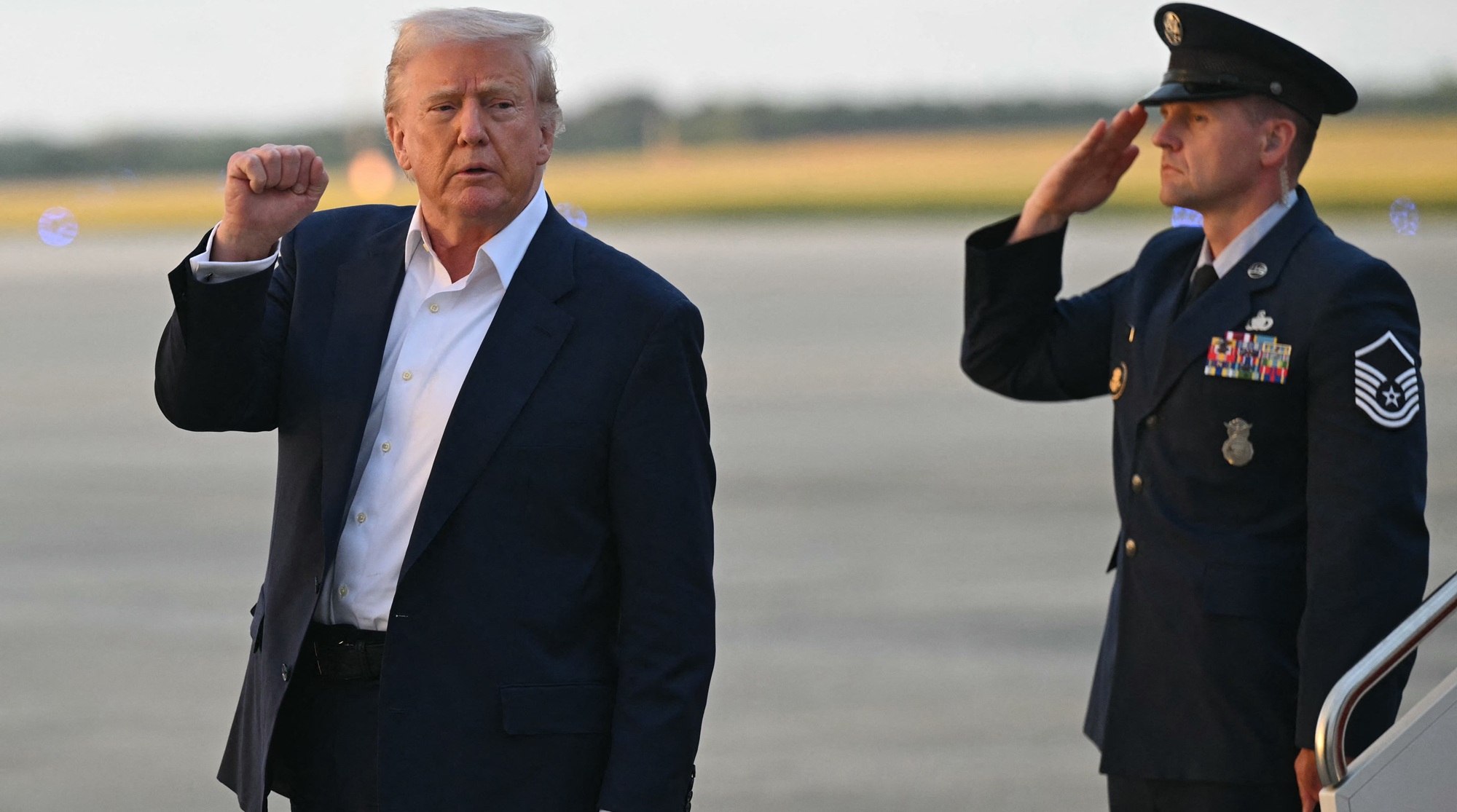
The ranking of US presidents is an evergreen, hotly debated topic both online and among historians. Now, however, we have the input on the matter from the person currently occupying the Oval Office, Donald J Trump, the 45th and 47th President of the United States himself.
He stopped just shy of grading all 45 men who have served in that awesome role, only including 34 POTUS’s in his rankings. Both Bush Jr and Sr are missing from his list—that is an understandable choice, given George W Bush is the last President to serve from President Trump’s Republican Party before him; and he has been critical of him in the past. For party unity before the midterms, it makes sense to exclude him and his father from the ranking.
It is less clear, however, why Ronald Reagan, one of the universally beloved figures of Republicans, is not on the list. Trump was at times highly critical of Reagan in the 1980s, but he has ceased his critiques since. During the tariff negotiations with Canada in 2025, at the start of President Trump’s second term, the provincial government of Ontario aired TV ads showing President Reagan speaking out against tariffs, which angered Trump—perhaps that is behind his exclusion.
Donald Trump Ranks Himself as the Greatest President of All Time
Now that we have covered who was not included, let’s take a look at the Presidents who President Trump did include in his ranking shared on his own social media platform, Truth Social.
Perhaps unsurprisingly, he has put himself and only himself in ‘The Greatest’ category.
Evidently, such a move is off-putting to some. However, we need to keep in mind that it is that boldness, ambition, and large ego that made it possible for Donald Trump to win himself the presidency in the first place, despite being given virtually no chance of winning by pollsters, pundits, and political analysts on both sides of the aisle back in 2016. The same attributes gave him the strength to push through another winning presidential campaign amidst an onslaught of criminal charges, an unprecedented obstacle for a major party’s presidential candidate in US history, in 2024.
Whether one considers Trump’s self-assessment justified is, of course, another question. At this point in his presidency, the Iran war started by US–Israeli strikes on Tehran on 28 February 2026, is still keeping gas prices elevated, despite President Trump’s statements to the contrary in the spring. This, in turn, is causing dissatisfaction among voters. In recent days, however, positive movements in diplomacy have pushed crude oil prices down somewhat in the international commodities markets.
President Trump has put his two immediate predecessors, President Obama and President Biden, into the lowest, 'Failures’ category, along with President Jimmy Carter—given the history of the statements he has made about them, there is no surprise there. What is surprising, however, is that he also included Civil War hero Ulysses S Grant in the lowest grade. While Grant’s presidency was plagued by corruption scandals and an economic downturn, most historians tend to give him some level of favourable treatment due to his enormous contributions to the Civil War as a General in the US Army.
Also unexpectedly low-rated by Trump: President Calvin Coolidge. He is a true hero of small-government, fiscally conservative Republicans, who balanced the budget every single year he was in office. Coming off the progressive era of Presidents who used their office as a ‘bully pulpit’ to move popular sentiments on issues, Coolidge managed to be a very popular President with the exact opposite style: quiet, reserved, and only speaking when absolutely needed. Yet President Trump put him in the ‘Below Average’ category in his rankings.
At the same time, President Trump put President Andrew Johnson, universally regarded as one of the worst, if not the worst, POTUS of all time, in the ‘Average’ group. Here, it is most likely Johnson’s opposition to the Fourteenth Amendment establishing birthright citizenship in the United States that made Donald Trump more charitable towards Johnson. Since entering office for the second time, President Trump has been fighting to exclude the children of illegal aliens from the birthright citizenship clause, unsuccessfully thus far. However, the Fourteenth Amendment was still passed by a veto-proof supermajority in Congress in 1866, despite President Johnson’s opposition.
As for which Presidents Trump put in the ‘Great’ category just below himself, there is only little surprise there.
George Washington, the military hero of the Revolutionary War and the first President of the United States who, in large part, defined the role of the POTUS, is among them. So is President Lincoln, who kept the Union together in the immeasurably difficult times of the American Civil War and ultimately oversaw the abolition of slavery in the United States.
Woodrow Wilson has been facing increasingly more criticism from observers from the left and the right lately. However, he was still a highly influential President who served during World War I, so his inclusion among the ‘Greats’ is not too shocking by Donald Trump. Similarly, conservatives sometimes like to speak negatively about the presidency of Franklin D Roosevelt, but his leadership during World War II and the Great Depression is still lauded by many scholars, left or right. He is also the only President in US history to be elected more than two times—although breaking with the Washingtonian tradition and seeking a third term may be grounds for criticism per se.
Andrew Jackson is also among Donald Trump’s ultimate great Presidents. Despite being the founder of the modern Democratic Party, President Trump has spoken highly of him on many occasions, thus his inclusion in the high category is also to be expected. The last POTUS to make Donald Trump’s ‘shortlist’ is Thomas Jefferson, the primary author of the Declaration of Independence, and the man who nearly doubled the size of his country without shedding any blood through the Louisiana Purchase in 1803.
Related articles:
At a time when public debate is increasingly polarized and superficial, Hungarian Conservative remains committed to depth, intellectual honesty, and independent conservative thought.
Producing high-quality journalism requires resources. Your contribution helps us expand our coverage, reach new audiences, and keep our content accessible.
Please consider supporting our mission.