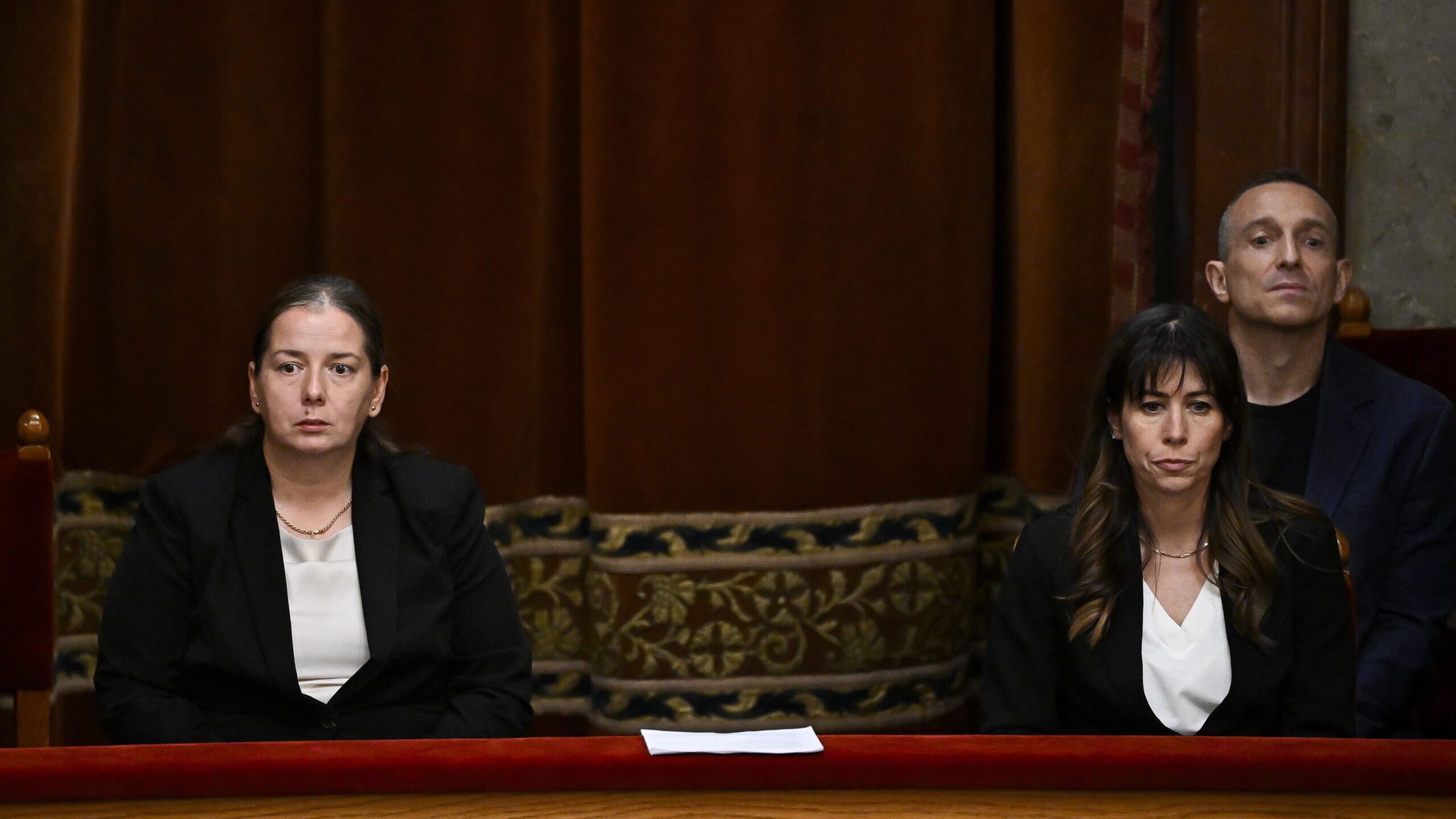
Parliament elected Anna Róza Unger president of Hungary’s new National Asset Recovery and Protection Office (NVVH) on Friday despite mounting criticism over her professional background and the chaotic selection process that produced her nomination.
In the secret ballot, 145 MPs cast votes: 137 supported Unger, seven opposed her and one abstained, comfortably clearing the two-thirds majority threshold required for election.
Unger’s nomination has already triggered unusually sharp criticism from figures who backed the change of government or spent years campaigning against Viktor Orbán and Fidesz. Former independent MP Ákos Hadházy, Momentum founder András Fekete-Győr, Hódmezővásárhely mayor Péter Márki-Zay and publicist Róbert Puzsér all questioned the choice, with several arguing that Transparency International Hungary legal director Miklós Ligeti was better suited to lead an agency combining investigative, prosecutorial and asset-recovery powers.
Fekete-Győr called Unger ‘extremely decent’ and well prepared but urged her to consider withdrawing, while Puzsér warned that a six-year wait for final judgments could bring down the Tisza government. Former Justice Minister Péter Bárándy said the office required serious criminal-law, investigative and courtroom experience, comparing the choice to putting a criminal police officer in charge of a sociology department.
A similar backlash also reached Tisza’s own camp. After the nomination, Prime Minister Péter Magyar’s social media posts were flooded with critical comments over the committee’s decision to pick Unger over Ligeti. The overwhelming majority referred to Unger’s controversial remark during her hearing, when she said that the first six-year mandate of the NVVH would probably not see a conviction; she argued that it should instead be used to map the broader system of corruption.
Magyar defended Unger in parliament on Friday, arguing that her six-year warning reflected the shortcomings of Hungary’s existing justice system, not a lack of ambition, and promising faster investigations, shorter procedural deadlines and stronger institutions.
Tisza MP Anikó Hallerné Nagy separately called Unger ‘extremely convincing and decisive’, praising her ‘neutral sense of mission’ and understanding of the organization’s structure. Responding to concerns over Unger’s lack of a law degree, she argued that the president’s role was to set and enforce the office’s direction, while specialist vice-presidents would provide the professional expertise required in their respective fields. Three of the four deputy-president posts remain unfilled after the selection process failed to produce suitable candidates.
Hadházy escalated his criticism on Friday, minutes before the secret parliamentary vote began, announcing a freedom-of-information request for the scoring system used to rank 96 applicants after receiving what he called ‘disturbing information’ that the competition had been largely ‘theatre’, with many applications allegedly not even read.
More explosively, Hadházy alleged, citing several unnamed sources, that the eventual choice resulted from a dispute between Magyar and Prime Minister’s Office Minister Bálint Ruff. According to his account, Magyar favoured asset-recovery specialist Nicholas Sárvári, Ruff preferred Ligeti, and Ruff then proposed Unger as a compromise accepted by the prime minister.
Political analyst Gábor Török had separately described Unger’s nomination a day earlier as a strong manifestation of ‘ruffizmus’, arguing that her broader political interpretation of the Orbán era was closer to the narrative favoured by Ruff’s political circle than Ligeti’s case-focused approach.
The allegations deepen scrutiny of an already chaotic selection. A closed scoring procedure initially produced Ligeti, Unger and corruption researcher Dávid Jancsics as the top three from 96 applicants, with Sárvári fourth. Tisza then used a statutory option to request Sárvári’s hearing after initially describing him as its candidate, wording it later rejected. Jancsics withdrew hours later, saying the first president should be a prosecutor–investigator ‘pitbull’ rather than an academic. On Thursday, Unger won the committee nomination 6–1, with one abstention; Ligeti received four votes and four abstentions.
Unger moved to contain the backlash on Friday by stressing that public trust was essential and publicly inviting Ligeti to join the new agency.
Related articles:
At a time when public debate is increasingly polarized and superficial, Hungarian Conservative remains committed to depth, intellectual honesty, and independent conservative thought.
Producing high-quality journalism requires resources. Your contribution helps us expand our coverage, reach new audiences, and keep our content accessible.

Please consider supporting our mission.