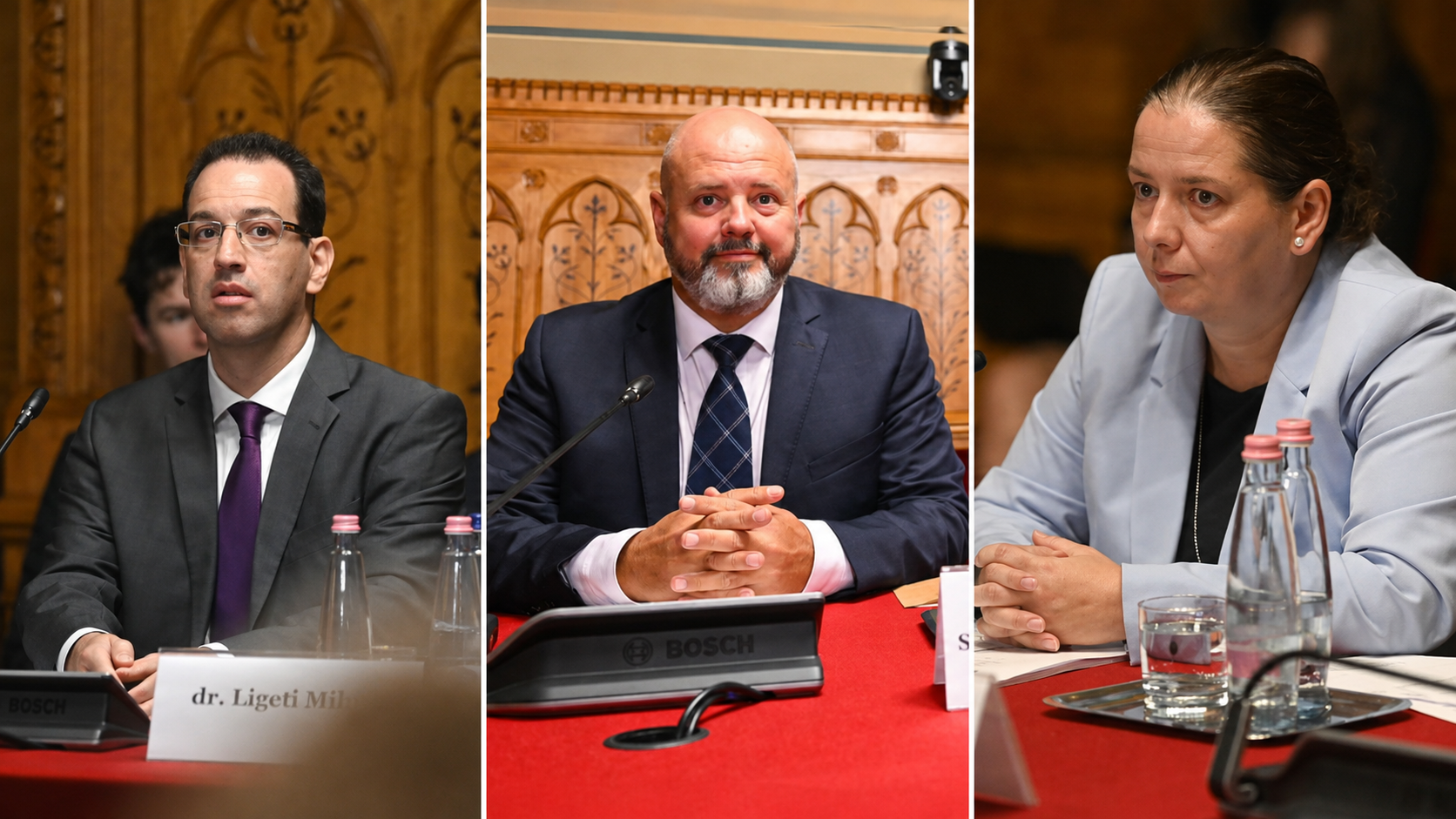
Hungary’s parliament will sit in extraordinary session on Thursday and Friday to elect the leadership of the recently established anti-corruption and asset-recovery super-agency, the National Asset Recovery and Protection Office (NVVH), with MPs due to choose its president by secret ballot on Friday. Three candidates remain: Nicholas Sárvári, Miklós Ligeti and Anna Róza Unger. Whoever wins will head one of the most consequential institutions of the upcoming years, with unusually wide powers.
The office will be able to trace assets, take over qualifying criminal cases, direct investigations and pursue prosecutions through assigned prosecutors. Its president will serve a six-year, non-renewable term and oversee the NVVH’s operation.
NVVH itself is part of the so-called ‘Operation Purgatory’, announced by Prime Minister Péter Magyar in June with the stated goal of ‘dismantling the economic and political patronage network’ built over the past 16 years around former prime minister Viktor Orbán and Fidesz. The government expects NVVH to investigate and make it possible to recover state assets channelled into private companies, funds and concessions in the past.
Against that mandate, the selection of the first president was supposed to establish the office’s independence, transparency and credibility before NVVH began operating. Instead, the process has descended into controversy over opaque scoring, contradictory Tisza communication and the professional suitability of the candidates, with the governing party responsible for much of the confusion.
A Last-Minute ‘Definitely Not’ Tisza Candidate
On Monday, parliament’s Justice and Constitutional Affairs Committee assessed 96 applications in a closed meeting and selected the three highest-scoring candidates: Transparency International’s legal director Miklós Ligeti, political scientist Anna Róza Unger and corruption researcher Dávid Jancsics. Applicants had submitted anonymized professional CVs and an essay about their concepts for how NVVH should approach its task, capped at two pages, while committee members used a 3-2-1 preference system to rank them. Sárvári initially finished fourth.
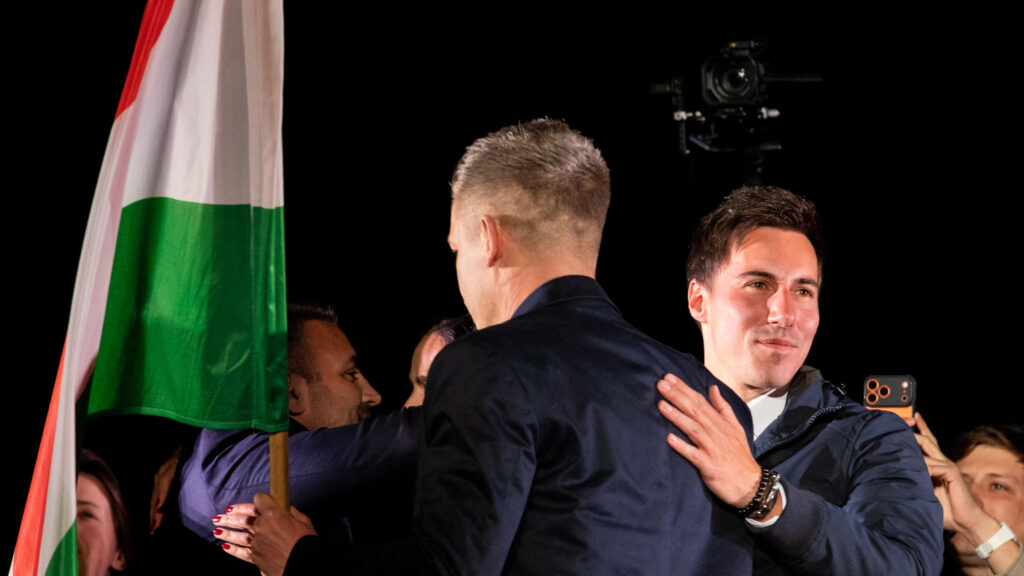
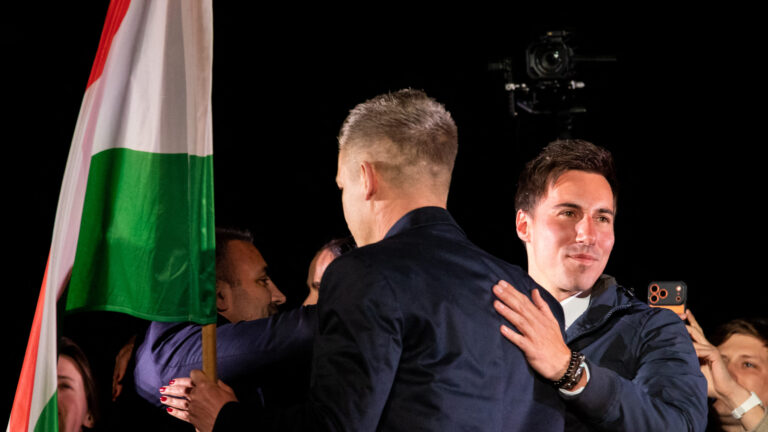
Nevertheless, later that day Tisza’s parliamentary faction used its legal option to request the hearing of one additional applicant, using that opportunity on Sárvári. In a statement on Monday, it explicitly described him as ‘Tisza Party’s candidate’. Hours later, Jancsics withdrew from the competition, saying the first NVVH chief needed to be a prosecutor-investigator type and even a ‘relentless pitbull’, while his own background was better suited to building a long-term anti-corruption system. At first glance, the chronology made it very much look as though Jancsics had been pressured to pull back to give space for Tisza’s candidate, Sárvári; however, no reporting proves that at the time of writing.
The next day, Tisza’s communication became even more suspicious, as the party made a U-turn on Sárvári, stating that none of the applicants heard by the committee was a party or faction candidate and explaining that Sárvári had been proposed because he finished fourth and Tisza wanted the widest possible competition. It later acknowledged that Monday’s statement had been ‘unfortunately worded’. Sárvári said nobody had consulted him beforehand and that he learnt from the press that Tisza had requested his hearing.
From the outside, the situation looks something like this: Tisza had one additional slot and used it on Sárvári; its initial communication presented him as its candidate; and he remains in contention after the original third-placed applicant withdrew. That disorder has undermined any scenario in which Sárvári could credibly win the position, making the question increasingly inevitable: why did the governing party choose precisely the fourth-ranked applicant for its discretionary intervention, and how could someone who did not even finish in the top three be considered suitable for such a powerful position?
The Strongest Fit Was Already There
That becomes even more interesting if one takes a look at Sárvári’s professional career. A Canadian-Hungarian risk specialist, he has spent more than two decades working in corporate investigations, fraud, corruption and crisis management through CNS Risk. At Tuesday’s hearing, he emphasized tracing money through offshore and corporate structures, identifying beneficial owners and pursuing assets internationally. Much of that private-sector work is difficult to assess independently because of client confidentiality; however, his own statements suggest that he worked in more than 40 countries, including Ukraine and some Arab states.
He was also active during the 2026 election as a coordinator in the DE! Akcióközösség election-monitoring operation, personally directing its network of nearly 200 motorcycle observers. After the election, he said that the group had deployed 2,200 monitors and said analysts were pointing to their presence as the decisive factor that allowed Tisza to secure a constitutional two-thirds majority. During his hearing, Sárvári described himself as ‘very independent’ and far removed from politics.
‘Ligeti warned against turning the NVVH into a political “de-NER-ification”’
Adding Sárvári to the pool of candidates becomes even more suspicious as, in Ligeti, they already have the perfect candidate for leading such an institution in terms of professionalism and preparedness. A lawyer, Ligeti began his career at the National Institute of Criminology, later worked in the justice and interior ministries under Socialist governments and has served as legal director of Transparency International Hungary since 2012. His work has focused on corruption, public procurement and public funds, while in June he co-authored a study examining legal avenues for recovering assets transferred out of the state sphere. Some of his proposals are echoed in the final text of the law establishing NVVH.
That was reflected in his hearing, where Ligeti warned against turning the NVVH into a political ‘de-NER-ification’ office, referring to the acronym commonly used to describe Orbán’s political system, and stressed that the most important operational criterion is that its cases must survive scrutiny in court. Political analyst Gábor Török described him as the best-known Hungarian expert in the field. His long association with Transparency International leaves him exposed to accusations of political bias, while he has no career background as a prosecutor or financial investigator. Nevertheless, from the publicly known available pool, he remains the closest fit to lead a conventional anti-corruption authority.
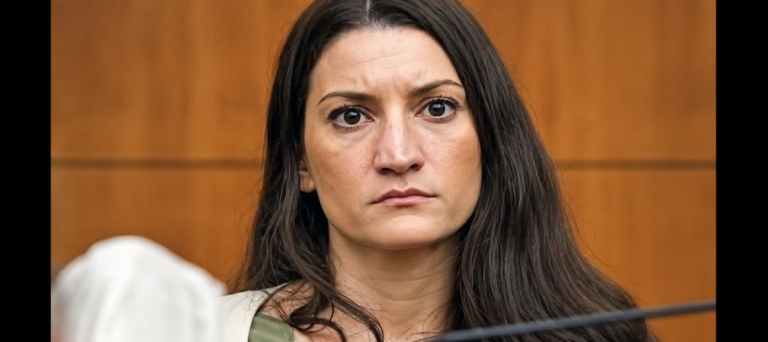
Unger, on the other hand, is the complete opposite. The ELTE associate professor is an established political scientist whose research focuses on democracy, elections, autocratization and political transition, while her hearing concentrated on systemic corruption, institutional responsibility and democratic consolidation. She argued that officials and institutions which ‘assisted the disappearance of public assets’ should also be identified and scrutinized. Among the candidates, her concept interpreted the mandate of NVVH the most broadly and systemically.
Her career contains no comparable record in prosecution, criminal investigation, forensic accounting, financial intelligence or asset recovery. Török described her as a ‘theoretical specialist far removed from the practical world of the subject’. Jancsics’s explanation for withdrawing sharpens that contrast: one of Hungary’s best-known corruption researchers concluded that the first operational phase required a prosecutorial-investigative temperament, a ‘pitbull’, as he said, rather than an academic mindset.
An Unusually Low Bar for an Unusually Powerful Office
How Unger managed to finish in the top three, without degrading her expertise, points to another weakness in the selection process. The NVVH Act allows its president to come from law, economics, state science, political science, public administration or other social-science backgrounds, subject to lengthy professional-experience requirements, while the law imposes no mandatory career experience in prosecution, criminal investigation, financial crime or asset recovery. The official explanatory memorandum argues that the educational, experience and incompatibility requirements together provide sufficient professional competence and independence.
The institutional design partly explains the broad criteria, as the president is described as the strategic head of a multidisciplinary organization, while three deputy positions covering investigations, prosecution and appellate prosecution are reserved for practising prosecutors and the office’s criminal-procedure work is carried out by qualified specialists.
Chairman of the justice committee István Hantosi cited precisely these safeguards when defending the model. His own reasoning, however, contains an obvious tension: he said the NVVH’s powers closely resemble those of the prosecution service and therefore require unusually high professional standards, while the law allows its president to qualify through a career entirely in political science or another social science, without any mandatory experience in prosecution, criminal investigation, financial crime or asset recovery. And there is another problem: the competitions for the prosecution and appellate-prosecution deputy posts, the specialist positions supposed to provide two of those prosecutorial pillars, failed because too few candidates applied.
‘The application rules are also noticeably weak compared with similar institutions in Europe’
Hantosi said on Wednesday that there would be ‘plenty of time’ to fill the posts once the authority and several key leaders were in place. That again, contradicts with the NVVH act itself, as it requires parliament to elect deputy presidents within 30 days of the law entering into force, a deadline that expires on Friday.
The application rules are also noticeably weak compared with similar institutions in Europe. The latest recruitment for European Chief Prosecutor sought at least 15 years as a prosecutor or judge, five years in senior management and five years personally investigating and prosecuting financial crime. Romania’s National Anticorruption Directorate similarly draws its leadership from senior career magistrates, while Britain’s Serious Fraud Office permits non-lawyer leadership but has turned to senior law-enforcement experience rather than academia. Virtually no similarly broad criteria exist in the wider region.
Whoever parliament elects to lead the first cycle of the anti-corruption super-agency, the selection process, already marred by controversy, leaves a mark on it, while it has definitely not helped ease concerns over its political independence, impartiality and credibility. Former governing party Fidesz had already announced that it would boycott the selection entirely, arguing that the NVVH’s powers and legal structure are unconstitutional and that the institution will be used for political retaliation. Hard-right Our Homeland remained involved in the process; however, it accused it of being rigged, alleging that Ligeti’s appointment had already been ‘fixed’. Given Tisza’s 141-seat constitutional supermajority, the governing party can ultimately elect its preferred nominee alone.
Related articles:
At a time when public debate is increasingly polarized and superficial, Hungarian Conservative remains committed to depth, intellectual honesty, and independent conservative thought.
Producing high-quality journalism requires resources. Your contribution helps us expand our coverage, reach new audiences, and keep our content accessible.

Please consider supporting our mission.