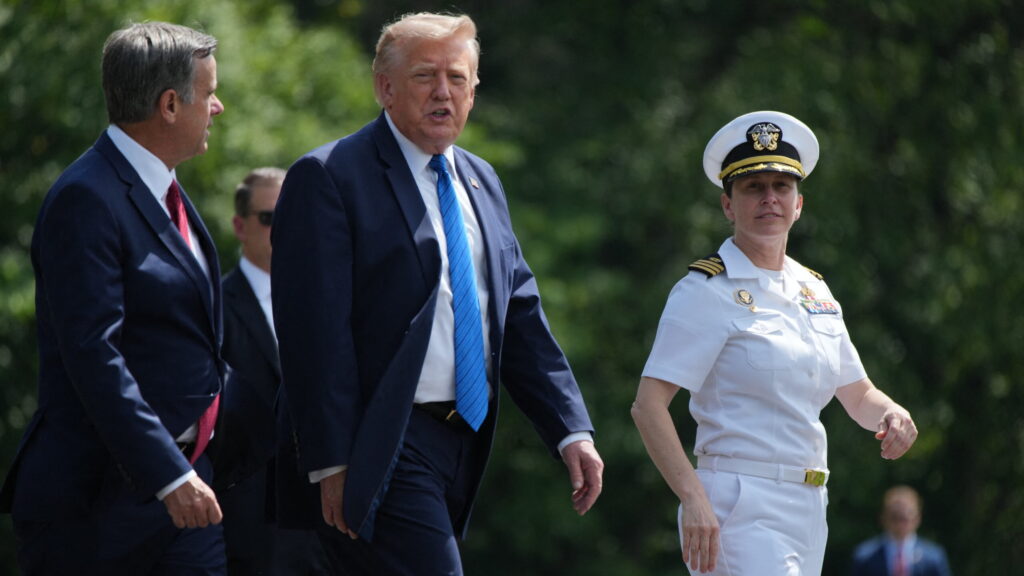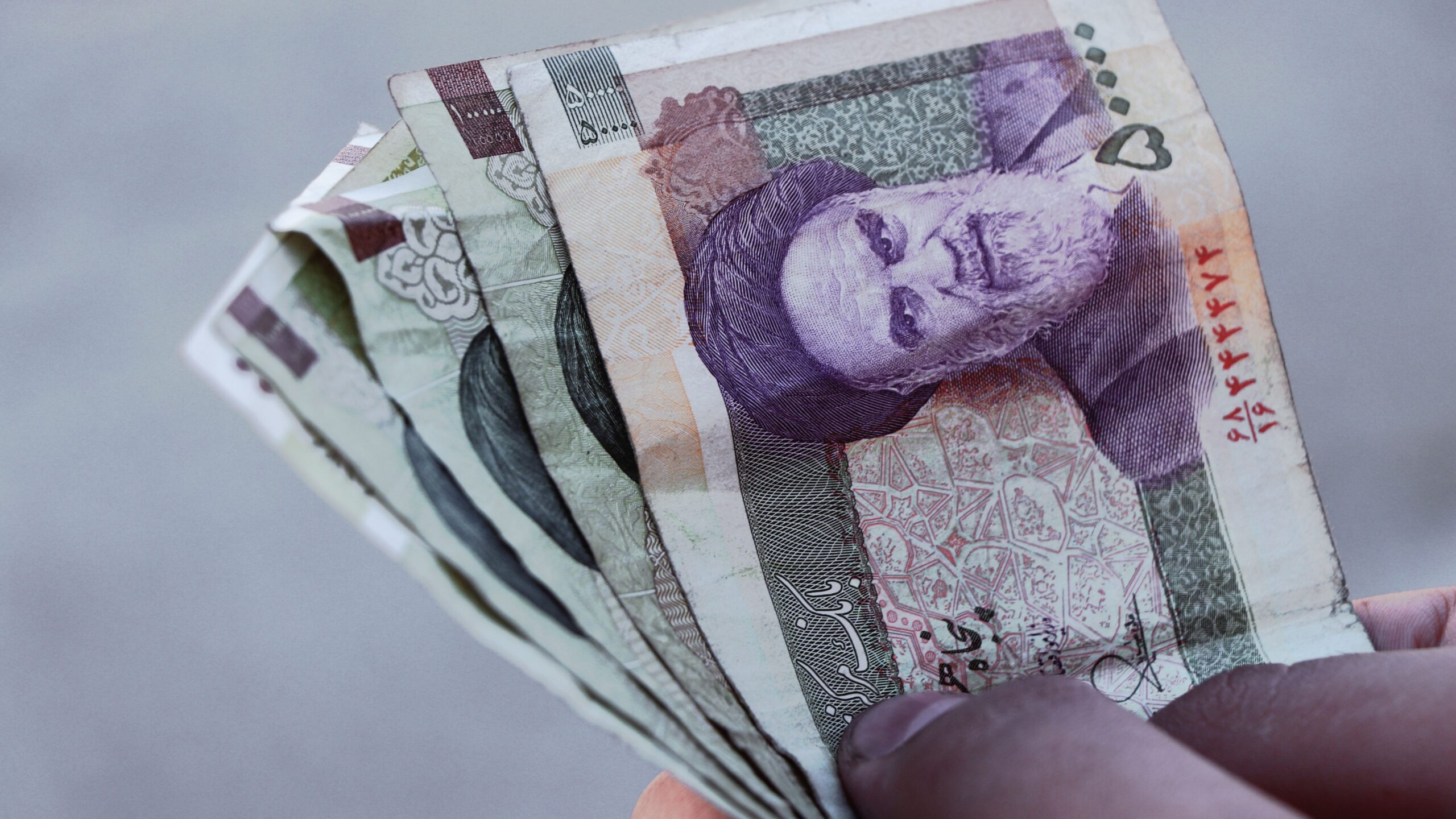
On Monday, Iran’s rial currency fell to a record low as President Donald Trump was set to announce new sanctions, which he referred to as an ‘economic D-Day’. This development is intended to add further pressure on an economy already struggling because of previous sanctions and a U.S. naval blockade. Trump’s announcement follows the expiration of a 60-day negotiation period aimed at ending the war and reopening the Strait of Hormuz, which was established under an interim peace agreement signed in June, without any resolution being reached.
The rial fell to 2.02 million against the U.S. dollar when trading began in informal currency markets. While Iran’s official Central Bank rate was approximately 1.5 million rials to the dollar, the informal rate reflects the actual cost most Iranians face.
Before the U.S. and Israel’s assault on Iran on 28 February, the currency was already experiencing pressure due to double-digit inflation and negative economic growth. However, it has continued to reach new record lows as nearly six months of conflict have inflicted even greater damage.
Despite this, President Trump, notwithstanding his inability to effect a regime change as he vowed would happen at the outset of the war, has struggled to secure concessions from Iran, which maintains strong control over shipping in the Strait of Hormuz. Iranian attacks and threats have significantly disrupted that maritime traffic throughout the conflict.
What explains the failure of the world’s most powerful country to achieve its objectives with a much smaller, less powerful nation that has been devastated by economic sanctions and military interventions? Two factors: an impregnable body politic and a resolute economy.
First Mistake — Regime Change
The first major mistake was that the Trump administration contemptuously believed it would compel an unconditional surrender, which in turn would result in a regime change, just as the U.S. did in Iraq when it ousted Saddam Hussein from power in 2003.
The regime has long implemented a mosaic defense strategy to protect itself from declared adversaries. This military capability rests not on a single decision-making authority whose removal would cause systemic failure, but on a distributed command structure that shares capabilities and operational initiatives across interconnected tactical centers. Consequently, removing its leader strategically does not collapse the military system, let alone the body politic; instead, it disperses the conflict across the operational landscape.
Similarly, another significant error in the Washington regime-change strategy is underestimating Iran’s ‘mosaic governance’. Known as the ‘Fourth Successor’, this system ensures that multiple leadership levels are prepared to take over if senior leaders are eliminated during a conflict, without relying on decision-making at every point. Essentially, it is a framework where all members understand the objectives and operate autonomously in line with those goals. It was designed for scenarios involving attacks or leadership changes, with predetermined successors ready to assume control and execute specific responsibilities.
‘Even if the new ayatollah were to be killed, the IRGC…will sustain the regime as long as they retain their power’
As a result, the system, supported by the Islamic Revolutionary Guard Corps (IRGC), can continue operating without interruption during a leadership change, as seen in the designation of Khamenei’s son, Mojtaba Khamenei, as his heir. Even if the new ayatollah were to be killed, the IRGC, which acts as a parallel state akin to the historical Praetorian Guard of Rome or that of the Schutzstaffel (the SS) in Nazi Germany, will sustain the regime as long as they retain their power.
Second Mistake — A Sustainable Economy
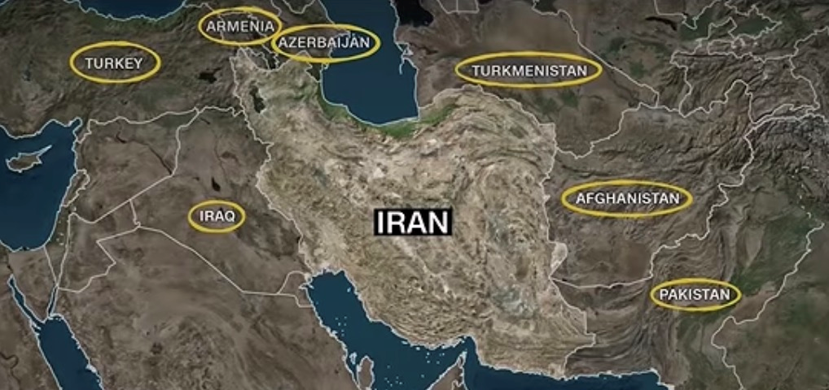
The second blunder, as Fareed Zakaria explains, has been misunderstanding the Iranian financial system, one of the region’s more diversified, functioning industrial economies. Iran borders seven countries and can trade over land. It also has several ports, some of which have been operational even during the war. Iran exports more than just oil. Protectionism and entrepreneurship have fostered booming industries such as steel, petrochemicals, iron, and food products.
Iran has also adapted to international sanctions by producing more goods domestically, such as cars, pharmaceuticals, and home appliances. While these products may not always compete in international markets, they meet local demand, which is especially important during wartime.
More oil transactions are increasingly being conducted in Chinese yuan instead of U.S. petrodollars and in cryptocurrency, which helps Iran bypass sanctions. In 2024, Iran reportedly generated around $43 billion in oil revenue, while its cryptocurrency ecosystem reached $7.78 billion in 2025. This development was mainly created to enable imports without using SWIFT after extensive U.S. sanctions disconnected the country from the dollar-based financial system, facilitating further sanctions evasion and complicating transaction monitoring.
Iran operates a complex and secretive shadow-banking network on a global scale, allegedly supported by China, according to U.S. officials. Chinese teapot refiners reportedly buy Iranian oil using the yuan, and Tehran uses some of that revenue to buy goods from China, which are then shipped to Iran.
Some oil proceeds are integrated into a barter-like system in which Chinese oil buyers transfer funds to state-supported Chinese firms for infrastructure development in Iran. Revenue from oil sales is also channeled through a series of front companies, often processed by Chinese financial institutions, to destinations like Hong Kong, where it is converted into other currencies.
According to U.S. officials, much of the revenue from oil sales to China is held in overseas bank accounts in financial centers such as Hong Kong, Dubai, and Singapore. Iranian importers and exporters trade foreign currency among their front companies, keeping records in Iran. Hong Kong has denied any involvement in facilitating sanctions evasion.
China has also been a weapon supplier to Iran. In mid-2025, Iran ordered thousands of tons of missile fuel ingredients from China. The Chinese government has said it is unaware of specific orders but maintains strict control over so-called dual-use items with both civilian and military applications.
According to The Washington Post, China has provided the regime with sodium perchlorate and dioctyl sebacate. Sodium perchlorate is used to produce ammonium perchlorate. Ammonium perchlorate and dioctyl sebacate can be used in the solid propellants that power ballistic missiles. Russia, too, has abetted Iran’s military by shipping parts for drones, missiles, and explosives to Iran to replenish its weapons stockpiles.
The White House has come to understand that Iran is unlikely to back down, particularly since the U.S. lacks a feasible military strategy to persuade Iran’s leaders—who are more hardline than those before the war began—to change their positions. What started as a decapitation strike and the aspiration for ‘escalation dominance’ has highlighted the limits of American power and the administration’s significant miscalculations. Additionally, it is questionable whether the regime’s diverse economy can be weakened to a critical extent by what has been termed ‘economic D-Day’. A feasible option may involve withdrawing from the Strait of Hormuz and reassessing trade relationships with Iran’s neighboring partners, irrespective of the actions or statements made by Israeli Prime Minister Benjamin Netanyahu.
Related articles:
At a time when public debate is increasingly polarized and superficial, Hungarian Conservative remains committed to depth, intellectual honesty, and independent conservative thought.
Producing high-quality journalism requires resources. Your contribution helps us expand our coverage, reach new audiences, and keep our content accessible.

Please consider supporting our mission.