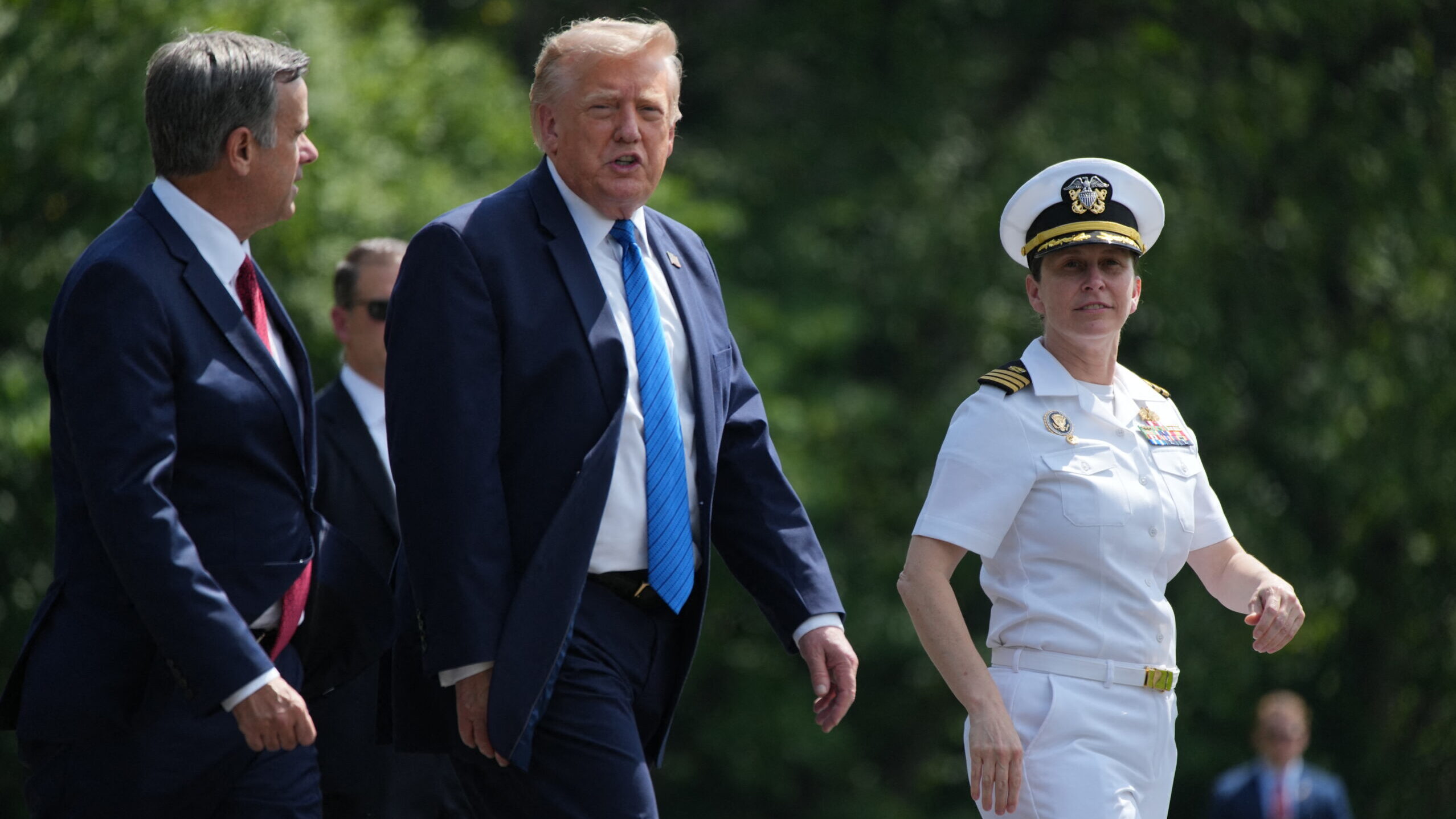
CIA Director John Ratcliffe made an unannounced visit to Moscow on Tuesday, becoming the first head of the American intelligence agency known to have travelled to the Russian capital since William Burns was sent there in November 2021 to warn the Kremlin against invading Ukraine—less than four months before Russian forces launched their full-scale invasion.
Ratcliffe travelled in full secrecy, and the purpose of his visit has not been disclosed. CBS News reported that he was in Moscow for meetings, while Reuters said neither the purpose of the trip nor the identity of his Russian interlocutors had been made public. The CIA and Kremlin declined to comment.
That inevitably sparked speculation that Ratcliffe may have carried a warning to Moscow similar to the one Burns delivered on his 2021 trip. The visit comes only weeks after US intelligence assessments concluded that President Vladimir Putin may be increasingly willing to test NATO’s resolve through provocative actions against alliance members, potentially including cyberattacks, hybrid operations or a limited military incursion.
Lithuanian Defence Minister Robertas Kaunas said earlier this month that military intelligence believes Russia is considering ‘unconventional kinetic attacks’ against critical infrastructure in the Baltics, potentially using Ukrainian-made drones in a false-flag operation intended to obscure responsibility. Kaunas stressed that there was no indication that such an attack was imminent.
The Wall Street Journal reported on Tuesday that Russia is also testing its readiness for another round of military mobilization, including exercises in the strategically sensitive Kaliningrad exclave. In separate reporting on Ratcliffe’s trip, the newspaper said one possibility was that the CIA chief had gone to Moscow to warn the Russian leadership against further military escalation.
The parallel with Burns’s last, retrospectively unsuccessful, Moscow mission is striking. Burns travelled to the Russian capital on 2–3 November 2021 after US intelligence detected detailed Russian preparations for a large-scale attack on Ukraine. He met Security Council chief Nikolai Patrushev and foreign intelligence chief Sergei Naryshkin and spoke with Putin by telephone. Burns later said President Joe Biden had sent him to lay out what Washington knew about Moscow’s plans and the consequences of an invasion. Russia attacked Ukraine on 24 February 2022.
Ratcliffe, according to Russian outlet SHOT, similarly met Naryshkin. Moreover, Kremlin-pool correspondent Alexander Yunashev reported that Vladimir Putin had been scheduled to attend a large-scale event on 25 August, but that appearance was cancelled, leaving his schedule unexpectedly open while the CIA chief was in the capital. Yunashev suggested the change could have been connected to Ratcliffe’s visit, but neither the Kremlin nor Washington has confirmed that he met Putin.
There are, however, several competing explanations for Ratcliffe’s visit. RFE/RL reported that Ukraine peace efforts, Russian support for Iran and detained Americans could all have been on the agenda. Washington also asked Kyiv to suspend strikes on northern Russia while a senior US delegation was in Moscow, according to reports cited by Reuters.
Related articles:
At a time when public debate is increasingly polarized and superficial, Hungarian Conservative remains committed to depth, intellectual honesty, and independent conservative thought.
Producing high-quality journalism requires resources. Your contribution helps us expand our coverage, reach new audiences, and keep our content accessible.

Please consider supporting our mission.