The following is an adapted version of an article written by Pál Péter Kolozsi, a research fellow at the Economy and Competitiveness Research Institute of the University of Public Service, originally published in Hungarian on the Ludecon blog of Ludovika.hu.
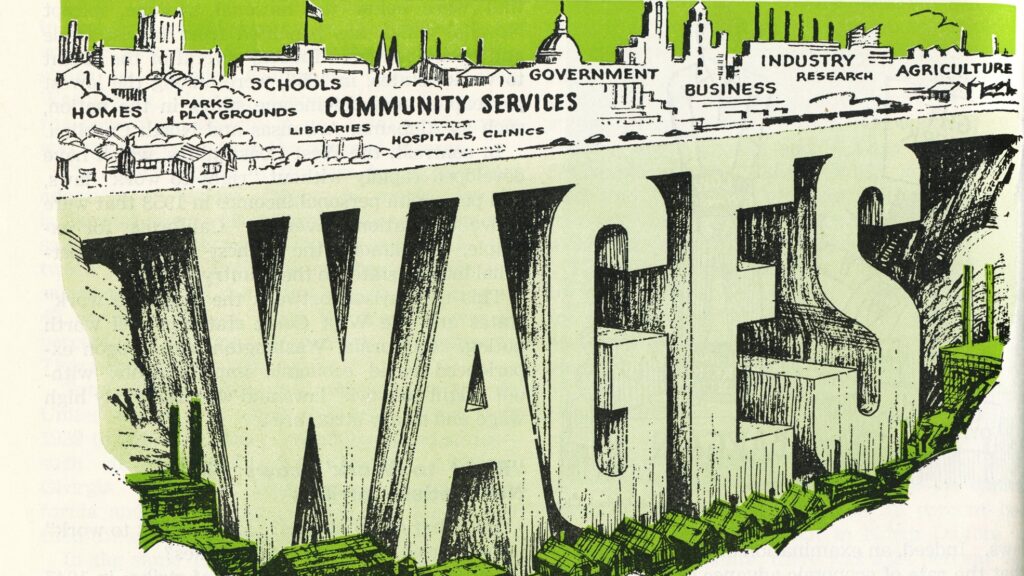
We tend to view the economy and trade as activities based on consensus and cooperation, yet economic history is often intertwined with wars and the violent assertion of interests.
‘Peace is a natural effect of trade,’ 18th-century French Enlightenment philosopher and jurist Montesquieu asserted. This idea has become widely accepted—at least as evidenced by our tendency to view the economy and trade as some peaceful activity incompatible with war. This is intuitive: where weapons are used, the emphasis is not on economic considerations or growth, but on military victory or, in some cases, mere survival.
In light of the above, French researcher Ali Laïdi’s work Histoire mondiale de la guerre économique (A World History of Economic Warfare) is particularly interesting and instructive, as it demonstrates that, contrary to widespread belief, economic history teaches us that the economy and warfare are not opposites but are, surprisingly often, intertwined; indeed, in many cases, the history of the economy is nothing less than the history of wars and conflicts.
Laïdi illustrates that economic warfare is nothing new but has accompanied human development from prehistoric times to the present day—people have often taken up arms to increase their prosperity and open the doors to trade. Clashes and aggression have coexisted with exchange since the dawn of time. Competition, which is written into the DNA of the market economy, is not immune to abuses, which in turn lead to injustices and violence, he states.
The researcher points out that while everyone has a general idea of what the concept of ‘economic war’ means, its definition is not actually clear-cut. According to Laïdi, we come closest to the truth by including everything that describes tensions—or even violence—in economic relations. Economic war is the use of violence, coercion, and unfair or illegal means to defend or conquer a market, or to gain or maintain a dominant position that allows for the abusive control of a market, the researcher says, who notes that economic wars used to be bloodier, but in reality, they have simply become more sophisticated. The weapons are more cunning, but just as terrifying as they used to be: espionage, blackmail, cyberattacks, information warfare, hostile takeovers, and the list goes on. Laïdi argues that economic war is to the economy what military conflict is to politics: a struggle for resources.
‘Clashes and aggression have coexisted with exchange since the dawn of time’
Without claiming to be exhaustive (since that would be an impossible goal), Laïdi’s work presents, in six chapters, the evolution of economic wars from prehistoric times to the present day. Here are a few instructive thoughts and examples related to each era.
- It may come as a surprise, but economic conflicts already existed in the Stone Age. The latest research shows that during the Palaeolithic era, our ancestors were already waging terrible wars, the main stake of which was control over natural resources: lakes, rivers, hunting, and gathering grounds… ‘Economic’ violence intensified during the Neolithic period, as people began to produce a surplus, which they stored—and which others immediately set their sights on. Anthropologists and ethnographers have observed that in ancient societies, groups and tribes waged war primarily for commercial reasons, often because one party felt cheated during a trade transaction.
- One of the most notable and interesting examples from antiquity came from the Phoenicians, who protected their markets by imposing their religion on their trading partners and spreading the worst possible legends about regions rich in raw materials to scare off the curious. The researcher also cited an account from the Old Testament, according to which the Israelite tribes engaged in ‘economic espionage’ even before they settled in the land, to gather information about the natural resources and inhabitants of Canaan.
- In the Middle Ages, trade was often regarded as a necessary evil, and merchants were viewed as figures of dubious character. Despite the contempt for their profession, merchants organized and banded together to counterbalance the secular power of the princes. The Hanseatic League was the perfect example of a confederation of merchant cities that simultaneously engaged in trade, economic blockades—and even war. But let’s not forget those kings who also excelled at economic warfare: one such example was King Louis XI of France, who imposed an embargo on certain foreign markets specifically to harm his political opponents. Or consider the Italian republics, whose economic rivalry was matched only by their mutual hatred. It goes without saying why it is relevant in this context that when the Portuguese set out to conquer the spice trade in the 15th century, they themselves called it ‘bloody trade’.
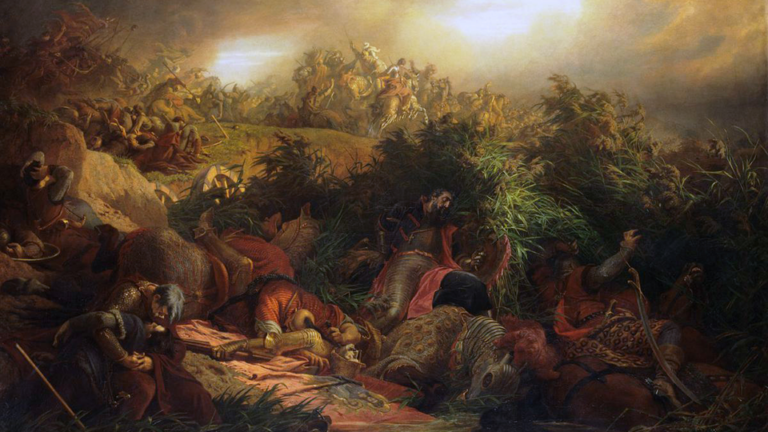
- After the Middle Ages, the great geographical discoveries opened up new opportunities for global trade. The newly discovered worlds became vast economic battlegrounds among the European kingdoms. Although the Spanish and Portuguese divided the territories under the Treaty of Tordesillas, they did not count on the ambitions of the Dutch, the English, and the French. Genocide, massacres, wars, slavery, murders, pirate wars, intelligence wars, espionage… Every means was permitted to wrest control of the gold, spice, and raw materials markets from their rivals.
- After four centuries of relentless economic clashes, we arrive at the 19th century, which is generally described as a peaceful period, rarely disrupted by major conflicts. Yet, to extend their major trade routes, companies and nations waged devastating economic wars. In China, the British bombed ports and ransacked the Forbidden City in Beijing to open the gates to the vast Asian market and obtain the secrets of tea. It is well known that during the ‘Opium Wars’, the British resorted to what is tellingly called ‘gunboat diplomacy’ to coerce the Chinese into doing something we can hardly even imagine today: allowing the narcotic produced in India into their territory…
‘In the 20th century, the economy became a full-fledged front in conflicts and one of the theatres of modern total war’
- In the 20th century, economic warfare became institutionalized and evolved into a genuine weapon during the two world wars. At that time, economic warfare encompassed every means (blockades, embargoes, economic espionage, etc) capable of striking at the enemy’s financial strength, weakening its economic resources, and ultimately undermining its war effort. In the 20th century, the economy became a full-fledged front in conflicts and one of the theatres of modern total war. Following the economic isolation of the Cold War, the 21st century has seen us ‘reach the point’ where the fundamentally military concept of economic warfare is being replaced by civilian applications in peacetime—economic conflicts are taking the place of ideological confrontation, economic relations are becoming more radicalized, and economic intelligence is emerging, that is, the use of information as an economic weapon. States and global corporations are developing economic intelligence doctrines to protect their own information assets while attempting to acquire those of their competitors.
Laïdi’s work is thought-provoking because it shows that, based on historical experience, it is by no means clear that the world must follow a peaceful, consensus-based path in economic matters—in many cases, this has not been the case in the past, and even now there is a danger that conflict between states will arise precisely for economic reasons (in fact, many suspect that such causes lie behind nearly every conflict).
Nevertheless, genuine development and stability ultimately require peaceful conditions. As Laïdi mentions the thoughts of 17th-century French merchant and economic thinker Jacques Savary in his book, whatever era we consider, the history of nations—even the most warlike ones—is just as much a history of trade as it is of their conquests. Although great empires are established through courage and the power of arms, only trade, the labour of the people, and their industry make them solid and sustainable. The victors would soon perish along with the vanquished if they did not transform the iron of their weapons into ploughshares—that is, if they did not draw upon the wealth produced by agriculture, crafts, and trade to preserve, through the arts of peace, the advantages gained amid the horrors and turmoil of war.
Related articles:
Click here to read the original article.
At a time when public debate is increasingly polarized and superficial, Hungarian Conservative remains committed to depth, intellectual honesty, and independent conservative thought.
Producing high-quality journalism requires resources. Your contribution helps us expand our coverage, reach new audiences, and keep our content accessible.

Please consider supporting our mission.