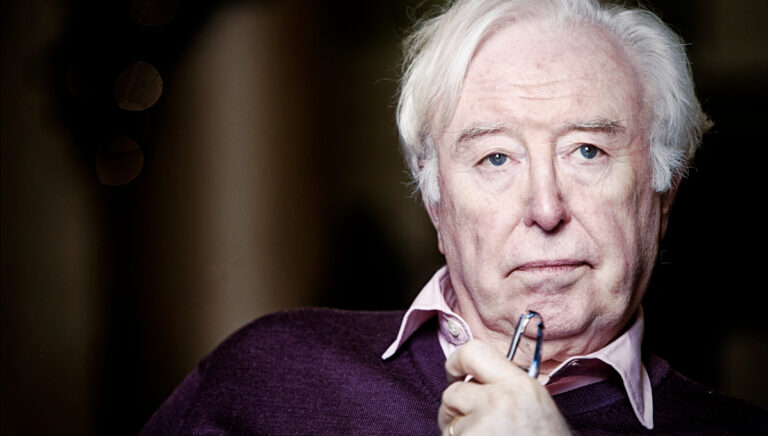
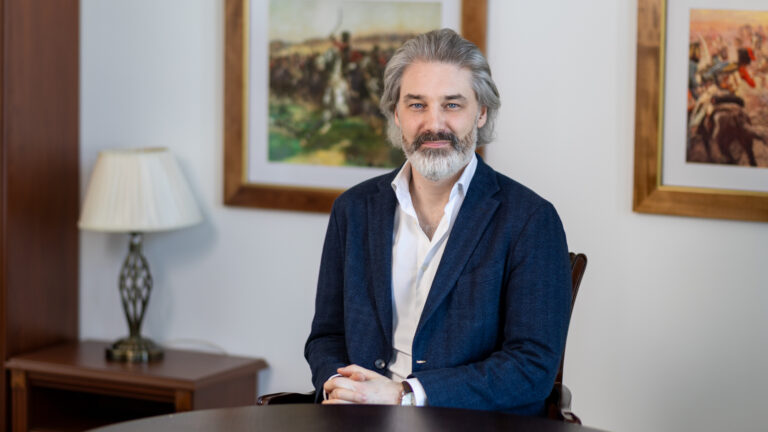
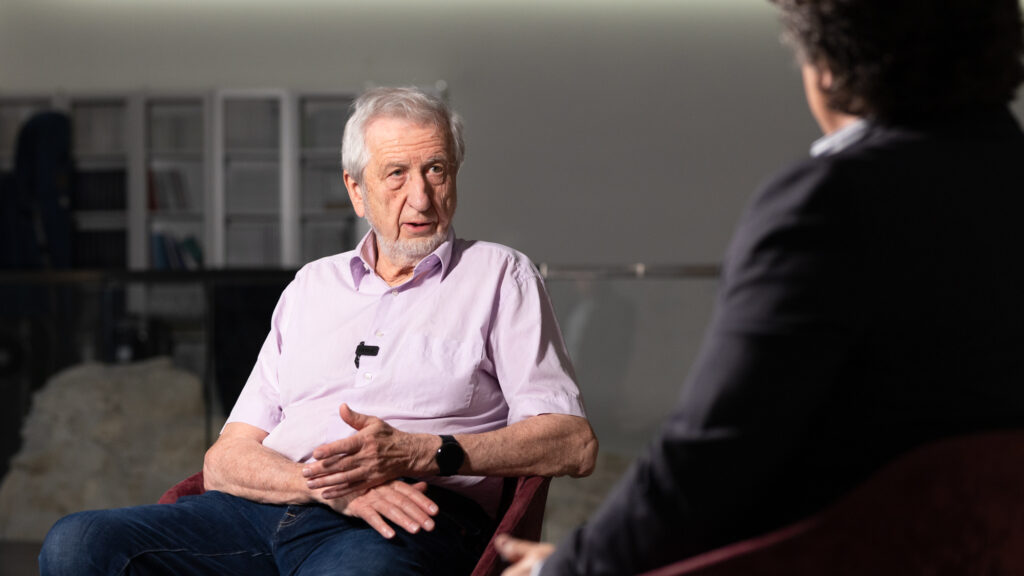
Géza Jeszenszky is a historian, former Foreign Minister of Hungary, and former Ambassador to the United States of America. He received his MA in history, English, and library science at Eötvös Loránd University in Budapest. From 1976 to 2011, he taught at what is today Corvinus University of Budapest. Between 1984 and 1986, he was a Fulbright visiting professor in history at the University of California, Santa Barbara. Jeszenszky was a founding member of the Hungarian Democratic Forum (MDF, 1988), which won the free elections in 1990, and he served as Minister for Foreign Affairs between 1990 and 1994. He was Ambassador to the United States of America from 1998 to 2002, and later from 2011 to 2014 to Norway and Iceland.
***
The Hungarian society’s expectations were very high in 1989, when communism collapsed; most of the people were enthusiastic about cooperation with the West and European Union integration. How did Hungarians view the United States back then?
Hungarian–American relations were always important for the Hungarians; obviously less important for the Americans, but the story goes back 250 years. The American Revolution was watched by contemporary Hungarians, and in the 19th century, there were many Hungarians who looked upon the United States as a kind of model, including Lajos Kossuth, the leader of the 1848–49 War of Independence. He was enthusiastically received in the United States, in New York, in Washington, and elsewhere.
During the Cold War, Hungary was considered a communist country, although the 1956 uprising showed the very contrary. During the Cold War, the most popular country was the United States in Hungary, and it was reflected in the very enthusiastic reception President Bush received in July 1989 in Budapest.
Yes, you are right, Hungarians expected a better life, thinking that if we rejoin our traditional Western ties and Western culture, then it would be a kind of Austrian standard of living; which was, of course, not possible. In the first years after the changes, the United States was the most important country investing in Hungary. In 1990, nobody knew that the Soviet Union would collapse in less than a year, so we considered the United States a guarantee that Hungary would not be forced back to the Soviet orbit.
In the last years of the 80s, you were the foreign policy spokesman of MDF, which was the main conservative opposition party.
It was a liberal–conservative party, a centrist party. It was not a right-wing party. Prime Minister József Antall has always said that the Hungarian Democratic Forum would be a party close to the centre, equally close to the Republican Party and the Democratic Party.
Both of you were invited to the US in 1990 January, and you met a lot of decision makers, journalists, leaders, and all the important people in Washington, DC. How did the MDF defend itself against the accusation of being an antisemitic, nationalist party?
Hungarian Democratic Forum was a conglomeration of people all opposed to communism or victims of communism, but there were people leaning towards conservatism, even towards liberalism. It was a very patriotic party, but it was missed by some people who depicted us as a controversial one.
I wouldn’t call our then opponents liberals; they were disillusioned Marxists. Our biggest opponent party was the Alliance of Free Democrats; many of their leaders were former colleagues at my university. They believed in perhaps an idealistic Marxism, but very soon, especially after the six-day Czechoslovak aggression by the Soviet Union, they lost their illusions and realized that so-called bourgeois democracy is the best form of government. These people usually came from well-established communist families; they were embarrassed by their parents.
‘I wouldn’t call our then opponents liberals; they were disillusioned Marxists’
But we were other people. I was 15 during the 1956 revolution, and I was always committed to NATO. Even as a child, I grew up listening to Western radios with my father, including BBC, VOA, Free Europe, and we expected that we would be welcomed by the West. And we were welcomed, especially once it became obvious to all our partners that the government led by Prime Minister Antall would be a centrist government dedicated to the West, dedicated to European integration, and to NATO.
Between 1990 and 1994, your government laid down the foundations of Hungary’s EU and NATO integration. Was it a success story?
It was an uphill struggle. Originally, we thought that membership in the European Community, as it was called, so today’s European Union, would be possible in a few years’ time, and we were encouraged that this was a good vision. But for many reasons, it was NATO which was ready to open the tracks; we had to argue with the American political establishment, because some thought that the former communist countries would delude and weaken NATO.
President Clinton and, of course, George Bush were strong advocates of our membership in NATO. What Russian President Putin says that there was a promise by NATO not to expand to the East is a falsification of history; there was no such promise. Actually, the reason why we had to wait until 1999 to accede to the Washington Treaty was the very reason that the United States wanted to convince the Russian Federation that NATO is not its enemy. NATO wanted to convince the Russians that one day, even they can have a place in NATO.
You served as Ambassador to the US between 1998 and 2002 during the tenure of the first Orbán cabinet. What kind of US policy did you represent there?
Hungary was a key ally. NATO still had only three former communist-dominated countries as members, and we knew that the future would not be as easy as everybody hoped in 1990, but the power struggles of the big adversaries would be over. The Soviet Union was gone. The Cold War was won by the United States.
‘The United States wanted to convince the Russian Federation that NATO is not its enemy’
After the terrorist attack against New York, Islamic fundamentalism was already seen as a danger, so to consolidate peace and the new world, we wanted to be a good ally of the United States. I must say that there were some reservations at the 1998 elections; they saw that this new government, led by Prime Minister Viktor Orbán, would not be such an easy ally as the previous socialist government was.
I was very happy that I was able to get an invitation for Orbán for a working visit, and it was a very successful one. Until the end of my term our relations were very cordial, although there was one stumbling block: on the contrary to expectations before, Hungarian Air Force did not buy F-16 fighter planes, but rather Gripen planes from Sweden, and partly from Britain. That was not well received.
The focus of the American foreign policy shifted to the Middle East, Afghanistan and Iraq; Central Europe wasn’t so important anymore. The socialist liberal governments between 2002 and 2010 concentrated on European integration and economic globalization. What were the significant differences between their and the Orbán government’s American policies?
The relations between the two countries during the time of the Hungarian liberal socialist government were good, but there was an important problem: the expenditure on defence contribution to NATO was considered by the United States to be too low. During the time of the Iraq war, the Hungarian government voluntarily joined the ‘coalition of the willing’, and the US appreciated that Hungary participated in the war against terror. So Hungary was considered to be a good, reliable ally, and that continued after 2010, but then came a gradual shift in the Hungarian government’s foreign policy towards Russia. That was a real problem.
In 2011 there was a letter sent to Hungary by Secretary of State Hillary Clinton, and later she came to Budapest for the opening of the Tom Lantos Foundation. The Orbán government considered this relationship very important. There was a bipartisan American delegation coming to Hungary a few days after the Clinton visit, and one of the members, former Secretary of State Condoleezza Rice, with whom I had a cordial relationship, told me that there was a rather tense conversation between Clinton and Orbán about the Hungarian government’s attitude towards the press, the new constitution, and Clinton tried to convince Orbán to go back—as she said—to ‘full democracy’.
I watched this relationship to Russia from Oslo as Ambassador with increasing reservations. When the so-called ‘Eastern Opening’ policy was combined with a completely unnecessary quarrel with Norway over the Norwegian Grants, I resigned.
If we view the activities of Chargé d’Affaires André Goodfriend or Ambassador David Pressman, they seemed to be not only the representatives of the US, but also of the liberal world order. Did you have the same perception of it?
I must say, not really. Actually, these American representatives, like April H Foley and Eleni Tsakopoulos Kounalakis, were not very openly concerned with the shift in internal and external policy of Hungary. So I must say that there was still a kind of bipartisan critical attitude towards the second and third Orbán governments from the United States. And even during President Trump’s first presidency, again, it sounds strange, but for three years Orbán was not invited to the White House.
During the first Trump presidency, the US Ambassador did not criticize the Orbán cabinet. The relations were very pragmatic; they emphasized common values. But after the Biden administration’s new Ambassador, Mr Pressman, arrived in Hungary, the whole culture war started again.
In fact, during the Biden administration, I was very pleased to see Secretary of State Antony Blinken. His father was the ambassador of the United States to Hungary at the end of Antall’s government and at the beginning of Horn’s government, and his wife was a Hungarian-born lady, so Blinken had a sympathy with Hungary, partly because of his own background.
I think it was not forgotten that before the 2016 Presidential election, Orbán took a very strong one-sided approach. Orbán, who was always hazardous, put all his stakes on Trump, and it paid off well, but during the Biden administration, Hungary neglected the American relationship. I think that was more important than the criticism which was levelled against Hungary by Ambassador Pressman.
I recall the very memorable visit of George W Bush to Hungary in 2006. He met Orbán as well, who was in opposition, and I heard later on that he approached Orbán, saying: ‘Viktor, what are you up to?’ So there was already some concern, even by the Republicans.
‘Orbán, who was always hazardous, put all his stakes on Trump, and it paid off well’
So I think both sides were to blame for the cooling of the relations between the two countries.
That changed when Donald Trump was elected for a second time. Trump praised Orbán for building a border fence against migration, his family policies, his patriotic foreign policy, and praised his fight for sovereignty against bureaucratic Brussels. Why was it so?
I am always happy when we see a very cordial relationship between two unequal partners. Prime Minister Antall and President Bush had a very close relationship; I think that was the real golden age. But certainly, I was happy to see a good relationship based on the internal policy of the Orbán government. To some degree, we may compare all the points which you mentioned to the policies of the second Trump administration, but the Trump administration obviously overlooked the foreign policy of the Orbán government, the Russian and Chinese relationships. Trump saw China as the rival, a dangerous country, but he thought that perhaps Orbán had a reason for that, and he accepted. Orbán told President Trump that we are a landlocked country, and we have no other source of energy but Russia. This is not true. We have the Adriatic pipeline, which was not much used during the Orbán government.
‘The Trump administration obviously overlooked the foreign policy of the Orbán government, the Russian and Chinese relationships’
And it was not certain what kind of attitude Trump would take towards the Ukrainian war, how much support he would give to Ukraine, or how it would be reduced. Nobody can expect Ukraine to defeat Russia militarily, but this war is an aggression and violation of international law, so I hope it will be realized, especially with the new Hungarian government, that Ukraine should be supported, because the collapse of Ukraine would be a grave danger for Europe, and also for Hungary.
Orbán’s Hungary was seemingly important for Trump in support of his global policies. Will the new Hungarian government be of the same importance for the US?
When we learned about the likelihood that JD Vance would come to Budapest, I wrote a letter to him. I wrote that Hungary would welcome him whether he came before the elections or after, and whatever government we would have.
I think Hungary will always remain committed to the very special relationship with the United States, and from the first statements of the new Hungarian government, it is reflected that this is our intention. I hope this is going to be returned by the Trump administration. The new Hungarian government is committed to common European policies, including common defence. We hope that the United States will not turn its back on NATO, as we understand the new government will increase defence spending, just because I very often quote the Latin saying I’ve translated into English that ‘If you want peace, you must prepare for war.’ We understand that, and the foreign policy of the new Hungarian government will be both European and Atlanticist.
‘The new Hungarian government is committed to common European policies, including common defence’
The EU supports Ukraine’s accession to the European Union. Is the new Hungarian government going to help realize this process?
Ukraine, our largest neighbour, has a place in the European Union for many reasons, but also for one particular Hungarian reason: the small but still existing Hungarian minority. Ukraine wants peace, and in the European Union, it will be the only way to see the future of the Hungarian minority in Ukraine safeguarded and guaranteed. And in rebuilding Ukraine, Hungary can also play an important role.
If there is a common agricultural market with Ukraine, it will probably be a disaster for many Hungarian farmers, you know that.
I am a free trader. We must buy the cheapest goods, including grain. Cheap Ukrainian grain is a problem, but it can be overcome with the European Union agreement on how to control the flow of grain. I have confidence that Hungarian interests in the European Union will be and can be represented. We have to find a compromise; we have to have a common European policy.
Watch the full podcast below:
Related articles:
At a time when public debate is increasingly polarized and superficial, Hungarian Conservative remains committed to depth, intellectual honesty, and independent conservative thought.
Producing high-quality journalism requires resources. Your contribution helps us expand our coverage, reach new audiences, and keep our content accessible.

Please consider supporting our mission.