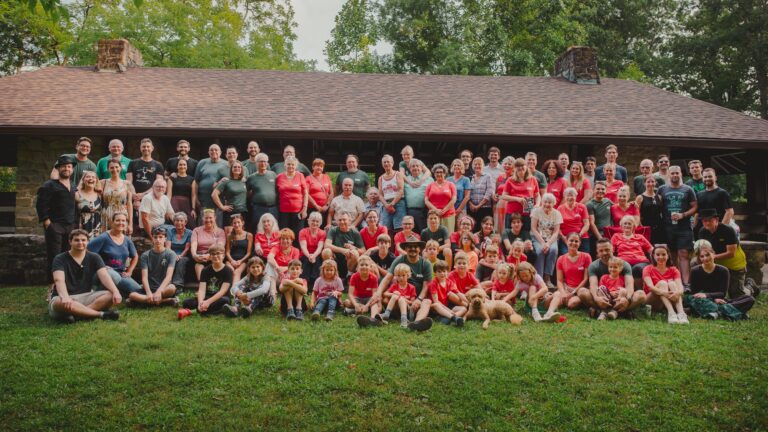
The following is a translated and edited version of an article by Anita Farkas, originally published in Hungarian on Mandiner on 8 June 2026. Translated by Ildikó Antal-Ferencz.
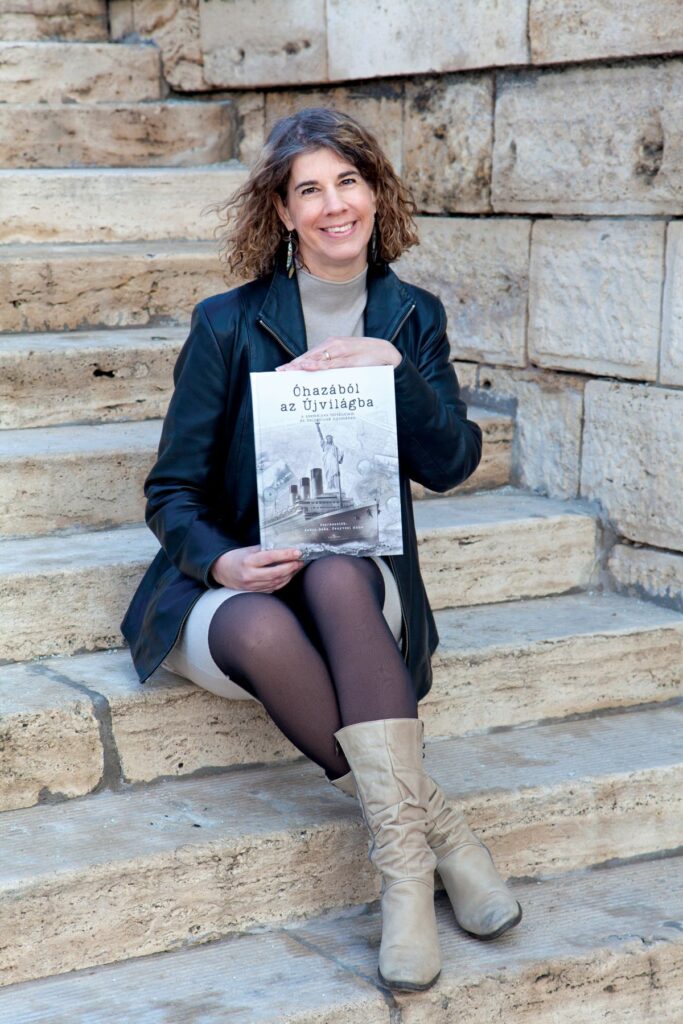
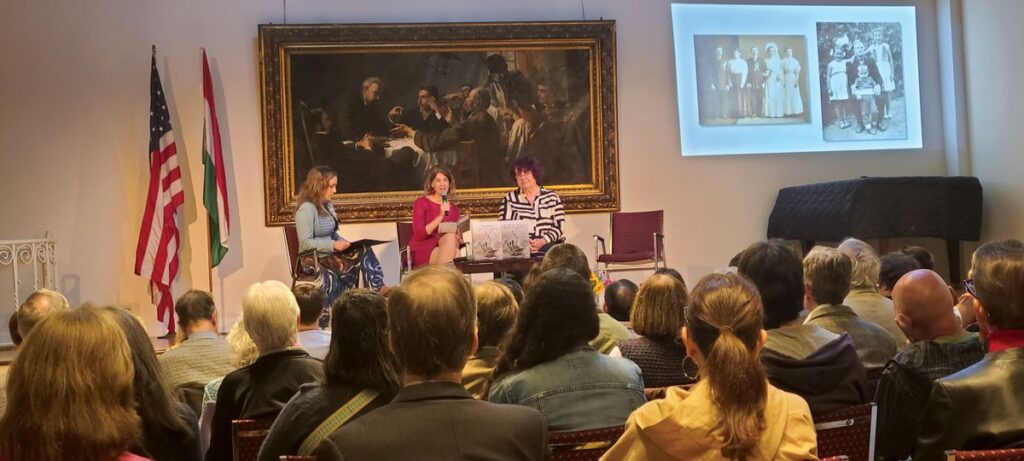
Some descendants of those emigrants have recently organized themselves and become a movement. We spoke with Director of the Hungarian Roots and American Dreams Program Réka Bakos.
***
From a corporate environment into genealogical research—what prompted such an unexpected career change?
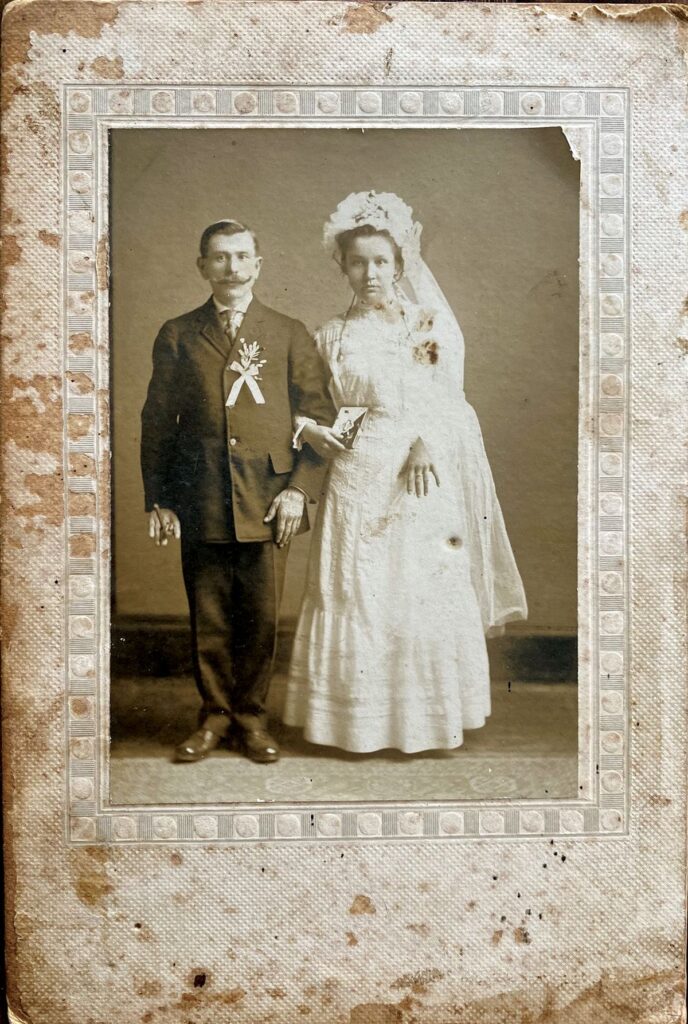
When I lost my grandmother and my mother in 2020, and then my grandfather passed away two years later, I inherited numerous archive photographs and documents. That was when I came up with the idea of making a family tree with photographs for my son to hang on the wall. I thought that if faces were attached to the names and stories, he might feel more connected to relatives whom he had only known as a very small child, or had never met at all. As I arranged wedding photographs and portraits from different eras, I realized that I also had many gaps to fill in. For instance, I knew that my great-grandparents had emigrated to America at the beginning of the 20th century. Pittsburgh, PA, also rang a bell, but beyond that, I knew very little. I began searching online and browsing publicly accessible databases, hoping to find something relevant.
Did you find your first clue straight away?
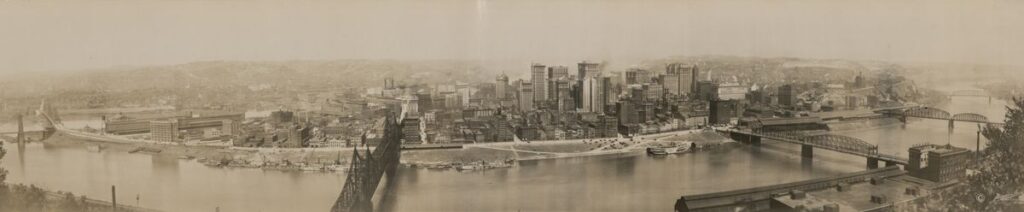
Fairly quickly. I found my great-grandmother’s name on one of the passenger manifests preserved at Ellis Island. From the end of the 19th century until the middle of the 20th, this port served as the principal immigration station of the U.S., where remarkably accurate records were kept of the arrivals (who, when, and on which ship). From there, I tried to discover as much as possible about their life in Pittsburgh, PA. Thanks to the 1910 U.S. Census, I soon located the house where they had lived; the records also revealed that my great-grandfather had worked in a steel mill.
How did you move forward from there?
Anyone who has ever started researching their family history knows that there is no stopping once you begin. The world of genealogy absorbs you almost instantly. That was certainly true in my case, even though I came from a completely different field professionally—human resources and consultancy.
I joined several social media groups devoted to genealogy, and in one of them I came across a post by János Szabon, who lives in Borsod-Abaúj-Zemplén County. It was as though he were writing about my own ancestors: his great-grandfather had also been one of the so-called ‘Amerikás Hungarians’ who earned money overseas and returned home to build a stone house from their earnings. We started talking and soon discovered that this was far from our only connection. Both of our ancestors had lived in Pittsburgh, PA, at the same time, and since they were both members of the Reformed Church, they most likely even attended the same congregation, so they almost certainly knew one another.
János suggested creating a Facebook group for the descendants of Hungarian immigrants—including those whose ancestors had returned home and started families in Hungary, as ours had done, or had remained abroad, with their descendants living in the U.S. or elsewhere around the world for generations. In February 2024, we launched the Facebook community Hungarian Roots & American Dreams. To our surprise, hundreds of people joined on the very first day, sharing deeply moving, uplifting, and sometimes heartbreaking family stories, archive photographs, and documents. Today, the community has more than 2,000 members, not only from the Carpathian Basin but also from across the American continent, and it continues to grow.
The book series examining the subject from different perspectives is also expanding.
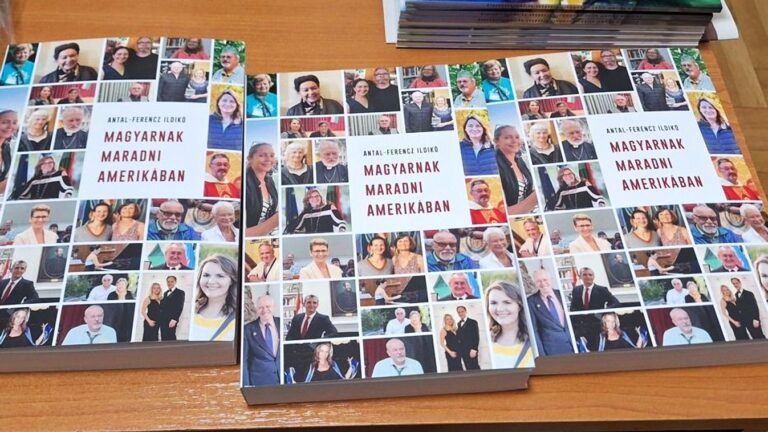
The idea came from Anna Fenyvesi, who later became my co-editor. She doesn’t have ancestors emigrating to America, but as a linguist, she spent many years researching the language use of Hungarian Americans, so she joined us almost immediately. The strength of the first two volumes of the Hungarian Roots and American Dreams series stems not only from the family histories they contain, but also from the remarkable variety of individual voices. More than 100 ordinary people tell the stories of their families in their own words. We asked them not only to recount what had happened to their great-grandparents or grandparents, but also to describe how later generations fared—whether in communist Hungary or overseas as second-, third- or even fourth-generation Hungarian Americans. The introductory studies in both volumes were written by Balázs Balogh, an ethnographer who has studied the subject for many years and himself spent several years conducting field research in the U.S. The difference between the two books is their organizing principle. In the first volume, chronology determined the order of the family stories based on the date of emigration. In the second, we adopted a geographical approach, grouping the narratives mainly around the states of New York, New Jersey, Pennsylvania, and Ohio, while also introducing nearly 30 locations.
How far back were you able to trace these stories?
The earliest emigration date we’ve documented is 1852. The chapter devoted to László Baróthy, a major in the Hungarian Honvéd Army, and his descendants is exceptional in that my co-author, Péter Homor, and I researched and compiled his life story ourselves. We came across Baróthy through studying Lajos Kossuth’s American tour. Baróthy was one of those six Hungarian former military officers who, armed with swords and revolvers, protected Kossuth during the New Orleans leg of his American tour in case of attack—since not everyone in the region welcomed his speeches on individual liberty. Baróthy later brought his two sons, who had been born in Hungary, to the U.S., where he also had more children. Following his meeting with Kossuth, he first became a farmer in Iowa and later in Nebraska. In 1865, he returned to Hungary accompanied by his wife and younger children. After his death, all of his sons returned to the U.S., whereas all of his daughters married in Hungary. Recently, one of his descendants contacted us, so a remarkable historical arc is gradually taking shape—considering Baróthy’s birth in the 1820s—and embraces two hundred years of Hungarian and American history.
What message does all this hold for the present day?
As Balázs Balogh often says about our initiative and about personal and family stories in general, this is ‘history from below’. It’s not history viewed through kings and military commanders, but through the lives of ordinary people—showing how historical events affected them personally and what decisions they were compelled to make, decisions that often shaped the lives of their descendants as well. This kind of research is also immensely valuable for self-understanding. The more we learn about our ancestors, the more we learn about ourselves. And, not least—since this was precisely what inspired me in the first place—we are then able to pass this knowledge on to our own children.
What have your own great-grandparents taught you?
They’ve taught me never to lose heart: we possess greater inner strength than we believe. They’ve also shown me that our own struggles—even the perfectly understandable stresses of everyday life—are scarcely comparable with what previous generations had to endure. For example, my great-grandmother, at only 19, left the small Zemplén village of Ricse—which is also Adolph Zukor’s place of birth—to board an ocean liner bound for the other side of the world, where she would marry a man whom, in reality, she knew only as someone from her own village. My great-grandfather traveled to the U.S. in 1905 as a married man to earn enough money to buy back the family’s lost land. During his time abroad, however, he was widowed. I assume that when he returned home for a short visit, he met his future wife, a friend of his sister. To make the story even more extraordinary, when my great-grandfather crossed the Atlantic again in 1914, also probably in connection with his land purchase efforts, he was immediately conscripted and sent to the Eastern Front of World War I, where the Russians took him hostage. Meanwhile, my great-grandmother remained stranded in America. After many years, they reunited in Hungary, and in 1921, their first child was born in Ricse. That kind of life demanded immense resilience. Almost every memoir we’ve collected stands as an inspiring example of how previous generations were able to face the hardships of fate with dignity, courage and unwavering resolve.
‘They’ve taught me never to lose heart: we possess greater inner strength than we believe’
Was there one particular story that affected you especially deeply?
I was profoundly moved by Szilvia Polcsik’s article about her grandfather, István Polcsik. During the great wave of emigration around the turn of the 20th century, when István was only a child, his parents left him in the care of relatives before setting off to America. Throughout his life, he recalled the moment they said goodbye at the edge of the village, where his mother handed him a few homemade scones as a farewell gift. He didn’t see his parents again for many years, nor was he able to meet his siblings born in America. At the age of 16, he managed to reach the U.S. himself using the passport of a deceased fellow villager. He found his family, but only a year later, someone reported him to the authorities, and he was deported back to Hungary. He spoke excellent English for the rest of his life. An American pilot who had remained in Hungary after World War II lived in the same street; they became close friends…
How many, like members of the Polcsik family, never returned home?
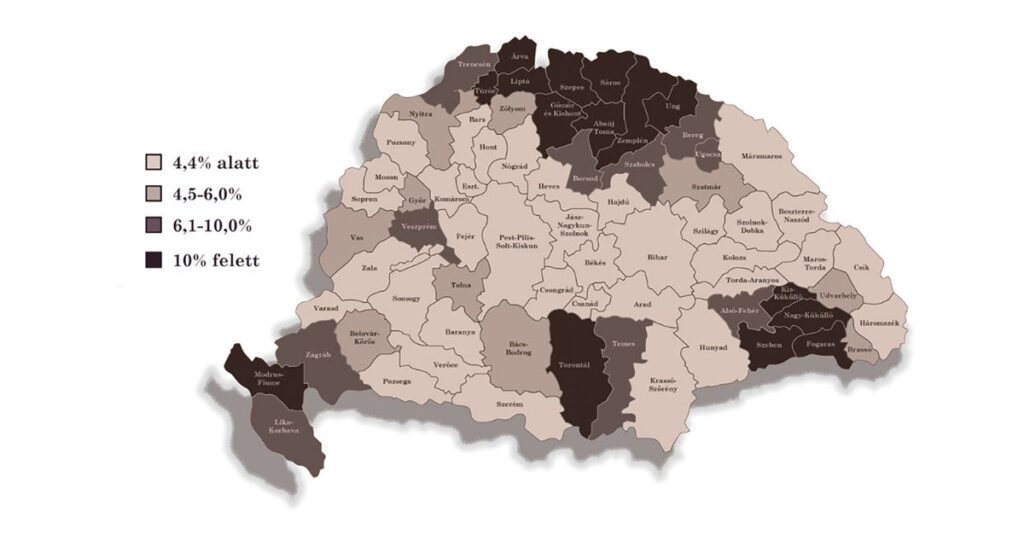
During the first and largest wave of emigration around the turn of the 20th century, nearly two million people ‘staggered out’ from the territory of the Kingdom of Hungary, of whom approximately 650,000–700,000 were ethnic Hungarians. Roughly one-third of this group eventually returned home permanently after a shorter or longer period. It’s important to note that this had been the original intention for most of them. Before World War I, only around 15 percent of Hungarians in America applied for U.S. citizenship. Then World War I came, followed by the Treaty of Trianon—and it was particularly the latter catastrophe that persuaded many to remain abroad, as they didn’t wish to find themselves living in countries such as Romania or Czechoslovakia after Hungary’s borders had been redrawn. This situation was compounded by the dramatically tightened American immigration laws introduced during the first half of the 1920s, which virtually reduced Hungarian immigration to the U.S. to zero. Many, therefore, hesitated to travel back, fearing that if they left America once, they might never again be allowed to return.
The longer people remain away from their homeland, the more difficult it becomes to reintegrate.
Indeed—particularly against the backdrop of historical and social upheavals of the kind we’ve been discussing. Anna Fenyvesi and I often say that, from the moment of emigration, time stands still. This was especially true in the past, when communication depended almost entirely on letters. Those Hungarian emigrants who left during the first great wave departed from an Austro-Hungarian Monarchy ruled by an Emperor and used crowns as currency. Those who fled during or immediately after World War II came from the Horthy or Szálasi regimes and had known the ‘pengő’ as their currency. The refugees of 1956 and the ‘dissidents’ exchanged the Hungarian People’s Republic and the forint for a free democracy and the US dollar. The frozen image of the homeland—which their native language also preserved through the survival of archaic words and expressions—often remained with them until the end of their lives. The same was true of Hungarian cuisine. Its traditional dishes, such as the chicken soup that one of our contributors refers to as ‘Sunday soup’, have frequently been preserved by later generations as an entirely natural family tradition.
How quickly did assimilation follow these major historical changes?
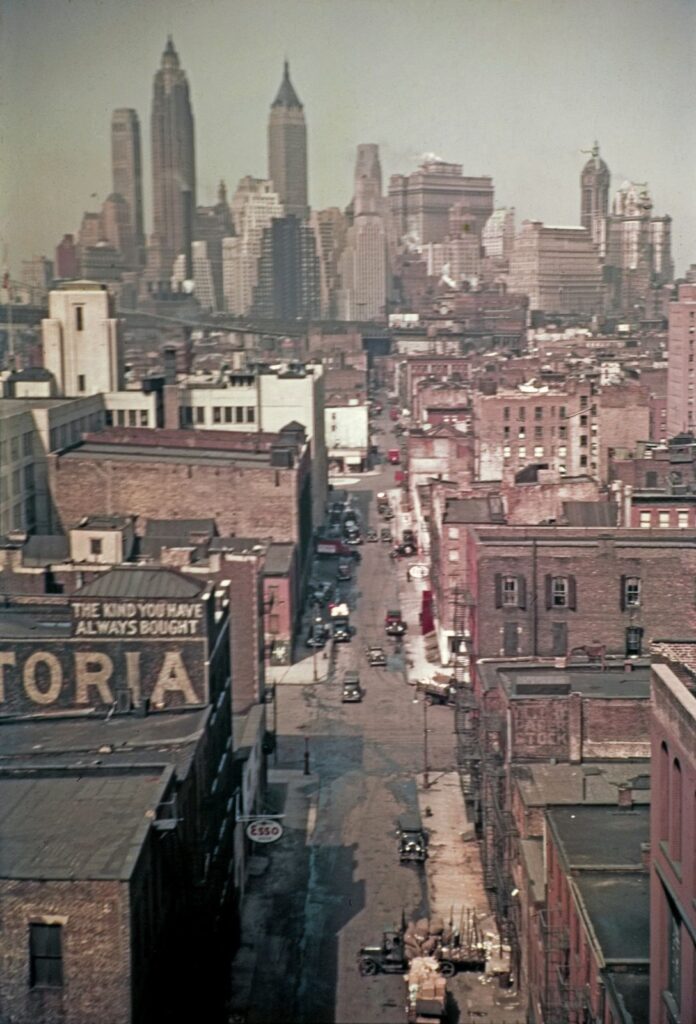
Very rapidly. Those who emigrated around the turn of the century initially formed relatively closed ethnic communities. Entire Hungarian districts—‘Little Hungaries’—emerged in the major cities of the north-eastern U.S., workers’ colonies developed around smaller industrial towns, and mining settlements were established throughout the Midwestern coalfields. In these village-like communities—known among Hungarian Americans as plézek, derived from the English places—and in the Hungarian neighborhoods, it was entirely possible for someone to spend a lifetime without speaking a single word of English. The men, naturally, learned enough English to manage their jobs in the factories. There were Hungarian grocers, butchers, and, demonstrating an extraordinary capacity for self-organization, churches, mutual aid societies, and cultural associations were also established almost immediately. The situation was very different for the second generation. Once the children began attending school, they had no choice but to learn English. A recurring theme in our books is the recollection of second-generation great-grandparents, who remembered just how difficult this transition had been and how frequently they were mocked because of their accents. Mixed marriages became increasingly common; from that point onwards, it largely depended upon individual family decisions whether children would continue to inherit the Hungarian language and cultural tradition. We have several stories—particularly from 56er families—in which abandoning the Hungarian language was a conscious choice to help future generations integrate more easily into American society.
How have those later generations experienced this?
Many of our contributors have written that they feel they lost part of their identity as a result. For precisely this reason, many have begun learning Hungarian as adults. They seek out Hungarian communities, whether through scouting organizations, Sunday schools, or other cultural associations. It’s not uncommon for them to apply for Hungarian citizenship. One example is Aaron, a young man in his 20s, whose grandfather no longer spoke Hungarian. Aaron, however, learned the language at the Hungarian school in Chicago. He’s been an invaluable contributor to the genealogical research carried out in our community. At the Szeged launch of the first volume, Aaron delivered—in Hungarian—the story of his family, starting with his great-great-grandparents, who had arrived in the U.S. during the first great wave of immigration.
These stories form part of the major exhibition you’ve been preparing for?
Following the success of a workshop we organized last year, the idea emerged for the Legacy of Hungarians in the United States – People, Places, Pathways exhibition, presented both physically and virtually. Numerous institutions and specialists from a wide range of academic disciplines have since joined the project. The U.S. celebrates its 250th anniversary this year; our aim is to present Hungarian–American history through the lives of 250 immigrants, family histories, and fifty emblematic locations. The exhibition will naturally feature figures such as Mihály Fabriczi Kováts, who emigrated in 1777 and is regarded as the father of American light cavalry, alongside many distinguished Hungarian-born soldiers, scientists and artists, but it will also tell the stories of the hundreds of thousands of ordinary Hungarians whose labour, determination and sacrifice helped build the bridges, railways and skyscrapers—and much else that still contributes to making America great today.
Related articles:
Read the original article here.
At a time when public debate is increasingly polarized and superficial, Hungarian Conservative remains committed to depth, intellectual honesty, and independent conservative thought.
Producing high-quality journalism requires resources. Your contribution helps us expand our coverage, reach new audiences, and keep our content accessible.

Please consider supporting our mission.