Hungary was once far larger than it is today and thus had many more bodies of water running through it like watery veins. Some cold, swift streams crashed from the Carpathians into the valleys of Transylvania; others were warmer, larger, and slower, snaking toward the dark seas. Today, Hungarians still live in large numbers in many of these areas, but because of the Treaty of Trianon, far fewer rivers and bodies of water remain within Hungarian territory.
One of the major rivers where this change is most perceptible is the Tisza River. The Tisza was, and still is, traditionally called by many the ‘Hungarian River’, given that it flowed through the Kingdom from beginning to end. The Tisza was extremely meandering. It swerved and curved many times through the Hungarian Great Plains before it finally joined the Danube in the far south. This was a vital element to Hungarian agriculture: the Tisza was a reasonably shallow, slowly flowing large-body river. During flood seasons, it inundated the land and thereby watered the fields around it. In many places, water would stand above the fields; locals often fished on the plains in boats, and the water seeped into groundwater reserves. This helped keep a large area of the vast plains highly fertile.
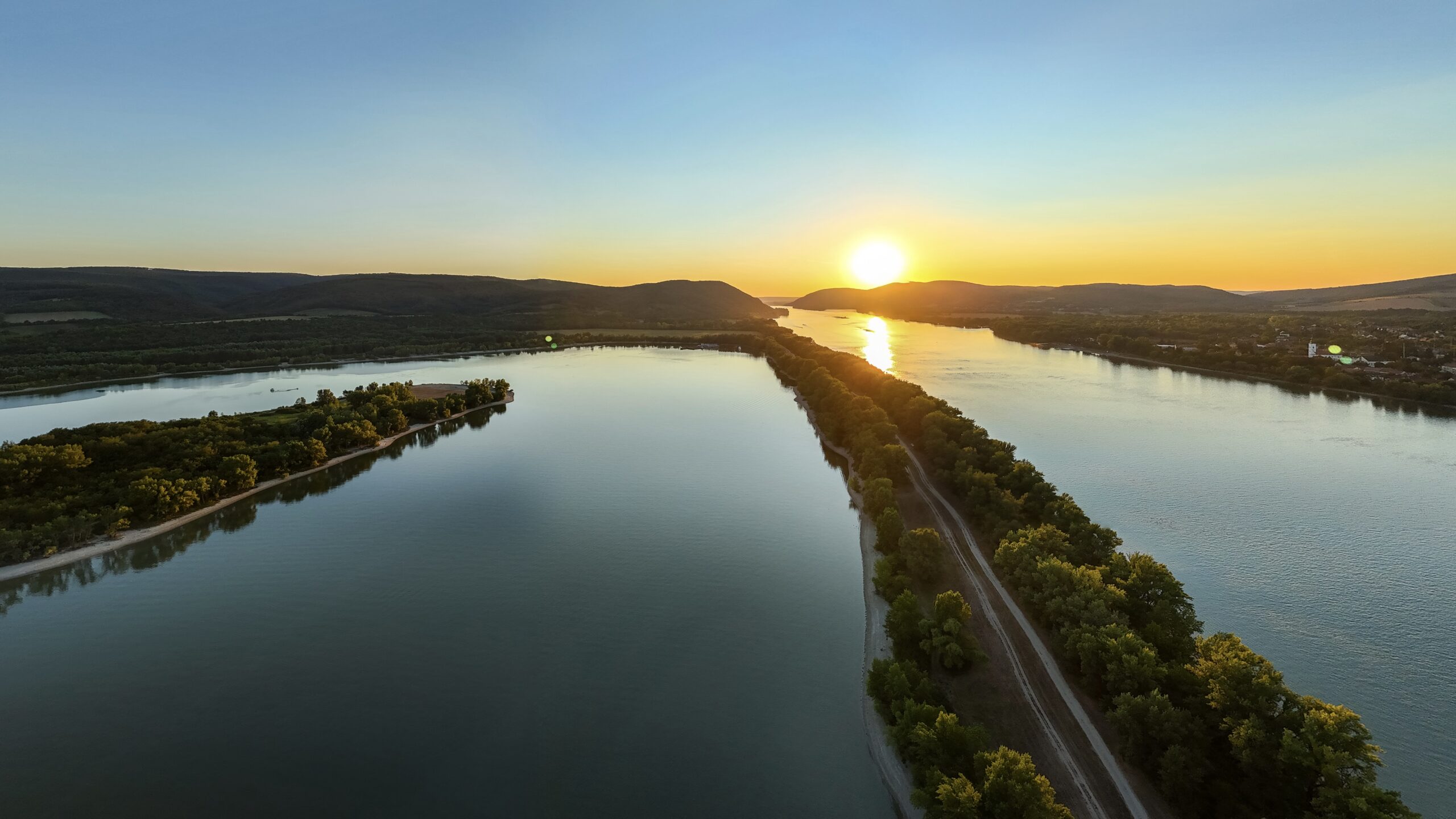
The other major river is the Danube, which also flooded often and had similar effects; both floods were often dangerous. Many flood prevention measures exist because floods and ice floods took many lives in past centuries, and the protection measures are well warranted.
‘The Danube symbolizes culture, art, music, and European connectedness’
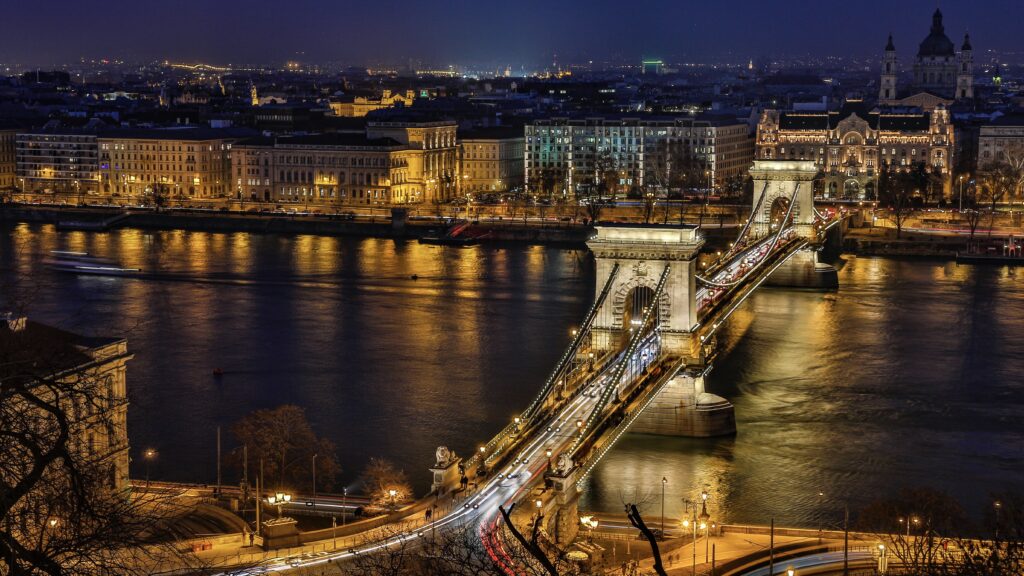
In a way, the Danube is possibly a more cultural icon of Hungary. In many ways, the Tisza symbolizes the plains, the wild Hungarian spirit, and agriculture. At the same time, the Danube symbolizes culture, art, music, and European connectedness. The Danube currently flows through ten nations, and it has flowed through many over the centuries of Europe’s development. In a sense, it is the river of capitals and great transport. The river’s ships passed through nearly half of Europe; this meant that travellers, innovation and culture were carried on its waves.
Specifically, in the case of Budapest, the river ran through the cities of Bratislava and Vienna before reaching the city. Two great cultural centres were touched upon on the way to the grand, divided city. Vienna was the co-capital of the Austro-Hungarian Empire, while Bratislava served as a coronation city for centuries. This definitely left its mark on the many places through which the Danube flowed—both the greater and the lesser.
Besides these two great rivers, Hungary has other major ones that are important. These include the Rába, Dráva, Sió, Zala, and Maros. These are all smaller rivers in different areas of the country. The Rába flows in the northwestern part of the country and joins the Danube around Győr, while the Dráva is in the southern periphery of the country near the Croatian border. The Zala and the Sió flow near Lake Balaton. The Zala empties into the lake, while the Sió connects the Balaton with the Danube River. The Maros flows in the eastern part of the nation and pours into the Tisza at Szeged. It can clearly be seen that, indeed, the lifeblood of the nation is the Danube and the Tisza Rivers. The veins of many of the mentioned smaller streams and rivers also filled the landscape with water. Now, the country faces a massive drought because of simplification plans carried out on the rivers, especially the Tisza. Two key players were Count István Széchényi, who supported the works, and engineer Pál Vásárhelyi, who drafted the Tisza regulation plans.
This is where a modern problem comes into the picture. The chronic drought is, in some ways, connected to the Tisza River regulations carried out in the 1800s to modernize Hungary. The meandering, flooding, wild, and dangerous river, with its boggy terrain, was seen as something that, in the name of modernity and technological progress, needed to be conquered and from which the fields needed to be freed for regular crop use. Yet today, this has unintentionally become one of the nation’s greatest plights. In such an intense, dry, warm climate, much water runs through Hungary too quickly.
Nowadays, the massive summer droughts in Hungary are being tackled with landscape-based water-retention methods. These techniques now have to be implemented artificially, since large rivers and smaller bodies of water no longer spread water across these areas in the same way. Redirecting these rivers into straighter paths has nearly completely limited the spread of water across the landscape—an unfortunate twist of history in the long term. Therefore, let us try to restore water retention (in a safe and modern manner) and thus achieve a greener, more flourishing ecosystem. Once more, let us diversify these currently dry, lifeless lands with flora and fauna. We should strive once again to become that lush, green, watery realm that our Hungarian ancestors once knew.
Related articles:
At a time when public debate is increasingly polarized and superficial, Hungarian Conservative remains committed to depth, intellectual honesty, and independent conservative thought.
Producing high-quality journalism requires resources. Your contribution helps us expand our coverage, reach new audiences, and keep our content accessible.

Please consider supporting our mission.