This is a translated and edited version of the original article.
‘I know you all—you come here every year for a week, and you clearly have a very good time,’ said a friendly local employee at the Lake Hope boat rental station. Her remark referred to this year’s two musician performers, Sándor Csoóri Jr. and László Hajdu-Németh Jr., who brought to and played their instruments also at the beach. Joining in was folk dancer István Berecz, who arrived with his father, the storyteller István Berecz—all four from Hungary. Actor Csaba Marosán and his flutist wife, Emőke came from Transylvania. Their presence guaranteed a high-quality cultural program throughout the week, but the truly important things didn’t happen during the performances…
The Hungarian Communion of Friends (Magyar Baráti Közösség, MBK) has been organizing its week-long ITT-OTT (Here-There) Conferences since 1967. Originally held in Hereford, PA, then on the shores of Lake Chautauqua, NY, the gathering has now been held at Lake Hope, OH for exactly 50 years.
I first heard about this event from my interviewees: Balázs Somogyi, András Ludányi and Györgyi, the widow of László Böjtös. All three are (used to be) founders and/or leading characters of MBK for decades and they always spoke about the organization and its annual conference with enthusiasm. I gladly accepted their kind invitation, this year for the third time, and arrived with my husband.
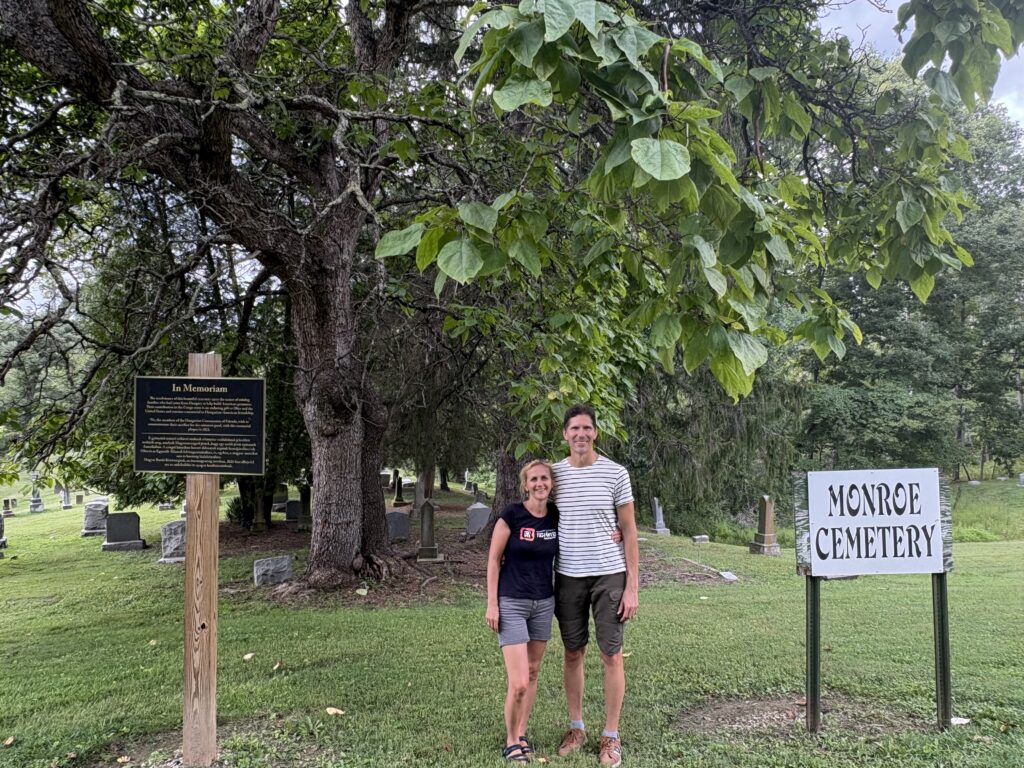
During our first summer in the U.S. in 2022, I knew nothing about this event. The following year, thanks to several interviewees’ recommendations, I became somewhat familiar with it, but I still didn’t manage to attend. In 2024, I finally made it there and stayed almost the entire week. Since then I know that it’s not enough to ask others or to ‘drop in’ for a few days—it’s worth being there each year and from beginning to end, because only then can we truly understand, and, above all, feel the essence of this friendly community and its wonderful gatherings. That’s why I’m also aware that I’ll never be able to put into words adequately what I’ve experienced there—however, since I was asked to do so, I try, but I shall begin with an invitation: come along and be part of it yourselves!
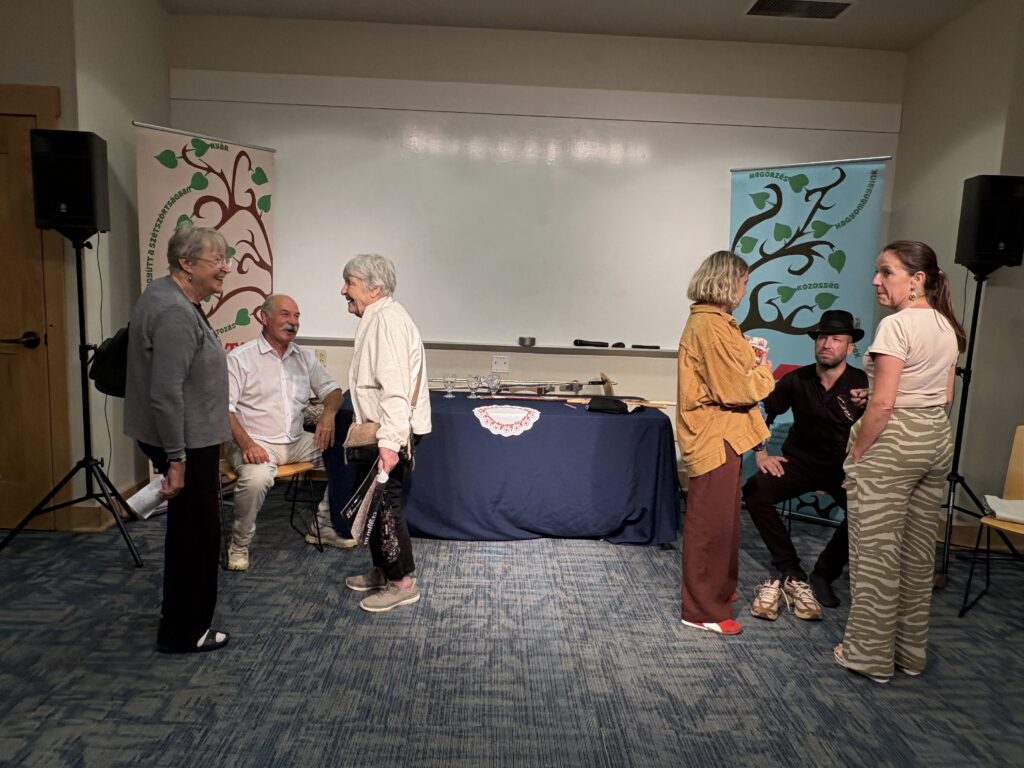
Rather than summarizing the history of the MBK and ITT-OTT—i.e. their foundation more than half a century ago, their ups and downs, repeated brushes with extinction, subsequent revivals and renewals, and their aims and principles—I’d rather record my personal impressions, what I had already sensed through my interviews, but only truly understood as a returning participant.
First, this is a Hungarian community of friends that seeks to keep the Hungarian language, as well as folk and literary culture alive and pass them on. Secondly, it’s a Hungarian community of friends built and organized around values: it doesn’t engage in politics, promote ideologies or follow a particular religion. Thirdly, it’s a Hungarian community of friends that doesn’t seek rigid, bureaucratic frameworks or organizational positions beyond what is absolutely necessary, following the founders’ wish to move away from the negative experiences of 60–70 years ago. It doesn’t exclude anybody, but emphasizes kindness, good faith, mutual respect and acceptance—preferably understanding, but at the very least tolerance. It’s fundamentally open to opinions and ideas based on these shared values, and consciously embraces the founders’ original aim and mission: a physical, intellectual and spiritual communion that seeks to preserve Hungarian identity, culture and morality within the North American diaspora.
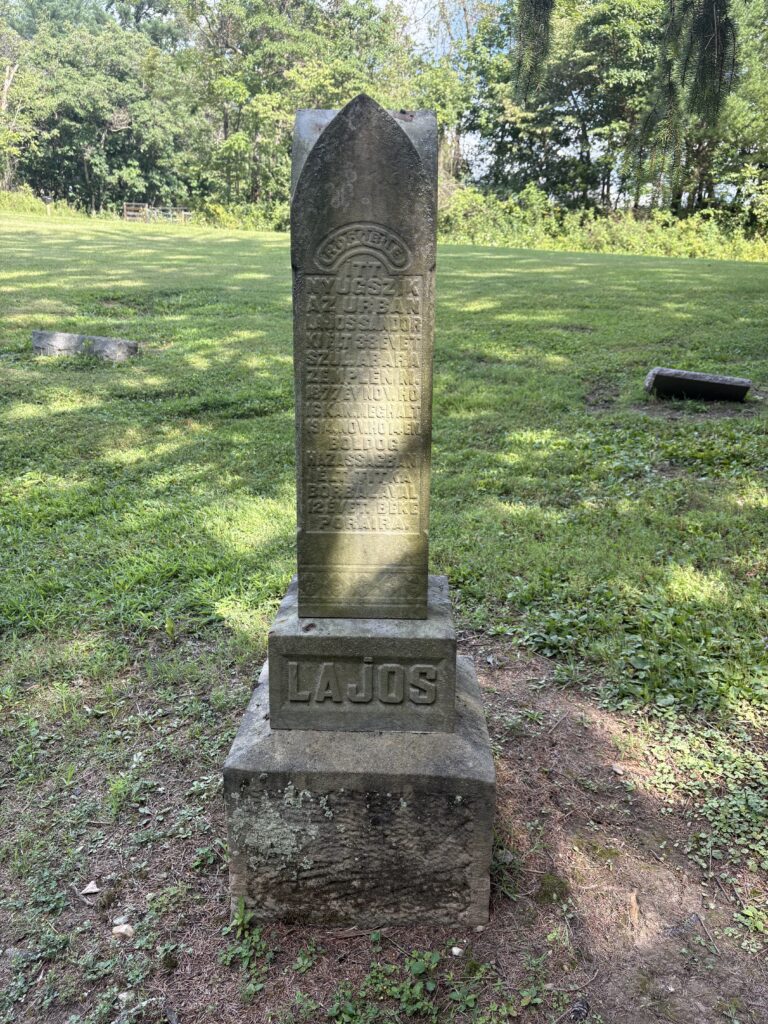
This year I already had a fairly good idea of what to expect—there were new people and surprises, too, but this time I felt at home from the very first moment I arrived there. I still remember how, upon my first visit two years ago, arriving without my family and from my usual hectic work routine, accustomed to conferences packed with presentations, I needed a day or two to tune into the slower pace of this gathering, with its abundance of intellectual, cultural and culinary experiences and its unusual emphasis on giving time for ourselves and paying attention to one another.
Last year was already easier to slow down; and this year I settled into it immediately. Days before arriving, I was already looking forward to the relatively late mornings, followed by lectures and to filling our afternoons with sleeping, reading, swimming and excursions. I also knew in advance that after the restaurant lunches, invitations would come for smaller, personal dinners in the cabins. This year we experienced Judit Puskás’s culinary skills and kindness more than once, in the form of lecsó and kocsonya (jellied pork), while at other friends’ cabins we were treated to home-made ribs from Detroit and New Jersey.
I was also looking forward to the evening cultural programs and the subsequent communal campfires, where Hungarian folk music, singing and dancing used to be a tradition for decades, but hasn’t happened during the previous years, apart from the traditional lakeside picnic nights. This time, there were plenty of musicians, singers and dancing feet available, so the cheerful campfire meetings went on until dawn every night.
And above all: from the very beginning, the organizers and participants welcomed me so warmly and openly that it felt as though we had known one another for decades. After a day or two I no longer felt like a guest, but like an integral member of an old family-and-friends kind of community. During that week-long community event I was recharged for an entire year with Hungarian culture, intellectual exchanges, food and drink, and friendships.
In 2024, this was a life changing experience for me because, since moving to America in 2022, what I had missed most were Hungarian cultural experiences, stimulating lectures and intellectual challenges. The relative proximity of the Liszt Institute and the Hungarian consulate in New York City, together with some local Hungarian cultural programs and, later, the many trips made for my book launches helped to a certain extent, but none could replace the cultural vibrancy I had been accustomed to in Hungary before. What came closest were first the annual congresses of the Hungarian Society of Cleveland and later the annual conferences of the American Hungarian Educators Association (AHEA), where I happily absorbed the messages and atmosphere of academic lectures, cultural events and lengthy friendly conversations for two or three days each. And, of course, ITT-OTT in August that perfectly complements the other two events, offering something that the others simply cannot: a whole week of lakeside, campfire-lit, starry summer holiday combined with high-quality literary and cultural experiences and relationships that develop into lifelong friendships.
The 50th anniversary was special from several aspects. There was a permanent priest present, Father Imre Juhász from New Jersey, who took part in almost the entire gathering and became deeply involved in its program, and spoke twice: first leading an opening service and later giving a lecture. In his service delivered, as usual, with warmly stern kindness (or kind sternness?), he successfully tackled the difficult challenge of addressing not only Catholics but non-believers as well, offering several concentrated thoughts: we must recognize the ‘tares’ (in the biblical meaning of the word) within ourselves, not only in others; opportunity does not create the thief—the thief creates the opportunity; humanity’s greatest sin is laziness in doing good; we aren’t perfect and need the Lord Jesus; and truth itself has a hierarchy: everyone sees only part of it, while God alone sees the whole. His lecture, ‘The Role of the Fairy Tale in the Bible’, was not light entertainment either. He first discussed the importance and role of fairy tales in general, then, through Jotham’s fable, examined the characteristics of a good leader: one who follows God and obeys his laws.
We were fortunate to hear three presentations by fairyteller András Berecz. In ‘Heartbeat in the Heights: The Bell Lives in Its Language’, he told the story of the bell photographs he began taking during the Covid pandemic, which eventually morphed into an exhibition from which he brought several pieces. Bells, he explained, proclaim the life of a community: they rejoice with the living at births and weddings, mourn the dead, mark the passing of time and warn of danger, enemies, storms as well as the beginning and end of wars. A bell, he said, is ‘the only instrument that makes sorrow as deep as the sea and joy rise to the heavens.’ Its sound, according to one bell researcher, is ‘to the world of sounds what the rainbow is to colors,’ while also being ‘as hard as an apostle’.
His photographs of interiors of bell chambers show the consequences of the clappers striking the inner wall for a long time—the bronze surface shines because it doesn’t oxidize there. His work had no precedent in photographic literature. Professionals acknowledged his achievements, but could hardly believe he had accomplished it with a single smartphone… The photographs are accompanied by captions revealing that bells possess a ‘deep memory’. Finally, we heard about so-called amateur bells, prepared not by professionals, but by people called upon to do so in times of urgent need—such as the one cast in the 1600s at Csecse in Nógrád County of Hungary. Its surface is rough, but it still works today, and the Hungarian inscription on that bell is the very first one of its kind in history.
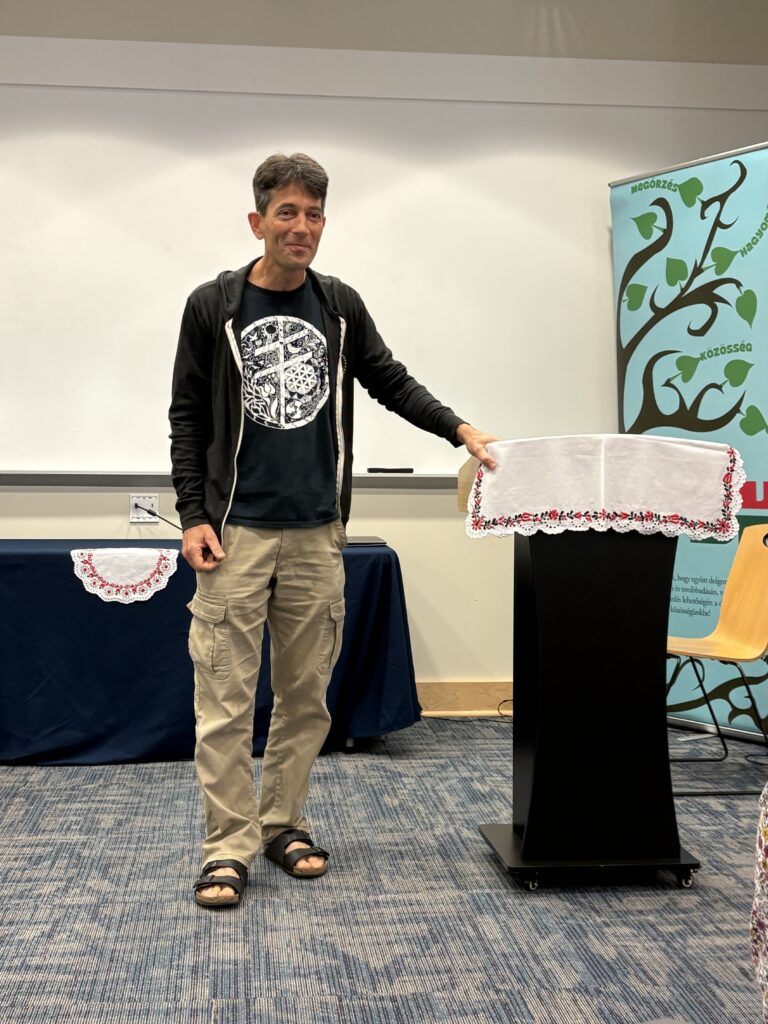
It’s practically impossible to reproduce in writing András’s other two presentations, ‘The Tales of Uncle Pista the Liar’ and ‘God’s Fool’. Only seeing them can one understand why, with very few exceptions, we were laughing ourselves to tears both times. His distinctive imitation of the Székely (Szekler) storytelling style may have been especially popular at ITT-OTT, because at least half of the participants come from Transylvania, many of them from Székelyföld (Szeklerland).
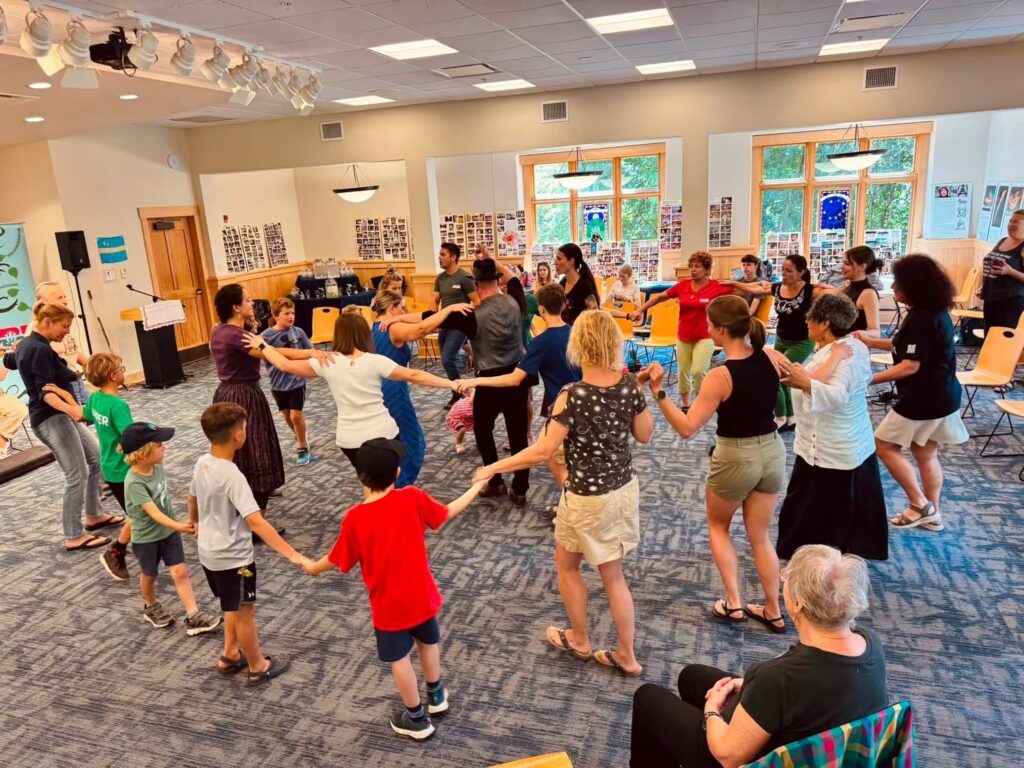
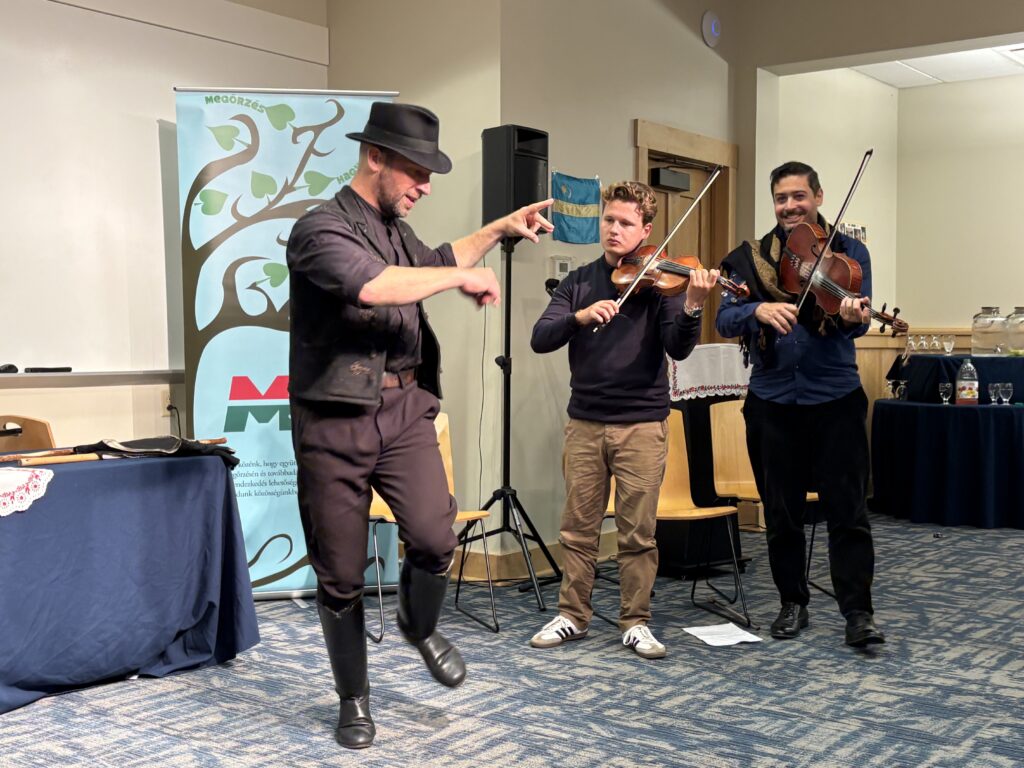
His son, István ‘Pityu’ Berecz, gave a presentation on the development of Hungarian folk music and dance. We learned, for example, that the circle dance first appeared in ecclesiastical images depicting heaven, and that it was generally performed in churchyards or on meadows beside streams and fruit trees, symbolizing life and fertility. Father and son also performed together: while András told his stories, Pityu showed dances, accompanied by the two musicians.
Pityu was also a central figure, together with the musicians, of the lakeside picnic evening program. Alongside them, many amateur participants shared their thoughts and talents, followed by communal singing until midnight, periodically interrupted by circle dancing. The picnic itself began with the traditional yearly group photograph and a greeting from president József Megyeri, followed by András Ludányi’s tribute to the previous presidents of the MBK, then the cultural program put together by Tímea Nádas (Mózsi), followed by spontaneous singing and dancing.
Sándor Csoóri Jr. spoke about the origins of the ballad, which was originally performed both as dance and song; the dancing eventually disappeared, leaving the song format. He discussed the experiential nature of folk dance and music and the power of music, mentioning his father and the famous folk song collector Zoltán Kallós as well. We learned that Transylvanian táncház (dance houses) originally operated according to strict rules: someone from another street, for example, couldn’t enter particular events; young men could attend only until the age of 18, when normally drafted to the military; fights weren’t uncommon, but music usually put an end to them as they began dancing again…
The four performances by Csaba Marosán, an actor residing in Kolozsvár (Cluj-Napoca, Transylvania) who was on a month-long North American tour of Hungarian communities with multiple stops, would deserve an article of their own—for now, I can only say: try to see them. His performance about the Transylvanian aspects of the 1956 revolution and freedom fight, and the presentation on Bishop Áron Márton, one of the great saviors and spiritual, intellectual and material supporters of the Hungarian community in Transylvania, were filled with lots of interesting data and quotations—every word of those was precious. The performance about the famous poet Sándor Petőfi as well as the collection of love poems presented together with the actor’s flautist wife were equally memorable literary experiences. Csaba also excelled when spontaneously asked to narrate a puppet show for kids about King Matthias. Emőke performed both as a musician, a puppeteer, and was also responsible for the large and broad-ranging children’s program of this year.
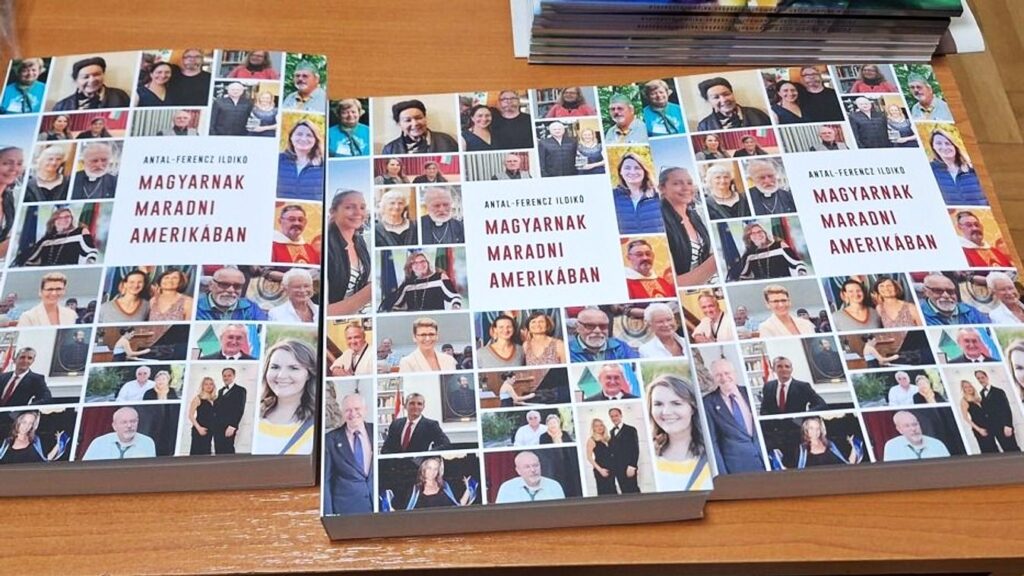
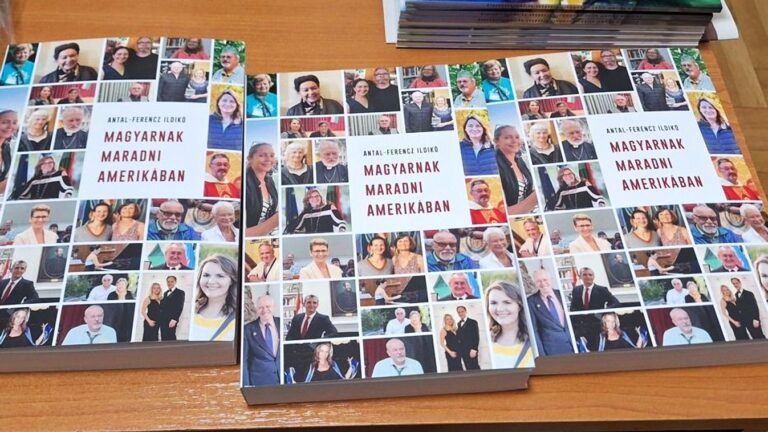
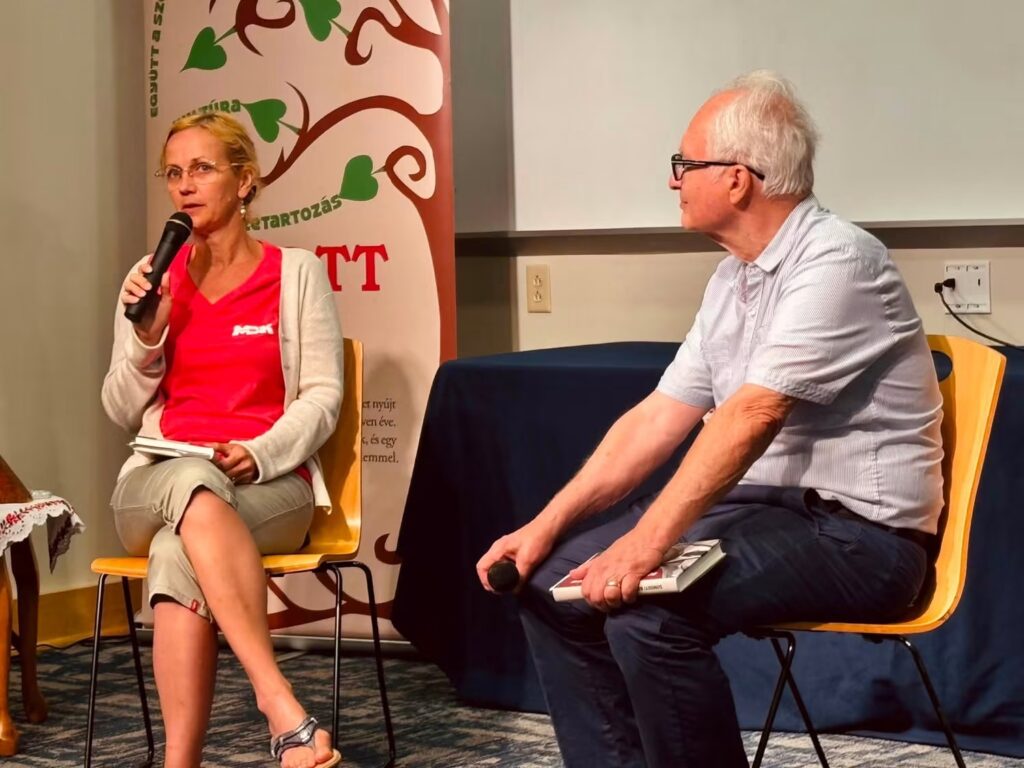
Other noteworthy presentations included András Ludányi’s memorial session for those MBK members and/or ITT-OTT participants who had passed away during the previous year—sadly, the list was particularly long this year. Bernadett Keszler, a Hungarian American Coalition (HAC) scholar presented about Ungvár (Uzhhorod, Ukraine); followed by a book presentation held by Ildikó Antal-Ferencz and András Ludányi about the life of Balázs Somogyi, the much-missed 88-year-old community organizer and 56 veteran doctor, who was unable to attend for the first time in the past 50+ years. His memoir was published in Hungary by Méry Ratio Publishing Co. and was funded by the Pro Minoritate Foundation; this first presentation will be followed by further events in Budapest in September and Connecticut/New York/New Jersey in October. László Aradvári, Chicago-based Hungarian community diplomat, gave a lecture on selected sports achievements of Hungarian Americans. Finally, an important new development was the reintroduction of English-language presentations. Nevertheless, non-Hungarian-speakers were happy to attend Hungarian lectures too, following them relatively easily with the help of a translating app.
Closing remark: the MBK, like every other diaspora community or organization, faces constant and recurring challenges—continuity, generational change, fluctuating interest, the participation and active involvement of younger (and less young) participants, bilingualism, etc. Bringing in new, especially young people is an ongoing task requiring persistent, Sisyphean work. New ideas, tools and solutions, and possible ways of working together must continually be sought and tested—‘possible common paths’, as the motto was two years ago, and ‘hand in hand’, as it was last year.
Another old-new challenge is securing the financial resources needed to fund the organization and the event. With Hungarian governmental support expected to decrease, the MBK will once again depend on its members and the civic fundraising so common in the USA. I know that the organizers are aware not only of these challenges, but also of possible solutions: involving young people in the leadership; distributing organizational tasks more widely; beginning and intensifying publicity earlier; inviting more young speakers and participants, especially musicians; organizing smaller workshops; inviting speakers and participants for the entire week; and providing a parallel English-language small group and childcare.
For the 50th anniversary, organizers succeeded in putting all of it into practice. If this high cultural standard, focus on details and commitment will be sustained (and the necessary fundraising succeeds), hopefully all participants, especially the younger ones won’t consider ITT-OTT merely as a nice family holiday, but as a responsibility or even a long term mission. With heartfelt congratulations and thanks, I wish the organizers strength and perseverance—so that 50 years from now there will still be an ITT-OTT Conference on the shores of Lake Hope!
Related articles:
At a time when public debate is increasingly polarized and superficial, Hungarian Conservative remains committed to depth, intellectual honesty, and independent conservative thought.
Producing high-quality journalism requires resources. Your contribution helps us expand our coverage, reach new audiences, and keep our content accessible.

Please consider supporting our mission.