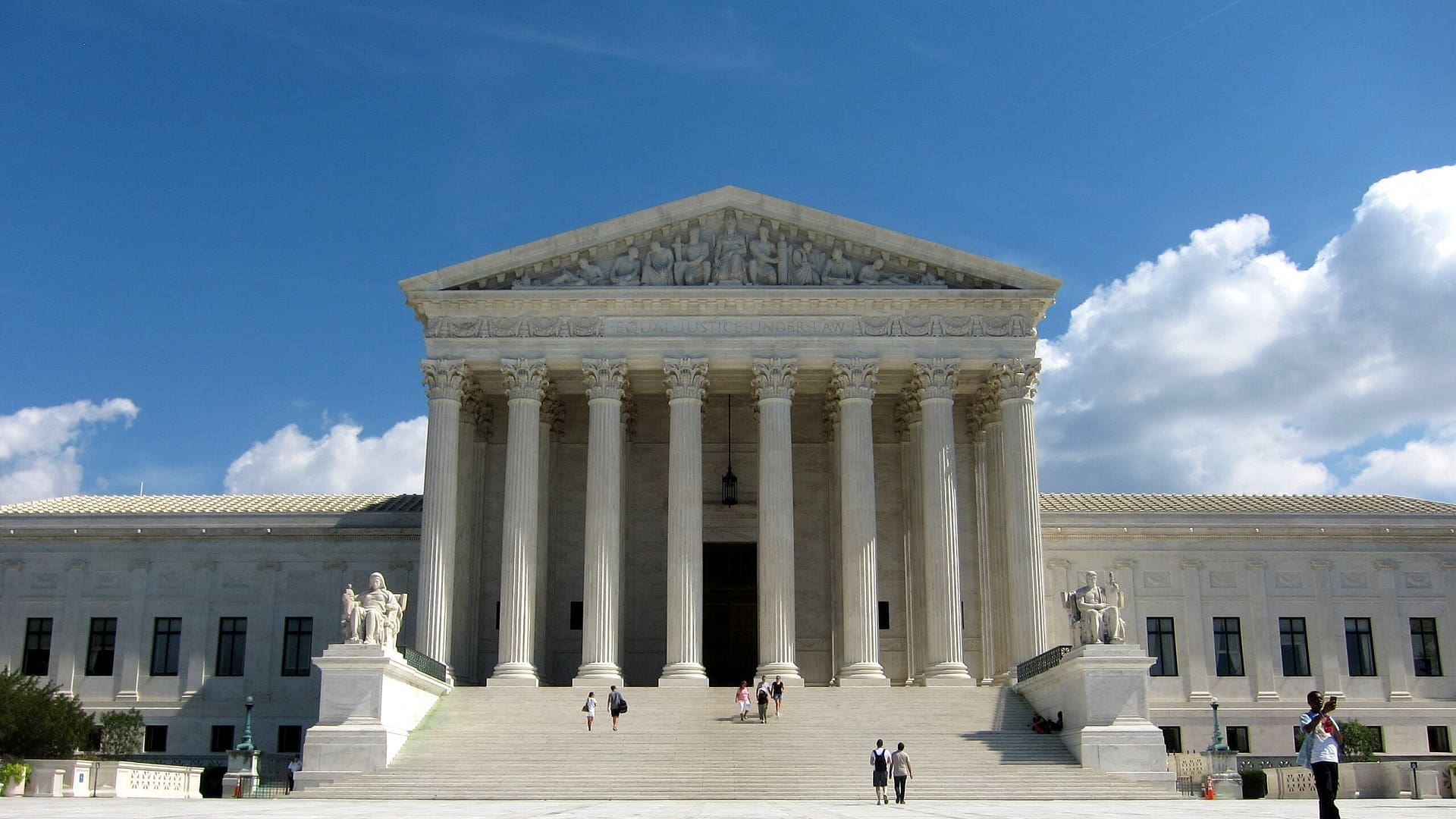
The US Supreme Court has delivered two immigration rulings pulling President Donald Trump’s second-term agenda on migration crackdown in opposite directions, blocking his attempt to restrict birthright citizenship while granting the administration broad authority to terminate Temporary Protected Status (TPS).
In Trump v Barbara, the Court struck down Executive Order 14160, ‘Protecting the Meaning and Value of American Citizenship’, signed on Trump’s first day back in office in January 2025. It ordered federal agencies to withhold citizenship documents from US-born children when the mother was either unlawfully present or only temporarily admitted, and the father was neither a US citizen nor a permanent resident.
By 6–3, the justices held that children born in the United States to parents who are unlawfully or temporarily present remain ‘subject to the jurisdiction’ of the country and are citizens under the Fourteenth Amendment. Chief Justice John Roberts said the administration had produced ‘scant evidence’ for its ‘dramatically revisionist view’ that citizenship depended on parental domicile.
‘Citizenship, then and now, was the right to have rights—to freely participate in our political community,’ Roberts wrote. ‘We keep that promise today.’ Justice Brett Kavanaugh supplied the sixth vote but concluded more narrowly that Trump’s order violated the Immigration and Nationality Act rather than the Constitution.
Justices Clarence Thomas, Samuel Alito, and Neil Gorsuch dissented. Thomas argued that the original understanding of the Citizenship Clause did not necessarily cover children of temporary visitors or parents without lawful status, accusing the majority of taking the ‘extraordinary step’ of invalidating the order.
Trump called the judgment ‘too bad for our Country’ and urged Congress to end what he described as ‘expensive and unfair’ birthright citizenship, insisting that no constitutional amendment was necessary. Vice President JD Vance similarly called the ruling a ‘major mistake’, but argued that its divided reasoning offered a ‘big silver lining’. He further stressed that the prevailing interpretation of birthright citizenship was ‘hanging by a thread’ and said the administration should continue fighting to reverse it.
The administration secured a broader victory five days earlier in Mullin v Doe. The Court ruled 6–3 that the TPS statute bars judicial review of non-constitutional challenges to the Homeland Security secretary’s decisions to designate, extend, or terminate protection. The judgment cleared the way to end TPS for more than 350,000 Haitians and approximately 6,100 Syrians.
Justice Alito wrote that the statutory language was ‘clear’ and its plain meaning ‘very broad’. The majority also found the Haitian challengers unlikely to prove racial discrimination. Justice Elena Kagan countered that courts should remain able to examine whether the secretary had followed mandatory procedures, warning that TPS holders could now be placed ‘on the next plane’.
Losing TPS is not itself a deportation order. It removes work authorization and protection from removal, leaving recipients without another lawful status subject to immigration enforcement and removal proceedings.
For the remaining two and a half years of Trump’s term, the rulings are likely to redirect the focus of his immigration policies. The birthright citizenship decision closes the most ambitious route to changing citizenship rules through executive action, pushing the White House towards powers over non-citizens: ending temporary protections, restricting asylum, expanding detention, and increasing removals.
That shift is significant because the Trump administration has increasingly incorporated the concept of ‘remigration’—a term historically associated with hard-right identitarian movements in Europe—into its political messaging. Trump wrote in June 2025 that America had been ‘invaded and occupied’, adding: ‘I am reversing the Invasion. It’s called Remigration.’ A State Department proposal also outlined the creation of an ‘Office of Remigration’ to coordinate removals, repatriation tracking, and voluntary returns, while the Department of Homeland Security later linked the concept to its self-deportation programme.
‘For the remaining two and a half years of Trump’s term, the rulings are likely to redirect the focus of his immigration policies’
As Hungarian Conservative previously reported, Republican Representative Andy Ogles has also introduced a discussion draft for a sweeping ‘Remigration Act’, which would significantly expand the federal government’s powers to revoke citizenship and legal immigration status under specified circumstances.
The rulings, therefore, are also significant because they define how far the remigration agenda can reach in the United States. The TPS judgment broadens executive authority to withdraw temporary protection and expand the pool of migrants subject to deportation. By contrast, Trump v Barbara prevents remigration from extending to US-born citizens on the basis of their parents’ immigration status, curbing what many supporters regard as one of the core objectives of any remigration framework. Any future effort to target citizenship itself—or to expand denaturalization beyond the existing legal framework—would face substantially greater constitutional and due-process barriers.
Related articles:
At a time when public debate is increasingly polarized and superficial, Hungarian Conservative remains committed to depth, intellectual honesty, and independent conservative thought.
Producing high-quality journalism requires resources. Your contribution helps us expand our coverage, reach new audiences, and keep our content accessible.

Please consider supporting our mission.