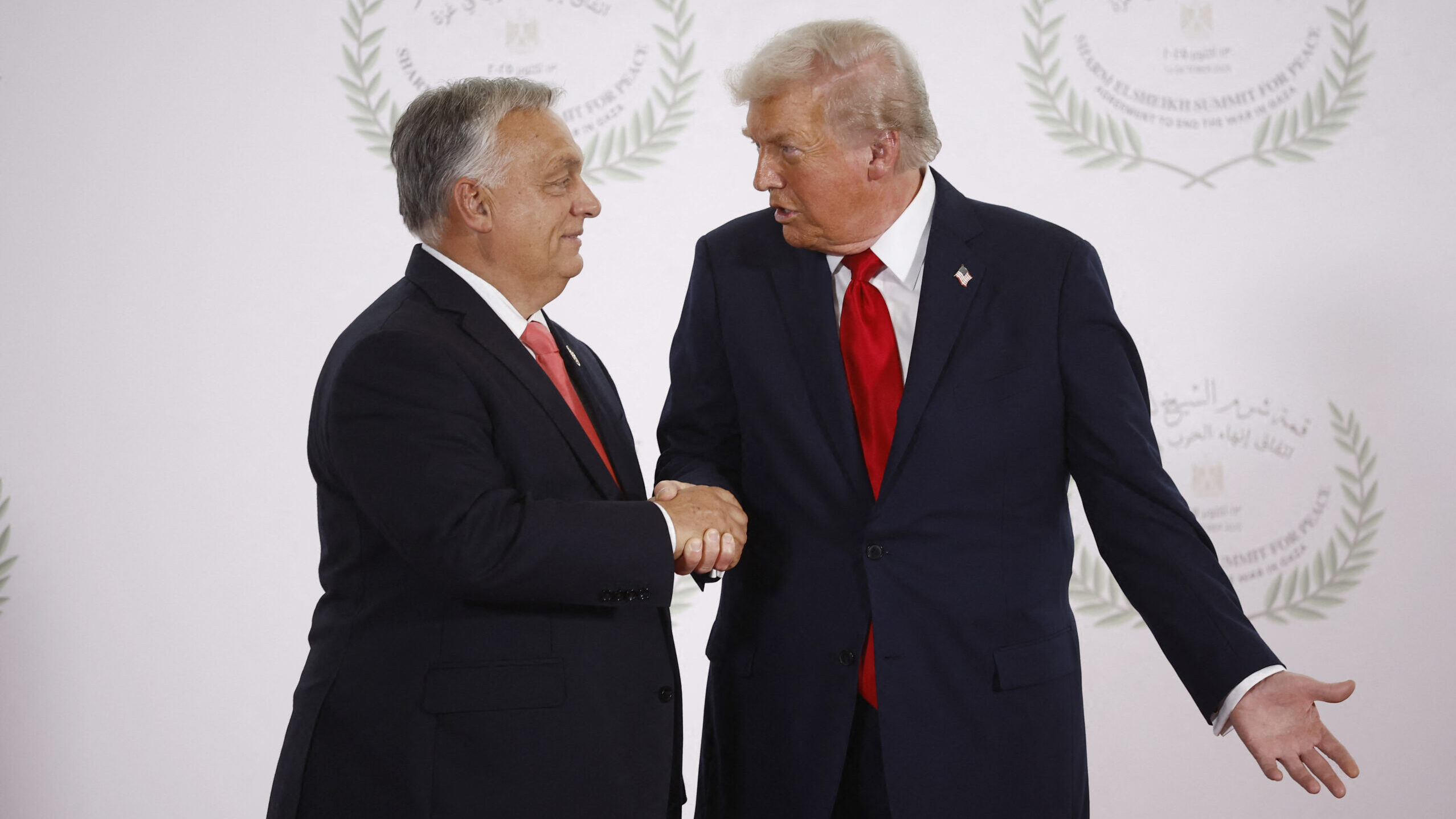
President Donald Trump has announced that Washington is ready to use the ‘full economic might’ of the United States to strengthen Hungary’s economy if needed, two days ahead of the country’s most important election in its post-communist history.
In a post on his Truth Social platform, Trump added that Washington is ready to invest in the future prosperity of Hungary under the ‘continued leadership’ of Prime Minister Viktor Orbán.
There has been constant talk of an agreement between Orbán and Trump during the former’s visit to Washington, DC, last November, which the Hungarian prime minister described as an ‘American protective financial shield’ to counter external political and speculative pressure on the country’s economy.
🚨BREAKING🚨
— Hungarian Conservative (@hu_conservative) April 10, 2026
🇺🇸Trump says Washington is ready to use the ‘full economic might’ of US to strengthem Hungary’s economy if needed to tackle EU pressure on Orbán
🛡️There has been constant talks of an American ‘protective finacial shield’ for Hungary since Orbán’s US visit back in… https://t.co/oSr0H5qdST
Trump signalled in his recent post that this agreement is most likely a currency swap deal, which had already been floated earlier but was rejected by the president himself in December 2025. In February 2026, during his visit to Budapest, Secretary of State Marco Rubio said that ‘Washington would take steps if Hungary faced financial or economic challenges due to external pressure,’ reigniting speculation over the existence of such a deal.
While stating that the US is ready to use its economic power to boost Hungary’s economy, Trump added: ‘as we have for our great allies in the past,’ a clear reference to the currency swap agreement reached with Argentinian President Javier Milei in autumn 2025, ahead of the midterm elections in the Latin American country. Milei’s party went on to win a landslide victory, and has since repaid the funds used under the agreement.
A currency swap agreement is a financial instrument typically used when one of the participating countries faces a severe economic crisis or a speculative attack on its currency. Under such arrangements, the two parties temporarily exchange their currencies at a predetermined rate and amount, helping to address shortages of foreign currency. This mechanism can prevent default on foreign-currency-denominated debt, strengthen central bank reserves, and enhance resilience to sudden exchange-rate fluctuations.
Hungary has been under sustained financial and political pressure from the European Union since 2022, after the European Commission froze part of the country’s EU funding, citing rule-of-law concerns, the need for judicial reforms, and issues related to media and academic freedom. The Article 7 procedure has been ongoing against Hungary since 2018, which could ultimately result in the suspension of its voting rights in EU decision-making. The country is also subject to a daily €1 million fine for non-compliance with EU migration policy.
Orbán’s government accuses the Commission of using funding as leverage to pressure Hungary for prioritizing national sovereignty and opposing the EU mainstream on key issues, including migration, gender ideology, family policy, and foreign policy.
Partly due to EU financial and political pressure, as well as the multiple crises triggered first by the COVID-19 pandemic and then by the war in Ukraine, Hungary’s economy has been stagnating for the third consecutive year as the country approaches what is widely seen as its most significant election in recent history. After 16 years in power, Orbán faces his first real challenger in former Fidesz insider Péter Magyar and the Tisza Party, which campaigns on a pro-EU platform and promises to unlock approximately €17 billion in frozen EU funds.
The campaign has been marked by scandals and an unprecedented level of information and intelligence warfare, with two sharply opposed political narratives clashing. The opposition, supported by Western mainstream media and, according to the government, certain Western intelligence-linked actors, accuses Orbán of cooperating with Russia to remain in power. The government, in turn, claims that the EU is backing Magyar in an effort to oust Orbán.
Earlier this week, US Vice President JD Vance visited Hungary on the occasion of the American–Hungarian Day of Friendship. During the visit, Vance praised Orbán’s leadership and endorsed the prime minister, stating that the two countries form a ‘civilizational alliance’. The vice president also referred to what he described as ‘the worst example of foreign interference I’ve ever seen’ regarding the upcoming election, accusing Brussels of attempting to weaken Hungary economically.
Péter Magyar, in contrast, accused Washington of interfering on the side of Orbán ahead of the vote scheduled for Sunday.
Related articles:
At a time when public debate is increasingly polarized and superficial, Hungarian Conservative remains committed to depth, intellectual honesty, and independent conservative thought.
Producing high-quality journalism requires resources. Your contribution helps us expand our coverage, reach new audiences, and keep our content accessible.

Please consider supporting our mission.