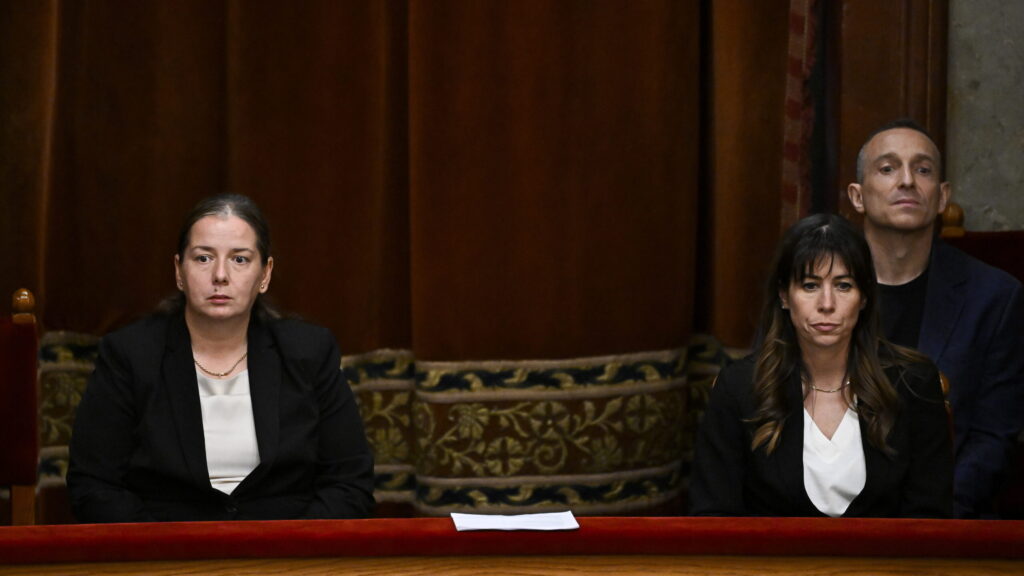
Hungary’s Parliament approved the so-called 17th amendment to the Fundamental Law, designed primarily to remove President Tamás Sulyok from office, on Monday, 13 July. All 139 MPs present from the governing Tisza Party voted in favour of the proposal, while six MPs from the hard-right Our Homeland (Mi Hazánk) voted against it. The former governing coalition parties, Fidesz and KDNP, boycotted the sitting.
Under the amendment’s final text—or, more precisely, one of its transitional provisions—the serving president’s mandate ends on the day after the amendment enters into force. President Sulyok, who was elected in 2024 for a five-year term, remains in office until the text is signed, promulgated, and takes effect. He may refer it to the Constitutional Court for a procedural review. Under the Fundamental Law, Sulyok has five days to take either course of action.
Sulyok has argued that removing a president for political reasons through a tailor-made constitutional provision is unprecedented in Europe and violates democracy, the separation of powers, and the rule of law. Prime Minister Péter Magyar, by contrast, said voters had given Tisza a mandate to dismantle the system established during former prime minister Viktor Orbán’s 16 years in power. ‘It would be a betrayal of the Hungarian nation if we did not touch this constitution,’ he told Parliament.
The amendment also contains several other highly controversial provisions that, compared with European and broader Western constitutional traditions, are largely without precedent. It retrospectively bars anyone who has served as an MP for 12 years, or been elected three times, from standing again. That restriction affects only opposition politicians, as all Tisza MPs, including Magyar, began their first parliamentary terms in May 2026.
The term limit prompted Fidesz parliamentary group leader Gergely Gulyás to resign on Monday, saying he could no longer credibly lead the opposition group while constitutionally barred from contesting a future election.
A third central measure gives constitutional status to the National Asset Recovery and Protection Office (NVVH), tasked with tracing and recovering unlawfully managed public assets. Separate legislation grants the new body extensive investigative, supervisory, and prosecutorial powers, establishing an unusually powerful institution with few precedents in either modern Hungarian or European constitutional systems.
The overhaul also affects several other constitutional institutions. It restores a retirement age of 70 for Constitutional Court judges, allows the Court to elect its own president, and revives broader constitutional review of tax and budget laws. It strengthens judicial self-government, allows judges to seek the removal of the presidents of the Kúria and the National Office for the Judiciary, reduces the range of cardinal laws, abolishes the Budget Council’s veto, broadens constitutional protection for public assets, restores the term megye (county) in place of vármegye, abolishes the title főispán (county governor), and dissolves the Parliamentary Guard.
Orbán, who left the country before the vote to travel to the United States to attend the FIFA World Cup semi-finals and final, reacted to the amendment’s adoption by posting a photograph of Péter Magyar captioned: ‘Democratic Hungary: 1990–2026’. Fidesz and KDNP MPs described the amendment as the ‘beginning of tyranny’.
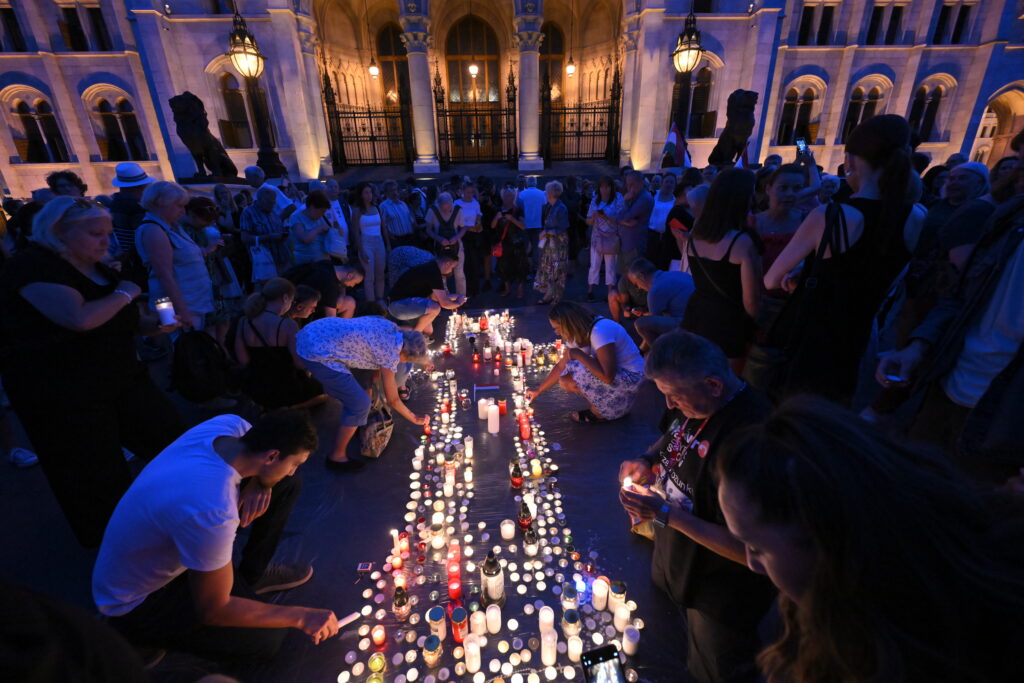
Later on Monday evening, opponents of the amendment gathered for a candlelight demonstration on Kossuth Lajos Square in front of Parliament. The silent protest, initiated by KözTér presenter Dániel Kurucz and political influencer Fruzsina Skrabski, began at 8.30pm. Participants arranged candles into the shape of a cross, prayed for Hungary, and sang patriotic songs. Former minister and Fidesz politician Tibor Navracsics attended to express his sympathy. A brief exchange of hostile chants broke out with several counter-demonstrators, whom police escorted away, but no serious incidents were reported.
The amendment places Sulyok in an extraordinary constitutional position. He must either sign the amendment that will end his own mandate the following day or refuse to complete the promulgation process, thereby breaching his constitutional duty and potentially triggering impeachment proceedings, which would likewise result in the termination of his mandate, albeit at a later stage.
Once Sulyok’s mandate ends, Parliament must elect his successor within 30 days, with the Speaker serving as acting head of state in the interim. Candidates require written nominations from at least one-fifth of MPs—currently 40—and the election is held by secret ballot. A candidate needs a two-thirds majority of all MPs, or 133 votes, in the first round; if nobody reaches that threshold, the two leading candidates proceed to a runoff decided by a simple majority of votes cast.
Tisza’s constitutional supermajority of 139 MPs could therefore elect the party’s preferred candidate without opposition support. The successor’s transitional mandate will last until a new constitution enters into force, but for no longer than five years. Prime Minister Magyar has repeatedly said that he would prefer the president to be directly elected, a change that would give greater democratic legitimacy to the largely ceremonial office.
Related articles:
At a time when public debate is increasingly polarized and superficial, Hungarian Conservative remains committed to depth, intellectual honesty, and independent conservative thought.
Producing high-quality journalism requires resources. Your contribution helps us expand our coverage, reach new audiences, and keep our content accessible.

Please consider supporting our mission.