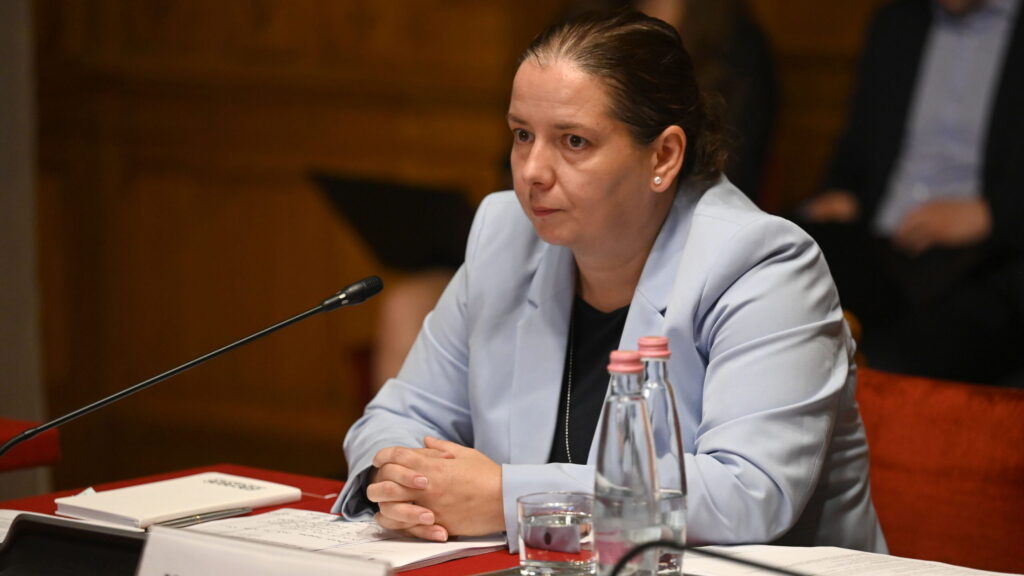
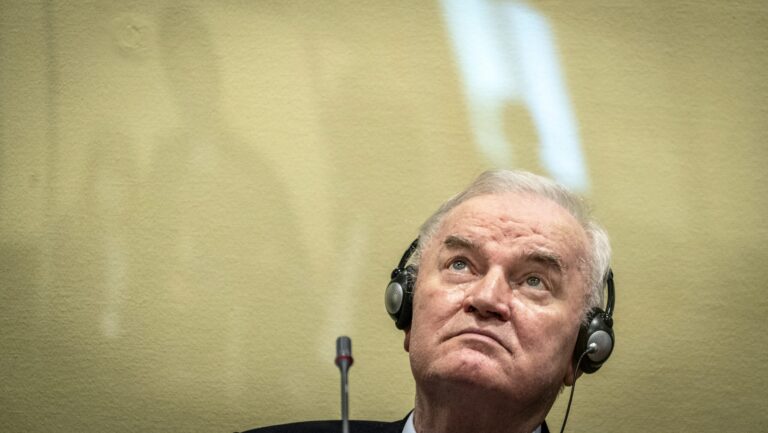
Gergely Gulyás resigned on Monday, 13 July, as leader of Fidesz’s parliamentary group, saying that the Tisza government’s proposed limit on parliamentary service would prevent him from contesting Hungary’s next general election.
Gulyás, an MP since 2010, had led the former governing party’s parliamentary group for barely two months after spending years as the minister heading former prime minister Viktor Orbán’s office. He remains a member of Parliament, however. ‘The largest opposition group cannot have a leader who, in constitutional terms, cannot be its leader, and therefore I resign as parliamentary group leader,’ he said during Monday’s extraordinary sitting.
The proposed bill would prevent anyone who has served as an MP for at least 12 years or been elected three times from standing again. Because the previous service would count, Gulyás would be excluded from standing in 2030. He argued that the measure was designed to remove much of the opposition from future electoral competition.
The term limit is one of the most controversial elements of the 17th amendment to the Fundamental Law, the constitutional reform package dubbed ‘Operation Purgatory’ by Prime Minister Péter Magyar. The package would give constitutional status to the so-called National Asset Recovery and Protection Office, prematurely terminate President Tamás Sulyok’s mandate, and reshape the Constitutional Court, judicial leadership, and institutional vetoes.
The Tisza government presents the overhaul as an effort to recover public assets and dismantle entrenched structures after 16 years of Fidesz rule. Gulyás has called it ‘the end of constitutional democracy and the beginning of tyranny’. KDNP group leader Bence Rétvári called Monday a ‘day of mourning for Hungarian democracy’, while pro-Orbán influencer Fruzsina Skrabski organized a candlelight demonstration in the event that the amendment passed.
Friend, Godfather, Political Nemesis
Reacting to Gulyás’s resignation, Prime Minister Péter Magyar said sarcastically during his speech opening Monday’s parliamentary session: ‘Today is a great day: from today, you are a free man.’ Magyar had learned of the announcement through interjections from the chamber.
The remark highlighted the unusual personal relationship behind one of the new Parliament’s most iconic political pairings. Magyar and Gulyás met while studying law at Pázmány Péter Catholic University, and their friendship deepened during a period of study in Hamburg in 2002, when they lived together. Gulyás introduced Magyar to Judit Varga—who later served as justice minister under Orbán—in 2005, subsequently acted as a witness at their wedding, and became godfather to one of their sons. They also provided legal assistance following the 2006 police violence in Budapest.
‘What is happening now has nothing to do with me. If it does, however, they will be very grateful to me’
When the friendship ended is disputed. Gulyás has said that Magyar informed him in writing in 2018 that it was over, while Magyar and media reports have pointed to later social contact. Hungarian outlet Direkt36 reported that the relationship deteriorated during Magyar and Varga’s divorce, when Gulyás sided with Varga, before collapsing publicly after Magyar broke with Fidesz in 2024.
During Magyar’s political emergence that April, Gulyás made one of the campaign’s most cryptic remarks. Asked whether he had discussed the ‘Péter Magyar phenomenon’ with Viktor Orbán, and whether Orbán’s confidence in him had changed, Gulyás replied: ‘What is happening now has nothing to do with me. If it does, however, they will be very grateful to me. Everyone should remember that.’
His office later clarified that he had played no role in Magyar’s entry into public life, adding that, had he done so, ‘everyone on the right would be very grateful to me soon’. Gulyás never explained why. The comment acquired an unintended irony after Magyar defeated Fidesz and became prime minister.
Their history has repeatedly entered parliamentary debate, making the pair one of the most memorable political dynamics in recent Hungarian politics. One of the tensest confrontations between them occurred on 26 May, when Gulyás reacted with outrage to Magyar’s broader accusations. ‘You know perfectly well that I have never stolen a single penny,’ Gulyás declared.
Later that day, during another tense exchange involving their shared memories of the 2006 police crackdown in Budapest, Magyar crossed the chamber to challenge Gulyás directly and exchange a few words with him in private—highly unusual conduct in Hungarian parliamentary history.
Other sittings have featured first-name remarks and references to their shared youth, although not necessarily in a positive or nostalgic way. On one occasion, when a member of the opposition faction voted against the party line, Magyar jokingly asked: ‘Gergő, was it you?’
The End of the Bromance—or the Beginning of a Redemption Arc?
Gulyás also became central to Magyar’s social-media-driven ‘absolute cinema’ communication style in Parliament. Their interruptions, first-name exchanges, and face-to-face confrontations produced clips that could easily be repackaged for online audiences. Analysts have described Magyar’s approach as ‘influencer governance’ and ‘parliamentary theatre’, in which visible opponents provide both narrative tension and shareable content.
Gulyás was especially effective in that probably unwanted role because their shared history gave procedural disputes an immediate personal dimension, driving engagement and algorithmic reach. Their relationship has already become a broader trend on Hungarian social media, framing their parliamentary confontrations as an ironic political ‘bromance’.
The trend has appeared explicitly on Threads and Reddit, where users have described the pair as a ‘bromance’ or ‘frenemies’, while others have joked that the two are secretly cooperating to accelerate Fidesz’s already declining support. Memes, edited videos, fan fiction, and increasingly elaborate theories imagine the pair eventually overcoming their past grievances, sharing power, or simply enjoying each other’s company once the day’s political theatre is over.
‘Their relationship has already become a broader trend on Hungarian social media’
The fascination has also produced more elaborate online mythology. Some users portray Gulyás as Magyar’s secret informant inside Fidesz, while others speculate that their public hostility is staged, that Gulyás covertly assisted Magyar’s rise, or that he will eventually defect in a political ‘redemption arc’. The latter theory gained renewed attention after Magyar called Gulyás ‘a free man’ following his resignation. Some users interpreted the move as the first step in Gulyás breaking with Fidesz, viewing it as the beginning of the long-speculated redemption arc.
Whether that ultimately proves to be the case remains to be seen. What is certain, however, is that the ‘bromance’ is over—at least in its current dynamics. Who will succeed Gulyás remains unclear, as no successor had been announced at the time of publication. Gulyás appointed seven deputy group leaders in April—Barbara Hegedűs, Zsófia Koncz, János Bencsik, Alpár Gyopáros, Balázs Németh, Gábor Szűcs, and Róbert Zsigó—making them the most obvious pool of potential candidates. Németh and Szűcs have appeared in informal speculation, but neither has been identified as the Fidesz favourite in credible reporting.
Related articles:
At a time when public debate is increasingly polarized and superficial, Hungarian Conservative remains committed to depth, intellectual honesty, and independent conservative thought.
Producing high-quality journalism requires resources. Your contribution helps us expand our coverage, reach new audiences, and keep our content accessible.

Please consider supporting our mission.