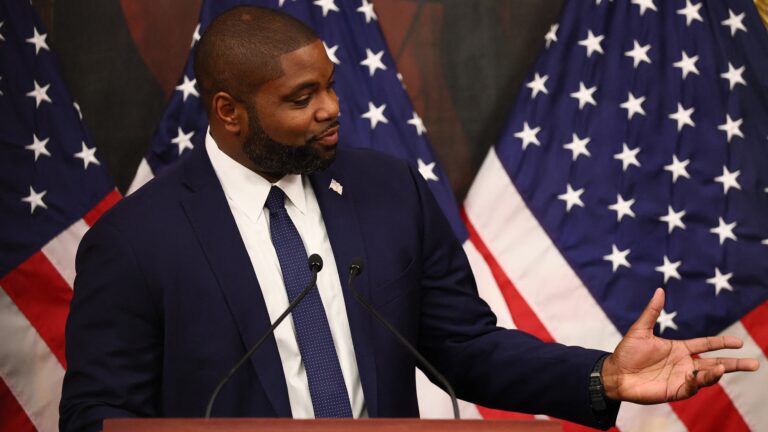
FIFA has cleared American striker Folarin Balogun to play in Monday’s World Cup Round of 16 match against Belgium in Seattle, suspending the automatic one-match ban he received after being sent off in the previous round’s 2–0 victory over Bosnia and Herzegovina.
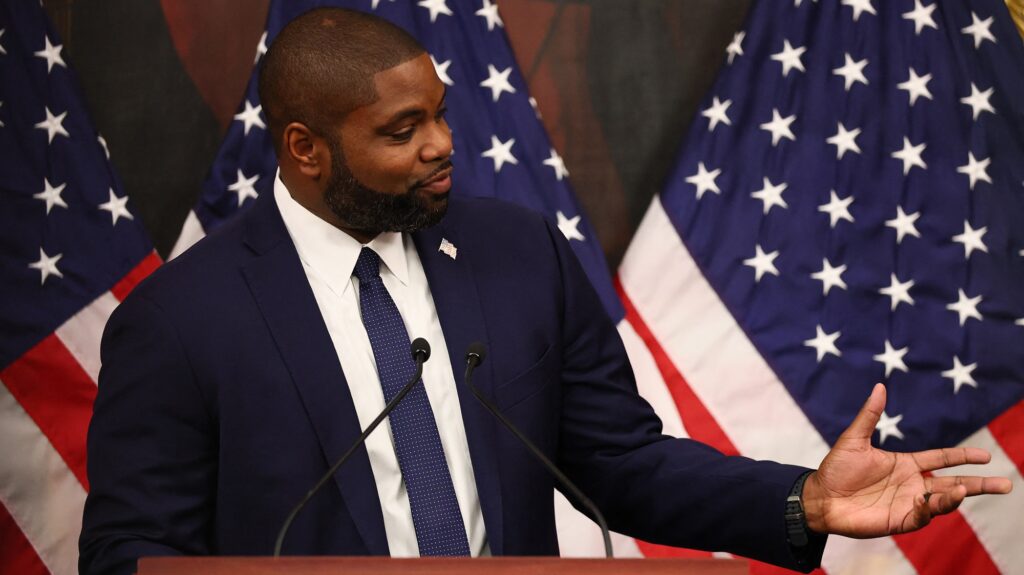
The decision, made after US President Donald Trump personally urged FIFA President Gianni Infantino to review the case, has triggered a major dispute over refereeing consistency, disciplinary rules, and political influence at the tournament.
The European Union, which is not generally known for intervening in football matters, also reacted to the decision, criticizing political interference in professional sport—and, more likely, taking the opportunity to criticize the Trump administration at a time when relations between Brussels and Washington have remained strained since the president returned to the White House in 2025.
In a post on X on Monday, EU Commissioner for Intergenerational Fairness, Youth, Culture and Sport Glenn Micallef said sporting decisions ‘belong to sporting bodies, not politicians’, adding that, as a football fan himself, he believed FIFA had made the wrong decision in Balogun’s case. The Commission also demanded fair play and transparent competition regarding the case.
FIFA’s official explanation is that Balogun’s one-match ban was not cancelled but suspended for a one-year probationary period under Article 27 of the FIFA Disciplinary Code. The rule allows a judicial body to ‘fully or partially suspend the implementation of a disciplinary measure’, while making the player liable to serve the sanction if he commits a similar offence during the probationary period. The red card, therefore, remains on his record, but he is free to face Belgium.
Trump welcomed the decision, thanking FIFA for ‘doing what was right’ and reversing what he called ‘a great injustice’. US coach Mauricio Pochettino also praised the outcome, arguing that Balogun’s challenge against Bosnia and Herzegovina never warranted a red card and that the United States had already been punished by playing the final half-hour with ten men. Christian Pulisic similarly said there had been ‘zero intent’ in the challenge.
‘UEFA’s own disciplinary practice undermines its claim that the decision is “unprecedented”’
UEFA also reacted, accusing FIFA of having ‘crossed a red line’ and describing the ruling as ‘unprecedented, incomprehensible and unjustifiable’. European football’s governing body argued that the automatic one-match suspension following a red card is ‘not discretionary’ and warned that FIFA’s decision undermines the certainty of the rules in the middle of the tournament. Belgium’s football association has also appealed, arguing that the decision contradicts both the FIFA Disciplinary Code and the World Cup regulations.
However, UEFA’s own disciplinary practice undermines its claim that the decision is ‘unprecedented’. At Euro 2024, England’s Jude Bellingham was fined €30,000 and given a suspended one-match ban after making a lewd gesture following the match against Slovakia. UEFA’s disciplinary body ruled that the suspension would not take immediate effect but would instead be subject to a one-year probationary period.
Although the two cases are not identical—Bellingham’s sanction related to misconduct rather than an automatic suspension following a red card—the precedent nevertheless complicates UEFA’s sweeping assertion that suspended bans are alien to elite tournament discipline.
There is also an older World Cup precedent that undercuts claims that FIFA has never made such an exception. At the 1962 World Cup in Chile, Brazil great Garrincha was sent off late in the semi-final against the hosts after retaliating against Eladio Rojas, apparently ruling him out of the final against Czechoslovakia. FIFA’s own account says his dismissal left him suspended, but that Chilean supporters and President Jorge Alessandri backed a successful petition for him to be allowed to play. FIFA’s disciplinary authorities ultimately let Garrincha off, he started the final, and Brazil beat Czechoslovakia 3–1 to retain the trophy.
The comparison is, nevertheless, also imperfect. Formal red cards had not yet been introduced, and disciplinary procedures were considerably less codified than under the modern regulatory framework.
The clearest recent example is Cristiano Ronaldo in November 2025. After being sent off for elbowing Ireland defender Dara O’Shea in a World Cup qualifier, Ronaldo was given a three-match ban. He served one match, while FIFA suspended the remaining two matches under a one-year probationary period, explicitly citing Article 27 of the FIFA Disciplinary Code. That allowed him to be available for Portugal’s opening World Cup matches.
‘The clearest recent example is Cristiano Ronaldo in November 2025’
It is also worth examining the original red card that led to Balogun’s dismissal. The American striker was sent off following a VAR review for stepping on Tarik Muharemović’s ankle—a serious offence if judged solely by its potential to cause injury. However, the footage also suggests the contact was accidental, as Muharemović approached from behind while both players were focused on the ball.
Many compared the incident to Argentina’s opening group-stage match against Algeria, in which Lionel Messi escaped both a red card and a yellow card after appearing to step on Algerian captain Aïssa Mandi’s calf with his studs in a similar challenge. ESPN pundit Ale Moreno described Messi’s challenge as ‘100 per cent’ worthy of a red card, arguing that the Argentine’s movement suggested greater awareness of the contact than Balogun’s. The Messi incident had already sparked fierce debate over football’s consistency and credibility, reviving accusations that FIFA has favoured Argentina because of Messi during several tournaments.
Nevertheless, FIFA’s latest decision has also renewed criticism of Infantino’s perceived closeness to Trump and long-standing allegations of political influence within the governing body. The FIFA president presented Trump with the inaugural ‘FIFA Peace Prize – Football Unites the World’ at the 2026 World Cup draw in Washington, a move later challenged by around 50 Members of the European Parliament, who urged FIFA’s Ethics Committee to investigate whether the award breached the organization’s political neutrality rules.
Co-hosted by Mexico, Canada, and the United States under Trump’s presidency, the World Cup had already come under heightened scrutiny before it began, with critics accusing it of becoming increasingly politicized and suggesting Trump would seek to place himself at the centre of attention rather than the football itself. So far, however, the opposite has largely been true. The president has not attended any of the American team’s matches and is not expected to do so unless the United States reach the final, where he is scheduled to present the trophy to the winners.
Monday night’s match nevertheless promises to be a compelling contest, with bookmakers making it a close tie while leaning slightly towards the United States following Balogun’s reprieve. He scored his third goal of the tournament against Bosnia and Herzegovina before being sent off, drawing level with Landon Donovan for the second-most goals scored by an American at a single World Cup.
Belgium, however, still possess greater knockout-stage pedigree and individual experience, even if the current side is widely regarded as less formidable than the so-called ‘Golden Generation’ led by Eden Hazard, Dries Mertens, Romelu Lukaku, and other stars, which finished third at the 2018 World Cup in Russia.
Related articles:
At a time when public debate is increasingly polarized and superficial, Hungarian Conservative remains committed to depth, intellectual honesty, and independent conservative thought.
Producing high-quality journalism requires resources. Your contribution helps us expand our coverage, reach new audiences, and keep our content accessible.

Please consider supporting our mission.