The Family Formation and the Future Conference, a two-day gathering of conservative experts, policymakers, and intellectuals discussing the very foundations of a stable and flourishing civilization, was organized for the second time between 31 March and 1 April in Budapest, Hungary.
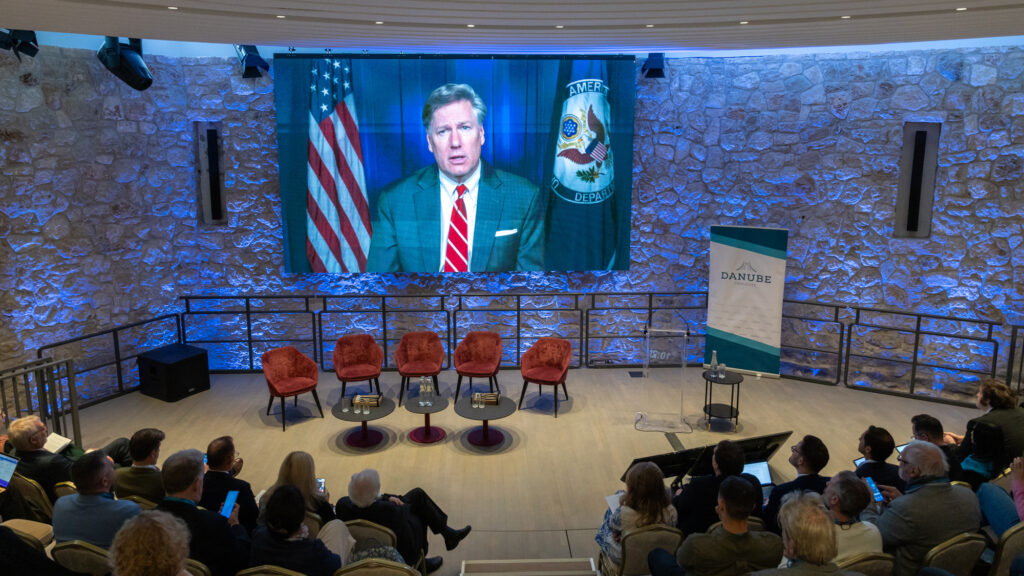
Hosted by the Budapest-based think tank Danube Institute, the first day of the high-profile summit was opened by US Deputy Secretary of State Christopher Landau via video message, who first thanked the organizers for making the event possible. ‘It takes clarity and courage to discuss such issues,’ he said, identifying migration and declining birth rates as ‘an existential threat to societies on both sides of the Atlantic’. He cautioned that without strong families, societies risk losing ‘the will to protect the institutions that carried us forward’, adding that ‘a nation that weakens the family, weakens itself’.
Referencing US Secretary of State Marco Rubio, Landau stressed that ‘strong families are essential for the long-term vitality and security of any nation’, linking this principle to an ‘America First’ approach that seeks to place families back at the centre of policymaking while rejecting what he called ‘global illusions’. He also highlighted the importance of cooperation with ‘courageous countries like Hungary’, arguing that tradition ‘is not a burden but a heritage to be proud of’, and that ‘family is where a people remembers who it is and what lies ahead’.
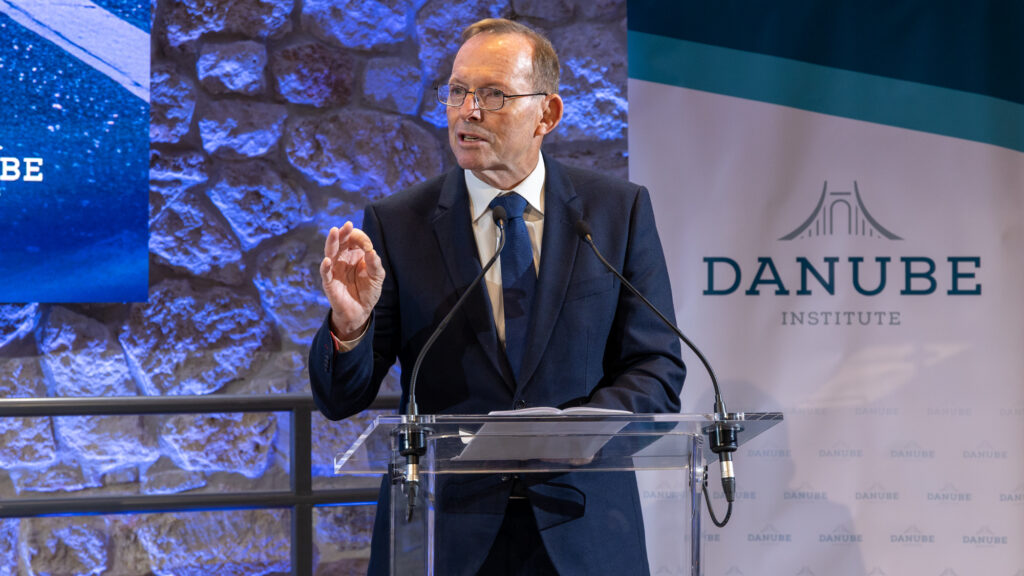
A keynote speech by former Australian Prime Minister Tony Abbott focused on the relationship between demographic decline and migration, arguing that Western societies are increasingly substituting one for the other. ‘What could be a bigger issue than population policy?’ he asked, warning that ‘every Western country is in the grip of an existential crisis’.
Abbott pointed to persistently low fertility rates across the developed world, noting that ‘France, the US, and Australia stand at around 1.6; Britain at 1.55; Italy at 1.2; and Spain at 1.1’. While Hungary had temporarily raised its birth rate through targeted family policies, he noted that it has ‘fallen back to around 1.3’, suggesting that ‘societal morale matters as much as economic incentives’.
‘Across much of the West, migration has increasingly replaced having children’
At the same time, he argued, migration has reached unprecedented levels. ‘Across much of the West, migration has increasingly replaced having children,’ Abbott said, citing sharp increases in net migration in the United Kingdom, the United States, and Australia in recent years. While acknowledging that migration can bring economic and cultural benefits, he warned that large-scale immigration, combined with multiculturalism, risks ‘creating a nation of tribes’ and undermining social cohesion.
‘The greatest act of faith—in yourself, your family, your country, and your culture—is to seek renewal through having children,’ Abbott stated, concluding that ‘the best migrants are our own children’.
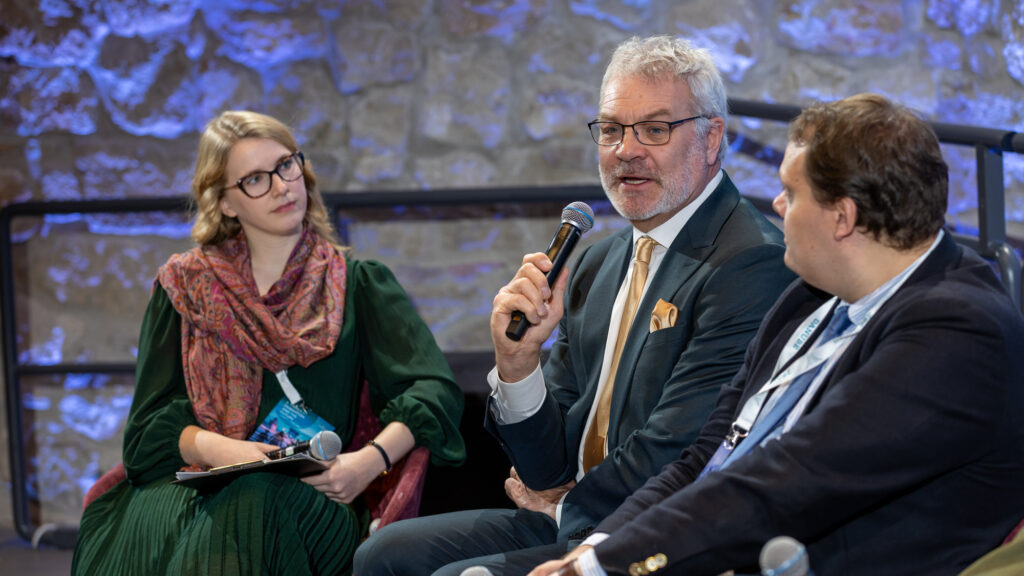
The conference’s first panel discussion, titled ‘Conservative Visions of Heritage’, examined how cultural inheritance shapes demographic and social outcomes. Moderated by Chief Executive Advisor at the Danube Institute Noémi Pálfalvi, the panel featured Mr Abbott; Distinguished Visiting Fellow at the Danube Institute Eduard Habsburg; Executive Director of the Danube Institute István Kiss; and Director of the B Kenneth Simon Center for American Studies at The Heritage Foundation Scott Yenor.
Speakers emphasized the centrality of family, faith, and national identity in sustaining Western societies. István Kiss argued that ‘families are the cornerstone of societies’ and highlighted Hungary’s policy approach, noting that the country spends around 5 per cent of its GDP on family support measures. ‘Learning from the Hungarian experience might be useful for other countries,’ he added.
Eduard Habsburg underlined Hungary’s international reputation in this field, stating that ‘everybody in the Western world knows that Hungary stands for families.’ He warned, however, that the institution of the family is under increasing pressure, arguing that ‘if we do not know our roots, we can easily lose ourselves.’
Tony Abbott, returning to the theme of cultural continuity, argued that ‘any culture or nation that wishes to flourish has to know its history’, while also criticizing what he described as a growing reluctance in parts of the West to embrace national heritage. ‘A sense of shame about history in the Anglo-Saxon world does not help preserve cultural heritage,’ he said, urging societies to reclaim their past ‘standing upright, with pride’. He added that while governments can support families materially, ‘government can provide money, but not love.’
Scott Yenor described the challenge of reconciling tradition with modern social realities. ‘The question of heritage is extremely complicated,’ he said, pointing to the difficulty of both preserving inherited traditions and rebuilding those that have been eroded. Comparing the issue to the renovation of Buda Castle, he argued that societies must find ways to ‘recover families as they were in the past’ while addressing the ‘bad heritage’ of recent decades.
Yenor also noted that parts of the American conservative movement are increasingly looking to Hungary as a policy model. ‘A lot of the Heritage Foundation’s work is implementing Hungarian policies in an American context,’ he said, adding that businesses also have a role to play in supporting family formation.
Related articles:
At a time when public debate is increasingly polarized and superficial, Hungarian Conservative remains committed to depth, intellectual honesty, and independent conservative thought.
Producing high-quality journalism requires resources. Your contribution helps us expand our coverage, reach new audiences, and keep our content accessible.

Please consider supporting our mission.