While Prime Minister Péter Magyar and the Hungarian government have launched a full-scale victory campaign at home celebrating ‘bringing home’ billions of euros in frozen EU funds, European Commission officials are simultaneously attempting to temper expectations, insisting that no actual disbursement decision has yet been taken and that Hungary still faces significant legal and procedural hurdles before receiving the money.
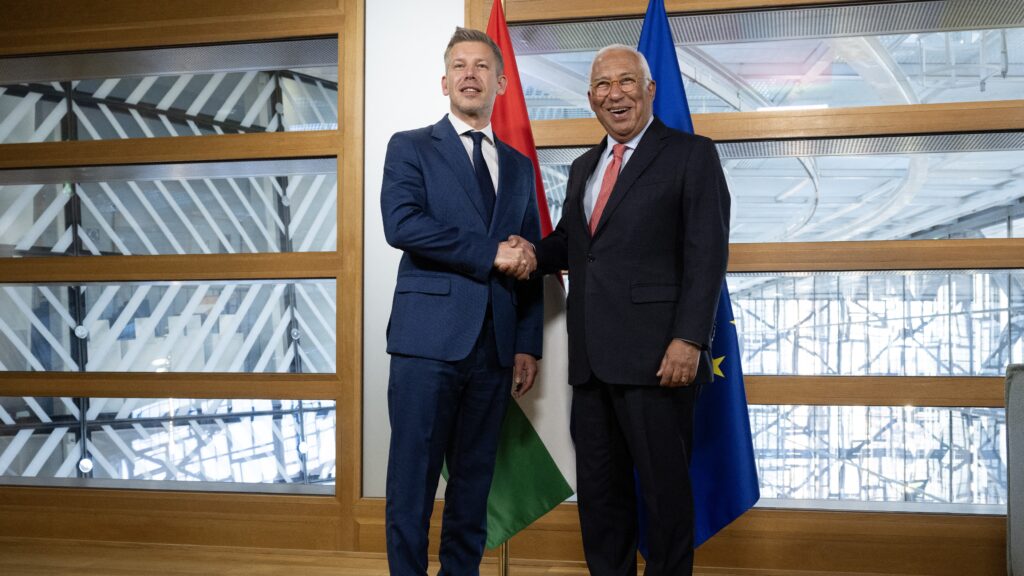
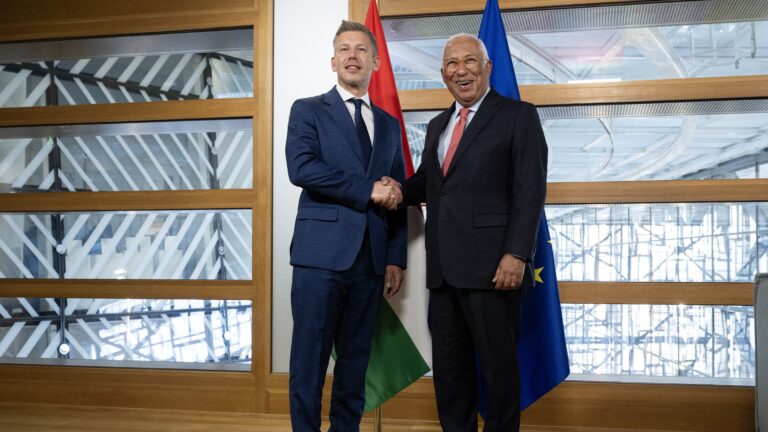
On Friday, 29 May, Magyar and European Commission President Ursula von der Leyen announced in Brussels what both described as a ‘historic agreement’ that could pave the way for Hungary to secure €16.4 billion in currently frozen EU funding.
‘We promised it, and we delivered. We have secured 6,000 billion forints in EU funding for the Hungarian people,’ Magyar declared in a widely shared social media post following the talks.
In another post published shortly afterwards, Magyar claimed that ‘the only price’ for obtaining the money had been ‘the complete elimination of Orbán-era corruption’.
Foreign Minister Anita Orbán, in a similarly triumphant tone, wrote: ‘We brought home the EU funds,’ describing the agreement as the beginning of ‘Hungary’s reconstruction and the strengthening of public services, living standards, and the competitiveness of small and medium-sized enterprises.’
Yet while Budapest has presented the agreement as a near-complete victory, European Commission officials are privately describing the situation in considerably more cautious terms.
According to a detailed report by POLITICO Brussels, senior Commission officials stressed that Friday’s agreement was not a formal decision to release the funds, but rather a political understanding regarding the reforms and investments Hungary would still need to complete before any payments can begin.
‘We haven’t agreed to disburse the funds’
‘We haven’t agreed to disburse the funds,’ a senior Commission official told the outlet. ‘We’ve agreed on a list of commitments which, if completed by 31 Aug, will trigger the payment of those funds.’ The distinction is politically significant.
According to Commission officials cited by POLITICO Brussels, Hungary must still formally revise and submit its recovery plan, obtain Commission approval, secure endorsement from EU member states, and complete the agreed reforms before any disbursement can take place.
‘There is a political understanding on the landing zone,’ another Commission official said, while stressing that the agreement still needs to be translated into formal legal decisions.
A post by Ursula von der Leyen later on Friday also appeared to confirm this, as the Commission president wrote: ‘We can finally unlock €10 billion, subject to the reforms adopted and investments implemented.’
If all conditions are ultimately fulfilled, Hungary could gain access to up to €16.4 billion in funding, including €10 billion from the EU’s Recovery and Resilience Facility, €4.2 billion in cohesion funding, and €2.2 billion linked to academic freedom reforms.
At the same time, officials noted that roughly €2 billion in cohesion funding has already been permanently lost due to expired deadlines and cannot be recovered. More than €530 million also remains frozen because of ongoing disputes related to migration, asylum, and LGBTQ issues, although Magyar recently signalled willingness to address the Commission’s concerns regarding Hungary’s asylum application system.
Many of the key conditions—including anti-corruption reforms, judicial independence measures, public procurement safeguards, and oversight mechanisms—are largely based on the same EU conditionality framework and ‘super milestones’ originally imposed during the Orbán governments.
‘What has primarily changed is the Commission’s apparent belief that the new Hungarian government is politically willing to implement reforms’
What has primarily changed is the Commission’s apparent belief that the new Hungarian government is politically willing to implement reforms that Orbán had resisted for years. That, and the contrast between the communication strategies of the Tisza Party and Brussels was also reflected in one viral moment during the joint press conference.
At one point, Magyar joked that if ‘there’s this much money to be received here’, he would gladly come to Brussels more often. Von der Leyen laughed at the remark while also subtly signalling that the money was not yet simply waiting to be collected.
The scene was also markedly different from the atmosphere during Orbán’s tenure, especially in his final years in office, when meetings with EU leaders—particularly with von der Leyen—often unfolded in openly confrontational tones.
Orbán himself reacted sharply to the deal, accusing the government of ‘concealing the true political price’ of the agreement. While acknowledging that Magyar had reached a political understanding on the return of previously frozen EU funds, Orbán argued that the public still did not know ‘what he promised in exchange’.
‘We know this. What we do not know is what he promised in exchange,’ Orbán wrote in a Facebook post, demanding that the government immediately disclose what he described as the ‘secret part’ of the deal, pointing to potential concessions on migration, LGBTQ issues, taxation, utility price caps, protected prices, and pensions.
‘It is time to stop the deception and honestly tell Hungarians what was handed over from Hungarian interests and from the rights of Hungarians to the President of the Commission,’ Orbán wrote.
Related articles:
At a time when public debate is increasingly polarized and superficial, Hungarian Conservative remains committed to depth, intellectual honesty, and independent conservative thought.
Producing high-quality journalism requires resources. Your contribution helps us expand our coverage, reach new audiences, and keep our content accessible.

Please consider supporting our mission.