‘When in the Course of human events…’ These are the opening words of the document we celebrate today. The final wording of the Declaration of Independence was adopted by the Continental Congress exactly a quarter of a millennium ago, on 4 July 1776.
Those grandiose words came from the mind of Thomas Jefferson, a 33-year-old attorney and delegate representing the Commonwealth of Virginia in the Continental Congress. As most of our readers most likely know, he is the primary author behind one of history’s most important texts ever written.
In the subsequent lines, he goes on to give the philosophical foundation of human rights, then a scathing indictment of King George III, the reigning British Monarch, for all the wrongs he did against the people of the 13 American colonies represented in the Continental Congress.
Of the most severe offences of the King were abusing his power of Assent to Laws required for colonial laws to take effect—the first grievance Jefferson enumerates—denying the right to a jury trial for certain individuals, taxation without representation, and the British Army’s attempts to crush the American Revolution, ongoing for over a year at the time the Declaration of Independence was adopted.
‘We hold these truths to be self-evident.’
This sentence, written before the list of grievances against King George, was an edit made by Benjamin Franklin of Pennsylvania, one of the Committee of Five, the group of Congressmen tasked with the awesome duty of explaining the philosophical origins of human rights that the Crown was violating, and also telling the Crown the justifications for breaking away and forming an independent nation.
Jefferson originally wrote: ‘We hold these truths to be sacred and undeniable.’ However, Franklin thought that this was an argument that appeals to faith and the divine, when the document ought to appeal to reason instead. Thus, ‘sacred and undeniable’ became ‘self-evident’.
‘Reason first—You are a Virginian, and a Virginian ought to appear at the head of this business. Reason second—I am obnoxious, suspected, and unpopular. You are very much otherwise. Reason third—You can write ten times better than I can,’ this is what John Adams, a Delegate from Massachusetts, told Jefferson when discussing which one of them should write the Declaration, as recalled in his 1822 letter to Timothy Pickering.
At the time of the outbreak of the American Revolution, many in the Southern colonies viewed it as a New England affair. That is where the fighting took place at the beginning of the war, mostly in Massachusetts and New York; and that is where the hotbed of the Patriot movement had been since the early 1770s.
Therefore, in order to get the Southern colonies-turned-states to join the revolutionary cause, Adams thought it was prudent to get a representative of Virginia, the largest and most influential Southern state, to pen the document declaring independence.
Adams, nonetheless, was still included in the Committee of Five drafting the Declaration. He and Jefferson are the only two of the five who went on to serve as Presidents of the United States.
The two were close friends and allies at the time of the Revolution. They then turned bitter political enemies, as Jefferson became a Democratic-Republican, while Adams became a Federalist—this was the oldest party divide in American history.
Adams and Jefferson reconciled at the end of their lives through letters. They both died on 4 July 1826, hours apart from each other, on the 50th anniversary of the adoption of the Declaration of Independence…
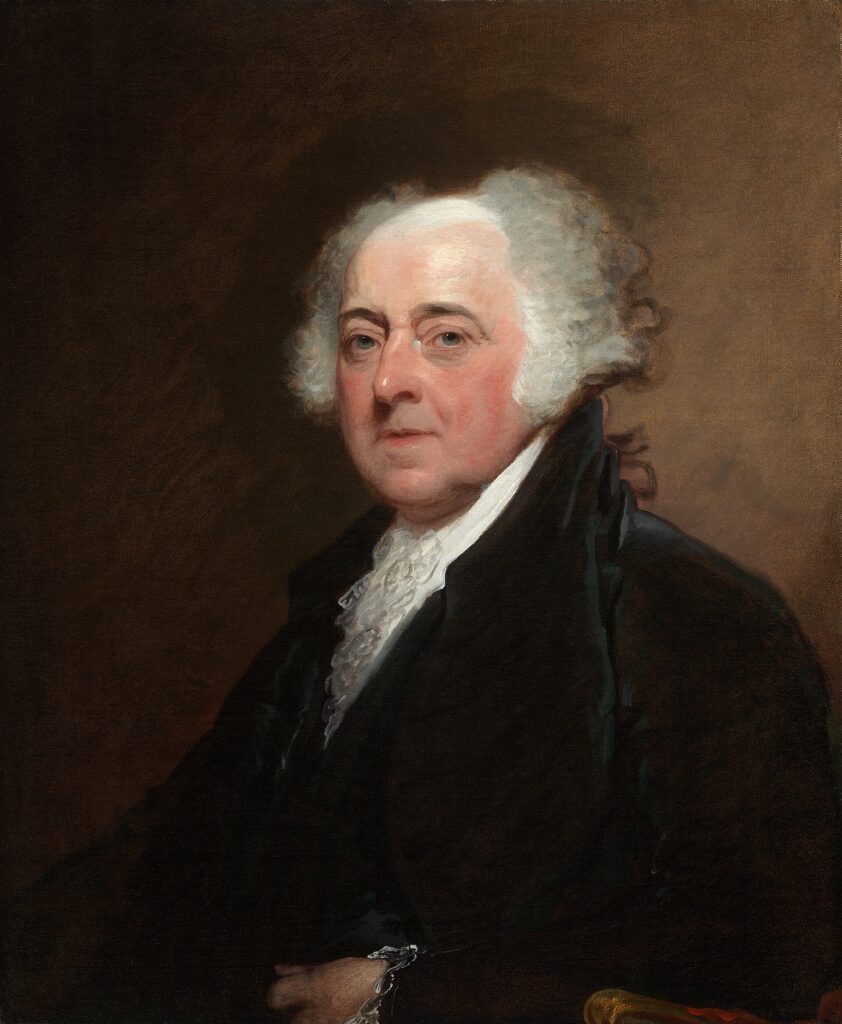
‘The people should have as little to do as may be about the government.’ This could be a campaign slogan for any Republican Congressman of the libertarian streak in the 21st century. However, it was spoken by Roger Sherman, one of the two hardly known figures on the Committee of Five, in 1787 at the Constitutional Convention.
The United States won its War of Independence against Great Britain. However, the Articles of Confederation under which they originally operated did not give enough power to the federal government to survive in the long run, hence a new constitution was needed. Sherman is one of the only six people who both signed the Declaration of Independence—as a delegate from Connecticut—and were present at the Constitutional Convention as well.
However, we should not give the impression that Sherman’s view of the scope of government was representative of all the Founding Fathers’. John Adams, and especially Alexander Hamilton, certainly were not in agreement with him on the matter.
Robert R Livingston, the fifth member of the committee that drafted the Declaration of Independence, is the only one among them who did not sign it. He was recalled for duty to his home state of New York to serve in its Provincial Congress before the signing began in early August. Thus, his name is missing from the historic document we still celebrate 250 years later, despite his taking part in creating it.
Related articles:
At a time when public debate is increasingly polarized and superficial, Hungarian Conservative remains committed to depth, intellectual honesty, and independent conservative thought.
Producing high-quality journalism requires resources. Your contribution helps us expand our coverage, reach new audiences, and keep our content accessible.
Please consider supporting our mission.