Easter is the most important Christian holiday, celebrating the resurrection of Jesus Christ. While its religious roots go back more than two thousand years, many of the traditions associated with the holiday in Hungary are even older, originating in pagan spring rituals that marked the rebirth of nature.
Over time, these layers of belief merged into a rich set of customs that still shape Hungarian Easter celebrations today.
In the weeks leading up to Easter, many Catholic communities observed a strict 40-day fast. Meat was avoided, celebrations were put on hold, and even weddings were not held during this period. Women traditionally wore dark clothing, reflecting the solemn nature of the season.
At the same time, households began preparing for spring. Women sewed, gathered supplies, and worked the land, while men repaired tools and carried out farm-related tasks. Religious life also intensified, with more frequent church services and the blessing of budding willow branches, believed to protect homes, families, and livestock.
One of the oldest folk traditions was the ritual known as ‘Morena burning’, held two weeks before Easter. Villagers created a straw figure representing winter, illness, and death, dressed it in women’s clothing, and carried it through the village in a procession. The effigy was then burned and thrown into water, symbolically driving away winter and welcoming the arrival of spring.
Holy Week brought a series of rituals blending faith and superstition.
On Holy Thursday, green foods such as spinach, cabbage, or herbs were eaten for health, while people washed in morning dew before sunrise to ensure vitality. Homes were thoroughly cleaned, and even small details, like sweeping debris to a crossroads were believed to ward off pests. Church bells fell silent from Thursday until Saturday, replaced by children using wooden rattles to mark the hours. Protective customs also extended to animals, with garlic crosses placed in stables.
Good Friday, marking the crucifixion of Christ, was considered a deeply symbolic day. People bathed in rivers or streams, believing it could bring health and protection. Work was avoided, and fasting became even stricter, often limited to bread and water.
By Holy Saturday, preparations for celebration began. Families cooked, baked, decorated eggs, and prepared traditional foods, while some communities lit symbolic fires connected to older rituals.
Easter Sunday marked the end of fasting and the return of celebration. Food was blessed in church, and leftovers were often preserved or used in symbolic ways, such as for healing or protecting crops.
The most well-known Hungarian custom takes place on Easter Monday: the sprinkling of women with water, or ‘locsolás’ in Hungarian. Traditionally, young men visited girls early in the morning, dousing them with cold water or symbolically ‘whipping’ them with braided willow branches.
‘The most well-known Hungarian custom takes place on Easter Monday: the sprinkling of women with water’
Though surprising to outsiders, the ritual was believed to bring health, beauty, and fertility. The water used was ideally taken from natural sources like streams, reinforcing its symbolic connection to life and renewal.
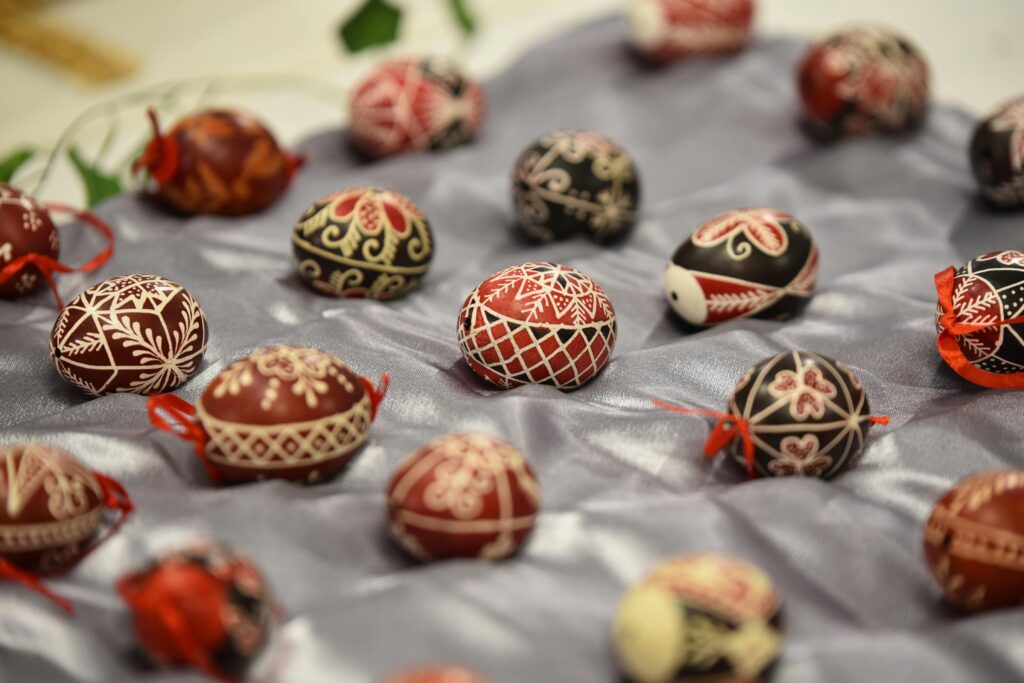
In return, girls gave painted eggs to the boys, symbols of new life. In earlier times, these eggs could carry romantic messages, and if feelings were mutual, the young man might later raise a May tree for the girl, signalling the possibility of marriage.
Food plays a central role in Easter traditions. Eggs, symbolizing new life, are among the most important elements. A boiled egg was often divided among family members to strengthen unity and ensure health.
Meals varied depending on region and wealth. Wealthier families prepared lamb, while others used goat or simpler dishes. Today, lamb-shaped cakes are common. Other traditional foods include sweet breads, strudels, and potato-based dishes, while simpler households might serve cabbage soup.
Beyond its rituals, Easter was a time for family. Even those who travelled for work would return home, making the holiday a rare moment when entire households gathered together.
Blending ancient customs with Christian meaning, Hungarian Easter traditions remain a vivid reflection of renewal, community, and continuity across generations.
Related articles:
At a time when public debate is increasingly polarized and superficial, Hungarian Conservative remains committed to depth, intellectual honesty, and independent conservative thought.
Producing high-quality journalism requires resources. Your contribution helps us expand our coverage, reach new audiences, and keep our content accessible.

Please consider supporting our mission.