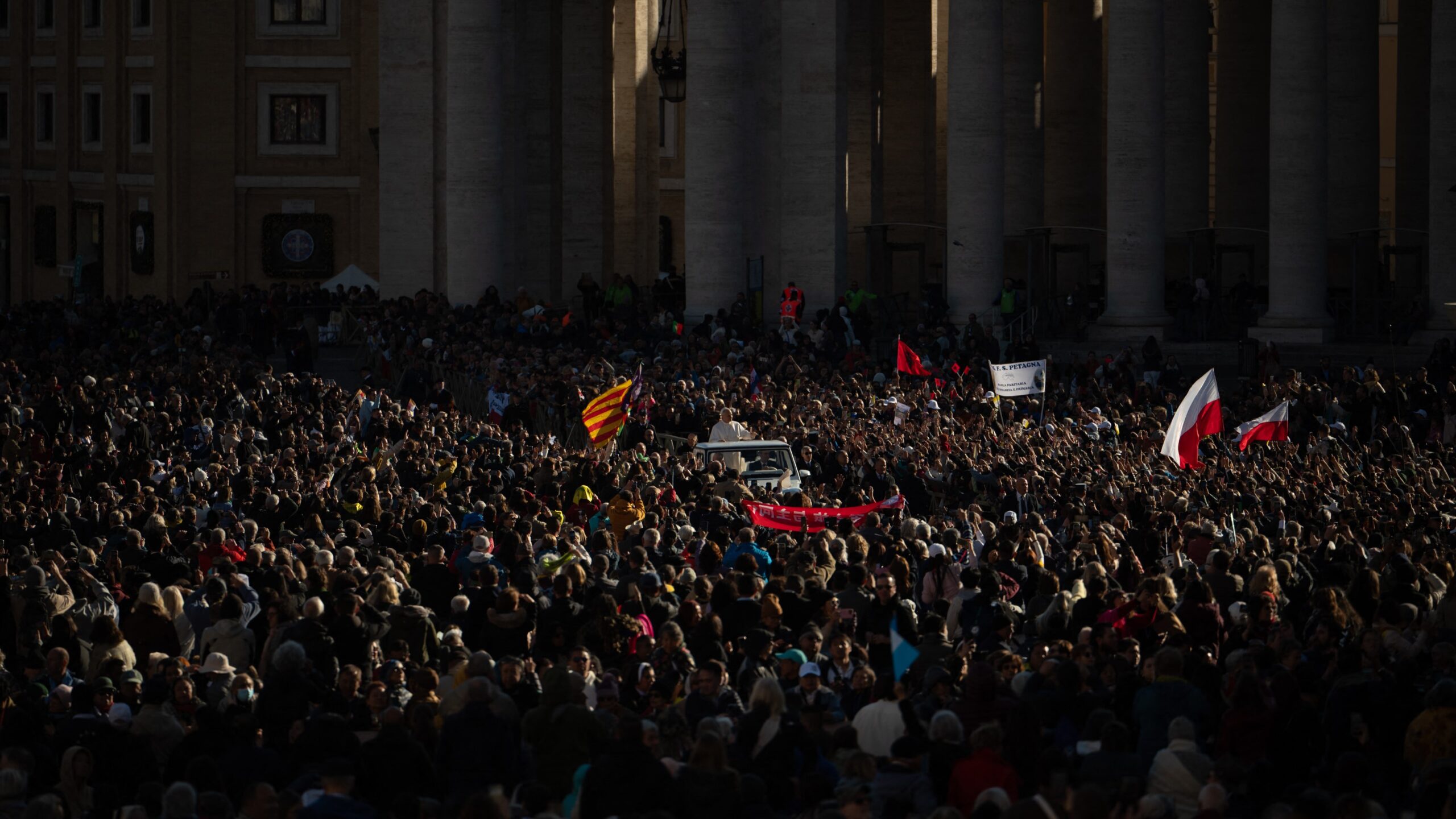
More than 33 million pilgrims visited Rome during the Jubilee Holy Year, far exceeding preliminary estimates, as the religious year comes to a close on Tuesday with the ceremonial closing of the Holy Door of St Peter’s Basilica. The figures were announced by Archbishop Rino Fisichella, head of the Holy Year’s programme organization, at a Vatican press conference on Monday.
The Vatican had initially estimated that just over 31 million pilgrims would arrive, but final figures show that more than 33.475 million faithful travelled to Rome over the past year. Pilgrims came from 185 countries, with the largest groups arriving from Italy and the United States.
The Holy Year dedicated to hope was launched by Pope Francis on 24 December 2024, with the opening of the Holy Door at St Peter’s Basilica. The Jubilee will be formally closed on Epiphany by Pope Leo XIV during a solemn ceremony attended by, among others, Italian President Sergio Mattarella.
Pilgrims were able to pass through the Holy Door until Monday evening, with long queues forming despite rainy weather. The final group to cross the threshold consisted of nearly 5,000 volunteers who assisted pilgrims throughout the Jubilee year.
Speaking at the final-day press conference, Archbishop Fisichella recalled that 35 major events were held during the Holy Year. The largest was the Jubilee Youth Meeting in Rome last August, which attracted more than 2 million young people. He noted that there was not a single day when the Vatican was not filled with pilgrims, describing their continuous presence as a sign of the Church’s vitality and pastoral strength.
Fisichella also said that Rome proved to be both welcoming and safe throughout the year. Rome’s prefect, Lamberto Giannini, highlighted the significant security challenge posed by the Jubilee, noting that authorities held more than 70 coordination meetings. While security forces were deployed in large numbers across the Vatican and the city, efforts were made to avoid a visible militarization of public spaces.
Rome Mayor Roberto Gualtieri said the city recorded more than 22 million visitors in 2024, adding that the more than 33 million guests arriving during the Holy Year represented an all-time record. He pointed out that pilgrims are often counted as tourists, even though not all pilgrims engage in traditional tourism.
Gualtieri also reported that 204 of the more than 330 public investment projects planned for the Jubilee were fully or partially completed, including the extension of a tunnel near the Vatican and the opening of two new metro stations.
Fisichella remarked light-heartedly that he had initially disliked two fountains installed between Castel Sant’Angelo and St Peter’s Square at the start of the Jubilee, but had since grown accustomed to them.
Looking ahead, he said the next Holy Year could take place in 2033, although the decision rests with the pope. He noted that the year would be extraordinary in any case, marking 2,000 years since the death and resurrection of Christ.
According to figures released by the Prefecture of the Papal Household, more than 260,000 people attended Jubilee audiences and ceremonies led by Pope Francis between January and April 2025, while nearly three million participated in Vatican events presided over by Pope Leo XIV thereafter. Pope Leo XIV will receive organizers and volunteers of the Jubilee Holy Year in a special audience on 10 January.
Related articles: