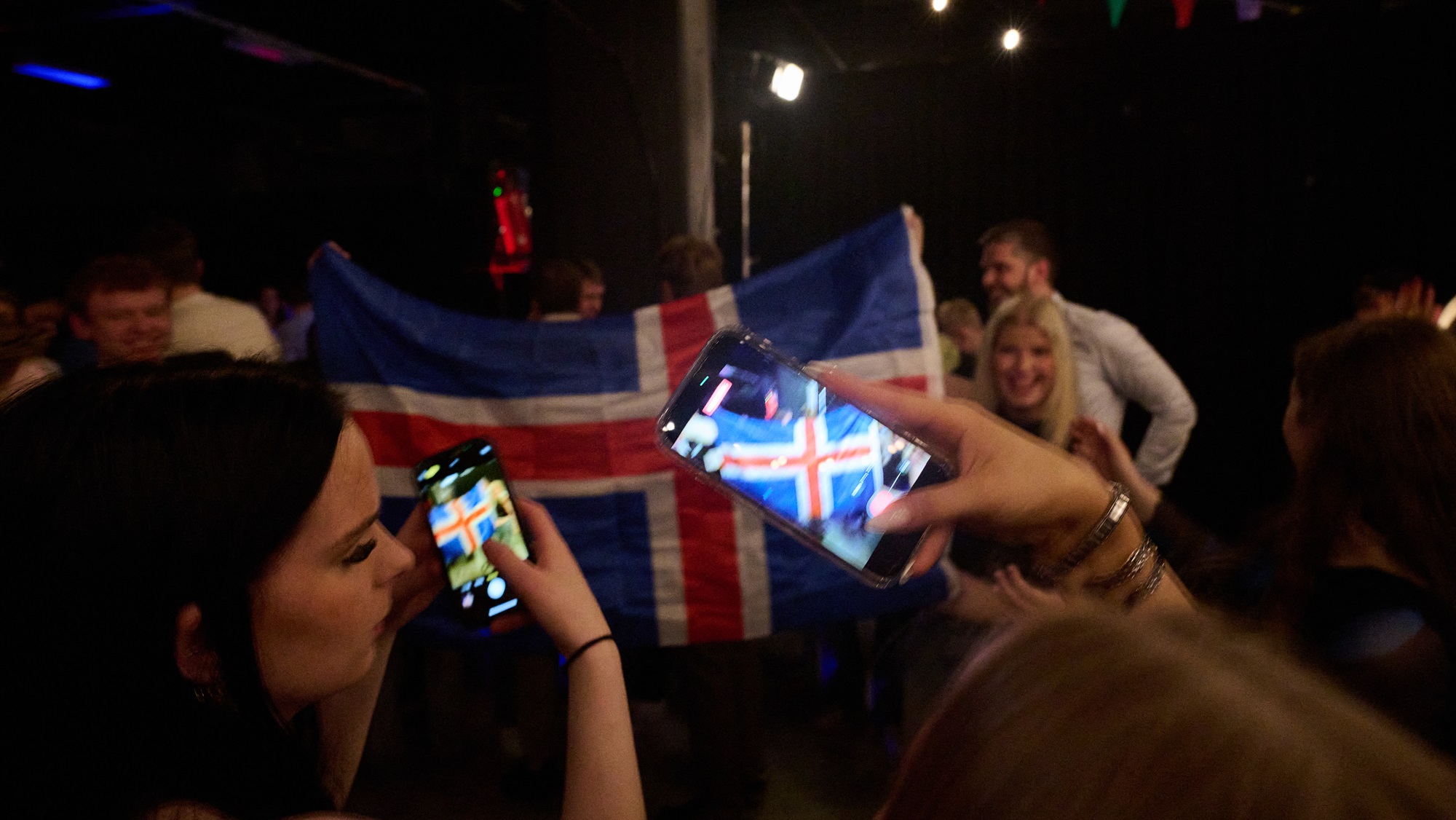
The Icelandic people voted against restarting accession negotiations with the European Union in a referendum held on Saturday, 29 August. With an extremely high 82 per cent turnout, the ‘No’ option received 52.8 per cent of the vote, against 47.2 per cent for the ‘Yes’ option.
The ballot question asked voters: ‘Should Iceland resume accession negotiations with the European Union?’
The small Nordic island nation originally started official talks with the EU about its potential membership in 2010. In 2015, however, the Icelandic government notified Brussels in a letter that it was withdrawing from the negotiations and they should no longer be considered a candidate country. The decision to step away from the accession talks was made by the right-wing populist Eurosceptic Miðflokkurinn (Centre) Party in power at the time, led by Prime Minister Sigmundur Davíð Gunnlaugsson.
In 2024, the left-wing liberal Samfylkingin – jafnaðarflokkur Íslands (Social Democratic Alliance) won the Icelandic parliamentary election. Prime Minister Kristrún Frostadóttir ran on a pro-EU platform. Holding the referendum was supposed to be her government’s first major step towards EU accession.
Proponents of the ‘yes’ campaign hoped that US President Donald Trump’s expressed desire to annex Greenland would help their chances in the referendum. President Trump has even mixed up Iceland and Greenland recently, during an address to world leaders at the World Economic Forum this year.
Meanwhile, the ‘No’ campaign emphasized sovereignty over Iceland’s fishing waters, which is important not just for the country’s economy, but also for its national identity.
In the eventual results, there was a clear divide between voters in the capital city of Reykjavík, Iceland, and the more rural rest of the country. The capital city voted overwhelmingly for the ‘Yes’ option, while the countryside backed ‘No’ by a large margin. Ultimately, the will of the rural voters prevailed this time.
Prime Minister Frostadóttir has confirmed in a public statement that her government will not move forward in restarting accession negotiations, based on the results of the referendum. ‘Something big has to change in the next 24 months for this to be at the top of the agenda,’ she added, referring to the remainder of her term in office, as quoted by Christianindex.org.
Nigel Farage, who spearheaded the ‘Leave’ campaign in the famous 2016 Brexit referendum in the United Kingdom, has reacted to the developments in Iceland on his social media, saying, ‘Congratulations to Iceland on voting to keep their independence’.
A piece published by the left-wing British newspaper The Guardian has drawn parallels between Brexit and the recent Icelandic referendum.
Iceland is a nation of around 400,000 people. It has been a member of NATO since 1949, and part of the European Economic Area (EEA) since 1994. Despite not being an EU Member State, it joined the Schengen Area in 2001.
The Icelandic Parliament, known as the Alþingi, is the oldest still existing legislature in the world, established in 930 AD.
Related articles:
At a time when public debate is increasingly polarized and superficial, Hungarian Conservative remains committed to depth, intellectual honesty, and independent conservative thought.
Producing high-quality journalism requires resources. Your contribution helps us expand our coverage, reach new audiences, and keep our content accessible.
Please consider supporting our mission.