The following is an adapted version of an article written by former Minister for Regional Development and Public Administration and researcher at the Europe Strategy Research Institute Tibor Navracsics, originally published in Hungarian on the Five Minutes Europe blog of Ludovika.hu.
Recently, we marked the tenth anniversary of the referendum in which the citizens of the United Kingdom ultimately voted to leave the European Union. The decade since then has been extremely turbulent in British domestic politics. In a historically unprecedented turn of events, the UK has gone through six prime ministers so far. The extent of the domestic political upheaval caused by Brexit is also evident in the fact that even the British party system—once considered the most stable in Europe—appears to be transforming. Today, the very political survival of the Conservatives and the Labour Party, which once formed a duopoly, is at stake in these struggles.
These past ten years have not been any easier in the realm of European domestic politics either. Although no other member states have followed the United Kingdom’s example, the erosion of the sense of mission behind European integration, the growing uncertainty surrounding EU institutions, and the rise in support for Eurosceptic forces have been evident ever since.
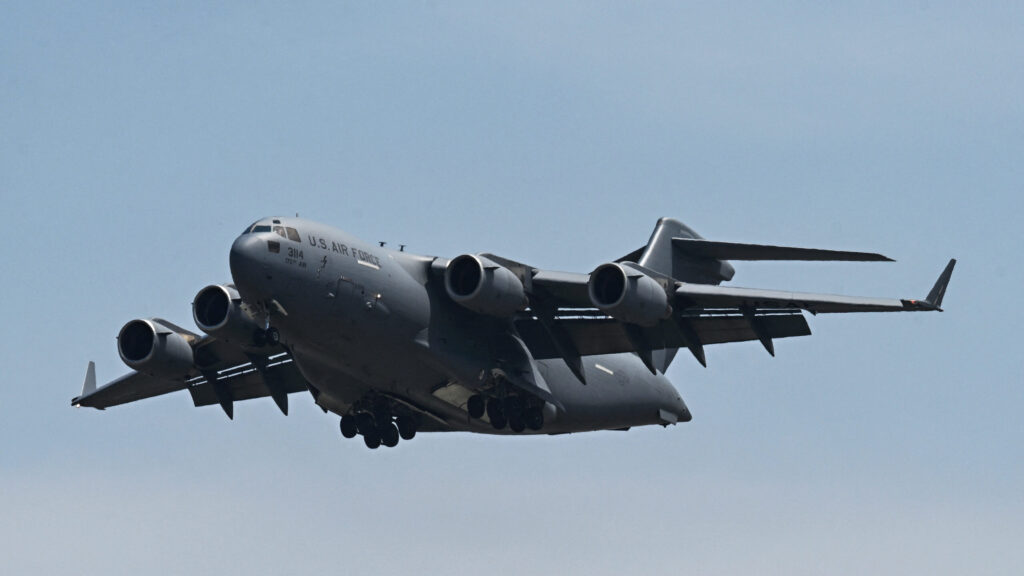
One of the most sensitive issues surrounding Brexit was the United Kingdom’s future geopolitical cooperation with the European Union. This issue became particularly acute starting in February 2022, as the Russo–Ukrainian war significantly increased the geopolitical importance of regions bordering the EU. As a European nuclear power and the United States’ foremost European ally, the UK has understandably become one of the EU’s most important partners.
The intention to establish contact has become even more relevant following Donald Trump’s re-election as president. While the UK, together with the EU, firmly stood behind Ukraine, the United States—breaking with its previous policy of unconditional support for Ukraine—became much more critical of the leaders of the country under attack by Russia, and this scepticism soon extended to its relations with the European Union as well.
‘As a European nuclear power and the United States’ foremost European ally, the UK has understandably become one of the EU’s most important partners’
These developments made it almost inevitable that these neighbouring geopolitical players would resolve their recent grievances and enter into a partnership. Within a short time, two alliances emerged with nearly identical membership and objectives. Still, they are linked not only by this, but also by the fact that both alliances bypass EU institutions—and indeed the European Union as a whole—despite being composed largely of EU member states.
The European Group of Five (E5) was first established in November 2024. Its members are the United Kingdom, France, Poland, Germany, and Italy. These five countries are the powers with Europe’s largest armies and largest defence budgets, and they established this cooperation in response to US calls for increased military spending.
The other alliance, with nearly identical membership, is Weimar+, which was formed three months later, in February 2025. As its name suggests, this alliance expanded upon a previously existing European cooperation, the so-called Weimar Triangle, whose original members were France, Poland, and Germany. Then the Weimar+ alliance was formed, with the UK, Italy, and Spain joining.
The fundamental goal of both initiatives is to address the security and defence policy situation that has arisen as a result of the Russo–Ukrainian war. Despite the similarities in their objectives and participants, there is one important difference: Weimar+ also invites the EU High Representative for Foreign Affairs and Security Policy to its foreign ministers’ meetings. Despite this difference, we can say that Europe’s new security policy structure appears to be taking shape along alternative lines, without the EU’s active involvement. It is as if models from 200 years ago were being revived in European security policy: through the Congress of Vienna, the Holy Alliance, and the European Concert.
Related articles:
Click here to read the original article.
At a time when public debate is increasingly polarized and superficial, Hungarian Conservative remains committed to depth, intellectual honesty, and independent conservative thought.
Producing high-quality journalism requires resources. Your contribution helps us expand our coverage, reach new audiences, and keep our content accessible.

Please consider supporting our mission.