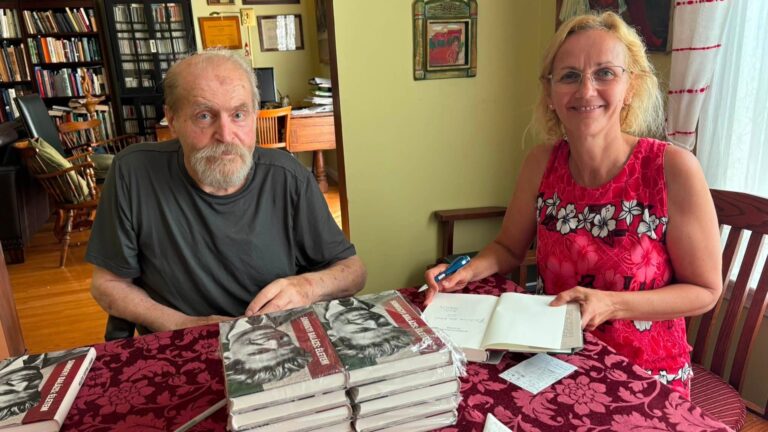
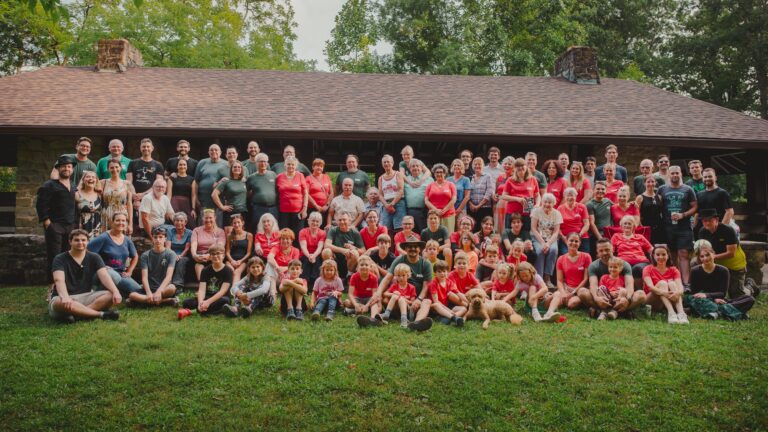
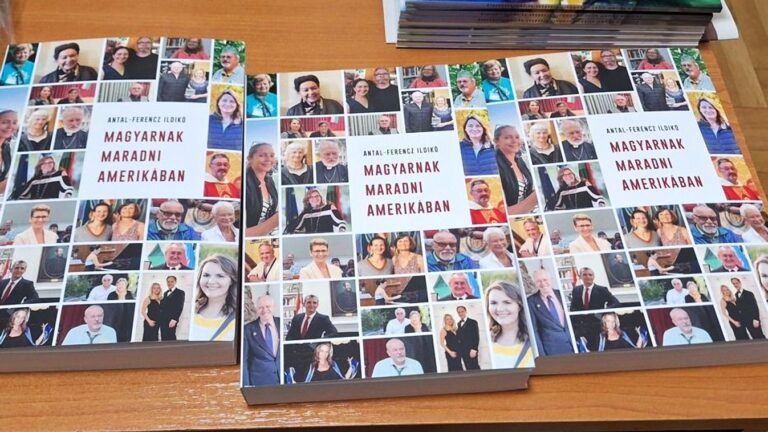
Born in Atlanta, raised in Alabama and New Orleans, with no Hungarian roots, Chris Ball moved to Hungary in 1994 for a scholarship. He fell in love not only with Emese Gáll, his later wife, but also with the land and the people of Transylvania. The family moved to Connecticut in 2003 because of Chris’ work at Quinnipiac University (QU), where he taught economics. In 2005, he began inviting Hungarian speakers to QU, and later, due to an anonymous donor, a Hungarian American businessman, they founded the American Business Leaders scholarship and program, as well as the Széchenyi Chair at QU. In 2012, he was nominated as Honorary Consul for Hungary.
***
You were born in the U.S. with no Hungarian roots or connections. When did you first meet Hungarians, and what were your impressions?
I was born in Atlanta, Georgia, in 1972, but we soon moved to Huntsville, Alabama. During 1976–78, we lived in New Orleans, then moved back to Huntsville, where I lived until 1994. I’m half German, a quarter English, and a quarter Irish. I had never met a Hungarian until I moved to Hungary in 1994 for a scholarship. The first Hungarian I met in Budapest was Sándor Mezei from Nagyenyed (Aiud, Romania). At the same time, I met all the other Transylvanian and Székely people (Szeklers) studying in Budapest and working at the Erdélyi Híradó, run by poet Géza Szőcs. My first impressions: they were all very nice, happy to share their history, experience, thoughts, and especially their culture with me. And, they were funny—everyone had a sense of humor about life and everything. I liked that a lot. Many of them are still personal friends.
How did you meet your wife? How did you support your children to embrace their dual identity?
Emese Gáll was a student at Semmelweis University (SOTE) in Budapest and was also working at the Erdélyi Híradó. She left Sepsiszentgyörgy (Sfantu Gheorghe, Transylvania) in 1990 to study medicine in Hungary. We met there in August 1994. We began dating in October and have stayed together since. In 1998, it was time for me to move back to the U.S. I had been in Europe for four years, my two-year research fellowship with the Institute of Current World Affairs was ending, and I wanted to return for my PhD in Economics. I proposed to Emese, she accepted, and we got married in July 1998 in Huntsville. Her parents couldn’t join us, so we had a one-year wedding celebration in 1999 with her friends and family. We have two children, Julianna Sára and Máté Áron. We spoke Hungarian at home with both of them, and spent as many Christmases and as much time in summer with Emese’s parents as possible. Since her parents didn’t speak English, our children’s Hungarian improved. We never thought about a dual identity; it was just natural for them. We’d say ‘they’re Hungarian, too’, but we didn’t think of it in a deeper national identity sense.
‘And, they were funny—everyone had a sense of humor about life and everything’
You speak Hungarian. How difficult was it to achieve this? What do you suggest to those who are considering and/or struggling with learning it?
From day one in Hungary, I spent hours and hours every day working on my Hungarian, trying to learn from books to learn the grammar, and having people help me. It was hard. In 1996, when I got the fellowship, the Institute of Current World Affairs funded the language training. I hired a private tutor and met her twice a week during 1996–1998, and also traveled alone in Hungarian-speaking parts of Romania a lot, which forced me to speak and grow. When my daughter was born, my skills began to improve again because I’d read Pöttyös Panni and Boribon books to her. And, obviously, when we were all speaking every day, I grew a lot then, too. But it was hard, and I’m still not as good as I’d like to be.
My only advice: Go slow and get your pronunciation as good as you possibly can first. Always focus on that while you learn words, grammar, and so on. I used that method later to learn Polish on my own from a phone app. I’m not great at Polish, but I needed enough to ask directions, order food, etc. It’s slow at first, but then you are really getting the spoken language, which in the end is sound. Your grammar and vocabulary are built when your ear hears it better, and then you can improve your written language, too.
Why did you move to Connecticut? When did you start connecting with the Hungarian community in Wallingford?
We moved to Connecticut in 2003 to start working at Quinnipiac University (QU). We immediately sought out and connected with the local Hungarian community. We were only loosely connected with them our first year or so, since we had little money and didn’t know anyone yet, but our relationships with them grew, and in 2005, I began inviting Hungarian speakers to QU. I had them give talks on campus, to which I invited the community, and then they would give talks at the Somogyis’ home in Hungarian. We got to know everyone more closely then.
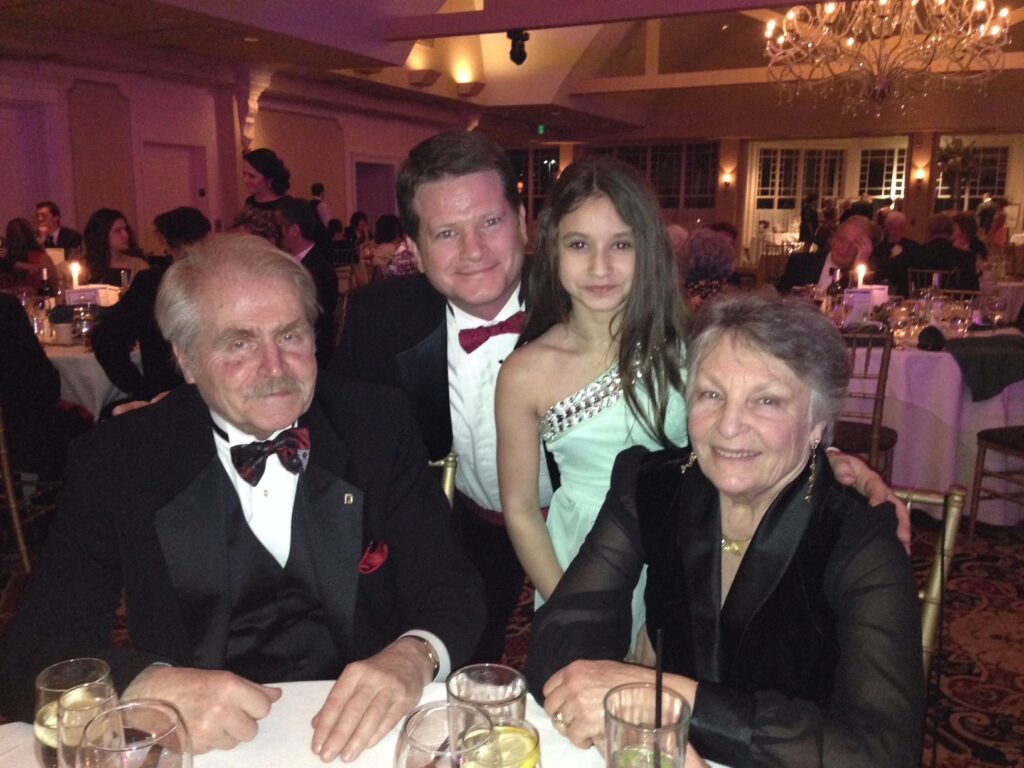
You attended many events of the Hungarian Cultural Society of Connecticut (HCSC), hosted by Balázs and Csilla Somogyi at their famous home in Cheshire. How did you find the atmosphere of these events?
Those events were my favorite. They were closer and more intellectual. The guests were poets, writers, politicians, professors, musicians, etc. We’d eat and talk in small groups, they would lecture with Q&A, then we’d mingle and talk more one-on-one. I’m a bit of an introvert and enjoy that setting more. We’d attend because the topic or the speaker was interesting, so there was a purpose.
Other Hungarian events, by contrast, are galas and similar events where you mix and chat with a lot of people. I always feel awkward in those settings. Anyone who knows me will notice that, whenever possible, I’ll give a talk or act as master of ceremonies, or otherwise help clean, set tables, etc., but I’m least comfortable wandering and chatting with people. I prefer the smaller, more intimate settings, so I naturally gravitated to Somogyi couple’s events anyway. Most people there attended other Hungarian events as well, thus I got to know the community well.
What happened at the university campus?
I started to bring old friends and contacts from Hungary to stay at QU for one week and give talks for the community. I started with Alfred Reisch in fall 2005—he was with Radio Free Europe and the architect of the secret book project sneaking dissident books into Central Europe during the Cold War. In spring 2006, Tamás Magyarics, then Professor at ELTE and Ambassador to Ireland, became deeply involved in NATO affairs. In fall 2006, Géza Jeszenszky, the first Foreign Minister of Hungary (in 1990), visited us, and then in spring 2007 Péter Ákos Bod, former Trade Minister and head of the Nemzeti Bank, came.
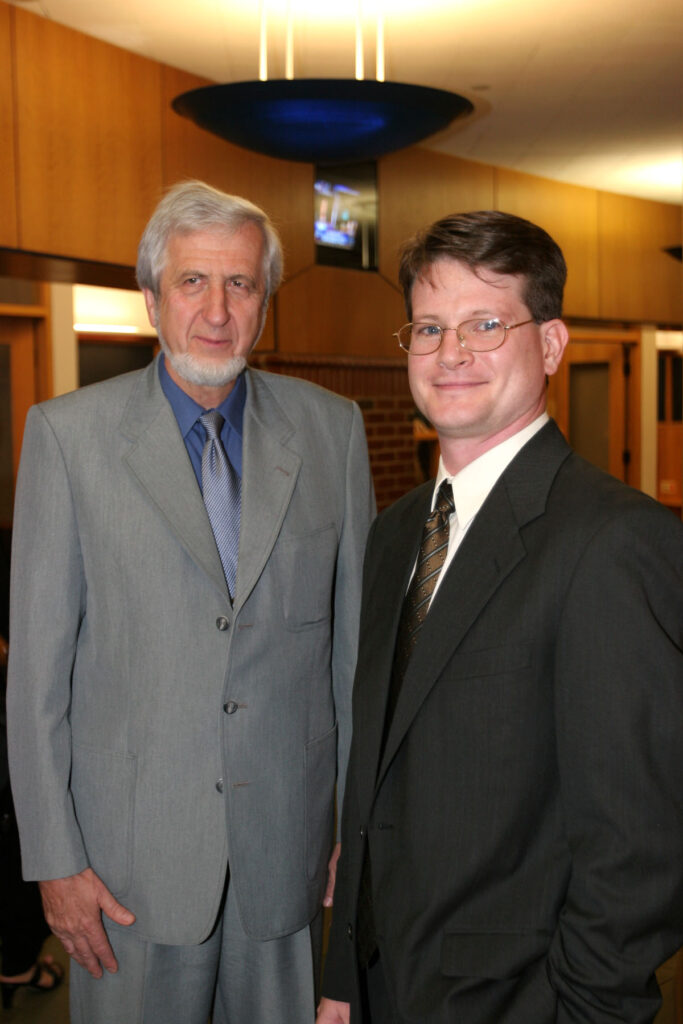
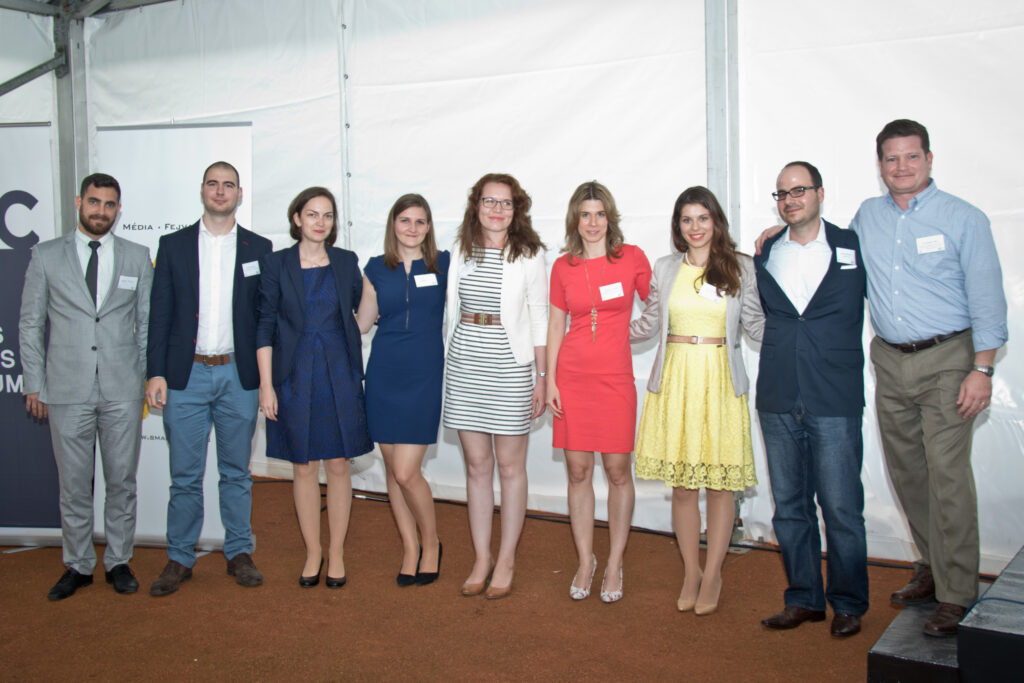
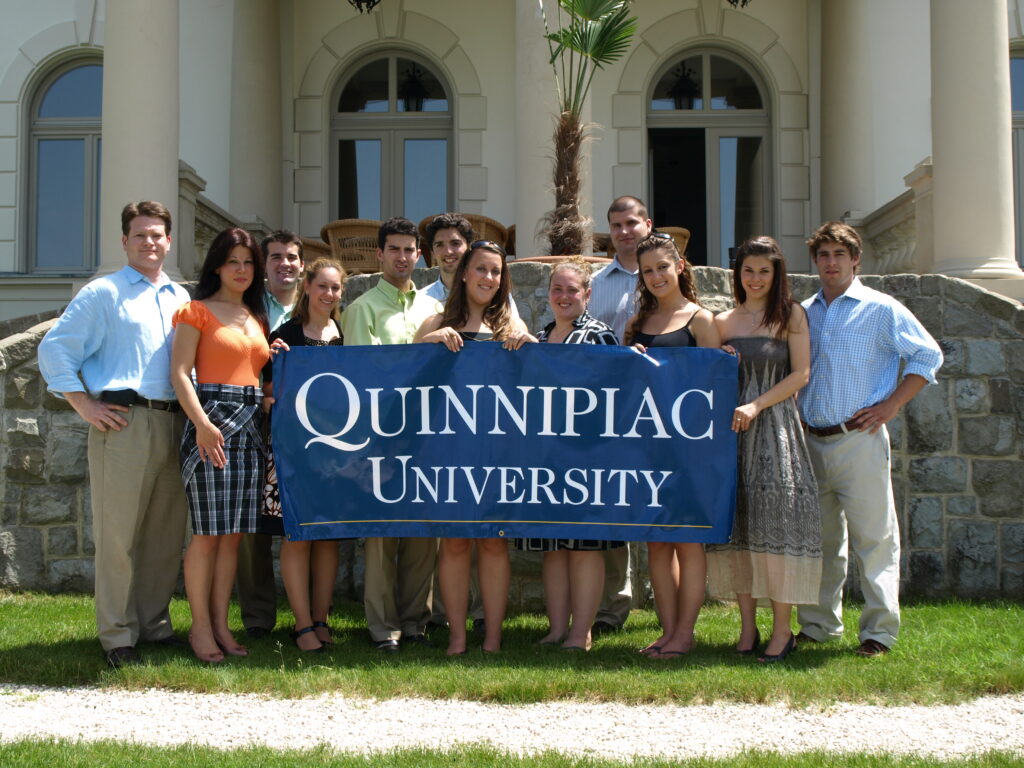
During that period, I got to be good friends with the Somogyi family and explained that I wanted to fund a scholarship for students from Székelyföld (Szeklerland, Transylvania) to come study in the U.S. Balázs and I started being more intentional about inviting people to the various speakers, and he began introducing me to people in the community. In 2007, I met a Hungarian American businessperson at QU, independently of everything else. His daughter went to QU to study law. He got to know our university leadership, and they discussed possible donations with him. When he said: ‘I’d be happy to give some real money if there was something with Hungary’, the university leaders found me. We connected and developed what is today our Hungarian American Business Leaders (HABL) scholarship and program: bringing Hungarians to QU to earn their MBA and work at businesses, then return home, taking that knowledge back to put to the best use, as they see fit. Since all Hungarians can get Hungarian citizenship, restricting it to Hungarians actually allowed us to offer it to a wide range of students, including many from Székelyföld. When the money was donated, the university matched his donation, and they also created the István Széchenyi Chair in International Economics, whose job is to run these programs and build relationships with Hungary—that’s what I do.
Did you target students from Transylvania because of your wife’s roots?
For a number of reasons. First, I decided to stay in Hungary for several years because of Székelyföld. I originally planned to be there for one year, but due to the change of the Hungarian government in 1994, my scholarship collapsed—after arriving in August, I was actually planning to leave in October. Friends at Erdélyi Híradó invited me to visit Marosvásárhely (Târgu Mureș) and Csíkszereda (Miercurea Ciuc) in Transylvania, which I did in early October. I 100 percent fell in love with the region and its people. I ultimately decided I’d stay in Hungary and Transylvania, no matter what. So, my heart is still very tied to that land, and those people; my best friends in life are mostly from there to this day.
Second, Hungarians in Hungary had a lot of opportunities, but those people in Székelyföld at the time didn’t. I wanted to help those who’d benefit the most. Szeklers are very clever, hardworking, and entrepreneurial in their own way. I thought that if they could get exposure to MBA training and American business practice, they could really do something meaningful. I really dislike outsiders coming into the region and deciding what locals should do—I saw plenty of that during my time in Hungary/Romania and didn’t want to do the same. I invest and believe in individual people, then let them see what needs to be done in their community and how. Third, I hoped it would provide a bridge for my family and me to personally remain connected to the region.
Why did you choose Széchenyi’s name for the Chair?
First, normally, the chair is named after the donor, but he was anonymous and wanted a name every Hungarian would recognize. Second, Széchenyi fits perfectly with everything we do: he went abroad and came home, putting his new knowledge to work in Hungary—that’s what we want our scholars to do. Also, he oversaw the Chain Bridge, and we are trying to build bridges between the U.S. and Hungary. And then you have his general approach, valuing communities and networks of people—his casinos and other efforts—his love of country and desire to free its people from the shackles of the past, and his deep connection to intellectual pursuits—Academy of Sciences, etc.
You mentioned that Balázs Somogyi decided that you, as the Széchenyi Chair, should learn and give talks about Széchenyi. How did you manage that?
Yes, once we created the Chair, Balázs—a great friend and supporter of all of this from the beginning—pushed me to learn about and lecture on Széchenyi. Our first talk was at the Széchenyi Hungarian Society in New York City. I then gave smaller talks at QU and at the Somogyi home. At that talk in NYC, I pointed out that Széchenyi’s works weren’t available in English. Balázs and I and some others started an initiative to get the works translated into English. I was very involved in launching the project and helped fund the initial efforts via my funds at QU, but it was very hard and dragged on because it turned out that his works are difficult to translate—he used a mixed language of Hungarian, German, and sometimes French or Latin, and it required a real specialist to translate. Getting the right translator was tough—we got started several times, then the translator would decide they weren’t up to the job, and we’d start over. In later years, I wasn’t as involved in the project, but eventually some of the people in NYC took it on, found partner organizations in Hungary to work with, and ultimately had it translated. It’s a huge success for Balázs, although he probably won’t ever get the credit.
Later, it turned out that people didn’t want to hear too much more about Széchenyi himself, but I began getting invitations to New Jersey, Toronto, and other places to give talks about our programs, how they connect to Széchenyi, etc. It was all very new at the time, and I did several talks from 2009 to 2011.
What other projects did you launch as the Széchenyi Chair?
Around the work of the Chair, I also started CEENET (Central and Eastern European network) to connect people and businesses from Central Europe with those in the U.S. We ran several trade missions and helped businesses match and some launch operations in the U.S. We also launched an Art as Ambassador Project and hosted some Hungarian art exhibits in the U.S. and helped Hungarian artists come to the U.S. and get some experience and exposure. Currently, we’ve had a research fellow archiving Brassai, Kertész, and other photographers as part of a special project.
What did you first think when you were asked to serve as Honorary Consul for Hungary (as a non-Hungarian)? What have you done in this role?
I first declined the offer because I’m not Hungarian. Also, honestly, I initially thought Balázs would be the best Honorary Consul. Then, I learned that you don’t need to be Hungarian to be an honorary consul. I also learned more about their work—they are local people who help Hungarians in three areas: business, education, and culture. The emphasis is on helping Hungarians and Americans connect in these areas. That’s exactly what I do, so it made sense, and ultimately I accepted. I’m very proud to serve in this capacity; it’s been a real honor for me.
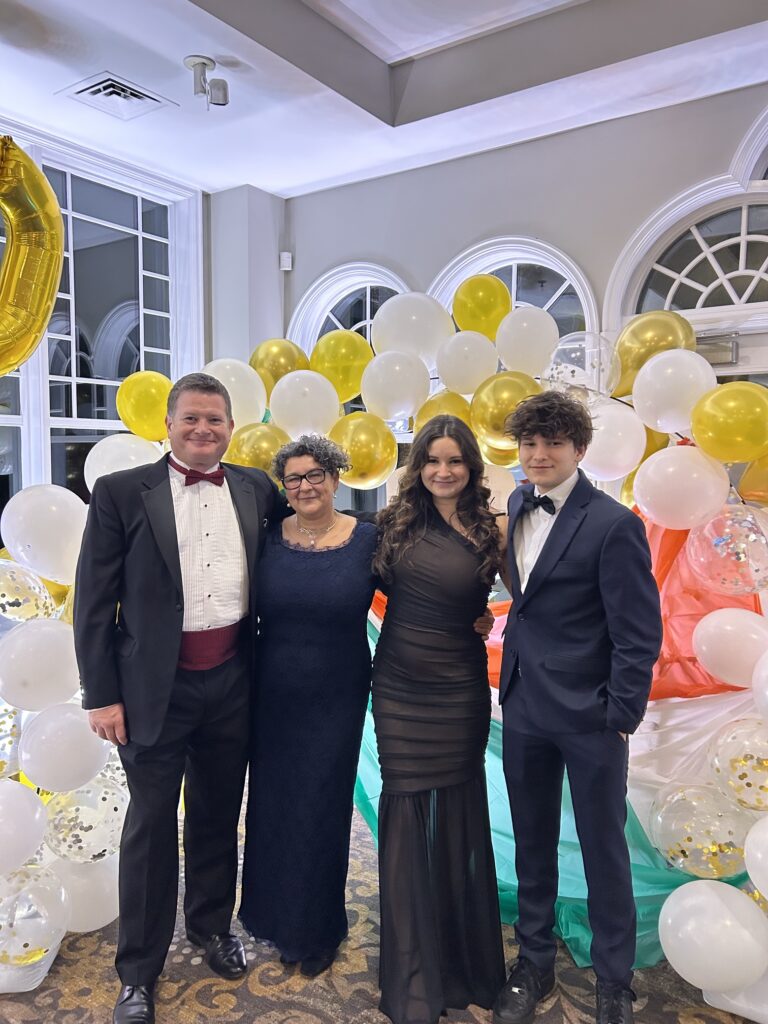
The other thing an Honorary Consul does is perform limited consular duties, such as verifying documents and facilitating local requests for citizenship, helping American Hungarians with family in Hungary when a family member dies or sells property, and things like that. So, most of my work is basic consular work. It’s not too much, but I probably help someone with basic consular needs about once per month on average, some years a little less. Secondly, I speak at local events of national celebrations (15 March, 23 October, etc.). I did a lot of that in the beginning, but the current Consul General in NYC has been very active and happy to come to CT, so in recent years, I’ve usually just attended, and he has done the speeches. Every few years, usually when Hungary sends a new Ambassador to Washington, D.C., or a new Consul General to NYC, I’ll host a diplomatic visit for them to Connecticut to meet businesses, innovation centers, universities, and local political officials.
Related articles:
At a time when public debate is increasingly polarized and superficial, Hungarian Conservative remains committed to depth, intellectual honesty, and independent conservative thought.
Producing high-quality journalism requires resources. Your contribution helps us expand our coverage, reach new audiences, and keep our content accessible.

Please consider supporting our mission.