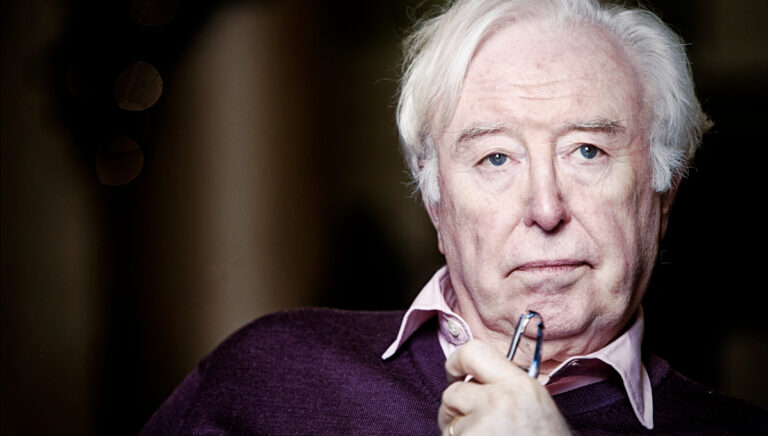
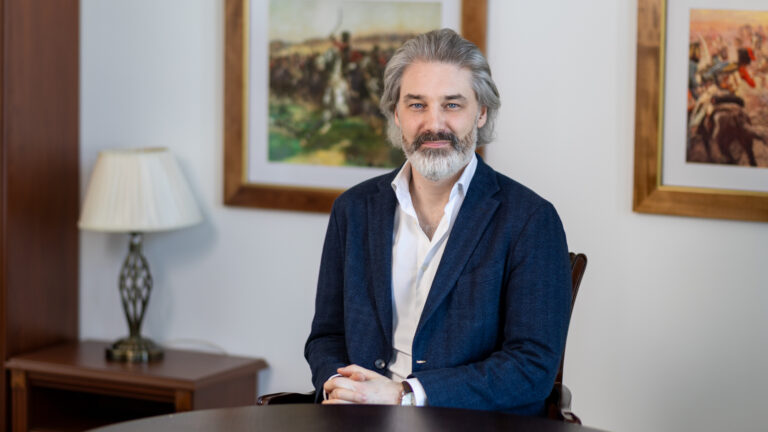
Raymond Ibrahim is an American author and historian specializing in the history of Christianity and Islam. He studied at California State University and also took graduate courses at Georgetown University Center for Contemporary Arab Studies. He pursued PhD studies in medieval Islamic history at Catholic University of America. A former associate fellow at Middle East Forum, he is currently a Visiting Fellow at Danube Institute. Ibrahim is the author of several widely discussed books, including Sword and Scimitar and Defenders of the West, and he has translated and edited important primary sources on jihad and Christian martyrdom under Islamic rule.
***
What does Islam want from us?
This is ultimately a doctrinal question, because every religion has worldviews. Islam happens to be very much rooted in a political worldview. Of course, Muslims have to do things like pray, fast, and perform the Hajj, but things like jihad—which, of course, has a very pejorative, negative connotation today from a non-Muslim point of view, because it essentially means war—are seen differently from a Muslim perspective. From that point of view, jihad is considered a good thing, because it is about struggling to expand the beautiful rule of Islam into non-Muslim regions. So: ‘We’re helping you because you’re an infidel, and we want to bring the goodness of Islam to you.’
That has always been part of the religion, doctrinally and historically. Islam conquered and expanded. Virtually the entire Islamic world today consists of formerly non-Muslim regions, from Egypt all the way to Morocco, Syria, and the broader Middle East, and these territories were conquered. So that is what Islam has historically sought. There is a saying in Arabic: Islam is not here to coexist or to be second. It is here to take over and rule.
There is one theory that Islam itself is a religion of peace, and that only radical Islam poses a threat to the West. Is that true or not?
It’s not true. Islam is Islam, and there is no moderate or radical. This is a false dichotomy we have created to rationalize and make sense of Islam, because no one wants to accept that Islam is inherently and fundamentally radical. Muslims who do not fully practice Islam—who are essentially secularized, cultural Muslims and possibly assimilated—are not really practicing Muslims. We say they’re moderate Muslims. They’re actually just secular Muslims, cultural Muslims, nominal Muslims. Then we say the Muslims who truly practice Islam are radical.
The religion itself is radical because, for example, punishing—or even killing—apostates is part of the religion. If you are born into Islam and try to leave it, that is traditionally punishable. Polygamy, concubinage, and the sexual enslavement of infidel women during warfare—all of this is completely part of the religion.
‘Islam is Islam, and there is no moderate or radical’
So when a Muslim does that, how is that radical? The religion is radical.
So you claim that if a Muslim takes the Quran and the Hadith seriously, as a word of God, he cannot be moderate.
Not by what Western people mean by ‘moderate’. From a Western point of view, ‘moderate’ essentially means someone who can assimilate and live under Western secular laws. Islam is simply the name of the religion; sharia is the way it is lived. Islam therefore has its own legal framework for Muslims, and many aspects of it contradict what we would call Western or secular law.
If you are a Christian or a Jew living under Islamic rule, you do not have equal citizenship rights. Of course, that contradicts the Western paradigm. Women also do not have equal rights. In court, a woman’s testimony is not considered equal to that of a man. And that is not ‘radical’; that is simply Islam. When Muslims follow what we call ‘radical’ practices, they are not necessarily being radical—they are being pious.
Masses of Muslims live in Europe; they are here through migration and demographic change. Will a religious Muslim ever integrate into Western society or respect Western values and traditions?
There are people named Muhammad who live secular lives and can potentially assimilate. But there are also others named Muhammad who follow the Prophet Muhammad closely, and they do not assimilate. So in the end, this is why it gets tricky. You know, it’s in the religion. The question is, is this person following their religion or not? You will always have one group that follows it closely and another that prioritizes living and getting by within their society.
But for those who do follow it, it’s very tribal. Islam actually commands Muslims in the Quran to have hatred for non-Muslims. Because it’s tribal; it was founded by a tribal man, Muhammad, in the seventh century. And so basically, he took tribalism and re-articulated through a theological paradigm. So now the other is no longer just the other. He’s the infidel, and the the blood tribe is all the Muslims. They have the entire passage called Dar al-Islam, which is the world of Islam, and Dar al-Harb, which is the world of non-Islam. And the two must always fight until the home of Islam conquers the other one.
Could Europe’s cultural, religious, and political landscape be radically changed by migration and Islamization?
The more any country becomes Islamic by population, the more it becomes Islamic by culture and by society. We see this already in places. I travelled recently in England, which has large Muslim populations, and I was surprised to see everywhere foot-washing facilities for Muslims for prayer. So, that’s a society that is being Islamified. They are acquiescing to Islamic culture in society, because the numbers are growing.
‘Islam actually commands Muslims in the Quran to have hatred for non-Muslims’
When you are outnumbered and weak, you can be what we call secular, you can be moderate, and you don’t have to enforce jihad, because it’s not the right time. And historically, this has also happened where Muslims would behave as friends amongst non-Muslims because they were the minority. And then, when that number grows, it starts changing, and the truth starts coming up. I think we’re already seeing this in a lot of countries. There are the radicals, there are the non-religious, and then in the middle, you have those who are shifting alliances, depending on where things go.
What is the worst possible real-life scenario for Europe in the future?
If it comes to a point where a country has many Muslims. Now in the UK, they claim there are 12 per cent, which does not sound like a lot; but, of course, they are very concentrated, so it looks like a lot. But I think the number is bigger; it reaches something like 25 per cent. It is going to be essentially a nation that prioritizes Islam above anything else. And as that number grows and as Muslims become stronger, the tolerance for the natives is going to become even more limited.
This is why history is very important. Islam has never changed; it still has the same mentality. What has changed is the West, which once used to fight back, like Hungary did. This is why Hungary still remembers the occupation by the Ottomans. And now the West has forgotten about its heritage. It sees its own heroes who defended it as the bad guys. It sees Muslims as misunderstood victims. It is basically a slow-motion suicide, and they do not know what they are doing.
One question about the Middle East: many jihadist and Islamist movements have tried to conquer large swathes of territory to form a caliphate, but they did not succeed. Is it an impossible project?
It was a historical reality, and we had different manifestations of caliphates throughout history. It is an idea that is pivotal to Islam. The caliphate comes from the word khalifa, meaning successor. So after Muhammad, the first caliph was Abu Bakr. A caliphate is based on governance by a leader who is essentially a religious authority following in the footsteps of Muhammad.
That is the normal paradigm for Islam. That’s what is expected. Muslims would love to have that, but you still have the political clashes: who’s going to be the leader? Is it going to be the Turks? Ot the Arabs? Is it going to be the Persians, who are Shia, which is another form, so obviously won’t be them?
But it’s possible. Caliphates existed before several times. The last one was abolished right around 1924, a century ago.
I would ask some questions about the spiritual background of the Islam. Islam considers the Torah and the New Testament as holy books. How do Muslim teachers then resolve the contradictions between the Bible and the Quran?
They believe that there were scriptures given to the People of the Book, the Jews and the Christians. So yes, the Old and New Testament they believe was originally divine.
‘Islam has never changed; it still has the same mentality. What has changed is the West’
However, the Bible that exists today, according to the Muslims, is wrong. It’s been intentionally distorted by the writers. So for example, when the New Testament talks about Jesus being crucified, resurrected, and referred to as the Son of God, Muslims believe that was added in later. It’s false.
So Jesus was the true prophet, but Apostle Paul was a false prophet because he distorted the original message of Jesus?
It could be that, or someone changed what Paul said in the Bible. But the bottom line is, the Bible that we have today, according to Muslims, is false. So the Quran was supposedly the new correction, bringing it back to the way it was. So now, when you read the Quran, there are some similarities with the Bible, but then there are differences. According to the Muslims, the differences are the correctio:, Muhammad came to bring it back to the truth. This isn’t a methodical science. The Quran makes it even worse, because the Quran was written much later. And there’s a lot of problems with how the Quran was written. And there were different versions, so there’re all sorts of problems with the Quran itself.
How can the new generations of Muslims overcome religious indoctrination, prejudice, and denial?
There’re many people who convert out of Islam. Some become Christians. Some become atheists—this is a real phenomena as well. It’s not that all of them are this, or all of them are that. Islam itself is built on a house of cards, which is why they have laws against what’s called blasphemy and apostasy. Blasphemy is essentially anything you say against Islam. Declaring Jesus Christ as the Son of God is blasphemy, because Muhammad says the opposite, and you’re saying he’s a liar. So everything has to be contained, and you can’t question it, because once you really start looking into the history of Islam and the way the Quran and the Hadith were put together, it starts falling apart: there’re a lot of question marks, a lot of missing data, a lot of counter-narratives to what Muslims are taught.
What is the difference between the main teachings of Islam and Christianity?
The thing about Islam is, it’s very man-made. Muhammad created a religion that gives men what they want. It gives them wealth; you can exercise your anger. You can go kill, you can subjugate, conquer, seize women, seize property, and then you’re a good guy, and you go to heaven. So it was seen as a man-made religion.
‘Islam itself is built on a house of cards, which is why they have laws against what’s called blasphemy and apostasy’
But of course, man-made religions do not necessarily bring the satisfaction of the soul that Christianity would, even though Christian teachings are counterintuitive to the human mind; and that’s what makes it divine. ‘Love your enemy’—who can think of that? That’s so counter to how we naturally are. And so when you have a religion that says that, you think about it, and you do it, and it’s a satisfying, elevating, edifying experience.
There are some prophecies in the Quran and the Bible, and there are some parallelism and also some differences as they view the person of the Messiah. What are the differences and similarities between Christian and Muslim eschatology?
Well, some of the similarities are that they believe that Jesus will come during Judgment Day. He’s going to fight an antichrist figure, and he’ll kill him. But the differences are just that. Jesus will come and break all the crosses, kill all the pigs, and cancel what’s called jizya. Jizya is in the Quran, which says: ‘Fight the People of the Book, Jews and Christians, until they either convert or pay jizya,’ so pay tribute and live as second-class citizens. By cancelling that, Jesus is basically saying: now Christians and Jews have to either become Muslim or die.
This is an excellent example of how different Jesus and all the prophets in Islam are from the biblical version. He’s breaking the cross because he wants to show all the silly Christians that he was never crucified and he never died and he never was resurrected, because that’s what Islam teaches. And he’s killing the pigs because Islam is halal.
About the Mahdi: he is the guided one. He also comes in and brings some sort of Islamic rule to the world, but it’s not a very clear vision. So Muslims are waiting for Jesus in a different capacity, because he’s a prophet, and, according to them, he’s not coming to judge as the Son of God; he’s coming to actually punish Christians.
Watch the full podcast below:
Related articles:
At a time when public debate is increasingly polarized and superficial, Hungarian Conservative remains committed to depth, intellectual honesty, and independent conservative thought.
Producing high-quality journalism requires resources. Your contribution helps us expand our coverage, reach new audiences, and keep our content accessible.

Please consider supporting our mission.