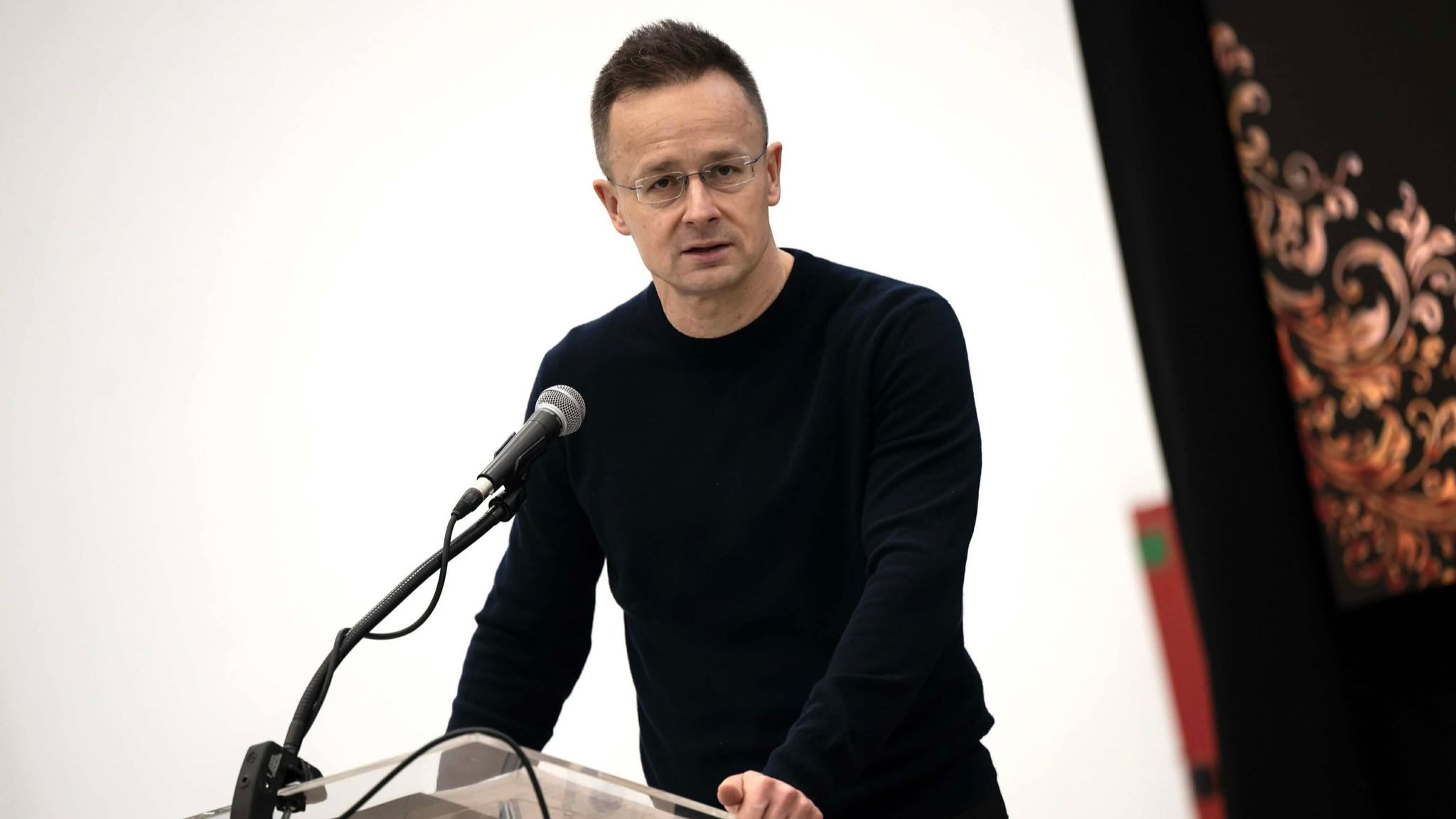
The Hungarian government is building the country’s future on children and therefore places support for families at the centre of its policies, although current global uncertainties could make past achievements fragile, Foreign Minister Péter Szijjártó said on Friday in Demecser.
According to a statement from the ministry, the minister spoke at a pedagogical conference in the city where he first reviewed the major crises of the past one and a half decades, including the financial collapse, mass illegal migration, the coronavirus pandemic and the war in Ukraine. He said the government had been able to respond successfully to these challenges thanks to what he described as a sovereign policy focused on national interests.
Szijjártó underlined that Hungary bases its future on children, and for this reason, family support forms the core of government policy. The goal, he said, is to ensure that having children is not an economic issue and that no one is placed at a disadvantage because they decide to start a family.
He stated that Hungary has now built what he called a ‘world champion family support system’, adding that many countries observe these measures with surprise. In his remarks, the minister listed several policies, including tax exemptions for mothers, benefits that increase depending on the number of children, and financial support for families during early childcare.
He said that in Hungary, mothers do not have to pay personal income tax under certain measures and that families receive expanding tax benefits based on the number of children. He also noted that mothers can receive their previous gross salary converted into net income during the first six months after childbirth, and if they choose to stay at home with the child, they can receive 70 per cent of their earlier salary until the child is two and a half years old.
‘Mothers can receive their previous gross salary converted into net income during the first six months after childbirth’
The minister also referred to other measures, such as the possibility for women to retire after 40 years of work, as well as programmes like the baby loan scheme, CSOK housing support and its updated versions, and the recently introduced 3 per cent housing loan, which he said had also attracted international attention.
Szijjártó Péter added that competitiveness and a hopeful future cannot exist without competitive education accessible to everyone. According to him, two conditions are essential for this: respected teachers and adequate infrastructure. He said the government had worked over the past 16 years to create these conditions.
He highlighted that the number of nursery places in Hungary has doubled since the government took office and has now reached around 70,000. The minister also addressed the issue of teachers’ salaries, recalling that the average salary of teachers was about 170,000 forints in 2010. Following several increases, including a 21 per cent raise last year and a further 10 per cent increase this year, the average salary of teachers is expected to reach around 936,000 forints.
He emphasized that this should not be seen as the final stage, adding that further improvements are needed because the nation’s future depends on children and on the work of both parents and educators.
The minister also referred to equal opportunity measures introduced in the education system, including free textbooks, discounted or free school meals, travel benefits, reimbursement of language exam fees and support for disadvantaged children, such as free dormitory accommodation and social scholarships.
Szijjártó noted that in 2010, the government reached an agreement with Hungary’s Roma community aimed at helping the minority advance and strengthen its social position. According to him, work and participation in education were identified as key tools in this process, and significant progress has been made in these areas over the past years.
He said the number of Roma people in employment has doubled since 2010, and the number of those with higher education degrees has increased two and a half times.
At the same time, the minister warned that during difficult periods such as the current one, achievements can easily become fragile. He said that in such circumstances it may be better to avoid taking risks and to prioritize stability and reliability, particularly in the interest of children and those working with them.
Related articles:
At a time when public debate is increasingly polarized and superficial, Hungarian Conservative remains committed to depth, intellectual honesty, and independent conservative thought.
Producing high-quality journalism requires resources. Your contribution helps us expand our coverage, reach new audiences, and keep our content accessible.

Please consider supporting our mission.