It is the Budapest effect. Having worked for three years at a conservative think tank in the Hungarian capital, the newly released National Security Strategy of the Trump administration strikes me as oddly familiar. The document breathes an unmistakably Budapestian spirit, especially in its sections on Europe.
The strategy paper advocates ‘the sovereign rights of nations’, labels mass migration an existential threat, and asserts that Europe is heading towards ‘civilizational erasure’.
All this, it claims, is driven by an eagerly censorious, ‘sovereignty-sapping’ European Union.
And because, the paper warns, Western and Northern European countries will, through mass migration, ‘become majority non-European’. Are we really to believe that Europe is incapable of shaping full European citizens out of the majority of its non-Western migrants and their children? The Trump administration evidently thinks not, drawing a grim conclusion.
Worse still: the entire theme is explicitly linked to NATO and to America’s security guarantees to Europe. Europe’s mismanagement, the document suggests, puts pressure on the ‘alliance with the United States’, for Washington will not defend a continent that suppresses its national democracies and, through demographic replacement, dismantles its own cultural foundations. Gasp.
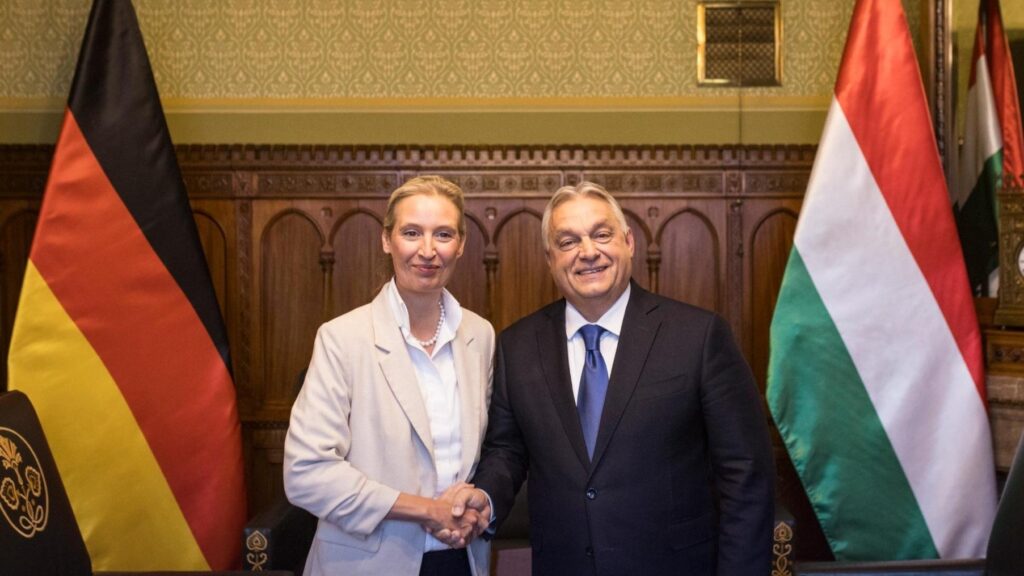
Yet there is hope: ‘the growing influence of patriotic European parties’. Think of Orbán’s Fidesz in Hungary, Meloni’s Fratelli d’Italia, and Germany’s AfD—parties praised by JD Vance and Elon Musk. According to the strategy paper, these patriotic parties must be strengthened, as must the sovereignty of Europe’s nation-states. They are to be bolstered against EU federalism, censorship by EU technocrats, mass migration, and transnational juridification.
Budapest’s Avant-Garde
I tick them off one by one on my Budapest bingo card. This comes from my world. Not everyone, however, inhabits that same reality. In Dutch, German, and British newspapers, I encounter mostly startled reactions to the National Security Strategy.
‘What sort of madness is this?’ liberal Western Europeans ask.
But for the Budapest-centric circles I move in, the strategy paper consists mainly of familiar assumptions and positions. To be sure, the document is exceedingly forthright, at times wild, even reckless. I myself hope to subscribe to more moderate versions of roughly similar interpretations and ideas. Yet to me, the paper is a familiar discursive space.
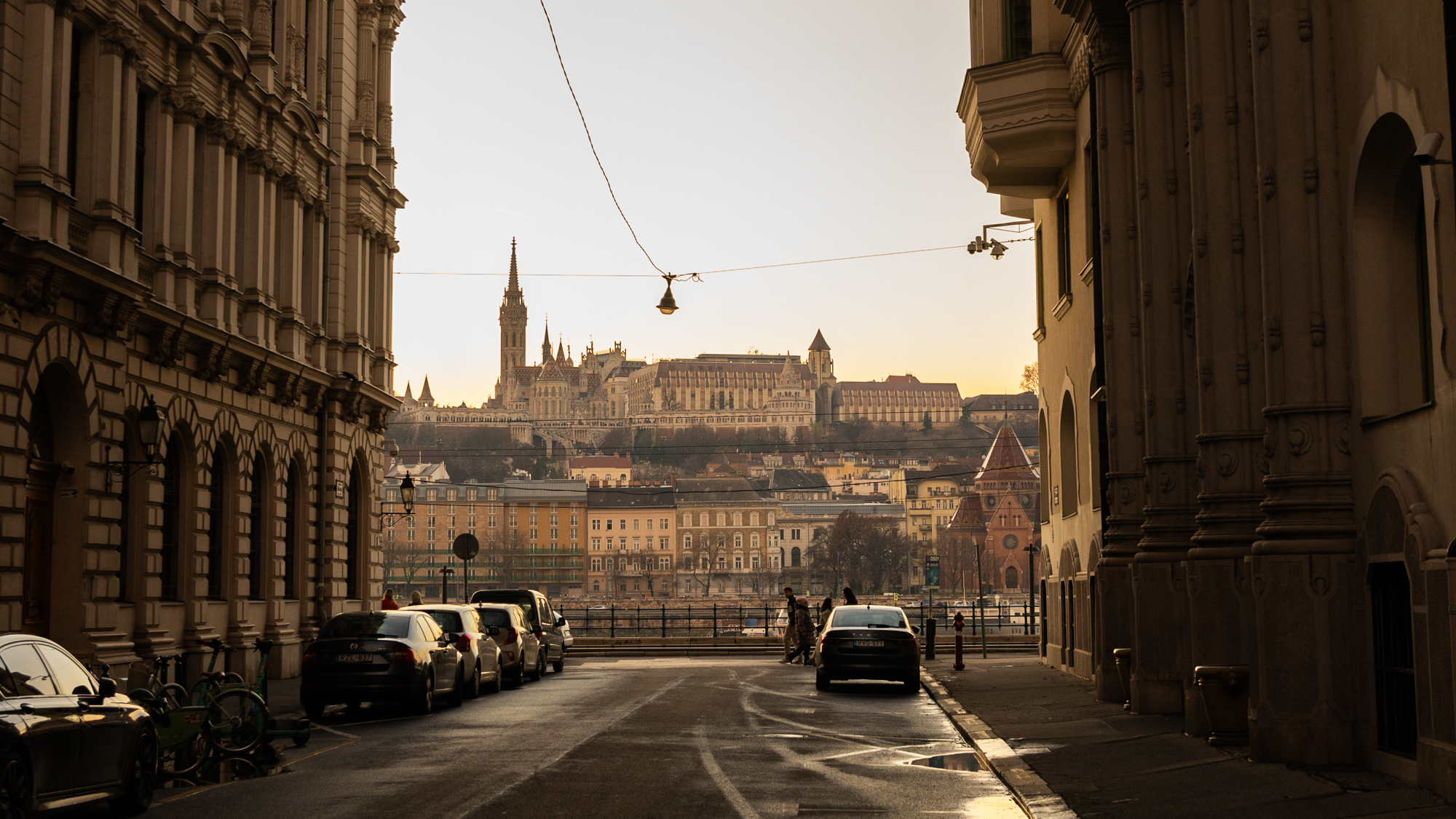
That is because of Budapest. The fact that the strategy paper is not, here, the bolt from the blue that it is in much of the rest of Europe has everything to do with the city’s avant-garde character.
‘As the epicentre of Europe’s culture war, Budapest attracts an assortment of conservative and heterodox intellectuals’
As the epicentre of Europe’s culture war, Budapest attracts an assortment of conservative and heterodox intellectuals, and this motley crew possesses—precisely because it is so disorderly and rebellious—a Fingerspitzengefühl for ideological shifts.
As a result, one finds here a clearer sense of the emerging contours of the new era in international politics and ideology. At times, it even feels as if one is already living, ever so slightly, in the future.
A New Global Era
The new global era that looms on the horizon remains shrouded in mist, even as its contours begin to take shape: sovereigntist, multipolar, post-Occidental, and—at its best, and hopefully—consciously multi-civilizational and self-reflectively culturalist.
These are disorienting labels, ones we cannot yet fully place, precisely because they still lack their most concrete referent. The new era that will eventually give these terms their concrete instantiation is, after all, still in the making.
In a research paper I wrote in late 2024 for the Danube Institute, titled The Sovereigntist Zeitgeist Binding Budapest, Beijing, and America First, I attempted an initial grasp of what is emerging. I outlined the shared assumptions behind America First thinking, the Hungarian connectivity approach, and Beijing’s ‘Socialism with Chinese Characteristics for the New Era’.
What, then, are these shared assumptions? First, that we are living through an axial transformation in which liberal globalization is giving way to a new sovereigntist era. Prime Minister Viktor Orbán speaks of a ‘global system change’ (világrendszer váltás), while General Secretary Xi Jinping describes a ‘great change unseen in 100 years’ (百年未有的大变局).
Secondly, that the world order is anchored in sovereign states and civilizations, not in the universalization of an abstract governance model.
Thirdly, that peace depends on respect for borders and the avoidance of ideological blocs, not on a Western-centric ‘rules-based order’.
All of this is, of course, exceedingly hopeful—and euphemistically phrased. It will still have to work in practice…
Sombre
So please do not read this analysis as a straightforward embrace of the ideological upheaval in question. On the contrary, I am sombre, deeply concerned. We are passing through a foreboding interregnum, and what normativity, what modes of thought and life, lie on the other side remains largely unknown apart from the rough contours I have attempted to sketch.
And this new era must in the end be ordered, a world order rather than a world disorder. And it must be upright. It falls to us—us interregnites—to make something worthy out of this transition and out of what follows it. Let a new order arise, and let it be idealistic, loving, and ennobling.
Above all, we must actualize the uplifting potential intrinsic to sovereigntism. Consider one example: chauvinistic nationalism is base, uninspired, and world-narrowing; yet it may nevertheless serve as a first step towards a self-reflective awareness of one’s own cultural-historical particularity. Such self-awareness, in turn, forms the basis for respecting the particularities of Others, under the broader framework of humanity’s common values.
This ethical dimension is missing from Washington’s strategy paper. And in Hungary and on Europe’s sovereigntist right, there is likewise little sense of the true task at hand: the new era requires a new idealism of human connectedness, self-knowledge, tolerance, and cosmopolitanism.
Not Too Destructive, Please
Alongside actualizing the potential that lies latent within sovereigntism itself, it is at least as important that the transition does not prove too destructive. The waning globalist constellation centred on the liberal West possesses many strengths. Our task, in this interregnum, is to carry as many of those strengths as possible into the new era.
We do not, after all, wish to find ourselves fully locked into stifling national boxes. No: we still want visa-free travel, foreign friends, an open internet, unfamiliar ideas, and trade. In sociological terms, we want the pleasantries of a functionally differentiated world society (funktional differenzierte Weltgesellschaft). Trust me.
‘We still want visa-free travel, foreign friends, an open internet, unfamiliar ideas, and trade’
And what about diasporas, and bi-cultural and bi-racial individuals and couples with loyalties to more than one country? They are splendid, are they not? And to return once more to Europe’s new Europeans, whose forebears came from elsewhere but who now live among us: we cherish them, and they are indeed European.
Finally, one should not let criticism of transnational structures go too far. Europe’s smaller nations, certainly, cannot manage without some degree of supranational governance. They may not always wish to admit it, but they rely on an overarching realm structuring the geopolitical space around them.
A Loving Disposition
What, then, should our fundamental disposition be? A loving one: love for what is one’s own, for the particularity of the politico-cultural self, one’s nation, one place in time and space; but equally love for the dizzying multitude of the human world.
At times, we may even be capable of loving the otherness of concrete Others—the highest form of love, and the true gateway to universality.
Ultimately, humanity forms a community of common destiny, cast into time and propelled towards an unknown future. And that future we must uplift. We must elevate what might otherwise be a desolate sovereigntist non-world into a dignified, flourishing order of peace.
Related articles: