Skip to content
Search
Newsletter
SUBSCRIBE
  • ABOUT
  • CURRENT
  • POLITICS
  • PHILOSOPHY
  • CULTURE & SOCIETY
  • OPINION
  • INTERVIEW
  • DIASPORA
  • GREEN
  • TECH
  • PRINT ISSUES
  • Newsletter
  • SUBSCRIBE
  • ABOUT
  • CURRENT
  • POLITICS
  • PHILOSOPHY
  • CULTURE & SOCIETY
  • OPINION
  • INTERVIEW
  • DIASPORA
  • GREEN
  • TECH
  • PRINT ISSUES
  • Newsletter
  • SUBSCRIBE
  • Conservative Calendar
  • ABOUT
  • CURRENT
  • POLITICS
  • PHILOSOPHY
  • CULTURE & SOCIETY
  • OPINION
  • INTERVIEW
  • DIASPORA
  • GREEN
  • TECH
  • PRINT ISSUES
  • Newsletter
  • SUBSCRIBE
  • ABOUT
  • CURRENT
  • POLITICS
  • PHILOSOPHY
  • CULTURE & SOCIETY
  • OPINION
  • INTERVIEW
  • DIASPORA
  • GREEN
  • TECH
  • PRINT ISSUES
  • Newsletter
  • SUBSCRIBE

PHILOSOPHY

Excerpt of the cover of the book Germany’s Third Empire written by Moeller van den Bruck (1923)
  • PHILOSOPHY

Beyond Reaction: The ‘Conservative Revolution’ in Germany

‘The phenomenon of the conservative revolution was partly a consequence of the collapse of the German state (formed in the 19th century by Bismarckian ‘state-building) after the First World War, and was born out of its internal and external crisis,…
  • Zoltán Pető
  • ‎ —‎ 27.04.2024
Science, technology and engineering -- illustration
  • PHILOSOPHY

The Faustian Bargain

‘Various machines also existed before modernity: the builders of the Gothic cathedrals of the Middle Ages also had considerable engineering and pragmatic knowledge, so it was not that they lacked the necessary knowledge, but above all they lacked the formulation…
  • Zoltán Pető
  • ‎ —‎ 24.04.2024
  • PHILOSOPHY

The Prison of Technological Determinism — How Our Perception of Technology Contributes to the Mental Health Crisis

‘A radical paradigm shift is required in which mental suffering is understood not in isolation, but in relation to consuming and depriving human existence of its roots: family, community, and a transcendental orientation. Only then can Hungarian society, as well…
  • Daniel de Liever
  • ‎ —‎ 18.04.2024
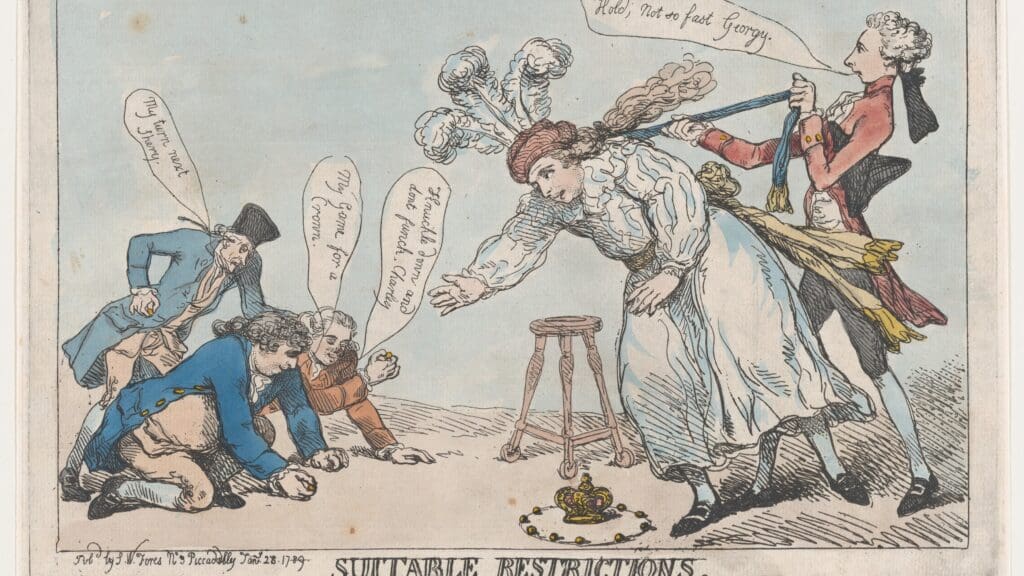
Hand-coloured etching and aquatint by Thomas Rowlandson(1789, Metropolitan Museum of Art)
  • PHILOSOPHY

Democracy and the Concept of Authority

‘In today’s democracy, authority is in crisis because real authority cannot follow from mere quantity. Quantity is always relative, and the thing what is ‘never identical to itself’ cannot awaken the intuition of true respect, true authority, and true supremacy….
  • Zoltán Pető
  • ‎ —‎ 07.04.2024
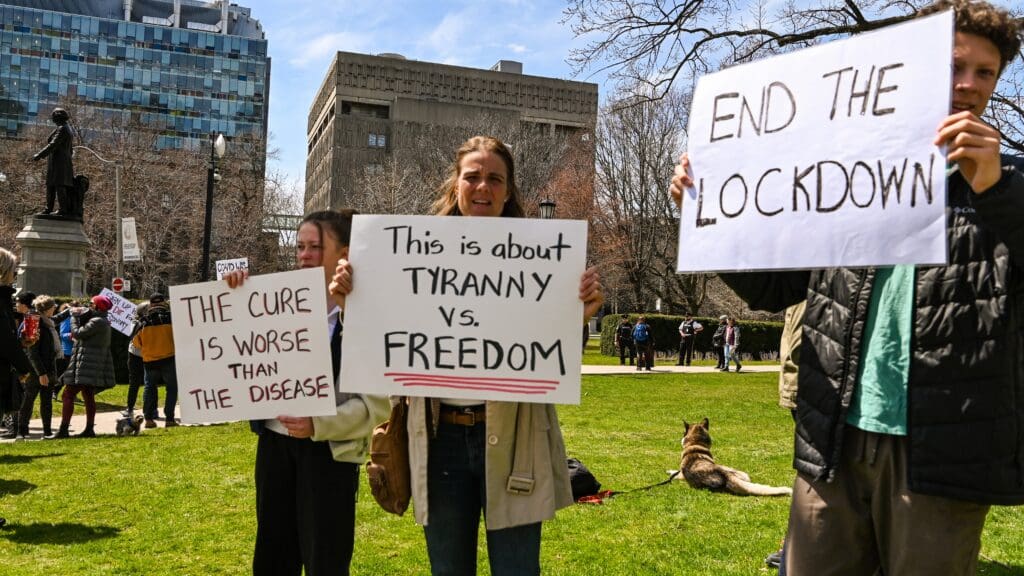
Anti-lockdown protesters at Queen's Park, Toronto, Canada on 25 April 2020.
  • PHILOSOPHY

Why We Should Read Carl Schmitt

‘Schmitt’s thought becomes particularly relevant in understanding how governments define the parameters of inclusion and exclusion in their responses to the pandemic. Schmitt’s theories provide a realistic framework for analysing such complex political issues, and understanding such a critical perspective…
  • Diána Dobos
  • ‎ —‎ 06.04.2024
Tea Time by Jan Josef Horemans II (18th century)
  • PHILOSOPHY

Culture and Civilization — Oswald Spengler’s Approach to History

Spengler’s work has not lost any relevance over the century that has passed since it was released, but rather has become increasingly significant: it is now one of the inescapable foundations of the philosophy of history. Many of the predictions…
  • Zoltán Pető
  • ‎ —‎ 05.04.2024
Jan Brueghel the Younger, Allegory of War (1640s). Private collection
  • PHILOSOPHY

How Democracies and Autocracies Fight Wars

‘For material, political, and geopolitical reasons, democracies trend towards long-duration, remote, low-exposure, naval, air, and space warfare. An absent-minded reading might leave a reader with a sense of dissonance between democratic tendencies and democratic victories in two world wars. In…
  • Bruce Oliver Newsome
  • ‎ —‎ 20.03.2024
Divine Law as the Basis for Human Justice by Jacob Jordaens (1665)
  • PHILOSOPHY

A Treatise on Law by St Thomas Aquinas

The notion of law reached new heights in the thirteenth century with Aquinas. Building upon the jurisprudence of the father of canon law, Gratian, who synthesized and harmonized the works of Roman jurists and the theological traditions, the Angelic Doctor…
  • Fr. Mario Alexis Portella
  • ‎ —‎ 17.03.2024
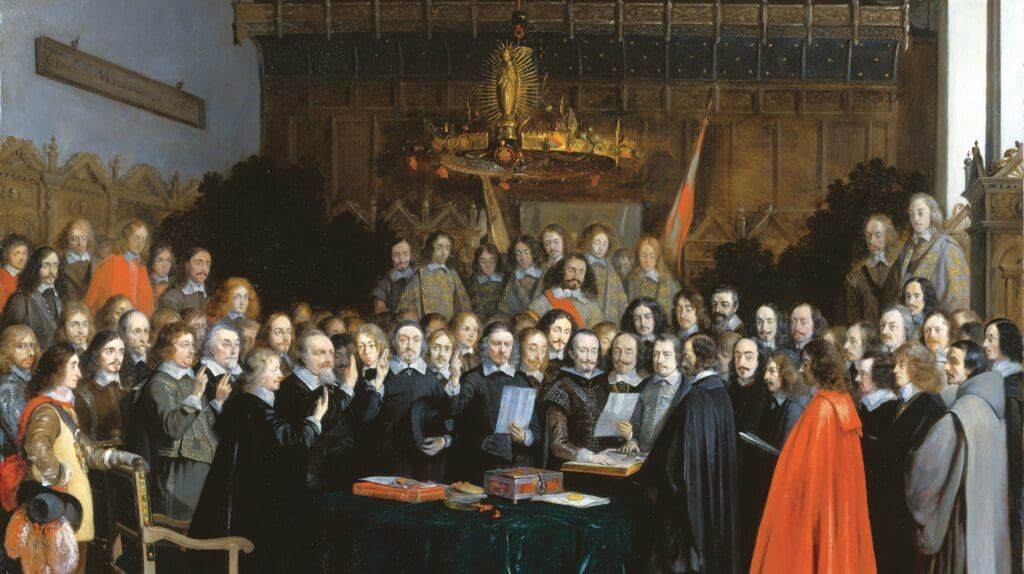
Gerard ter Borch, The Ratification of the Treaty of Münster (1648). Rijksmuseum, Amsterdam, The Netherlands
  • PHILOSOPHY

The Concept of Nation According to Scruton and the Central European Perspective

In Scruton’s philosophy…the social practice of legislation and jurisdiction could not be realized outside the national framework, because—regardless to their origins—the interpretation and the enforcement of the set of legal rules and moral duties, even human rights, are bound to…
  • Márton Falusi
  • ‎ —‎ 01.03.2024
The Birthday of Plato Celebrated in the Villa di Careggi by Lorenzo the Magnificent by Luigi Mussini (1862)
  • PHILOSOPHY

The Intellectual and the Conservative

‘Before the corrosive spirit of purely rational analysis without synthesis became widespread, societies were conservative because they perceived the non-variable essence behind phenomena not only through their most eminent intellectuals but also collectively. The ‘‘men of the spirit’’ in each…

  • Zoltán Pető
  • ‎ —‎ 25.02.2024
Page1 Page2 Page3 Page4 Page5

Hungarian Conservative is a quarterly magazine on contemporary political, philosophical and cultural issues from a conservative perspective.

ABOUT

GENERAL TERMS & CONDITIONS

PRIVACY POLICY

LOG IN

CONTACT

[email protected]

© Hungarian Conservative 2025

  • Privacy Policy
  • General Privacy Policy
  • General Terms & Conditions
  • Comment Regulation

POWERED by BLACKDEVS

  • HU24EU
  • CURRENT
  • POLITICS
  • PHILOSOPHY
  • CULTURE & SOCIETY
  • OPINION
  • INTERVIEW
  • DIASPORA
  • TECH
  • PRINT ISSUES
  • Newsletter
  • SUBSCRIBE
  • HU24EU
  • CURRENT
  • POLITICS
  • PHILOSOPHY
  • CULTURE & SOCIETY
  • OPINION
  • INTERVIEW
  • DIASPORA
  • TECH
  • PRINT ISSUES
  • Newsletter
  • SUBSCRIBE
Search

About

SUBSCRIBE

Tired of browsing?

Choose the Hungarian Conservative newsletter. Sign up for free – cancel anytime.

By signing up, you consent to receive our newsletter and allow Hungarian Conservative to use your data for marketing purposes. You can unsubscribe at any time.

We use cookies to enhance your browsing experience and to personalize the content and advertisements that you see on our website.