Last week marked the fifth anniversary of the return to power of the Islamic Emirate of Afghanistan, commonly referred to as the Taliban, after their removal in 2001 with the support of the United States and other international allies.
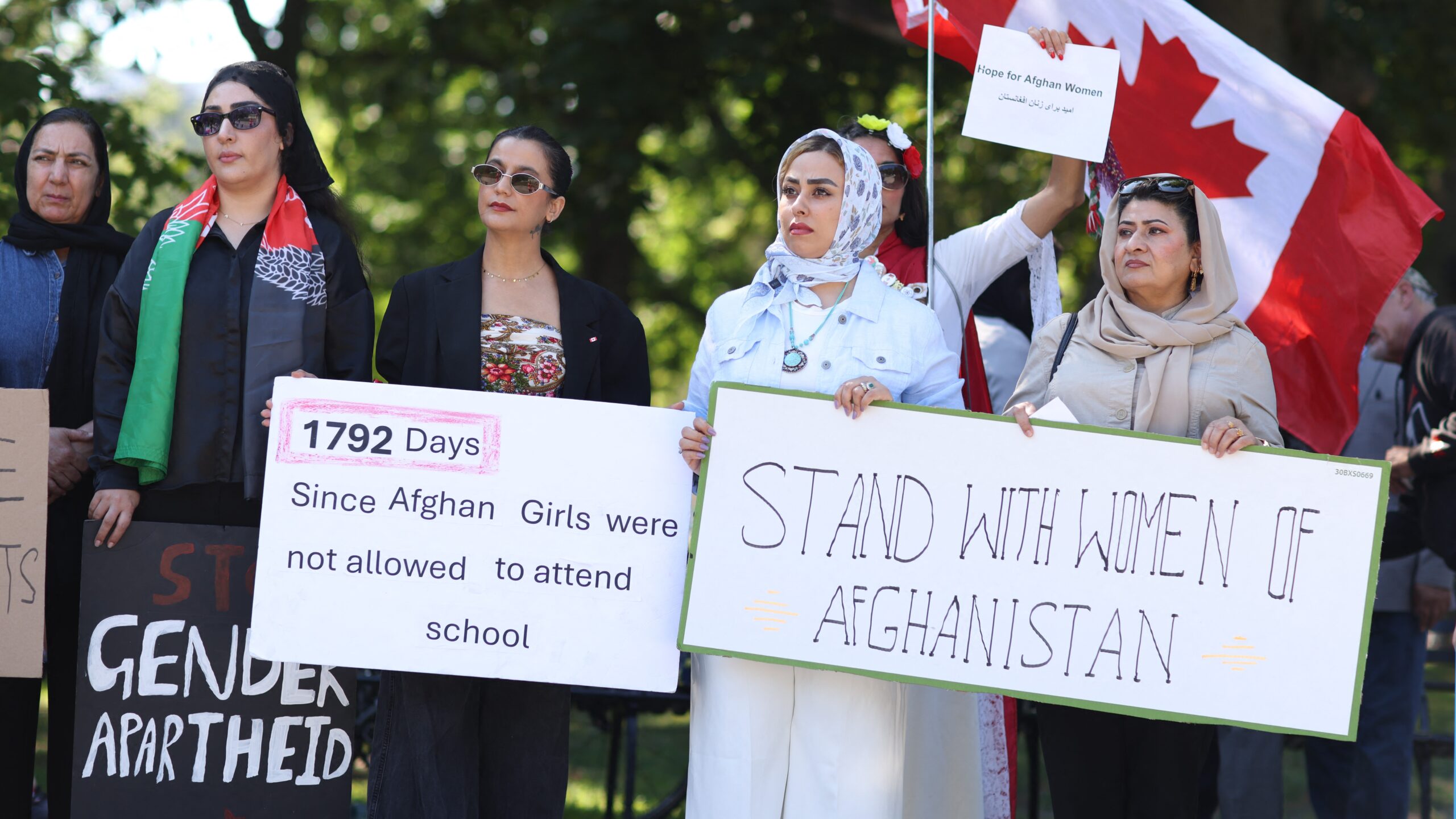
Since their resurgence, economic challenges, restrictions on girls’ education, and the dismantling of laws and services aimed at preventing and addressing violence have increased the risk of violence, particularly against Afghan women and girls. In this context, women have emerged as the most determined opposition to the group’s efforts to transform the nation into a fundamentalist Islamic theocracy, particularly the Taliban’s state-building initiative, which is fundamentally focused on the exclusion of women and girls from public life. Concurrently, women in Afghanistan are almost four times less likely than men to access formal justice systems, underscoring an expanding justice gap that leaves many women without secure means to assert their rights, seek protection, or contest abuse.
Women, within Islamic doctrine, are perceived as inferior to men, prompting the Taliban to introduce increasingly stringent measures each year. For example, in 2024, the regime enacted the Law on the Promotion of Virtue and the Prevention of Vice, alongside the issuance of over a hundred decrees affecting nearly every facet of women’s lives. More than three thousand morality inspectors have been assigned throughout the nation to enforce the Taliban’s regulations in public areas and to compel male family members to guarantee women’s adherence within their households.
In May, Richard Bennett, the UN Special Rapporteur for human rights in Afghanistan, reported that women and girls who protested against or opposed the Taliban’s gender policies experienced torture, mistreatment, and sexual violence while in detention facilities.
His findings indicated that, despite the Taliban’s declared prohibition on forced marriage in 2021, officials within the Taliban have been implicated in both perpetrating and perpetuating such marriages. Indeed, the prevalence of early, forced, and child marriage remains alarmingly high and is increasing. In 2023, almost 30 per cent of Afghan girls under 18 were married, with 10 per cent of them being under 15 years old. Some families, facing poverty, resort to marrying off their daughters as a means of survival.
‘The prevalence of early, forced, and child marriage remains alarmingly high and is increasing’
The Taliban’s agenda has also involved dismantling institutions, subordinating the judiciary to religious authority, eradicating political dissent and civic participation, suppressing independent media, and redirecting male and young female students from schools offering comprehensive formal education to madrasahs (centres of Islamic study and teaching). All of this is in pursuit of maintaining a despotic rule rooted in a 14-hundred-year-old religion characterized not by peace, but by ‘submission’—‘Islam’ is derived from the Arabic root s-l-m (al-Silm), which is a verbal noun that essentially means ‘to submit’ or ‘to surrender’; an individual who embraces Islam and submits is referred to as an amu’min (believer), a Muslim, while someone who rejects Islam is labeled a kafir (unbeliever).
The fundamental tenet of an Islamic theocracy, as illustrated by sharia law, is to uphold the supremacy of Allah without any exceptions. This principle, for instance, explains why Muslims have initiated holy wars over the centuries, as jihad embodies a widespread concept and authority. As noted by the 20th-century jurist Muhammad Hamidullah:
‘War is defined by Muslim jurists as the expending of ability and power in fighting the path of Allah by means of life, property, tongue and other than these…to preserve one’s own power and then to break that of the unbelievers and to subjugate them…to establish a theocracy, a Kingdom of Allah on earth…’
Despite the valiant efforts of Afghan women to oppose the Taliban, international interactions with Kabul, including those of the Russian Federation—the only nation to have officially recognized the Taliban—and Communist China, which has accepted the credentials of a Taliban-appointed ambassador, have largely overlooked or failed to support their initiatives.
Similar to other regional countries that have strengthened their diplomatic and economic ties with the Taliban, it has been concluded that forming a transactional relationship with the regime is the most effective strategy for containing extremism, managing migration, and stabilizing the nation. This is in spite of the United Nations Analytical Support and Sanctions Monitoring Team’s report indicating that the Taliban maintains a ‘close and symbiotic’ relationship with al-Qaeda, and that various other extremist groups continue to operate within the country.
‘As the Taliban escalates their repressive measures, the diplomatic consequences they face are diminishing rather than increasing’
In June, the European Commission extended an invitation to the Taliban to engage in discussions regarding migration issues, a meeting that included representatives from 15 EU member states. While foreign officials voice their concerns and denounce the oppression faced by women and girls during these discussions, it is frequently apparent to the Taliban that these matters do not hold the utmost importance for their counterparts. As a result, as the Taliban escalates their repressive measures, the diplomatic consequences they face are diminishing rather than increasing.
The UN in 2021 had called for ‘the establishment, through inclusive negotiations, of a government that is united, inclusive and representative with the full, equal and meaningful participation of women.’ Yet, the past five years have shown that further collaboration with the Taliban will not lead to any moderation of this terrorist regime.
In the event of any engagement with the Taliban, it is crucial for governments to establish a formal framework that incorporates Afghan women in pivotal conversations about the future of Afghanistan. Such substantial participation would send a powerful signal that the international community does not recognize the regime’s claim as the sole political representative of Afghanistan, especially as the group has systematically undermined the rights of half its population through legislation, policy, and practice, effectively excluding them from public affairs.
Related articles:
At a time when public debate is increasingly polarized and superficial, Hungarian Conservative remains committed to depth, intellectual honesty, and independent conservative thought.
Producing high-quality journalism requires resources. Your contribution helps us expand our coverage, reach new audiences, and keep our content accessible.

Please consider supporting our mission.