For decades, the United Nations has presented itself as the world’s foremost institutional defender of women against violence, war, and oppression. That claim has now been tested—and found wanting.
When Israeli women were subjected to systematic sexual brutality during Hamas’s 7 October attack, key voices within the international community grew strangely hesitant to say so plainly. More than 600 days later, that hesitation has become increasingly difficult to distinguish from denial.
The testimony of former hostage Ilana Gritzewsky makes that failure impossible to ignore.
Gritzewsky was kidnapped from her home in Kibbutz Nir Oz on 7 October and held in Gaza for 55 days. She did not come as an activist or a politician. She came as a witness.
‘I am a woman who was kidnapped, who survived, and who came back to be the voice for those still in hell, for those who were murdered and will never have a voice, and for those who are still too afraid,’ she told the chamber. ‘And I will not be silent.’
She described 55 days she called ‘hell that words cannot describe’—a gun held to her head, being dragged by her hair, beaten unconscious, waking up half-dressed and surrounded by armed men. She spoke of being treated as property, stripped of agency and dignity for the amusement of her captors. And she distilled all of it into a single, unanswerable line: ‘I am standing here today—not as a report, not as a statistic. I am a woman who survived. I am the living proof of sexual violence by Hamas.’
That is not political rhetoric. It is the testimony of a woman whose body and mind still carry the evidence.
‘The victims were never silent—the world was’
As Sheryl Sandberg, founder of Lean In, put it in her endorsement of the Civil Commission’s report on these crimes titled Silenced No More: ‘The victims were never silent—the world was.’ It is hard to find a more precise diagnosis of what has actually happened over the past two and a half years. The women were never quiet. Gritzewsky was never quiet. It was the institutions built to listen to women like her that went quiet instead.
That silence has a name, and in this case it belongs in part to UN Special Rapporteur Reem Alsalem. Despite survivor testimony and the UN’s own prior reporting on Hamas’s use of sexual violence on 7 October, Alsalem has repeatedly cast doubt on the scale of what occurred. In November 2025, she said no independent investigation had confirmed rape took place that day. Months later, she went further, describing claims of mass sexual violence against Israelis as ‘misinformation’ deployed to justify Israel’s military campaign in Gaza.
For many observers, this is not a good-faith dispute over incomplete evidence. It is a moral failure dressed up as caution.
‘Violence against women must be condemned as a matter of universal human rights’
The principle at stake is not complicated, nor should it depend on who the victims are: violence against women must be condemned as a matter of universal human rights, or the very idea of universal human rights loses its meaning. The moment a UN office treats one nation’s victims as self-evidently credible and another’s as politically suspect, that office has stopped being a neutral guardian of human dignity. It has become an instrument of whichever narrative is currently convenient.
When Gritzewsky confronted Alsalem directly, she asked the question that should haunt every institution that claims to speak for women: ‘When other Israeli women and I begged not to be raped, why were you silent?’
Silenced No More
That question did not go unanswered for long. The following day, Dr Cochav Elkayam-Levy, founder and chair of the Civil Commission on October 7 Crimes by Hamas Against Women and Children, appeared before the UN Human Rights Council to present Silenced No More—by her account, the most comprehensive evidentiary record yet assembled of sexual crimes committed during the attack and against hostages held in Gaza. The Commission spent nearly two years gathering survivor testimony, eyewitness accounts, forensic material, visual evidence, and expert analysis, and documented 13 recurring patterns of sexual and gender-based violence, including rape, gang rape, sexual torture, and mutilation committed against hostages in captivity.
Elkayam-Levy made clear that the question of whether these crimes happened should no longer be open to debate. ‘We revealed 13 patterns of abuse—including rape, gang rape, sexual torture, and the deliberate mutilation of victims’ faces and genitalia,’ she told the Council, arguing that this was not the work of individual terrorists acting in the chaos of battle, but a deliberate strategy aimed at terrorizing both the victims and Israeli society as a whole. As she put it: ‘This terror was made for visibility. Women’s bodies became spectacles of war.’
Her sharpest words, though, were reserved not for Hamas but for the institutions she believes failed the victims afterward: ‘Speaking for so many Israeli women who care about women’s rights, we were heartbroken by your response. Where is your compassion?’
This is the broader value of the Commission’s work, and why it has drawn endorsements from figures as varied as Hillary Clinton, who called the report ‘an act of witness’ against the erasure of wartime sexual violence, and Prof Mukesh Kapila, who pointed to the ‘muted responses—and even denials’ that followed 7 October as the reason such rigorous documentation was needed in the first place.
A report like this does not exist to win an argument. It exists because, without a permanent evidentiary record, atrocities committed against women have a long and troubling history of being minimized, politicized, or simply erased from memory.
That is precisely the danger here. The tragedy of 7 October should never become collateral damage in a larger political argument about the war that followed it. Terrorism is not mitigated by the identity of its perpetrators, and a victim’s credibility should never hinge on her nationality. There can be no hierarchy of survivors—not at the UN, not anywhere.
‘Atrocities committed against women have a long and troubling history of being minimized, politicized, or simply erased from memory’
Ilana Gritzewsky’s courage in standing before the UN should remind the world that behind every cited statistic is a human being whose suffering was real and specific. Her testimony deserves to be weighed on its own merits, not filtered through whatever narrative is politically expedient in a given news cycle. If the international bodies entrusted with defending women’s rights cannot bring themselves to fully acknowledge a survivor who stands before them and asks to be believed, they will have forfeited the very moral authority they invoke every time they speak in women’s name.
The victims were never silent. It is long past time the institutions that claim to speak for them stopped being silent too.
No Matter How Hard They Tried, the Truth about Hamas’s Sexual Violence Could Not Be Silenced in Hungary
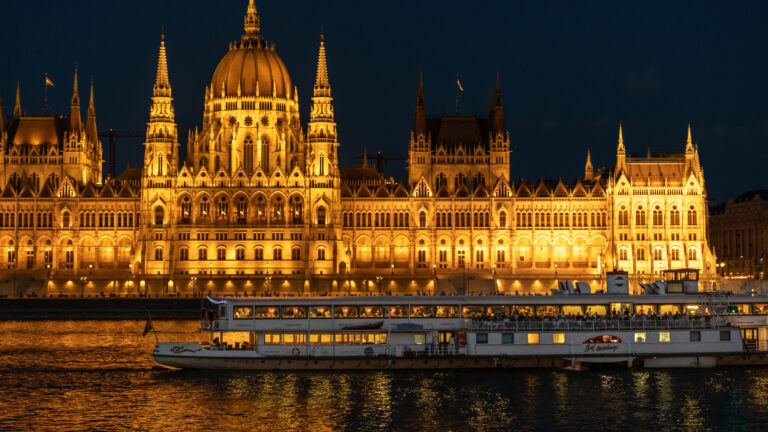
This pattern was not confined to international institutions. A smaller but revealing example unfolded in Budapest in May 2024, when the Danube Institute hosted a panel discussion titled Sexual Violence in Israel and Gaza on October 7 and Beyond: Impact, Denial and Silence. As Hungarian Conservative reported at the time, the event brought together Israel’s ambassador (at that time) to Hungary, Yacov Hadas-Handelsman; Staff Sergeant Nicki, representative of the IDF’s spokespersons unit; Shirel Liberman, co-founder of the women’s advocacy group SHIFT; and Or Yissachar, a former head of research of the Israel Defense and Security Forum, to discuss the very atrocities this report documents.
Events of this kind rarely face such disruption in Hungary, however, a group of pro-Palestinian demonstrators, several of whom had reportedly travelled in from Vienna, disrupted the speeches repeatedly, shouting slogans rather than asking questions, and security concerns eventually forced the ambassador to leave the building. One demonstrator was later questioned by police on suspicion of assault.
What the protesters did not manage to do was stop the speakers from talking. Ambassador Hadas-Handelsman used his remarks to point to what he called ‘the shocking and painfully deafening silence of women’s organizations’ in the aftermath of 7 October. Staff Sergeant Nicki, who had come not just as a soldier but as someone bearing witness to survivor testimony, kept speaking through the interruptions and stayed afterward to answer questions. Liberman and Yissachar did the same, each finishing their remarks despite the heckling.
What happened in Budapest was, in many ways, a smaller reflection of the same dynamic seen at the UN: an attempt to drown out survivors’ testimony rather than engage with it on its merits. It did not succeed in Geneva, and it did not succeed in Budapest. The speakers finished what they had come to say. That, ultimately, is the thread running through this story—from Gritzewsky’s testimony to the Civil Commission’s report and the disrupted panel in Hungary. Each attempt to silence these women has met with their determination to keep speaking.
Related articles:
At a time when public debate is increasingly polarized and superficial, Hungarian Conservative remains committed to depth, intellectual honesty, and independent conservative thought.
Producing high-quality journalism requires resources. Your contribution helps us expand our coverage, reach new audiences, and keep our content accessible.

Please consider supporting our mission.