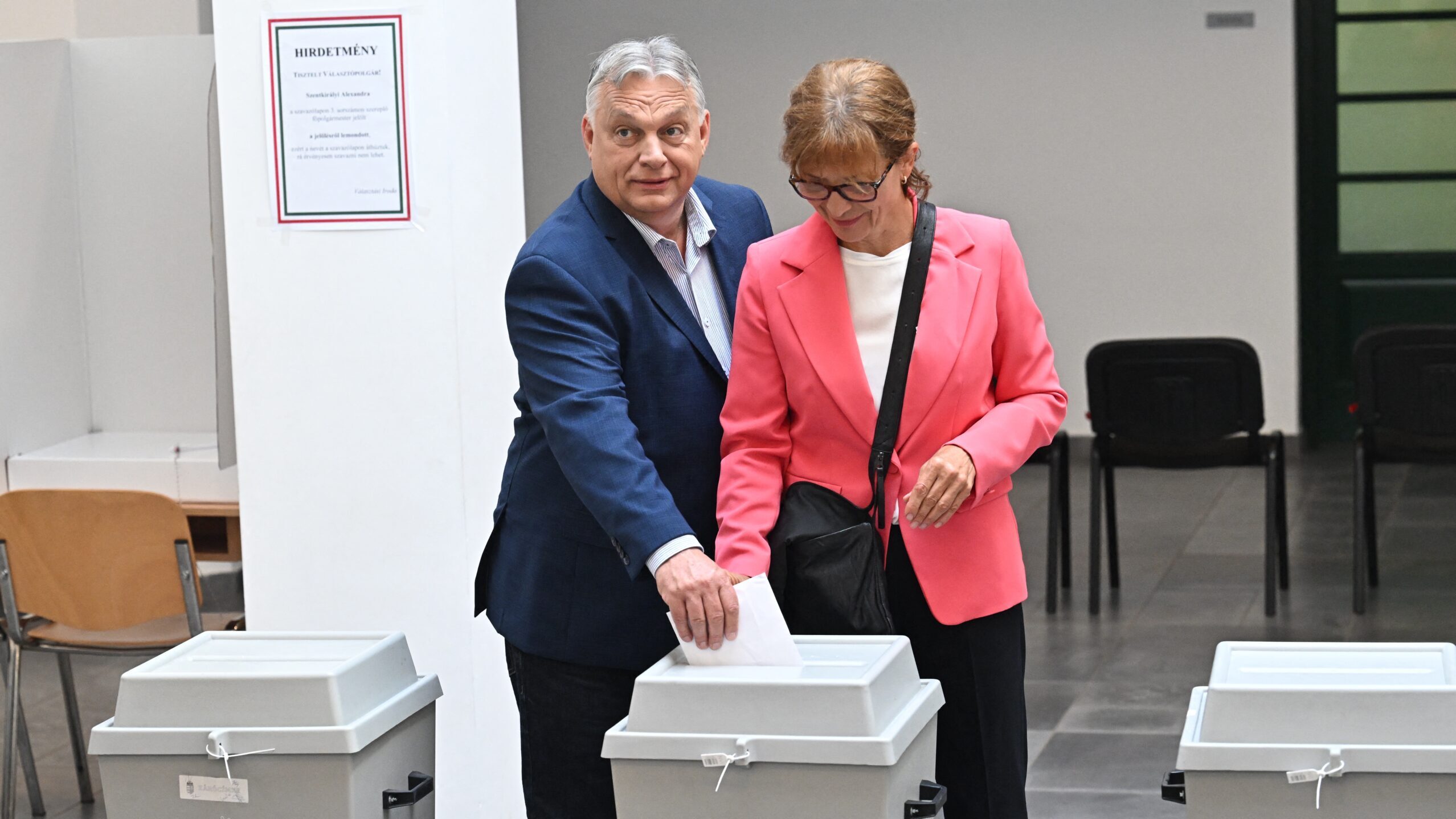
2026 will see many exciting and significant elections, from the United States to Slovenia, and from Sweden to Hungary. Many of these votes go far beyond domestic affairs and could influence wider geopolitical developments across the globe. In the following article, we present what we see as the top five elections to watch in 2026.
16 Years of Viktor Orbán on the Ballot
What else could top the list other than the upcoming parliamentary elections in Hungary, one of the most conservative member states of the European Union? The April vote will be significant in many respects. Hungarians will go to the polls to pass judgment on 16 years of governance by Hungarian Prime Minister Viktor Orbán, whose governing party alliance, Fidesz–KDNP, has secured four consecutive supermajorities in elections held since 2010.
Over those 16 years in government, Orbán has become one of the most influential figures of Europe’s new right movement, inspiring parties such as Germany’s Alternative für Deutschland (AfD), Andrej Babiš’s ANO in Czechia, Spain’s VOX, and many others. By promoting traditional Christian values, a hard stance on mass and illegal migration, resistance to wokeism, and exceptional support for families, Hungary has also become a key reference point for American conservatives, elevating Orbán to the status of favourite European leader among US President Donald Trump’s MAGA voter base.
These same positions, however, have turned Hungary into a ‘pariah’ state within the European Union. From migration policy to the war in Ukraine, Orbán is increasingly portrayed as a stick between the spokes of Europe’s progressive-globalist elites. Since 2022, the European Commission has been withholding EU funds from Hungary, and following a 2024 ruling by the European Court of Justice, the country has been fined one million euro per day for refusing to accept migrants.
The permacrisis Europe has faced since the Covid-19 pandemic—coupled with Brussels’ political and financial pressure and the downward trajectory of the German automotive industry—has resulted in an economic slowdown in Hungary that is being felt acutely by citizens. In this economic environment, a new opposition force to Orbán has emerged, led by a defector from Fidesz circles, Péter Magyar, the ex-husband of former justice minister Judit Varga. Magyar and the Tisza Party rose rapidly to become the second-largest political force in Hungary during the 2024 European elections, securing 29.6 per cent of the vote just four months after Magyar entered politics, effectively wiping the traditional opposition parties off the political spectrum.
Magyar leads a pro-European platform, pledging alignment with Brussels’ policy preferences for Hungary. He is supported by Manfred Weber’s European People’s Party (EPP) and is widely described by pro-Orbán circles as a ‘Brussels puppet’. In government, he would be expected to lift Hungary’s veto on Ukraine’s EU accession and support further EU assistance for Kyiv’s war effort, while phasing out Russian energy sources from the country’s imports.
Polling data in Hungary varies widely, largely due to the sharply divided polling landscape between pro-government and pro-opposition institutions. Nevertheless, Orbán is clearly preparing for the tightest race of his 16-year tenure as prime minister. With endorsements from both US President Donald Trump and Russian President Vladimir Putin in hand, the outcome of the Hungarian election will carry significance well beyond domestic politics in a Central European country. If Orbán secures a fifth consecutive victory, it would mark a major success for the global right in its pushback against progressive-globalist elites. If he falls, the global right-wing movement would lose one of its most influential figures, while Europe’s elites would remove a key obstacle to their long-term vision of deeper EU centralization and a ‘United States of Europe’.
Could Trump Defend the House?
The 2026 US midterm elections mark a critical test for the conservative movement and the durability of America First policies under President Donald Trump. Although national polling gives Democrats a narrow lead on the generic House ballot, structural factors paint a more balanced picture.
According to Cook Political Report ratings, Republicans hold more solidly aligned districts, with 187 solid GOP seats compared to 177 solid Democratic ones, reflecting the effects of redistricting and persistent geographic advantages. While Democrats have a slight edge in likely and lean districts, Republicans remain competitive in toss-up races, suggesting that strong turnout and disciplined campaigning could preserve their narrow House majority.
‘Trump’s active role in fundraising and mobilization further strengthens GOP prospects’
Republican messaging on economic growth, national sovereignty and border security continues to resonate with voters and was central to Trump’s 2024 victory. There is also substance behind the slogans. US GDP grew at an annualized rate of 4.3 per cent in the third quarter of 2025, marking the strongest expansion in two years. This figure exceeded economists’ consensus forecast of around 3.3 per cent and surpassed the second quarter’s growth rate of 3.8 per cent. Entering the midterm year on the back of such robust economic momentum could prove decisive in favour of the governing party.
Moreover, Trump’s active role in fundraising and mobilization further strengthens GOP prospects in key battlegrounds and reinforces party unity, not to mention that US billionaire Elon Musk has reportedly started funding the GOP midterm campaign.
Nonetheless, significant risks remain. Historically, the president’s party tends to lose ground in midterm elections, and Republicans enter 2026 with a slim 220–213 majority. Even modest Democratic gains could be sufficient to flip control, making the defence of the House a serious challenge despite otherwise favourable structural conditions.
Tidö 2.0 to Cement Sweden Democrats’ Power
Swedes will go to the polls in September 2026 after four years of the historic ‘Tidö Agreement’ coalition, which allowed the Christian Democrats (KD), the Moderate Party (M) and the Liberals (L) to govern as a minority with the passive support of the right-wing, anti-immigration Sweden Democrats (SD). Signed in 2022, the Tidö Agreement enabled the SD to break out of the cordon sanitaire imposed by mainstream parties since 2010 and fundamentally shifted Sweden’s asylum and migration policy paradigm.
Its stated aim was to create the strictest asylum system permissible under EU law in a country that many argue has transformed from a safe and secure Nordic society into a multicultural one increasingly affected by gang violence and security concerns following decades of open-border policies. From outside the government, the SD also succeeded in pushing through stricter criminal justice measures.
However, nine months before the election, the opposition Social Democrats (S) clearly lead in all credible polls, with support at around 30 per cent. Trailing behind them are the Sweden Democrats at 20–23 per cent, followed by the Moderates at roughly 18 per cent. The Liberals and the Christian Democrats are hovering around the 4 per cent parliamentary threshold, while the Left Party (V), the Centre Party and the Green Party (MP) stand at approximately 5–6 per cent. Aggregated polling trends point to a tight race between the Red-Green bloc (S, V and MP) and the Tidö Agreement camp (KD, M and L), supported by the SD and the Centre Party, with overall support estimated at around 47 per cent and 50 per cent respectively.
A renewed Tidö Agreement coalition would mark a deeper fusion between Sweden’s centre-right and hard right, embedding the Sweden Democrats’ agenda more systematically into government policy. Under a prospective ‘Tidö 2.0’, cooperation would shift from tactical to ideological, prioritizing stricter migration controls, tougher law-and-order policies, deregulation and a more sovereignty-focused approach, while further normalizing the SD’s influence within mainstream governance.
At the EU level, such an outcome would signal a broader rightward shift and offer a potential playbook for similar realignments elsewhere—most notably in Germany—by demonstrating how mainstream conservative parties could integrate and legitimize, rather than demonize and isolate, hard-right actors such as the Alternative für Deutschland (AfD) without formally bringing them into government.
Janša Is Back!
Slovenia’s parliamentary election, scheduled for March 2026, is shaping up to be one of the most competitive contests in recent memory, driven by widespread public dissatisfaction with the incumbent coalition led by Robert Golob’s liberal Freedom Movement (Svoboda).
Opinion polling indicates that the opposition Slovenian Democratic Party (SDS) is consistently in the lead, with support at around 21–22 per cent, ahead of Svoboda, which is polling at approximately 15–17 per cent. Smaller parties—including the Social Democrats, New Slovenia (NSi), Levica and the Democrats—are clustered between 5 and 8 per cent in recent surveys. Taken together, these trends point to a fragmented yet highly competitive political landscape, with no single party anywhere near an outright majority.
At the centre of the right-wing resurgence stands Janez Janša, Slovenia’s most prominent conservative political figure, who served multiple terms as prime minister prior to his defeat in 2022. Under Janša’s leadership, the SDS has consolidated its position as Slovenia’s dominant centre-right force, and current polling suggests it could once again emerge as the largest party, placing Janša in a strong position to initiate coalition negotiations for government formation.
A potential return of Janša to power would carry implications well beyond Slovenia’s borders. He has long maintained close political ties with Viktor Orbán, aligning with him on conservative, sovereignty-focused policy agendas and regional cooperation frameworks. An SDS-led government could deepen bilateral cooperation with Hungary, reinforcing a Central European axis that is sceptical of deeper EU integration and the harmonization of migration policy.
AfD’s Unstoppable Rise
The 2026 German state elections—spanning Baden-Württemberg (8 March), Rhineland-Palatinate (22 March), Saxony-Anhalt (6 September), and later Mecklenburg-Vorpommern and Berlin—are shaping up as pivotal tests for the rising Alternative for Germany (AfD) amid declining support for mainstream parties.
In Baden-Württemberg, support for AfD has surged to around 19 per cent, up from single-digit results in 2021. The CDU is polling at roughly 31 per cent, while the Greens stand near 20 per cent, positioning the AfD as a decisive force shaping campaign dynamics in a state long dominated by mainstream parties. In Rhineland-Palatinate, AfD polling in the high teens—around 17–23 per cent—places it well ahead of traditional opposition forces, eroding the Social Democrats’ long-standing dominance and forcing strategic recalculations across the political spectrum.
A particularly high-stakes contest is expected in Saxony-Anhalt, where recent polls put AfD support at approximately 39–40 per cent, far ahead of the CDU’s roughly 26–27 per cent. Such figures point to a dramatic rightward shift and suggest that the AfD could emerge as the strongest party in the state by 2026. In Mecklenburg-Vorpommern, the party is also polling competitively, often in the 29–38 per cent range, at times surpassing both the SPD and the CDU, indicating a broader consolidation of regional strength.
Recent polling also indicates that a clear majority of Germans expect at least one AfD-led state government by 2026, with a substantial share anticipating the emergence of an AfD state premier, underscoring the party’s expanding appeal beyond its traditional strongholds.
At the national level, the AfD has managed to increase and stabilize its support throughout 2025, with federal polling placing the party ahead of CDU. Under the leadership of co-chair Alice Weidel, the AfD has also worked to break out of its previous international isolation, pursuing high-profile outreach to Viktor Orbán’s government in Budapest and engaging with the Trump administration in the US.
Designated as an ‘extremist party’ deemed incompatible with Germany’s free democratic order, the AfD is subject to heightened surveillance by the country’s domestic intelligence services and is a frequent target of Antifa mobs and rioters. Further electoral advances at the state level would significantly increase the party’s chances of being taken seriously as a political force, rather than continuing to be treated as an oppressed dissenting movement by the mainstream political establishment.
Related articles: