This is a translated and edited version of the original interview, published in Reformátusok Lapja on 5 April 2026.
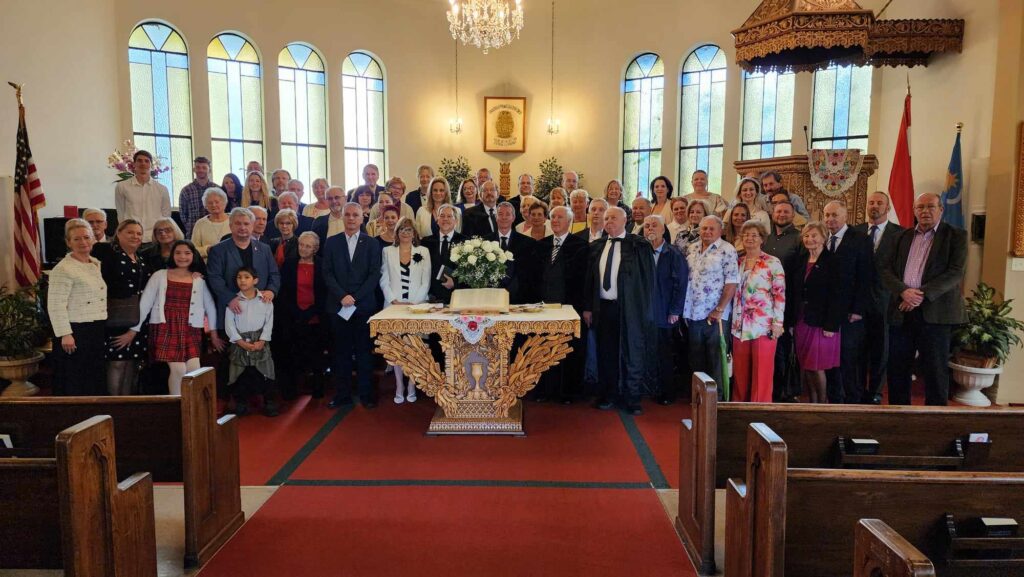
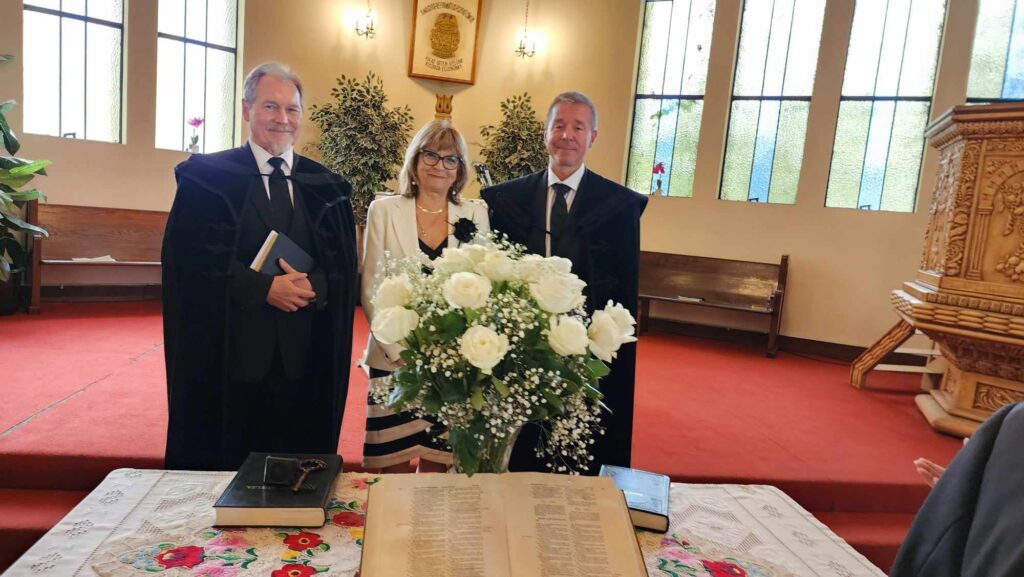
Attila Károly Ágoston-Palkó, dean of the Western Classis of the Hungarian Reformed Church in America, arrived in the U.S. as a result of a childhood dream and a personal crisis. There, he began a new life, giving up his pastoral vocation for a while. After two and a half years of physical labor, he not only serves again as a minister, but—by his own account—lives a heavenly life: as a missionary pastor, he is responsible for six, as a dean for 11 Hungarian congregations, traveling extensively, welcomed everywhere.
***
Since when have you been living in the U.S.?
I’ve wanted to come to the U.S. since early childhood. In the second half of the 1970s, surrounded by the misery of Soviet communism, my maternal uncles spoke of America as the land of economic prosperity—that may have planted the idea in my mind. Ten years ago, my divorce led me to move away. I originally came for a two-month tour, but it became so clear that I could rebuild my life here on new foundations that within six months, I moved here.
Where did you grow up? What memories do you have of your childhood?
I was born in the Kalotaszeg (Țara Călatei) region of Transylvania; we lived in Sztána (Stana) until I was six. When I started school, we moved to Kolozsvár (Cluj-Napoca), where I grew up and graduated in 1988. After graduation, I applied to study theology, but missed out despite my very good results. Thus, in January 1989, I was conscripted into the army. At the end of that year, the Ceaușescu dictatorship was overthrown…I was serving in Nagyvárad (Oradea) at the time, guarding the local bank with loaded submachine guns against ‘terrorists’. To this day, news of war affects me deeply. I might have needed the army to grow stronger and endure later humiliating periods, but at the time, it all seemed cruel, degrading, and entirely unnecessary. When, in early January 1990, I was invited to the theological faculty, I left the army without hesitation and joined theology with great joy—it was a tremendous transition.
Why theology?
One Easter, my grandfather took me to the church in Kispetri (Petrinzel), where he had previously been a cantor. From the gallery, I watched the pastor and the congregation dressed in traditional costumes. The harmony of the scene, the beauty of the church, the discipline and the attire of the people, and my grandfather’s musical accompaniment gave me the feeling that nothing more beautiful could be imagined. I decided: when I grow up, I want to be a priest. When I managed to get into high school on my first attempt, I saw the surprise on my family members’ faces: ‘This boy might actually become a minister…’
Yet, at university, in my first Old Testament Hebrew class, I understood nothing. By my third year, however, I was already studying at Eötvös Loránd University (ELTE) in Budapest, Hungary, and later for a year in Utrecht, Netherlands as well. At the time, this wasn’t common; many asked me why I wasn’t living the ‘normal’ life of other people in their twenties. Looking back, every effort bore fruit; all was necessary for me to be here and to do what I’m doing now…
What about your first years of ministry?
While I was studying at ELTE, I grew very fond of Budapest, the Faculty of Humanities, and Hebrew studies. After half a year, I returned to Kolozsvár and completed my fourth year. Then my mother died, very young, at 46. I found it incredibly difficult to cope with her loss, so I requested a deferral and returned to Budapest. Head of department Géza Komoróczy offered me to complete the Hebrew studies program free of charge, but Bishop Kálmán Csiha didn’t allow me to pursue that—there was a great need for ministers in Transylvania…
I became an assistant minister in Hátszeg (Hațeg)—a good start, with positive experiences. After two years, I was called to Kalotadámos–Jákótelke (Domoșu–Horlacea). In my 14 years there, I learned more than at university: what it means to live among people and to lead them… They were cheerful, big-hearted, quick-witted people with strong physiques, with deep faith and many children. However—as a cruel consequence of Trianon and communism for the Hungarian population of Transylvania—these strong, capable, active people had to make a living largely from agriculture, which provided little income. Meanwhile, during a scholarship in the Netherlands, I saw vast tracts of land lacking sufficient and suitable labor….
How did the Dutch scholarship turn into a business venture?
I met a farmer there who managed 4,000 hectares of land with three others. Before returning to Transylvania at Pentecost in 2002, I casually mentioned that in the village I served, we had 200 strong men who could work on their land. As soon as I arrived home, they called me: they needed 30 men within a month for the spring work. I managed to assemble a team from the more courageous ones—they didn’t even have passports. For ten years thereafter, 100–150 of them went twice a year, including people from neighboring villages. Their lives were completely transformed within a couple of years: they got their own cars; their children were among the first to gain access to the internet and mobile phones; students lagging behind caught up, and many of them went to university.
How did you start fulfilling your childhood dream?
Bishop Géza Papp, my mentor, supported me through my divorce. When I asked him in the summer of 2015 for a year off, after some bargaining, he granted me two months. I rented a car in Tampa, Florida, and drove to Los Angeles, California, and back. It was the fulfillment of a five-year-old boy’s dream. It wasn’t a cheap ride—I regarded it as a personal investment. On the way home, I already knew I couldn’t continue my ministry in the same way as before, so I soon resigned. When I returned from the Netherlands from another scholarship and encountered obstacles in moving to Budapest—I wanted to be closer to my daughters, who moved there under the custody of my ex-wife—I decided to move to the U.S. I remember once, in a deepest spiritual low, I was cycling and singing aloud ‘the Lord works in wondrous ways’—trying to convince myself that it would be so. I completely entrusted myself to the Lord, surrendered my own will—not 99 percent, not 99.99 percent, but 100 percent. I closed everything behind me and, at my brother-in-law’s suggestion, went to Nashville, Tennessee, to work on a construction site, which became an important turning point for me.
‘I completely entrusted myself to the Lord, surrendered my own will—not 99 percent, not 99.99 percent, but 100 percent’
How did you manage there?
While my paternal grandfather had locked away his rusty tools from us, there I was handed the finest and most expensive ones—I could make up for something I had missed in childhood. In my first week, I earned more than my last monthly salary as a minister back home. But it was unimaginably hard—my arms hurt so much that no muscle relaxant or painkiller helped; at night, I groaned in my sleep. Yet by the end of my stint there, Mexican professionals praised my work because I had learned the trade very well. I worked in the homes of star football players worth 10–20 million dollars each, with typically 10–20 cars in the garage. There were tensions and very difficult moments, but it has brought me enormous benefit—I can now build a house myself. I needed those two and a half years in order to stand my ground later in what I’ve been doing since.
When did you return to the church?
I arrived in Nashville on 16 July 2016, and in October, on Reformation Day, I put on a suit and held a service for myself. Later, I spent a week’s wages to travel to Cleveland, Ohio, and attend a Hungarian service there. At Rev. Csaba Krasznai’s congregation, three elderly men were chatting cheerfully when I arrived. It was a striking realization that I still had 40 years ahead of me—while previously I had been living with the feeling that my life was nearing its end. I knew I still had to support my daughters—that kept me going during those years—but I had no personal ambitions left. My mother had also lived only 46 years, and by this age, I had lost everything important and had no strategy, no plan, no hope ahead of me. My only hope was the Lord.
In the same year, the episcopal inauguration of Rev. Csaba Krasznai took place, to which he invited me. Despite the fact that I didn’t have a robe, I was called together with the other ministers to lay my hand on his head and give a blessing. This gesture was a great honor and a significant spiritual turning point for me. Over the meal, I befriended Rev. Tibor Király, who invited me to Fairfield, Connecticut. During the Christmas break, my eldest daughter visited me—it was a great joy to finally embrace her. We spent a lot of time on the East Coast, in the New York area. On Sunday, I preached in the church in Fairfield at Rev. Tibor Király’s invitation.
How did you become an appointed minister?
The following October, Rev. Tibor Király suggested that I call Bishop Sándor Szabó in California, as he was looking for an assistant minister. It took me two weeks to gather the courage to contact him, and at the end of our phone conversation, we agreed that, since the previous missionary minister would only be leaving at the beginning of the following year, I should call him again in March. For two weeks, I felt the Lord working within me, and I concluded that since Christmas was approaching and there would be a winter break on the construction site where I worked, I wouldn’t wait until March, but would fly to California and meet Sándor Szabó in person during Christmas. When I called him again, he invited me to stay for New Year’s Eve as well. The Christmas service brought about a change similar to that once from the army to theology. The bishop asked whether I could move to California right away.
What were your duties as a missionary pastor?
Six missionary congregations belong to Ontario: San Diego (California), Las Vegas (Nevada), Houston (Texas), Denver (Colorado), Portland (Oregon), and Seattle (Washington). Every first Sunday, there was a service in San Diego, and every last Sunday in Las Vegas. After the Ontario service, I’d drive three hours one-way to those two venues. In addition, I was responsible for administering communion on feast days, commemorations on national holidays, chairing presbytery meetings, organizing leadership elections, etc. In the other four congregations, I held four services each year—at Easter, Mother’s Day, one around 23 October, and at Christmas. I substituted several times in Ontario. In practice, I held service every Sunday somewhere.
Why did you call it ‘heaven’?
Since childhood, I had longed to come to the U.S., and I very much wanted to fly. Both were granted to me here. After working on construction sites every day with dirty hands and clothes, I now go to the airport in a suit and tie, where people often think I’m part of the crew. At the beginning, the chief elder received me in his own home in Seattle and drove me around the city. In Houston, they took me up in a private airplane and even allowed me to control it alone. In Denver, they took me to the mountains and to an open-air theatre with wonderful acoustics. It was a tremendous adventure, and since I lived alone, it was manageable to travel this much and be available even at night if needed. I took on everything and performed twice as much in everything.
What has changed since you became dean?
I served as a missionary pastor for five years. On 9 October 2023, Bishop Sándor Szabó announced his retirement, and effective 1 January 2024, the Ontario congregation elected me as its minister. Since then, I’ve held services every Sunday, and every April I organize the annual general assembly for the representatives of the five mother congregations of the Western district—Phoenix (Arizona); Ontario, Hollywood and San Francisco (California); and Vancouver (British Columbia)—and the six missionary congregations mentioned before. In addition, I have other tasks: there was a dean’s visitation in Phoenix; the Vancouver post became vacant when Rev. Lajos Fábián retired; etc. I still visit Las Vegas and San Diego regularly, but since 2024, we’ve been inviting students from the theological faculty in Budapest to serve others—it’s a great help to us, and the students gain rich experiences.
What are the characteristics of these congregations?
Ontario is a vast industrial city with an international airport, where Hungarians arrived in significant numbers in the 1960s for work opportunities. The large church—one of the most beautiful Hungarian churches in America—was consecrated in 1980. A strong presbytery operates according to the rules established by Sándor Szabó, involving a great deal of administrative work, including the maintenance of the 32 apartments, originally intended for retired church members. Since I arrived, investment costs have been reduced to a third, and we’ve managed to rent out all the flats. If renting the apartments remains profitable, the income is used for missionary activity. Attendance at services varies, but we have a monthly event with a festive meal and live music, sometimes with over a hundred participants; on such occasions, church attendance also increases—most recently, we had 55 people.
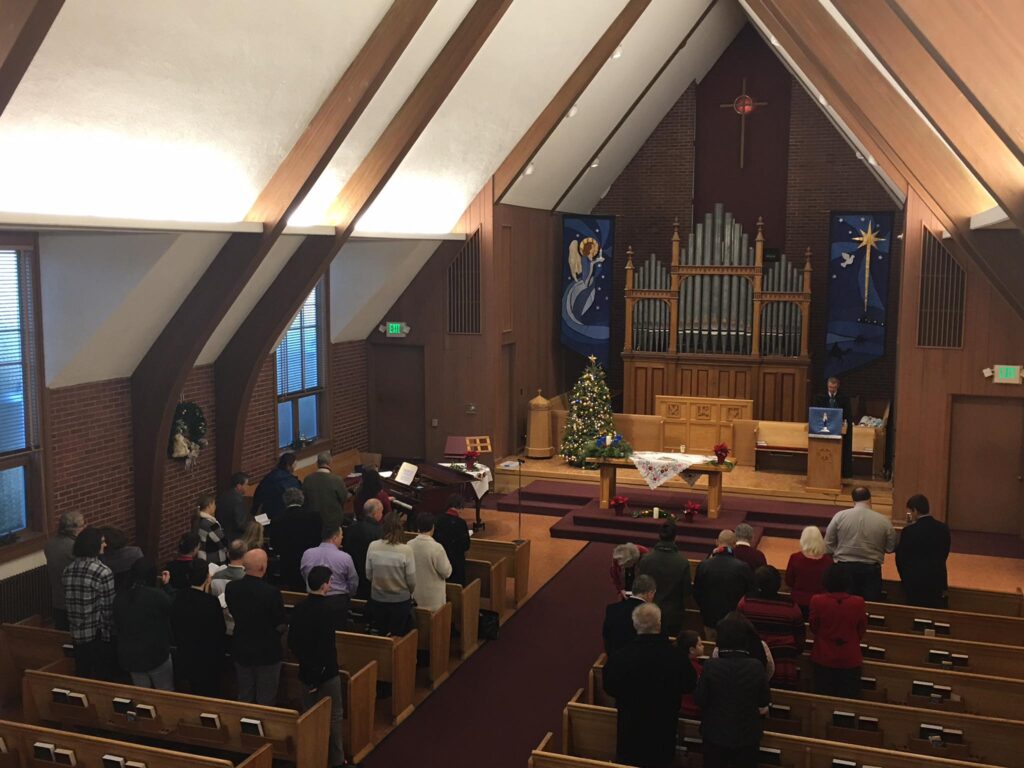
In Houston, the church and the Hungarian club community cooperate well—thanks to the chief elder and the president of the Hungarian Club, the earlier divisions have been overcome, and cooperation has been achieved through events and activities revolving around children. There are two services a year in the church and two outdoor events when they rent a pavilion in a park, after which the children play football, the adults barbecue, with usually 60–65 people. In Denver, attendance is usually around 80; the fellowship meal after the service has a wonderful atmosphere—I once nearly missed my flight because of it. In Portland, services are usually held on Saturdays; attendance there is around 50. In Seattle, there are around 20 people, an intellectual elite—I greatly enjoy speaking with them afterward whenever I’m there.
Do you have any plans in this ‘heaven’?
Faith in God is, for me, a deeply experienced certainty. I hope that both the Lord and the congregation will grant me the trust to continue serving here. The retirement age is now set at 67; I still have 12 years, but I’m already beginning to prepare a successor. Furthermore, I hope that next year we will succeed in filling the missionary minister position, and then ‘only’ serving in Ontario, and the deanship will remain for me.
Related articles:
At a time when public debate is increasingly polarized and superficial, Hungarian Conservative remains committed to depth, intellectual honesty, and independent conservative thought.
Producing high-quality journalism requires resources. Your contribution helps us expand our coverage, reach new audiences, and keep our content accessible.

Please consider supporting our mission.