This is a translated and edited version of the original interview.
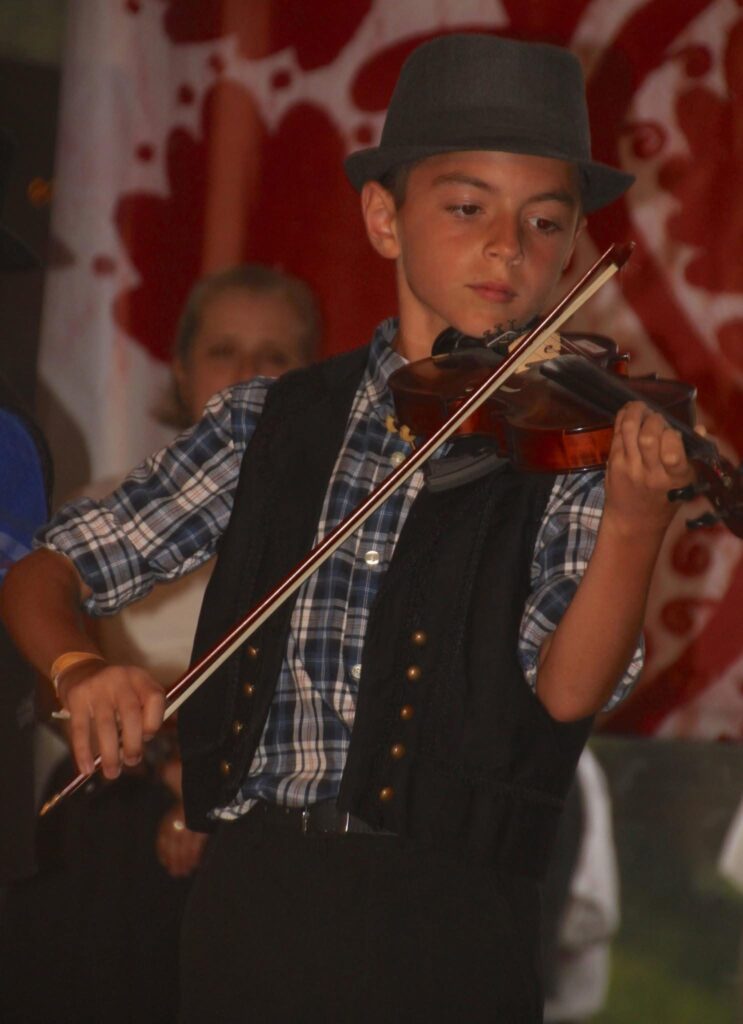
19-year-old Soma is a grandson of Kálmán and Judit Magyar, pioneers of the Hungarian folk dance movement in North America. Born in New Jersey, he grew up in Toronto, Canada. As a high school student, he spent a year in Hungary and later returned as a university student on the Diaspora Higher Education Scholarship. Although his choice of degree proved wrong and he is still considering his future studies and career path, he is now enthusiastically preparing for a seven-stop folk music tour across Transylvania.
***
How did the idea of a Transylvanian folk musicians’ tour come about?
My good friend Péter Balla, a lead violinist, often plays at the folk dance camps in Válaszút (Răscruci), but this year he is preparing for his final exams and asked me whether I could stand in for him. I was delighted to say yes. After that, I’ll be playing at folk dance camps in Avasújváros (Orașu Nou) and Pusztadaróc (Dorolț), together with Levente Dallos, who works at the House of Traditions in Nagyvárad (Oradea) and organizes this year’s Méra Lead Violin Competition. I met him last year at Válaszút and told him that this summer I wouldn’t be returning home to Canada because I had enjoyed that camp so much and had heard—among others from my old friend Hunor Kosbor, who grew up in New Brunswick, NJ, spent many summers in Transylvania and has been living in Pécs on a Diaspora scholarship for the past two years—that there are many other summer camps I’d love to attend. Thanks to Levente, I’ll be working and learning at seven different camps altogether. I’m sure Hunor and I will cross paths at one or two of them.
After the Felsősófalva (Ocna de Sus) camp at the end of July, I’ll have a few days off when my mother comes from Canada to visit me, and we’ll spend some time traveling around Transylvania together. The plan is for her to accompany me to the Méra Festival. Then comes the folk music and dance camp in Kalotaszentkirály (Sâncraiu), where József Szász has invited me. I’ve been good friends with the Üsztürü Band members for two years; they are musical mentors to me, and we also play football together almost every week. The final stop is the adult folk camp in Válaszút, where I’ll be part of the night-time band, providing music for dancing until dawn. During the day we’ll either be sleeping or dancing. Last year I learned Bonchida dances—perhaps this year I’ll learn something new.
Why do you enjoy visiting Transylvania?
People are wonderful, we spend our time in nature, we eat fresh homemade food, I can play music and have good conversations with anyone. When I was in Válaszút, I took a few friends from Toronto to Szék (Sic) and visited the local musician Gyurika Moldován ‘Ilka’. We brought him some beer and had a great chat. He showed us his father’s grave, also a musician. I attended the táncház gathering in Kolozsvár and thoroughly enjoyed myself there. In the Háromszék region lives Vince Fazekas, the son of lead violinist Levi Fazekas. If I had been born there or lived there, I’m sure I’d be spending my time with them because we think alike and I enjoy being around them. I believe they feel the same way.
You seem to be very familiar with the Transylvanian and Hungarian folk music scenes. And we haven’t mentioned your close relatives who live here…
Yes, we often play music or dance together within the family. My cousin Balázs Hajdú-Németh is a member of the Vadrózsa Ensemble in Budapest. I danced with them for a year and also played music for them from time to time. Recently, they held their end-of-year performance, followed by an after-party at a pub, and Balázs invited me to play. His older brother, Lacika, has often invited me to perform at the Fonó and at various gigs, and sometimes I’ve invited him as well. Last year, Lacika and I traveled to Pécs, where we played together at a táncház with Hunor. A few months ago, I was also playing in Pécs with Pál Havasréti and Hunor.
Bendegúz Csoóri also plays in the Sarjú Band, founded by my cousins. Thanks to Soma Salamon, we had a performance of music from Szék at the House of Hungarian Music, accompanied by József Szász and Bendegúz Csoóri. I once played at the House of Traditions as well, filling in for Lacika in the Sarjú Band. I invited members of Üsztürü, and we performed together, too.
You started a YouTube channel where you upload archival recordings from the House of Traditions’ archives. Why?
All of these recordings already exist somewhere; there is an enormous volume of material available online. However, a few years ago, when I became obsessed with the music of Szászcsávás, I’d watch one video, and YouTube would recommend ten more, making it easy to work through them and learn from them. Sometimes I could only find audio recordings, not videos, but I still discovered excellent-quality field recordings. Since then, I’ve learned how to find these materials in the archives themselves, but at the time I was extremely grateful to have found them on YouTube. Now I’m trying to help other beginners in the same way by uploading material from different regions, because I know how useful it can be.
For example, when I stood with my violin alongside the Üsztürü band at the Fonó, the lead violinist, Levente Major, went to the toilet, and the dance teacher asked for music, so I sat down by the microphone. I played a rarer tune, and when Levente returned, he thanked me for stepping in and asked where I had learned the csávási style. I told him that I had learned it from István Pávai’s 1986 field recordings, whereupon he complimented me.
Your father didn’t have access to these sources when he was young. He said you sometimes told him: ‘Dad, you’re just making it up.’ Do you never ‘just make it up’?
I listen to field recordings every day and do my best not to… But not everyone considers it important. There’s a saying: ‘I’d rather suffer for 15 minutes than practice for two hours.’ Some musicians are not concerned with playing in a completely authentic way. For example, nobody could ever accuse Gergő Koncz—the best lead violinist in the world—of just making things up… But many other violinists like to add their own style, saying: ‘Fine, you can play exactly like that lead violinist did in 1969, but where are you in it?’ I’m very devoted to authenticity. I believe those field recordings, archives, and ensembles that have been playing together for 30 years have already found a harmony that doesn’t need changing. If something isn’t broken, there’s no need to fix it. I believe the more authentic it is, the more beautiful it is.
‘I’m very devoted to authenticity’
Where does your love of Hungarian folk music come from? Presumably from your family and friends, although not all of them are musicians…
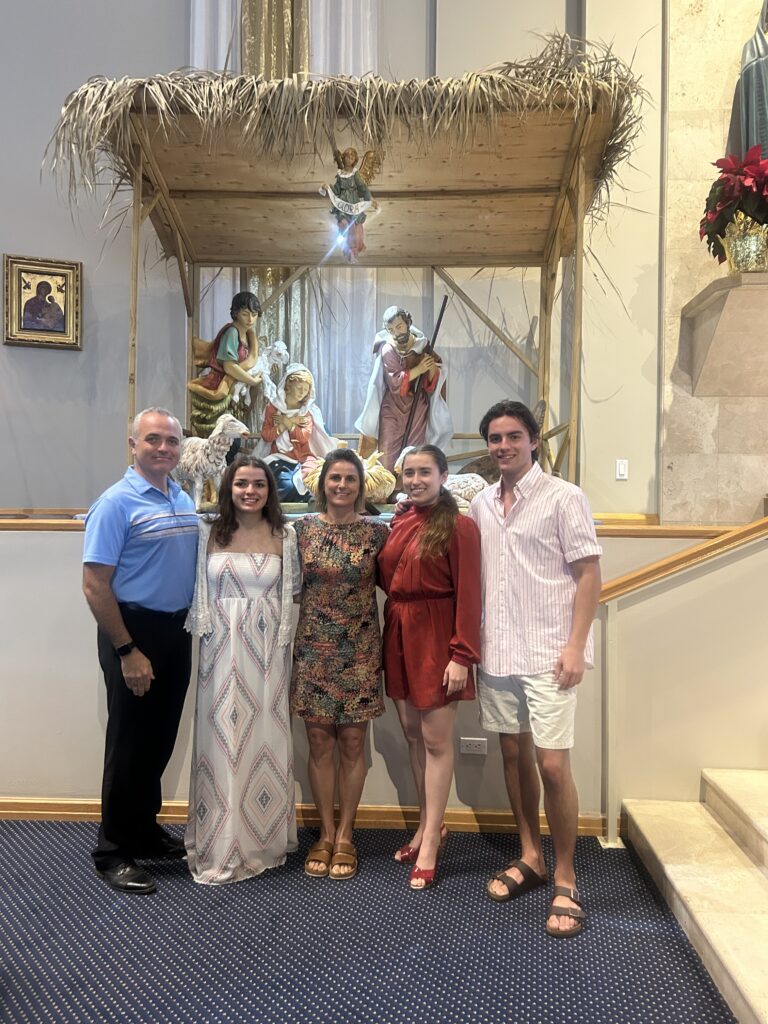
My paternal grandparents, Judit and Kálmán Magyar Sr., who fled Hungary after the 1956 Revolution, pioneered the Hungarian folk dance movement in North America. They lived in New Jersey, where my father, Kálmán Magyar Jr. (‘Öcsi’), and my aunt Ildikó grew up. Both are highly talented musicians and lead violinists. My maternal grandparents were also 56ers; they settled in Canada, my mother was born there, and danced for many years with the local Kodály Ensemble. After my parents married, they initially lived in New Jersey. My sister and I were born there, but my younger sister was born in Toronto, because my father found work there and my mother was delighted to move back close to her parents and friends. We therefore grew up in Toronto, where, alongside their civilian professions—my father is a lawyer and businessman, and my mother is a Pilates instructor—Hungarian folk culture remained extremely important to them. My father played, and still plays, extensively with the Gyanta Band.
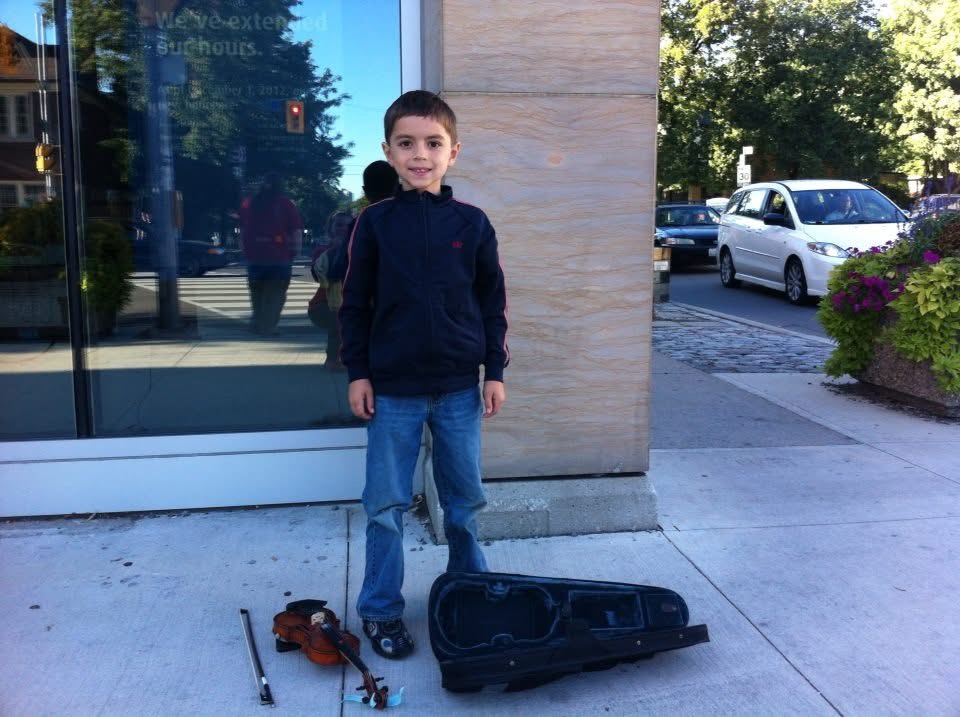
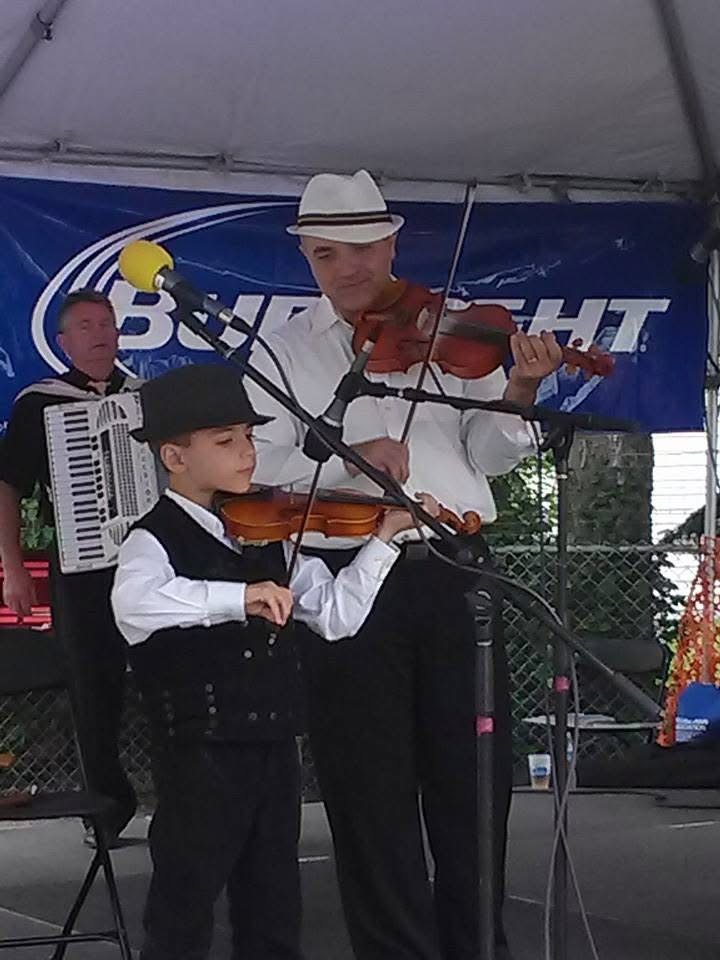
We also began learning the violin at a very young age. Once Gyanta Band’s viola player was unavailable for a show, my father decided that my sister and I should step in. At that point, we could barely play the viola and were still learning the Suzuki method on the violin, but there was an outdoor event, and my father needed accompaniment. I remember we had to perform a legényes—it sounded nothing like it should have; my father was extremely stressed about it…
That doesn’t sound like the moment you fell in love with folk music…
No, that happened when I was 15 at the Tücsök Camp near Ottawa, a long-weekend camp held on a farm and organized by Sylvie Paquette, Gyanta Band’s singer. János Gelencsér taught music in Mezőkörpény. I hadn’t particularly liked that music before, but when I watched a 40-minute YouTube recording of the left-handed lead violinist Viktor Szabó, I fell completely in love with it. Afterward, I’d practice for hours every day, and I’d fall asleep listening to it with my phone beside my pillow. People say every musician has a first great musical love—that was mine. It had a profound impact on my life, including my decision to follow my sister and spend a year studying in Hungary.
That year must have been particularly important to you…
Absolutely. I think every child benefits from spending a year in Hungary. Life is completely different when your parents are not beside you. You can’t expect everything to be solved for you; you have to manage on your own. Admittedly, we had it easier because we lived with our grandparents, who had moved back to Hungary in the early 90s, but we still became far more independent.
I fell in love with Budapest and its folk music scene almost immediately. It was also a golden period because the members of the Sarjú Band were younger then and organized youth folk dance hall events (Kamasztáncház) at the Fonó every month. Lacika was already a remarkably talented lead violinist and much further ahead than I was. At the Fonó, I played alongside the band without amplification and learned an enormous amount. I recommend it to everyone: if you genuinely want to learn, watch the musicians’ hands from close up. It doesn’t matter if at first you feel you know nothing—start quietly, and each time you’ll get a little better.
After finishing high school in Canada, why did you come back to Budapest?
When I returned to Canada, my father took me everywhere with the Gyanta Band: to the Gulyás Festival in Chicago, IL; the Folklorama Festival in Winnipeg, Canada; and the Regős program’s Golden Wedding Anniversary in Cleveland, OH. I’d always play alongside him and observe how seriously he takes choreography when accompanying dancers. He knows all the Hungarian folk dance groups, knows which tunes each group can sing, and is very good at creating a great atmosphere at táncház events because he knows which songs and dances Hungarians in different towns know and enjoy. I learned a great deal from him.
When I finished high school in Toronto, I had several plans, including studying in Florida or staying in Ontario like many of my classmates, who are my closest friends. But during a family Christmas gathering in New Jersey, I learned that the Diaspora Higher Education Scholarship was fully funded. After that, choosing Hungary was easy. Sometimes I wonder what my life would have been like had I remained in Canada or the U.S. I’d probably play less music because there are fewer opportunities there, although I’d certainly still play with Gyanta Band and with my other musician friends. Many people in Hungary are surprised that I moved from North America to Central Europe. I’m familiar with some of Canada’s serious social problems, such as immigration pressures and declining public safety. Dangerous incidents happen daily on the underground line that my mother uses, and not long ago, two women were stabbed there. I worry about her as much as she worries about me. Of course, salaries are generally higher there, and I miss my family, especially my mother, as well as my closest high school friends. But Hungary is safe, at least for now, and there is a táncház every day somewhere…
… and Transylvania is much closer. You eventually left university. What are your plans now?
I spent a year at Corvinus University studying Data Science in Business. It sounded good, but it simply wasn’t for me. Sometimes I’d even listen to recordings from Szék during lectures. Within the Diaspora Program, I could transfer only within the business faculty, where I had three options and eventually completed one semester in Business Management too, but I didn’t enjoy that either. I decided to quit so that the money the Hungarian state would have spent on me could instead support another young person. I may apply again for a completely different field.
Since then, I’ve been playing much more music. Recently, I was the lead violinist for the graduation tests at the Hungarian University of Dance. We rehearsed every day for a week; it was an intense period. At the moment, I still don’t know exactly how or where I’ll continue. Playing folk music might become my profession. By the end of the two months of intensive performing ahead of me, I’ll know whether it truly suits me. On this Transylvanian tour, I’ll be with my friends, doing what I love and even earning some money. The same applies to my online teaching. It certainly beats sitting in a classroom or working an eight-hour office job…
Do you also help out your father with the Hungarian Folklife Association (HFA) he established?
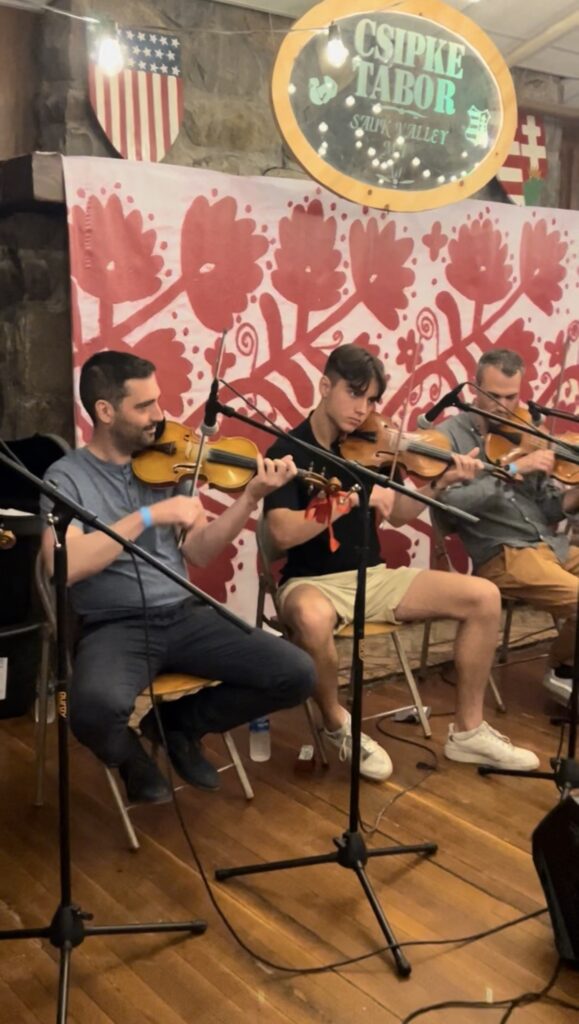
Yes! I strongly believe in it and have contributed some ideas of my own, including an online folklife network, which I now administer, also from here. Every year, there is a major HFA conference. I attended the first one in Chicago and performed with the Gyanta Band. The most recent conference was held in Cleveland, but unfortunately I couldn’t be there. This year I also won’t make it to Csipke Camp, despite having attended every year until now over the past several years. This year, the camp is being held at the same location where the Symposium Camp, organized by my grandparents, used to take place—SNPJ Recreation Center, Pennsylvania—so my grandparents and my aunt’s family will be attending the camp as well. I won’t be returning home until October, when I plan to attend the Western Canadian Hungarian Folk Festival (WCHFF) and stay for about a month in Canada, so I can spend as much time as possible with my family and friends there.
Read more Diaspora interviews:
Read the original article here.
At a time when public debate is increasingly polarized and superficial, Hungarian Conservative remains committed to depth, intellectual honesty, and independent conservative thought.
Producing high-quality journalism requires resources. Your contribution helps us expand our coverage, reach new audiences, and keep our content accessible.

Please consider supporting our mission.