NATO Secretary General Mark Rutte described Iran’s ballistic missile strike on Türkiye as a ‘serious and absolutely condemnable’ incident during a press conference on Thursday, 5 March, as the conflict in the Middle East moves increasingly closer to the defence alliance.
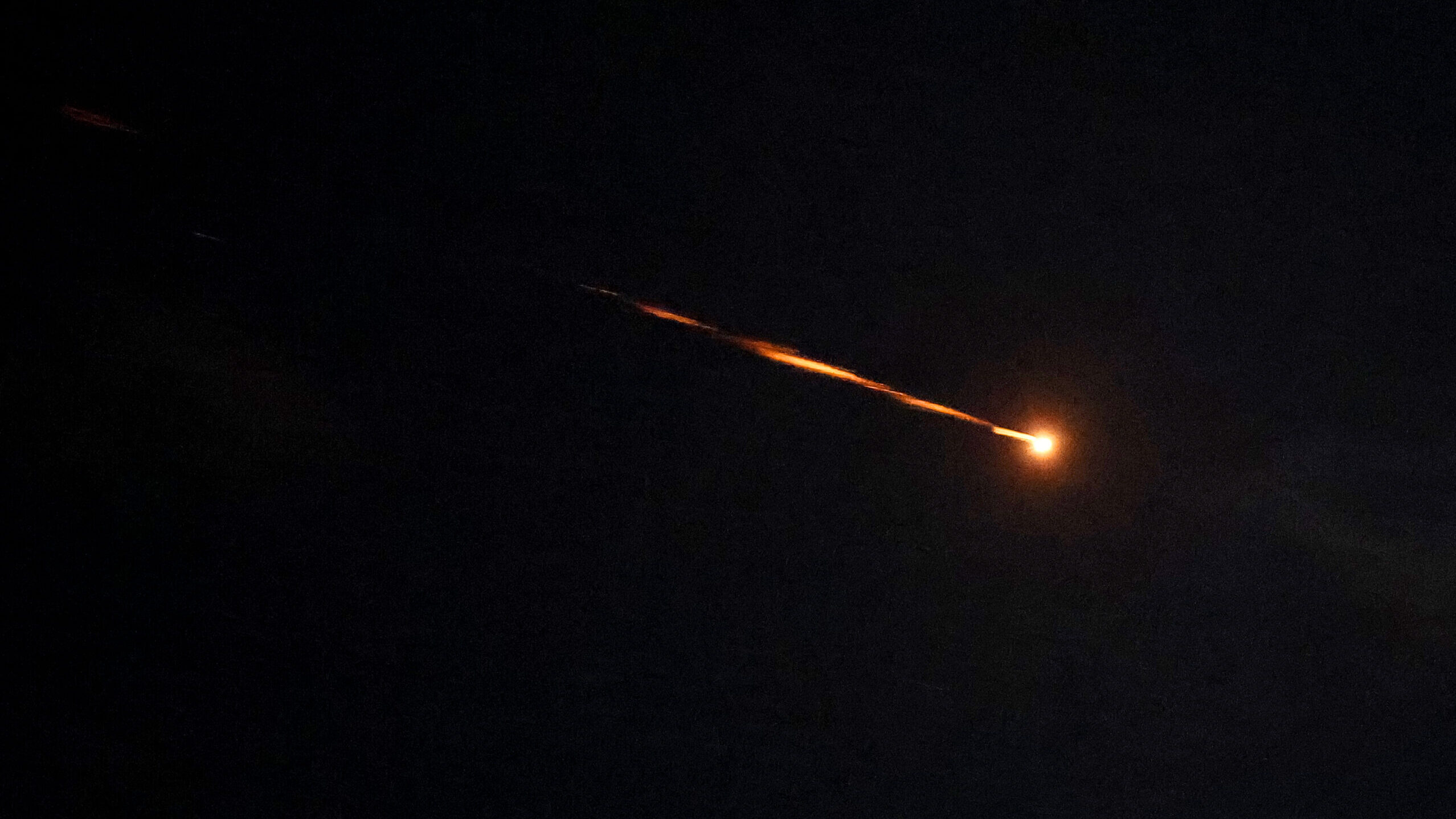
Türkiye said on Wednesday that it had intercepted a ballistic missile launched from Iran, which passed through the airspace of Iraq and Syria before being neutralized by NATO air defence systems over the southern Turkish province of Hatay. According to a statement by Burhanettin Duran, Head of Communications of the Republic of Türkiye, fragments of an interceptor missile fell into an open area in the Dörtyol district of Hatay, but no casualties or injuries were reported.
‘All institutions monitored the process in real time and in full coordination,’ Duran wrote in a post on X, adding that Türkiye’s ‘resolve and capacity to ensure the security of our country and our esteemed nation remain at the highest level.’ He further stated that all necessary steps to defend Turkish territory and airspace will be taken without hesitation. ‘Any potential hostile acts encountered will be responded to in accordance with international law. During this process, consultations and cooperation with NATO and other allies will continue,’ Duran underlined.
‘Türkiye will continue to fulfil its responsibilities with a constructive approach to reduce tensions in the region and ensure that issues are resolved through peaceful means,’ he concluded.
Drone attacks were likewise reported in Azerbaijan, specifically in the Nakhchivan Autonomous Republic. The Ministry of Foreign Affairs of Azerbaijan strongly condemned the attack launched from Iranian territory, which damaged the airport and injured two civilians.
Burhanettin Duran on X (formerly Twitter): “A missile launched from Iran, passing through the airspace of Iraq and Syria, and heading toward Turkish airspace via the Hatay, was destroyed by NATO air defence systems. A fragment of an interceptor missile fell into an open area in Dörtyol district of Hatay, and no casualties… / X”
A missile launched from Iran, passing through the airspace of Iraq and Syria, and heading toward Turkish airspace via the Hatay, was destroyed by NATO air defence systems. A fragment of an interceptor missile fell into an open area in Dörtyol district of Hatay, and no casualties…
Washington and Tel Aviv launched a joint military operation against Iran over the weekend, during which a large part of the country’s leadership was eliminated, including Supreme Leader Ali Khamenei. Tehran immediately launched retaliatory strikes against several regional targets, including Gulf states, Saudi Arabia, Cyprus, and Israel, with more than 500 missiles and 2,000 drone strikes reportedly launched in recent days. One of the most heavily targeted countries has been the United Arab Emirates, which was reportedly struck by 174 ballistic missiles, 689 drones, and eight cruise missiles. One of the first attacks hit a British military base in Cyprus, and so far six US service members have reportedly been killed in the retaliatory strikes.
The conflict in the Middle East has already caused major disruption in global energy markets, with European gas and electricity prices skyrocketing after the Strait of Hormuz effectively froze following the collapse of the maritime shipping insurance system. In an attempt to moderate the crisis, US President Donald Trump ordered the US Development Finance Corporation to immediately offer political risk insurance and guarantees for maritime trade through the Gulf—particularly energy shipments—backed by naval escorts if necessary.
Marc Gravely on X (formerly Twitter): “Yesterday, I explained how seven insurance firms in London shut down one-fifth of the world’s oil supply.Today, Trump may have just made the most aggressive sovereign insurance play in modern history.Here’s what happened and why it matters:Trump ordered the U.S. Development… pic.twitter.com/LdCxIdi9p9 / X”
Yesterday, I explained how seven insurance firms in London shut down one-fifth of the world’s oil supply.Today, Trump may have just made the most aggressive sovereign insurance play in modern history.Here’s what happened and why it matters:Trump ordered the U.S. Development… pic.twitter.com/LdCxIdi9p9
The US–Israeli joint strikes have also created major dilemmas for European capitals over how to respond. Most major Western powers acknowledged the necessity of the strikes due to the perceived Iranian nuclear threat, while simultaneously criticizing Washington and Tel Aviv for breaching international law. Spain was the only country that explicitly refused to support the US and Israel, a stance that drew praise from the Iranian regime—an endorsement that few European governments would likely welcome.
On Thursday, however, Italy, Spain, France, and the Netherlands announced plans to deploy naval assets to help protect Cyprus from further strikes. Separately, Italian Prime Minister Giorgia Meloni told RTL 102.5 radio that Italy was also preparing to send air defence assistance to Gulf countries in response to Iranian attacks.
She explained that the decision was driven not only by diplomatic considerations but also by the presence of Italian citizens in the region. Tens of thousands of Italian nationals live in the Gulf, while around 2,000 Italian troops are currently deployed there, she said.
EU foreign policy chief Kaja Kallas, speaking ahead of an extraordinary meeting of the bloc’s foreign ministers, accused Iran of ‘exporting the war’ and ‘trying to expand it to as many countries as possible to sow chaos.’
Orbán Viktor on X (formerly Twitter): “Hungary on alert❗️In the wake of the war involving Iran, terrorist cells in Western Europe may be activated. This directly affects Hungary’s security, which is why we have introduced precautionary measures.We will protect the security of Hungary and the Hungarian people! pic.twitter.com/2x0TQOTh8P / X”
Hungary on alert❗️In the wake of the war involving Iran, terrorist cells in Western Europe may be activated. This directly affects Hungary’s security, which is why we have introduced precautionary measures.We will protect the security of Hungary and the Hungarian people! pic.twitter.com/2x0TQOTh8P
On Thursday, Hungarian Prime Minister Viktor Orbán announced that Hungary is taking precautionary measures due to an increased terrorist threat following the escalation of the war in Iran. ‘We will protect the security of the Hungarian people,’ Orbán said, adding that he had convened the leaders of the organizations responsible for counterterrorism.
‘We have learned that through mass migration, Middle Eastern terrorist organizations have established themselves and strengthened their presence in Western Europe. We now expect that these organizations and the terrorist cells operating in Europe will be activated. However, we will protect Hungary’s peace and security even in this situation. That is why we have strengthened the control of foreign passenger traffic entering Hungary,’ Orbán concluded.
Related articles: