Prime Minister Péter Magyar announced a series of major government initiatives following Wednesday’s cabinet meeting, including a nationwide rural development strategy, a multi-billion-forint railway modernization programme, new road safety measures and a public security operation in Budapest.
Speaking at a press conference in Budapest on Thursday, Magyar said the government had completed the first reading of the St Stephen Programme, a comprehensive rural development initiative designed to strengthen local communities and help residents remain in smaller towns and villages. The programme is expected to be formally presented before Hungary’s 20 August national holiday.
The prime minister said rural development had been one of the government’s key election commitments, adding that the programme would allocate 1 billion forints to every group of ten participating municipalities. He argued that a vibrant countryside is essential for Hungary’s long-term development and said the initiative aims to slow depopulation by supporting local employment, improving mobility and bringing public services closer to rural communities.
Magyar criticized previous rural development policies, saying many earlier programmes had merely reallocated funding for existing state and municipal responsibilities rather than providing additional resources. The government plans to launch consultations with mayors across the country and involve local residents in shaping the programme, acknowledging that different regions face different challenges. Pilot projects involving groups of ten municipalities with varying economic and demographic conditions will also be launched before the final programme is adopted.
‘The government plans to launch consultations with mayors across the country and involve local residents in shaping the programme’
The cabinet also approved the preliminary framework for a major railway investment programme, which Magyar said would be presented in detail next week. The multi-year scheme will be financed largely through EU funding released since the change of government, alongside resources from the European Union’s next seven-year budget. The programme includes railway track reconstruction, electrification projects, the purchase of new locomotives, passenger carriages and HÉV suburban train sets, as well as the expansion of tram-train networks.
Magyar said the first visible results are expected within two to three years, while the overall programme will be implemented over the next two to six years. In the meantime, the government aims to improve the speed, reliability and comfort of rail services. He described Hungary’s railway network as being in one of the most difficult situations in its history and praised Transport and Investment Minister Dávid Vitézy for leading the sector’s renewal.
The government also launched a nationwide public consultation on road safety, with proposals aimed at reducing the number of fatal and serious traffic accidents. Discussions will focus on illegal street racing, excessive speeding, stricter penalties, expanded use of automated enforcement systems and new regulations for electric scooters. According to the prime minister, the government’s objective is not to increase fines but to improve public safety and protect lives.
Magyar also provided an update on the government’s 3 billion forint hospital air-conditioning upgrade programme. Work has already been completed at 11 hospitals, while installations continue at another 11 locations. Eight additional projects have been delayed because of expanded technical requirements, and another 25 sites have been added following newly identified equipment failures.
The prime minister further announced that the interior minister will order a 30-day enhanced policing operation in Budapest involving the Budapest Police Headquarters, the Rapid Response Police and volunteer civil guards. The operation will focus on busy nightlife districts in the city centre and the Rákosrendező area following reports from residents and local mayors of deteriorating public safety.
Magyar said the initiative seeks to increase the visible police presence, prevent crime and improve public order. He added that many of the underlying problems are linked to homelessness, addiction and untreated mental health conditions, meaning social and healthcare services will also participate in the operation.
‘The initiative seeks to increase the visible police presence, prevent crime and improve public order’
He said the government inherited police staffing shortages of 20.2 per cent nationwide and 38.3 per cent within the Budapest Police Headquarters. To address immediate staffing needs, 750 million forints from the government’s Drug-Free Hungary programme will be allocated to fund police overtime.
In the longer term, the Interior Ministry is preparing broader personnel reforms aimed at retaining officers, encouraging former police officers to return to service and attracting new recruits. Plans also include the introduction of a new category of contracted community police officers who would handle lower-level incidents, alongside measures to reduce administrative workloads and improve police communications.
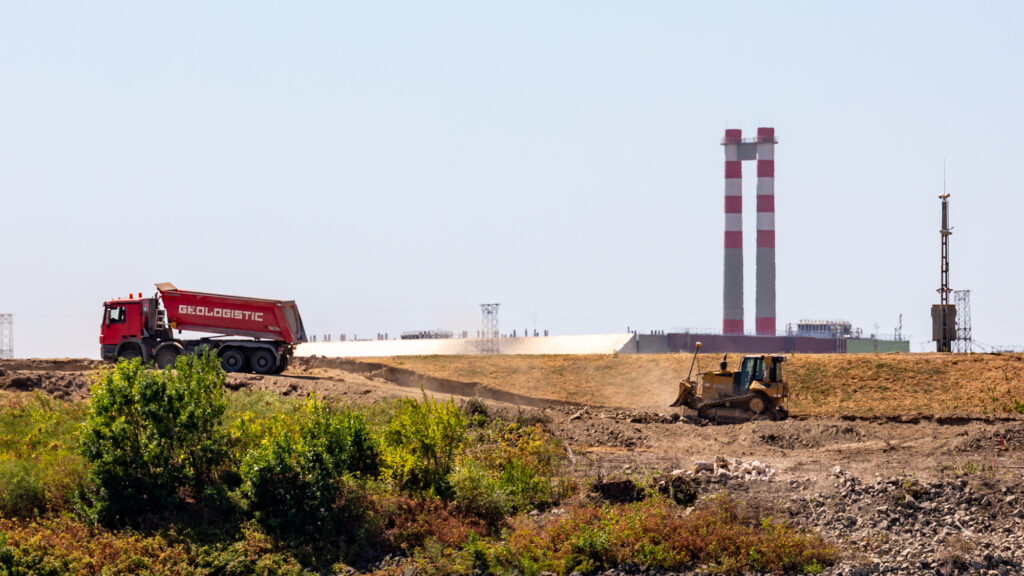
Addressing the asbestos contamination case in Szombathely, Magyar said the Hungarian state is currently advancing the costs of the clean-up but intends to recover the expenses under the ‘polluter pays’ principle. He said legal experts are examining the potential liability of the contractor, the Austrian quarry that supplied the material, the province of Burgenland and, ultimately, the Austrian state.
The prime minister said he intends to raise the matter again with the Austrian chancellor, noting that similar contaminated stone is now being removed from sites in Austria, making the issue impossible to ignore. He added that Hungary will document all remediation costs and seek reimbursement through legal action if necessary.
Related articles:
At a time when public debate is increasingly polarized and superficial, Hungarian Conservative remains committed to depth, intellectual honesty, and independent conservative thought.
Producing high-quality journalism requires resources. Your contribution helps us expand our coverage, reach new audiences, and keep our content accessible.

Please consider supporting our mission.