Hungary would be required to establish a migrant camp capable of hosting 23,000 people next year under the European Union’s Migration Pact, Prime Minister Viktor Orbán’s chief domestic security adviser György Bakondi said on Wednesday morning on M1 television.
Bakondi said Brussels expects member states to take in migrants deemed suitable for relocation, but Hungary believes it has already found an effective solution to migration. Referring to the EU Migration Pact, he described it as a complex legal framework based on the principle of ‘solidarity’, under which migrants would be redistributed according to quotas from countries facing high levels of illegal migration to those with fewer arrivals.
He stressed that Hungary has taken a different path. Measures introduced in 2015 with broad public support, including physical and legal border barriers and the presence of police and military forces, have proven effective in maintaining internal order and security. Bakondi noted that foreigners arriving in Hungary often remark on the fact that people can safely walk the streets after dark.
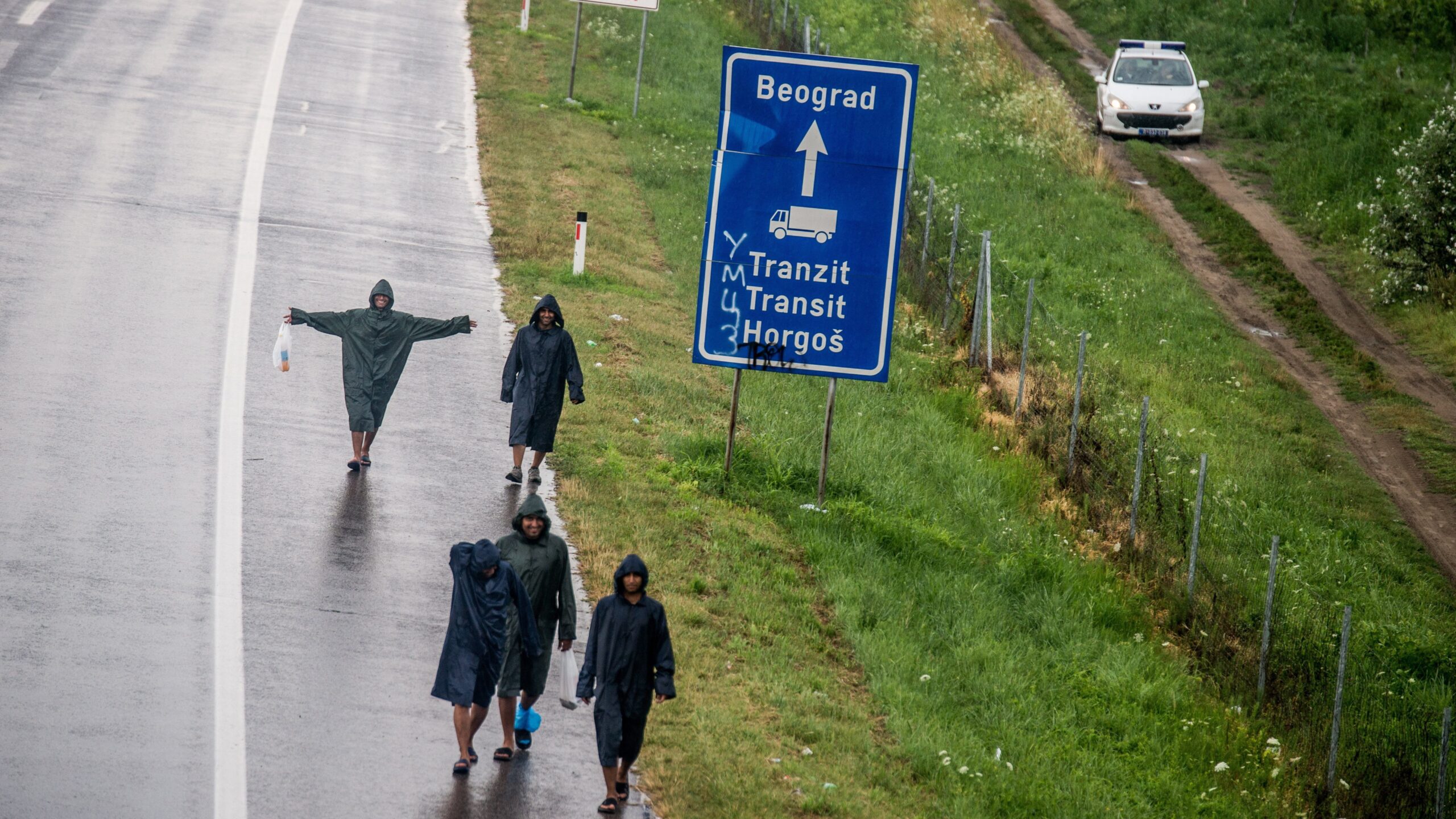
Commenting on the deployment of another Hungarian police contingent to the Bulgarian–Turkish border, Bakondi said the government believes migrants should be stopped as far from Hungary as possible in order to reduce pressure on the southern border.
Hungarian police officers have long been serving on the North Macedonia–Serbia border, he said, and since Bulgaria joined the Schengen area, Hungarian police have also been patrolling the Bulgarian–Turkish border together with Austrian and Romanian officers, helping to limit migration flows along the Balkan route.
Speaking earlier on Kossuth Radio, Bakondi said a survey conducted last year showed that the vast majority of illegal migrants arriving in Europe were young men, many with military experience.
According to him, these men believe they are better able to endure the physical hardships and dangers of the journey than women or children, with the intention that family members would later follow through family reunification once living conditions are established. He noted that this pattern has indeed been observed over the past ten years.
Bakondi added that this process has led to a significant deterioration in public security in nation states, prompting growing political pressure from citizens for governments to act. In response, many countries have strengthened border controls, reduced social benefits, restricted family reunification and sought to deport as many criminal offenders as possible.
Related articles: