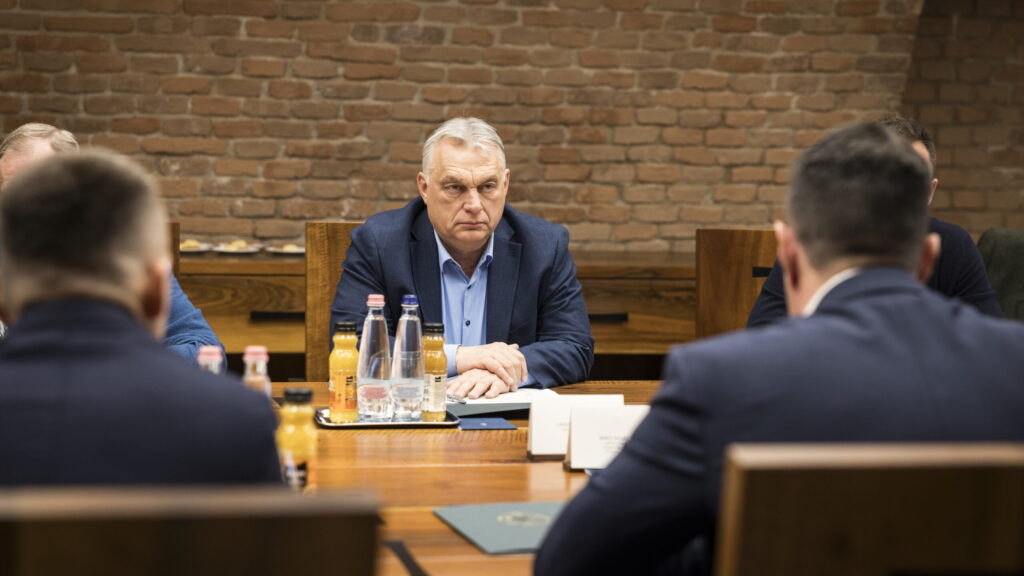
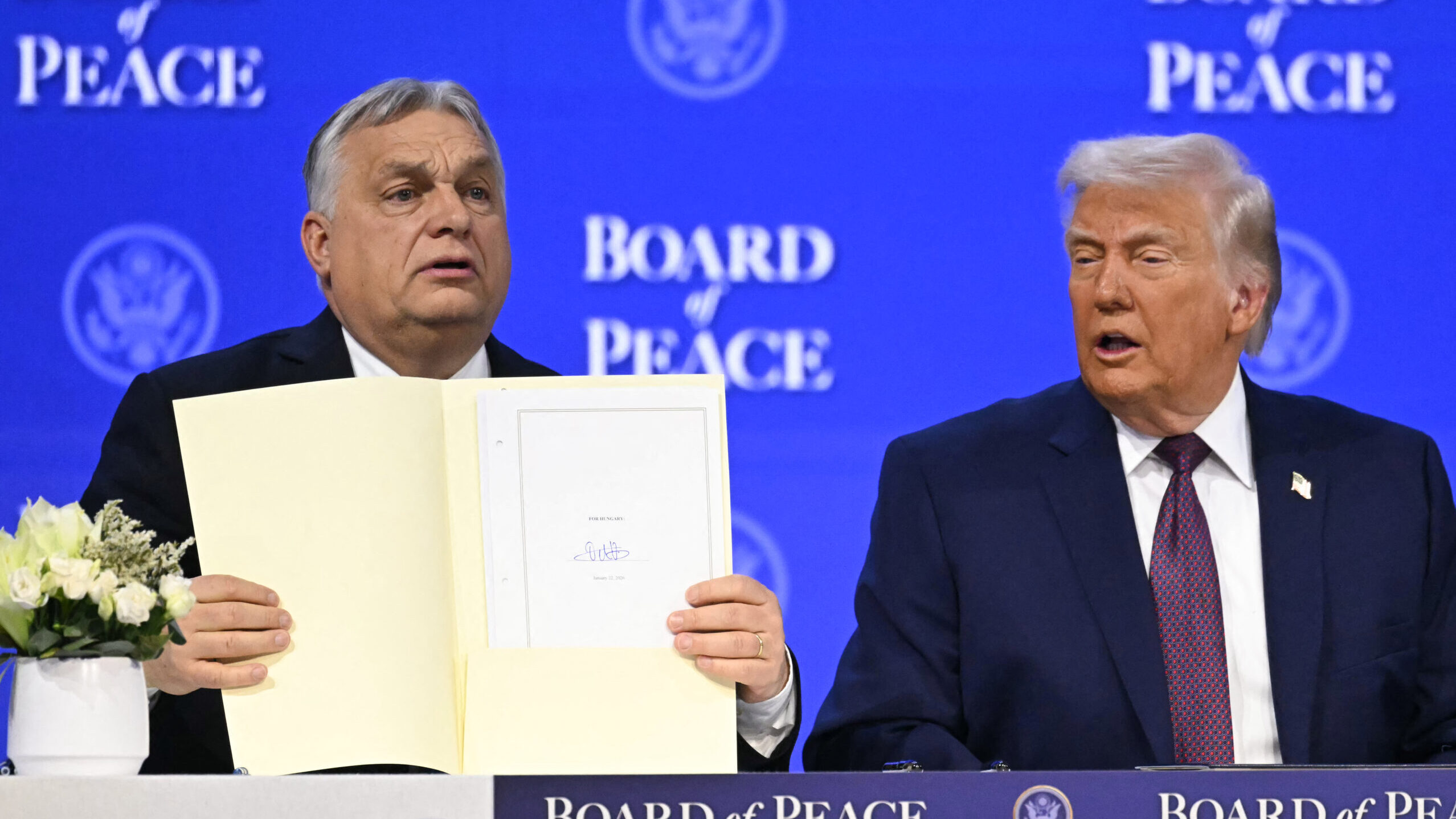
Hungarian Prime Minister Viktor Orbán has praised the launch of US President Donald Trump’s new initiative, the Board of Peace. ‘Hungary is among the founding countries, because Hungary needs peace in order to continue to grow and develop,’ Orbán wrote in a post on X from the World Economic Forum in Davos.
‘War puts at risk everything we have built over the past fifteen years. War brings inflation, sanctions, high energy prices, and the decline of national economies,’ the prime minister continued. ‘Hungary does not want to move backwards. We want to move forward. That is why we support and take part in every international initiative that prevents and contains wars, and guarantees the security and peace of mind of nations and families,’ Orbán added.
Orbán Viktor on X (formerly Twitter): “Today in Davos, the President of the United States launched a new initiative: The Board of Peace.Hungary is among the founding countries, because Hungary needs peace in order to continue to grow and develop.War puts at risk everything we have built over the past fifteen… pic.twitter.com/Zz09DYIby7 / X”
Today in Davos, the President of the United States launched a new initiative: The Board of Peace.Hungary is among the founding countries, because Hungary needs peace in order to continue to grow and develop.War puts at risk everything we have built over the past fifteen… pic.twitter.com/Zz09DYIby7
President Trump unveiled the Board of Peace charter during a ceremony in Davos on Thursday, 22 January. The new international forum for conflict resolution was established to support—though not exclusively—the implementation of the Gaza peace plan agreed in 2025 between Israel and Hamas. However, the charter does not mention Gaza in its text, signalling that the body’s scope is broader.
Alongside Trump, more than a dozen world leaders from 19 countries signed the charter on Thursday, including Argentina, Bahrain, Armenia, Azerbaijan, Bulgaria, Hungary, Indonesia, Jordan, Kazakhstan, Kosovo, Pakistan, Paraguay, Qatar, Saudi Arabia, Türkiye, Morocco, the United Arab Emirates, Uzbekistan, and Mongolia. ‘Today the world is a safer, richer and much more peaceful place than it was one year ago,’ Trump declared during the ceremony.
The initiative was announced last week, and media reports said Washington had sent invitations to more than 50 countries and organizations worldwide, including Russia, China, India, Ukraine, European countries, and the EU’s leadership. France, the United Kingdom, Norway, and Sweden rejected participation, while many capitals have yet to decide.
The establishment of the Board of Peace comes at a chaotic moment in international relations, as reflected on the first day of Davos. European Commission President Ursula von der Leyen spoke about a ‘new form of European independence’ in her speech, while Canadian Prime Minister Mark Carney argued that the rules-based international order has ended and been replaced by great-power rivalry. He noted that Western powers should not fall into nostalgia for the past liberal order, as this is not a strategy for the future.
In his speech, Trump hailed national sovereignty, cultural preservation, and proactive security as key pillars of a renewed transatlantic partnership between the US and Europe. He also reiterated Washington’s interest in acquiring Greenland, stating that the United States would not use military force to take control of the strategic territory. Later that day, Trump and NATO Secretary General Mark Rutte reportedly reached an agreement on a framework for a future deal on Greenland, potentially including additional US military bases on the island.
Political director of the Hungarian prime minister Balázs Orbán described the Board of Peace as ‘one of the first institution of the new world order.’ In a post on social media, he said Hungary will not be a ‘victim’ of the transformation of the global order, but rather a ‘shaper’ of it. ‘We have a place in every international initiative that prevents and curbs wars and guarantees the security of nations and families,’ Orbán concluded.
Related articles: