Greenpeace says no contamination exceeding regulatory limits was found in samples collected from areas near battery factories and NMP processing plants in Hungary. According to a statement released by the organization, it examined ten samples collected in Göd, Komárom, and Sóskút, which were analysed for antimony, arsenic, cobalt, lithium, nickel, and NMP; all were below levels that could pose a risk to human health.
The results, published by Greenpeace days after the election, contradict claims that became central to the opposition’s campaign against Viktor Orbán’s Fidesz–KDNP. At the beginning of February 2026, several portals published reports alleging that workers were exposed to toxic and carcinogenic substances, sometimes far above legal limits, at the Samsung SDI battery factory in Göd.
The reports argued that heavy metal and NMP emissions were coming from the facility, claiming that authorities had prior knowledge of these risks yet approved the investment. Leaked reports also alleged that the government knew about ‘systemic safety failures’ and ‘poisonings’ but allowed production to continue. The Orbán government was accused of prioritizing economic and investment interests over public health.
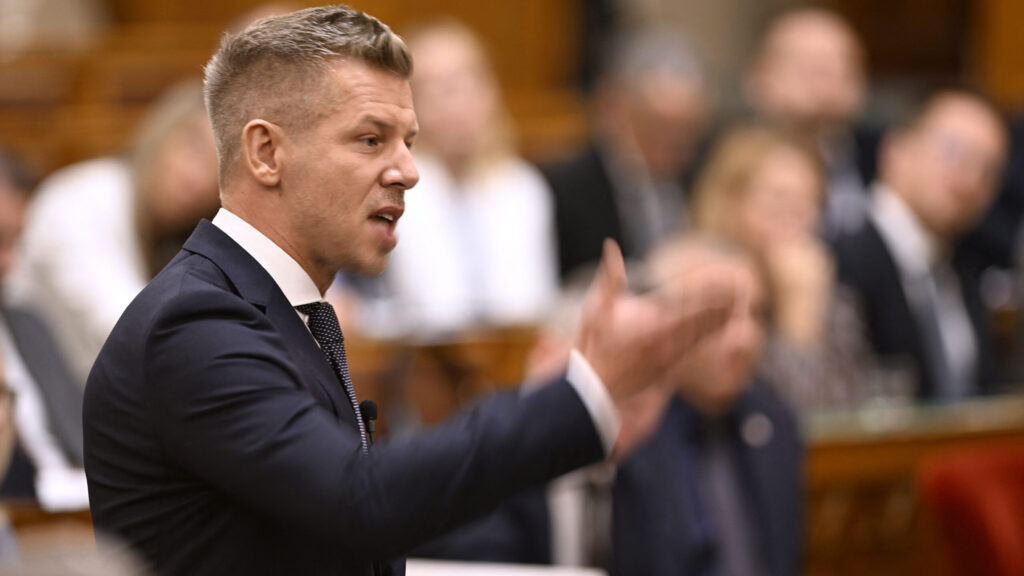
The accusations triggered a full political scandal, which the Tisza Party and Péter Magyar successfully leveraged in the final phase of the campaign ahead of the 12 April election. Magyar framed Göd as evidence of a ‘system that protects multinational corporations’ against Hungarian citizens, linking the scandal to wider allegations of systemic corruption and governance failures, which resonated with voters.
‘The accusations triggered a full political scandal, which the Tisza Party and Péter Magyar successfully leveraged’
Over the past years, Hungary has increasingly become a hub for investments related to the green transition of the automotive industry, with several investors from the East, including China and South Korea, bringing multi-billion-euro factories into the country. These plants are part of the government’s battery industrialization strategy, under which Hungary has become one of Europe’s largest battery producers.
Outgoing Hungarian prime minister Viktor Orbán stated at the time of the Göd scandal that claims about pollution exceeding legal limits were false and politically motivated, a response that became central to the government’s communication strategy regarding the case.
Despite the absence of hard evidence supporting these allegations regarding the Samsung factory in Göd, a series of protests emerged nationwide, both in areas directly affected by the battery industrialization strategy and in Budapest. The Budapest rally held in February was, ironically, organized by Greenpeace, among other NGOs.
Péter Szijjártó must leave his post immediately! Viktor Orbán’s Minister of Foreign Affairs and Trade was fully aware of the poisonings and pollution at the @SAMSUNG_SDI factory in Göd. He personally lobbied to ensure that the plant’s operations would not be suspended, despite… https://t.co/uDTOIR2mPD
— Magyar Péter (Ne féljetek) (@magyarpeterMP) February 9, 2026
The Tisza Party and Péter Magyar kept the issue on their agenda, launching a national petition stating that it is ‘unacceptable for the economic interests of a multinational corporation to take precedence over the health of Hungarians’. In the petition, Magyar called for an immediate, independent official investigation into the case, the disclosure of the contents of government reports and official investigation results regarding polluting factories, and the identification of legally and politically responsible parties.
The Tisza Party won the election by a landslide, securing 141 mandates in the 199-seat parliament and a constitutional supermajority on a scale unprecedented in Hungary’s post-communist history.
Greenpeace published the results of its investigation on 16 April, four days after the election.
Related articles:
At a time when public debate is increasingly polarized and superficial, Hungarian Conservative remains committed to depth, intellectual honesty, and independent conservative thought.
Producing high-quality journalism requires resources. Your contribution helps us expand our coverage, reach new audiences, and keep our content accessible.
Please consider supporting our mission.