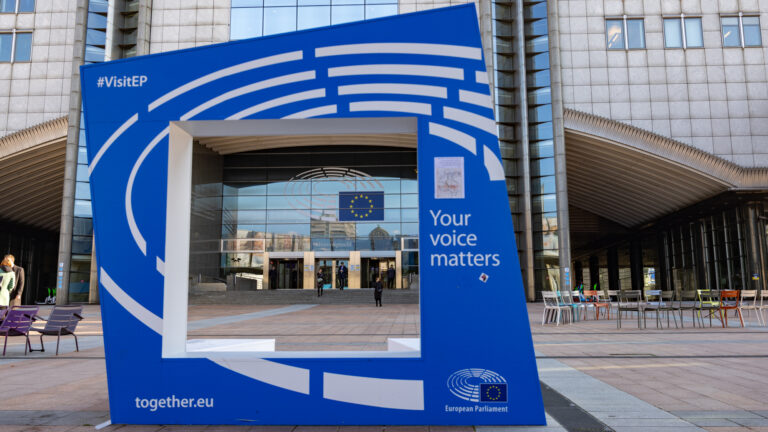
European Commissioner for Democracy, Justice, the Rule of Law and Consumer Protection Michael McGrath arrived in Budapest on Tuesday for talks with members of Hungary’s new government as Brussels begins preparing its 2026 Rule of Law Report.
According to the European Commission, McGrath’s visit aims to discuss Hungary’s rule-of-law situation and the reforms needed to address long-standing concerns identified in previous reports.
During his stay, the commissioner will meet Richárd Rák, Deputy Speaker of the National Assembly and chairman of the Committee on Legislation; István Hantosi, chairman of the Committee on Judicial and Constitutional Affairs; Márton Hajdu, chairman of the Foreign Affairs Committee; and Éva Ildikó Sopov, chairwoman of the Committee on European Affairs. He is also scheduled to hold talks with Deputy Prime Minister Bálint Ruff, Justice Minister Márta Görög, and Minister for Social Relations and Culture Zoltán Tarr.
The discussions come only days after Hungarian Prime Minister Péter Magyar and European Commission President Ursula von der Leyen reached a political agreement on the release of €16.4 billion in previously frozen EU funds. Under the deal, Hungary committed to implementing reforms in areas including judicial independence, anti-corruption measures, media freedom, and fundamental rights, while Brussels agreed to begin unblocking funding withheld during years of disputes with the previous government led by Viktor Orbán. The first payments are expected to arrive in the final quarter of 2026, provided Hungary implements the reforms demanded by the Commission.
As part of the agreement, Hungary formally notified Brussels on 29 May of its intention to join the European Public Prosecutor’s Office (EPPO). The accession was among the EU’s longest-standing demands directed at Budapest. The Commission described the move as an important step towards ‘strengthening the protection of the Union’s financial interests’ and ‘combating fraud and corruption’ involving EU funds.
McGrath’s trip marks his second official visit to Hungary since taking office. His previous visit took place on 24–25 March 2025, during the final year of Viktor Orbán’s government. At the time, the commissioner met government officials, judges, prosecutors, NGOs, and media representatives as part of the Commission’s preparations for the 2025 Rule of Law Report.
The political atmosphere surrounding that visit was markedly different. Relations between Budapest and Brussels were increasingly strained over frozen EU funds, anti-corruption concerns, media freedom issues, and the Orbán government’s proposed transparency legislation targeting foreign-funded NGOs and media organizations, which critics labelled similar to Russia’s foreign agent law.
Following the visit, McGrath publicly voiced ‘serious concerns’ regarding the state of the rule of law in Hungary, while government officials accused Brussels of using rule-of-law mechanisms as political instruments against a conservative government pursuing policies at odds with the EU mainstream.
Those tensions were reflected in the Commission’s 2025 Rule of Law Report, which remained highly critical of Hungary despite acknowledging certain improvements. The report recognized progress in judicial governance and the strengthened role of the National Judicial Council following earlier reforms. Nevertheless, it concluded that significant shortcomings persisted across all four areas assessed by the Commission: the justice system, anti-corruption framework, media freedom, and institutional checks and balances.
Among the report’s principal criticisms were concerns regarding judicial independence, limited progress in investigating high-level corruption cases, insufficient safeguards against conflicts of interest in public procurement, media concentration, state influence over the media market, and restrictions affecting civil society organizations and fundamental rights. The Commission also highlighted Hungary’s refusal at the time to join the EPPO as a major weakness in its anti-corruption architecture.
The Orbán government strongly rejected those conclusions. European Affairs Minister János Bóka argued that the Rule of Law Report had evolved into a political instrument rather than an objective assessment, while government officials maintained that Hungary was being subjected to double standards because of its positions on migration, national sovereignty, and LGBTQ issues. Budapest also pointed to judicial reforms and anti-corruption measures already implemented as evidence that Brussels was failing to acknowledge progress.
‘Many of the criticisms contained in the 2025 report are now expected to be reassessed’
Many of the criticisms contained in the 2025 report are now expected to be reassessed. Hungary’s planned accession to the EPPO directly addresses one of Brussels’ most persistent concerns, while the Magyar government’s reform commitments linked to the recent funding agreement could lead to a more favourable assessment regarding anti-corruption efforts, judicial governance, and cooperation with EU institutions.
McGrath’s visit, however, is also taking place during one of the most tense constitutional stand-offs in Hungary’s post-communist history. The trip comes just days after Hungarian President Tamás Sulyok refused to comply with Prime Minister Péter Magyar’s 31 May ultimatum demanding his resignation.
The government, which holds a constitutional supermajority following Tisza’s landslide victory in April, is now expected to pursue measures—most likely constitutional amendments affecting not only the presidency but also other public office-holders appointed under the Orbán governments—aimed at removing the head of state. Sulyok has sought the opinion of the Venice Commission, arguing that attempts to remove a sitting president on political grounds raise serious constitutional and rule-of-law concerns, while Fidesz has accused the government of engaging in ‘open blackmail’ and undermining Hungary’s constitutional order.
Related articles:
At a time when public debate is increasingly polarized and superficial, Hungarian Conservative remains committed to depth, intellectual honesty, and independent conservative thought.
Producing high-quality journalism requires resources. Your contribution helps us expand our coverage, reach new audiences, and keep our content accessible.

Please consider supporting our mission.