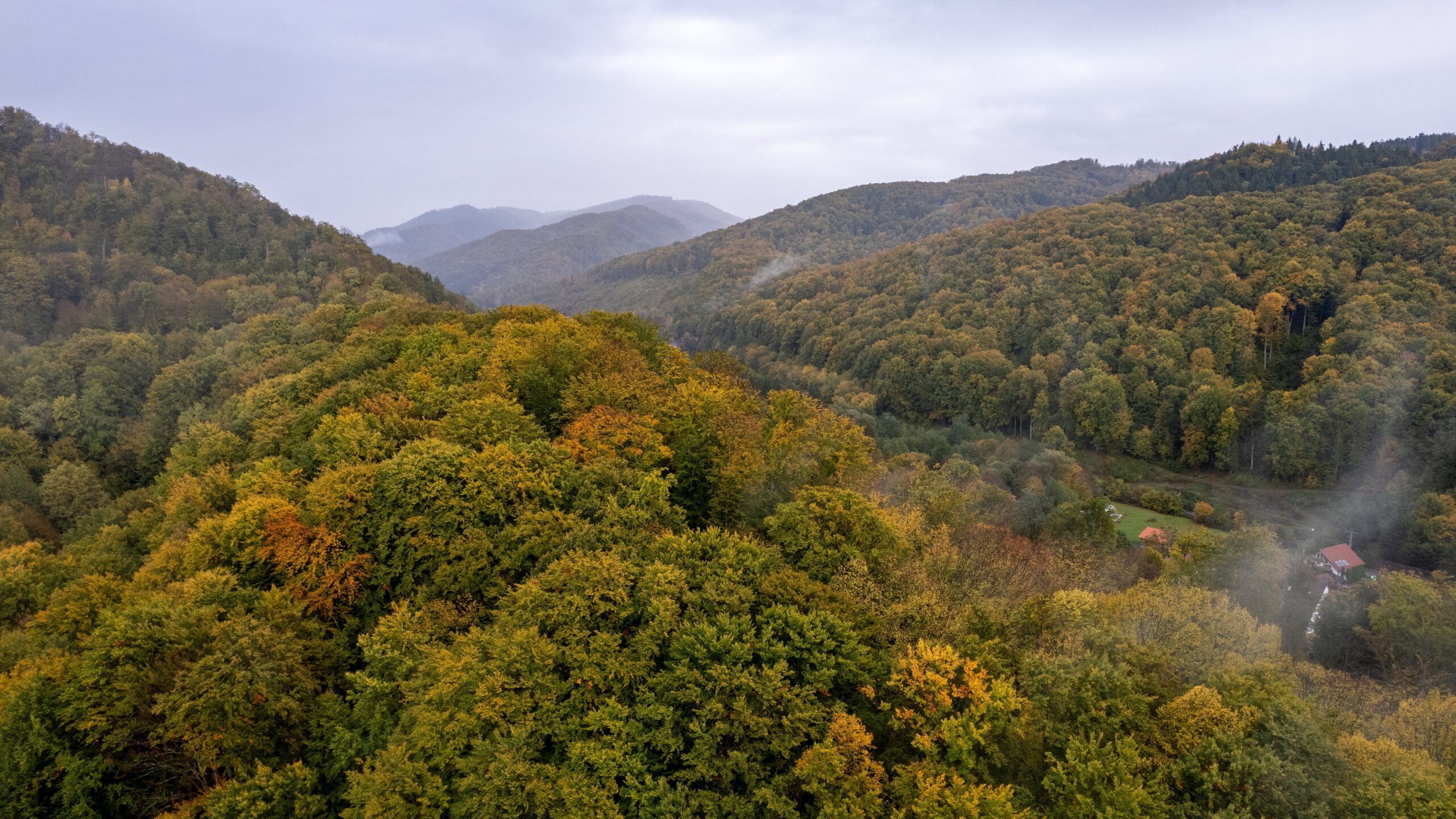
WWF Hungary has called for a comprehensive overhaul of forest management in the country’s protected and Natura 2000 forests once the current logging moratorium expires on 30 September, arguing that long-term reforms are essential to help forests adapt to climate change and preserve biodiversity.
In a statement, the environmental organization said changes are needed not only to protect wildlife but also to safeguard soils and improve the living environment for communities surrounding forests.
Among its key proposals, WWF Hungary recommends phasing out clear-cutting in native forests and expanding continuous-cover forestry, which maintains permanent forest cover instead of harvesting entire stands at once. The organization also argues that large forest blocks within national parks and landscape protection areas should be removed from commercial timber production altogether.
For high-natural-value ‘sanctuary forests’ containing native trees older than 140 years, WWF says only conservation-focused management should be permitted in order to preserve their undisturbed ecological condition. Elsewhere, the group advocates creating mixed-species, uneven-aged native forests that are better equipped to withstand the impacts of climate change.
WWF also stresses that successful continuous-cover forestry depends on maintaining suitable site conditions, particularly natural water availability and water replenishment.
The organization further recommends reducing invasive non-native tree species, controlling overabundant populations of large grazing mammals whose numbers have increased due to human intervention, and lowering the overall volume of timber harvested each year.
It also calls for an end to what it describes as the wasteful use of firewood, particularly in biomass power plants. According to WWF, reforming the financing of state forest management organizations would help achieve this by reducing their dependence on timber sales as a primary source of revenue.
According to proposals published on WWF Hungary’s website, replacing clear-cut forestry with continuous-cover management could affect around 600,000 hectares of forest—nearly one-third of Hungary’s total forest area. Maintaining continuous forest cover would better preserve forest habitats, local climate conditions and soil quality.
WWF notes that continuous-cover forestry has already been successfully practiced for decades by several state-owned and private forest managers in Hungary, although only on relatively small areas. The organization says additional incentives will be needed to expand the approach.
The group estimates that between 200,000 and 300,000 hectares of forest within Hungary’s national parks could eventually be designated as non-commercial conservation areas, although examples of such management remain limited. It also believes that mixed-species forests could be established across approximately 800,000 hectares, helping forest ecosystems adapt more gradually to changing climatic conditions.
Related articles:
At a time when public debate is increasingly polarized and superficial, Hungarian Conservative remains committed to depth, intellectual honesty, and independent conservative thought.
Producing high-quality journalism requires resources. Your contribution helps us expand our coverage, reach new audiences, and keep our content accessible.

Please consider supporting our mission.