The following is an adapted version of an article written by Orsolya Ferenczi-Bónis, originally published in Hungarian in Magyar Krónika.
Holy Thursday—also known as Maundy Thursday or Green Thursday—is the day of the Last Supper according to Christian tradition. Many folk customs and traditions were associated with Holy Thursday, such as using a clapper instead of ringing the bells, the ‘beating of Pilate’ (pilátusverés) that breaks planks, and rituals to ward off evil spirits and diseases.
The revival of nature also encourages people to renew and purify themselves, and in folk tradition, Holy Week was a prominent period for this. These days are associated with customs aimed at ensuring people’s health and well-being, keeping diseases away, and protecting their homes and property.
People strove to put their surroundings in order, clean their yards, correct mistakes, brew beer, sweep, plaster, and whitewash so that their homes would be reborn. After they cleaned up all their belongings and put all their tools and equipment in order, they went to the cemetery to decorate the graves with bouquets of catkins.
When the Bells Took a Student to Rome
It is a well-known saying that on Holy Thursday, the bells go to Rome. In Sándor Bálint’s book Christmas, Easter, Pentecost — Traditions of Major Holidays in Hungary and Central Europe, we can also read about the legendary origin of this tradition. According to this, on Holy Saturday in 1674, the sacristan went up to the tower of St Peter’s Church in Rome, where, to his greatest astonishment, he found a young man in strange clothes, deep in a dream. After the boy was awakened with great difficulty, he could not say who he was or where he had come from.
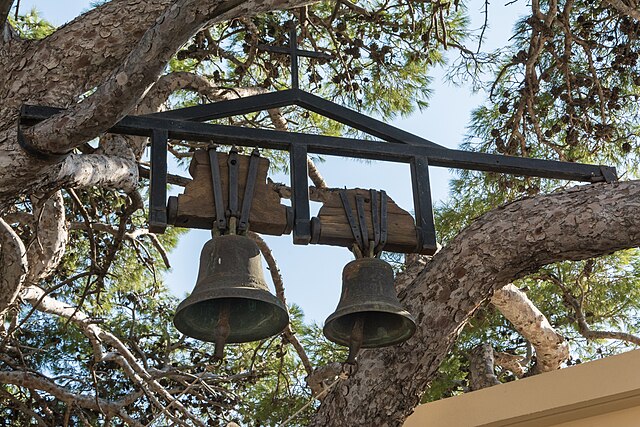
He looked around in confusion and finally spoke in Latin and said that his name was Mihály Kopeczky, a student from Késmárk (today’s Kežmarok, Slovakia), who really wanted to get to Rome and see its famous churches. Since he had heard that the bells fly to Rome at Easter, he decided to make his journey with the bells. He climbed the tower of Keszthely, hid inside the old bell, and tied himself to the bell’s hammer with a strap. Suddenly, he felt a great shock, as if he had been thrown out of the tower, and lost consciousness. He only regained consciousness when the sacristan woke him up.
Shaking Fruit Trees, Clapping, Beating of Pilate
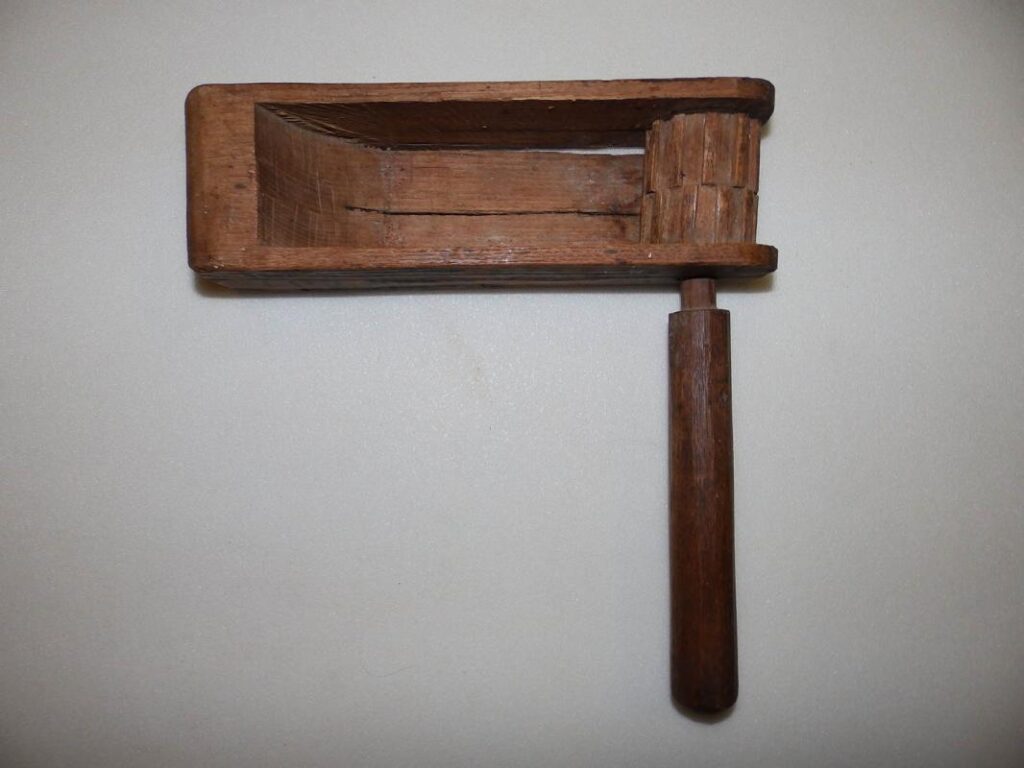
According to popular belief, the fruit trees had to be shaken at the sound of the last bell on Holy Thursday so that they would bear fruit in abundance. After the bells stopped ringing, they would ring again on the evening of Holy Saturday. In the absence of bells, on these days, they would use a clapper to warn of the ceremonies—this was also a revival of the old noise-making, evil-expelling customs.
Until Holy Saturday, the children had to run around the village with their little clappers and signal the time and the start of the mass. It was recorded that there was a resourceful boy who pushed a wheelbarrow to which he had tied a piece of copper so that it would rattle. The children making noise received an egg for their service on the afternoon of Holy Saturday.
The ceremony of washing of feet also takes place on Holy Thursday in memory of the Last Supper. The liturgical custom may have inspired the washing of altars on Holy Thursday, a popular remnant of which was the mopping of the church.
A playful game of ‘beating and burning of Pilate’ was another custom on Holy Thursday, which may have been intertwined with the rituals protecting the spring crops and expelling evil spirits. András Dugonics wrote the following about the tradition: ‘Children beat the ground with merciless blows, on Good Friday with a mat, and they say that they are beating Pilate, who hanged our Lord in Jerusalem.’ In some places, the faithful hit the church pews with sticks, as if they were beating Pilate; in others, they broke planks carried in front of the church. During the burning of Pilate, a straw effigy representing Pilate was burned.
Vigil at Calvary, Washing in the River, Deworming
On the evening of Holy Thursday, in memory of Jesus’s vigil on the Mount of Olives, it was customary for older women to pray at Calvary or at the roadside crosses, singing about the Lord’s suffering and Mary’s maternal pain. In some places, they would go around the village, recite the painful reading at the stations, and walk along the crosses at the border. Some prayed in the solitude of their own gardens.
Also, in the evening or at dawn on Good Friday, before sunrise, they would go out to the nearby river to wash themselves, because this rite was believed to have a power to ward off evil. After washing in complete silence, they would also take water to those who had stayed home to wash away the illness. They would even sprinkle it on their livestock, and they would take their horses to the riverbank with them so that they could also go in the water.
At dawn, deworming took place in the houses, based on the belief that the evil spirit lurks in worms, like the serpent of paradise. They swept the house, took out the garbage, and walked around the porch with a stick, shouting, ‘rats, cockroaches, and mice, go where you see a smoky chimney!’ The saying is based on the ancient tradition that on Good Friday, the fire in every house was extinguished in memory of the death of the Saviour.
Related articles:
Click here to read the original article.
At a time when public debate is increasingly polarized and superficial, Hungarian Conservative remains committed to depth, intellectual honesty, and independent conservative thought.
Producing high-quality journalism requires resources. Your contribution helps us expand our coverage, reach new audiences, and keep our content accessible.

Please consider supporting our mission.