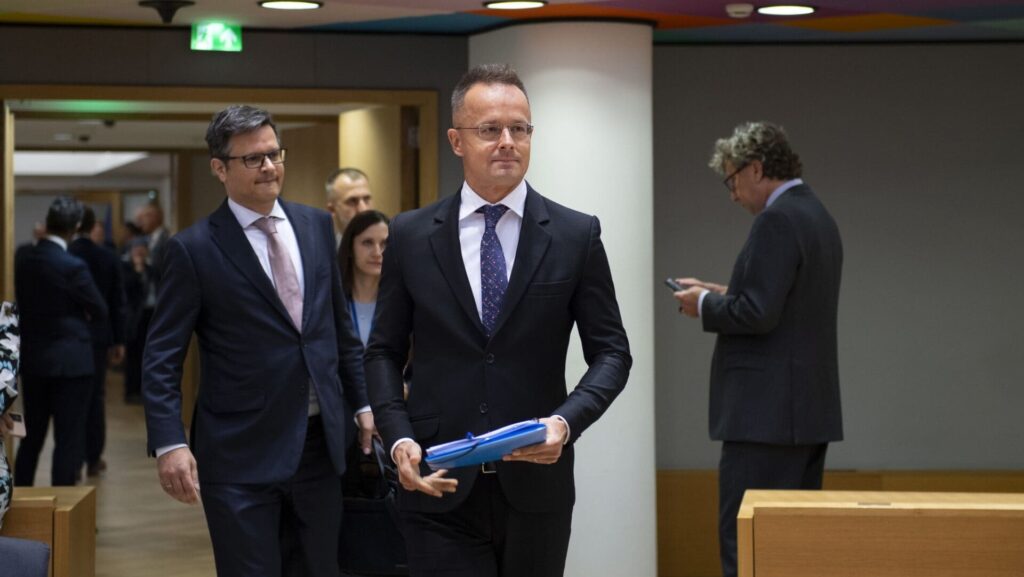
Hungary considers flexibility, technological neutrality and predictability to be the cornerstones of environmental policy, as these are crucial for maintaining Europe’s competitiveness, the State Secretary for Environmental Affairs at the Ministry of Energy said on Tuesday in Brussels.
Speaking ahead of a meeting of EU environment ministers, Anikó Raisz commented on renewed discussions within the European Union about easing the planned 2035 ban on internal combustion engines. She recalled that Hungary had already urged caution during earlier debates and consistently stressed the importance of long-term thinking, particularly whether set deadlines were economically feasible.
Raisz noted that Hungary adapted to the EU’s agreed direction once decisions were made, but continues to regard regulatory predictability in EU legislation as a fundamental requirement. She underlined that investors and businesses can only plan for the long term in Europe if the regulatory environment remains stable and foreseeable.
According to the state secretary, this is why Hungary sees appropriate flexibility and technological neutrality as key to success, adding that even after reviewing the concrete legal texts, the country will continue to advocate for reasonable and pragmatic solutions.
Raisz also reported that she had recently returned from Nairobi, where she was re-elected vice-president of the UN Environment Assembly for its eighth session at UNEA-7. She thanked EU member states for their support and described the assembly as successful, highlighting the importance of European unity in international cooperation.
Regarding Wednesday’s agenda, she welcomed the EU bioeconomy strategy but stressed the importance of technology transfer, which she said is essential for the effective use of biomass, particularly in eastern regions. She also highlighted the BIOEAST initiative originating in Central and Eastern Europe, under which plans include launching an innovation partnership and preparing an impact assessment.
Commenting on the Council’s conclusions, another key item on the agenda, Raisz welcomed the Danish EU presidency’s decision to take member state feedback into account. She said the document was balanced in terms of both adaptation and the circular economy, while stressing that harmonization should go no further than absolutely necessary and should respect existing national best practices.
In conclusion, Raisz emphasized that Hungary priorities thorough impact assessments across all policy areas and only supports decisions afterward that provide clear guidance for investors. She reiterated that preserving technological neutrality, flexibility and predictability is essential for safeguarding Europe’s competitiveness.
Related articles: