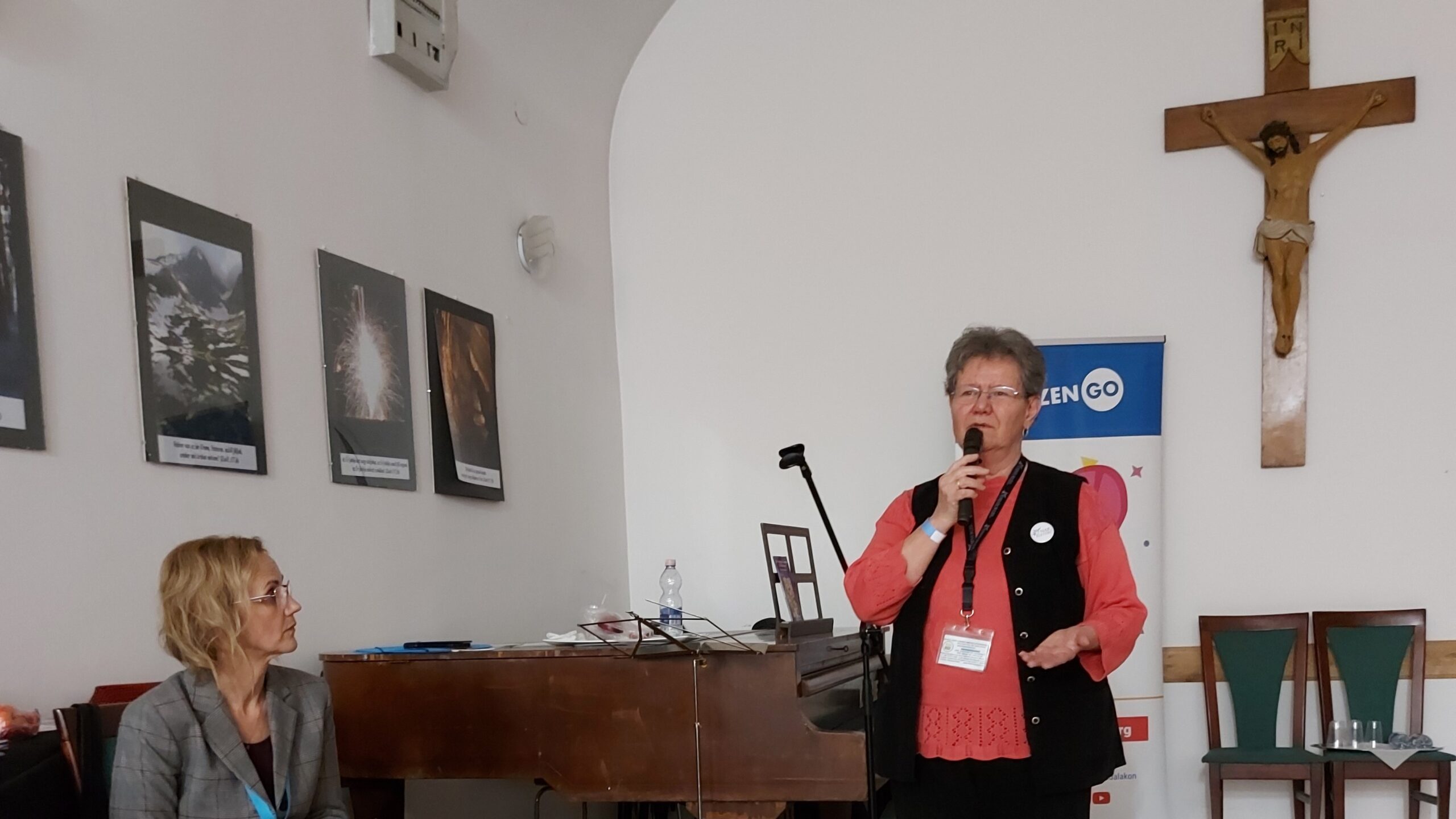
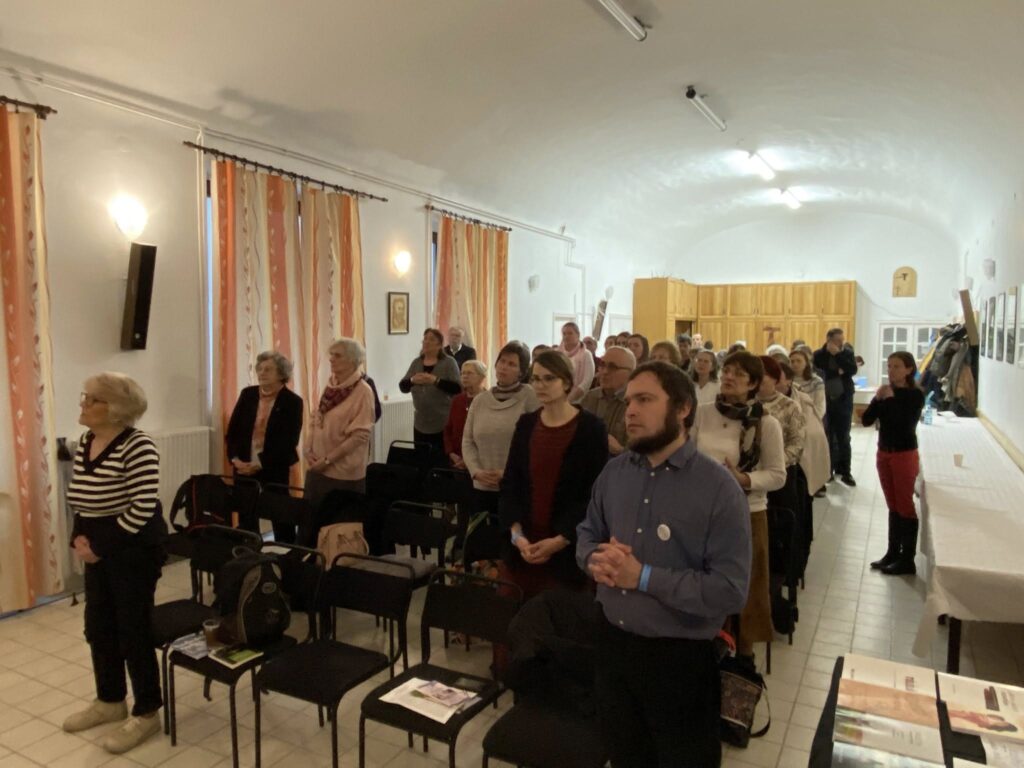
On 31 January, the national coordinator of the 40 Days for Life movement in Hungary, Magdi Hajdaniné, organized an international pro-life professional day as preparation for the movement’s spring prayer vigil beginning on 18 February. The event, attended by around 80 participants, was hosted by the Franciscan friars in Pest, with CitizenGo and local organizers also contributing. The program was moderated by journalist Ildikó Antal-Ferencz, who read out messages from speakers unable to attend in person; she also enriched and connected the individual presentations with her own personal experiences.
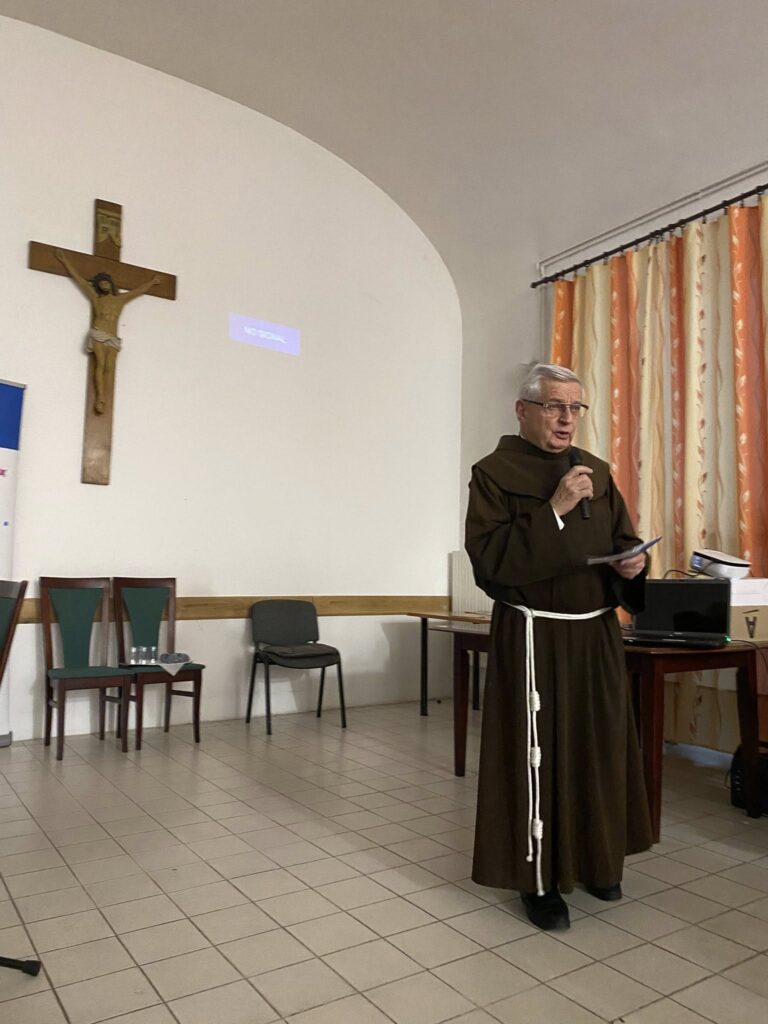
The praise and worship led by Éva Kulcsár and József Laufer set the tone upon arrival and, through communal singing, further elevated the atmosphere, making the presence of the Holy Spirit tangible. Following a brief welcome by chief organizer Magdi Hajdaniné, the host of the event, Franciscan friar Fr. Tihamér P. Papp, greeted those present. The central message of his short address was: ‘sin humiliates’. He was followed by Father Zoltán Osztie—founder of the Good That You Exist! Alliance of Pro-Life Defenders (Jó, hogy vagy! Életvédő Szövetség)—who emphasized the importance of defending life from conception to natural death. As he stressed, protecting life is a matter of destiny; it’s not a Christian or religious issue, but a universal one. It extends to the whole circle of life—it isn’t only about abortion, but also about gender reassignment surgeries, infertility, nearby wars, care for the elderly and people with disabilities, and the dignity owed to every human being at the end of life—in short: the defense of human dignity. ‘The greatest value is the human person,’ he concluded, adding that this message would also be displayed on the façade of the Belvárosi Plébánia (the Downtown Parish Church he leads) in the spring. He reminded those present of the I Say Yes online retreat for mothers coming up in May.
The in-person local greetings were followed by a video message from CEO of 40 Days for Life Shawn Carney, and then by a video address from International Director Robert Colquhoun. After excusing himself that, due to the birth of his sixth child, he was unable to attend in person, he noted: ‘You are fortunate in Hungary: under your conservative Christian government, you are able to evangelize freely, unlike, for example, the UK, where prayer vigils often encounter civil and governmental opposition.’ As he mentioned, abortion is the leading cause of death worldwide, something that ‘can be brought to an end with your help’.
He continued: ‘Continuous vigil is only the beginning. God is the source of life and love; He creates every human being, and when we turn to Him in prayer, we can experience personal spiritual renewal and bring about changes in our surroundings that can lead to spiritual revival at a societal level as well…This is an ongoing battle between the culture of life and the culture of death, in which by saving a single child we save an entire future family,’ he said, adding: ‘Every abortion is a tragedy, which is why the most beautiful part of the pro-life movement is post-abortion healing, during which God transforms our wounds and pain into something beautiful.’
After citing American results (for example, in Texas, daily abortions dropped from an average of 365 to an average of seven per day following the launch of the movement), he emphasized that every state and country is fighting its own battle, in which local organizers play a key role. Finally, recalling the 1956 Hungarian Revolution, he concluded: ‘Hungarians are a generous and spirited nation, the hope of the pro-life movement.’
Following the screening of these two messages (dubbed by Rev. Péter Márki of Keszthely), several committed and experienced pro-life professionals shared their personal and professional reflections, addressing the three main areas of life protection: prevention and education from early childhood, assistance for pregnant women in crisis, and healing from the pain of child loss. After a brief overview by Magdi Hajdaniné on Hungary’s population decline, two thought-provoking—at times deeply confronting—presentations followed. Identity coach Éva Eberlein emphasized that parents should be the primary source of information for their children. Therefore, as early as possible and in an age-appropriate manner, children need to be taught that they are all children of God, good and valuable; that their body and sexuality are gifts from God; that feelings pass and therefore cannot be the foundation of life decisions; and that they are not alone—with their parents and appropriate boundaries, they are safe.
‘In Texas, daily abortions dropped from an average of 365 to an average of seven per day following the launch of the movement’
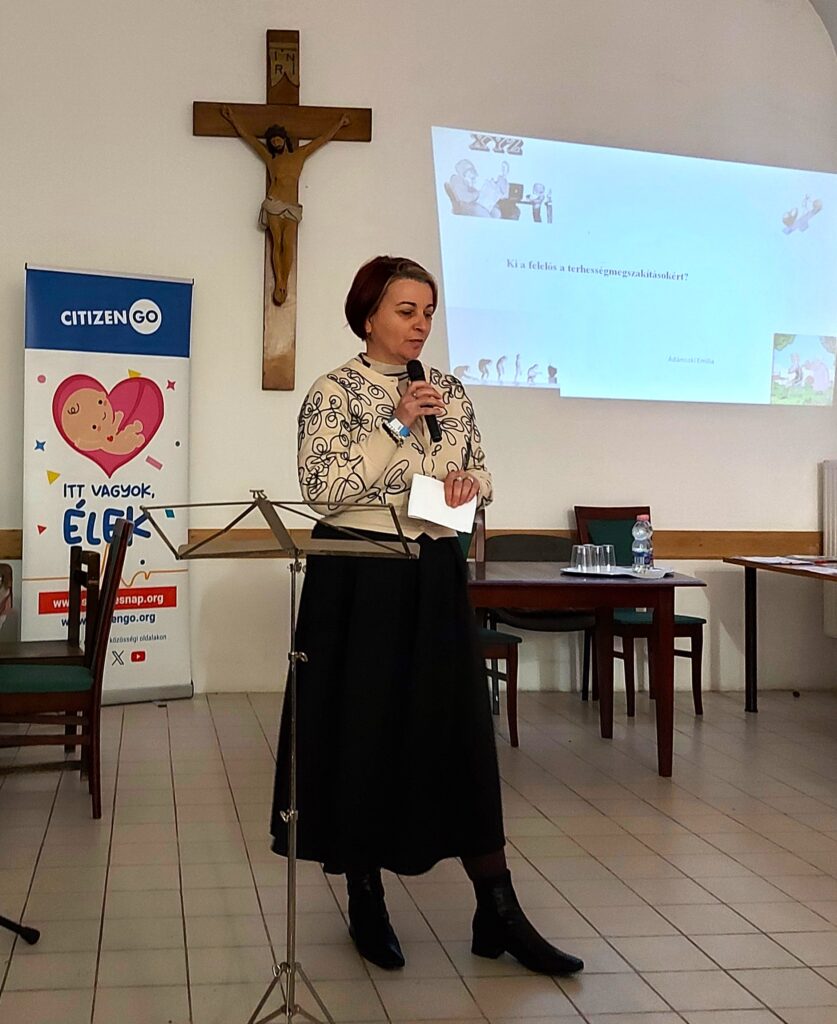
From public health nurse Emília Ádámszki, we learned that during her nine years of work with the Hungarian Family Protection Service (CSVSZ), approximately 900 women approached her during the two legally mandated pre-abortion consultations—many of them repeatedly—but none of them with joy or on their own free will. She identified influencing factors in childbearing decisions such as family and social background, social expectations, lack of information, parents’ own traumas, the absence of positive role models, and present parental support—gaps that communities can help to fill; that’s why the existence and networking of pro-life organizations are so important. ‘My work is meaningless if I don’t know where to send pregnant women,’ she stressed, adding that a decision is truly the woman’s only if she knows what she’s deciding about—which is impossible in a narrowed state of consciousness. Therefore, responsibility lies with everyone, from the immediate family to society as a whole, including the state, civil, and church organizations.
Also within the second theme (practical assistance), Éva Pálinkás, representing the Várva Várt Foundation, shared her thoughts via a written message. In 2025, their crisis helplines were contacted over 6,000 times by professionals or people in need seeking advice or actual help. They were able to provide assistance in 656 cases and helped 15 babies find adoptive families. They continuously support several pregnant women. They consider abortion rescue the peak of their volunteer work: in 2024, they saved 30 babies, and in 2025, another 19, whose mothers were directly facing abortion. So far in 2026, six babies have been born because their mothers received help from the foundation.
Gábor Kosár (Szombathely) provided insight into the far from encouraging situation of pro-life efforts in Poland. The current Polish government openly supports anti-life measures: abortion pills (ultimately vetoed by the President), in vitro procedures, and several other measures facilitating abortion, such as user-friendly websites advertising abortion tourism abroad, an ‘abortion clinic’ offering counselling near the Polish Parliament—which is illegal, yet no investigation has been launched to stop it, while recently a pregnant woman who publicly expressed her opinion about a pro-abortion doctor was convicted of defamation.
Moreover, according to guidance from the Polish Minister of Health, a single doctor’s support is sufficient to invoke women’s mental health, which has now become the justification in 99.5 per cent of all abortion cases, resulting in 12 times more procedures than before this guidance was published.
Presentations from three organizations dedicated to healing from the pain of child loss (miscarriage or abortion) came next: Anna György-Deák introduced The Path of Protection; Ildikó Csajági sent a message about Rachel’s Vineyard and the concept of spiritual adoption; and Mária Kovácsné Treer presented the Do Not Be Afraid, I Do Not Condemn You retreat. All three share the goal of ‘freeing the mother from the pain of pregnancy loss’. Their methods are similar: individual processing in small groups through God’s healing love and the compassionate presence of peers; reflections, exercises, and prayers based on the Gospel and using biblical drama techniques to help participants reach the depths of their souls; and naming and saying goodbye to the lost child. They also share the conviction that the mother’s spiritual healing leads to the healing of the entire family and that ‘there is no replay in life, but by God’s grace there is healing.’
The Path of Protection places special focus on the child, their healing, and asking for their intercession; therefore, they pray to Jesus to baptize the lost child. Rachel’s Vineyard is spiritually led by Pauline monk Father Antal Puskás, while the Do Not Be Afraid, I Do Not Condemn You is led by permanent deacon Ferenc Kovács, with a rotating accompanying priest. Both involve lay leaders and numerous volunteers. Spiritual adoption of the unborn child is a nine-month commitment to pray for unborn babies and their families, where abortion is a risk. Only God knows the identity of the unborn child; those praying become spiritual intercessors and get connected with other pro-life prayer communities.
‘Spiritual adoption of the unborn child is a nine-month commitment to pray for unborn babies and their families’
The deeply moving testimony of Ágota Fenyvesiné Gábriel, mother of eight, confirmed that everything discussed by the speakers reflects a painful reality: the decision to terminate a pregnancy and post-abortion syndrome are heavy emotional burdens affecting not only women (mothers) but also men (fathers)—yet with God’s help, healing is possible for all. However, speaking publicly about this, even years later, is a great challenge, but also an essential mission so that others may learn and be helped on their path to healing.
Secretary General of the Hungarian Evangelical Alliance István Horváth echoed this sentiment: ‘God is the one who can cleanse us.’ He shared that at the age of 19, following a powerful encounter with God, he turned towards serving people and has since been proclaiming the Gospel worldwide. His organization operates two ships travelling the seas, and since 2007 has also run an exhibition bus. Between 2017 and 2020, in cooperation with the Cry for Life Association, they reached over 10,000 Hungarian students in more than 100 schools, engaging them in discussions on sexual education and prevention.
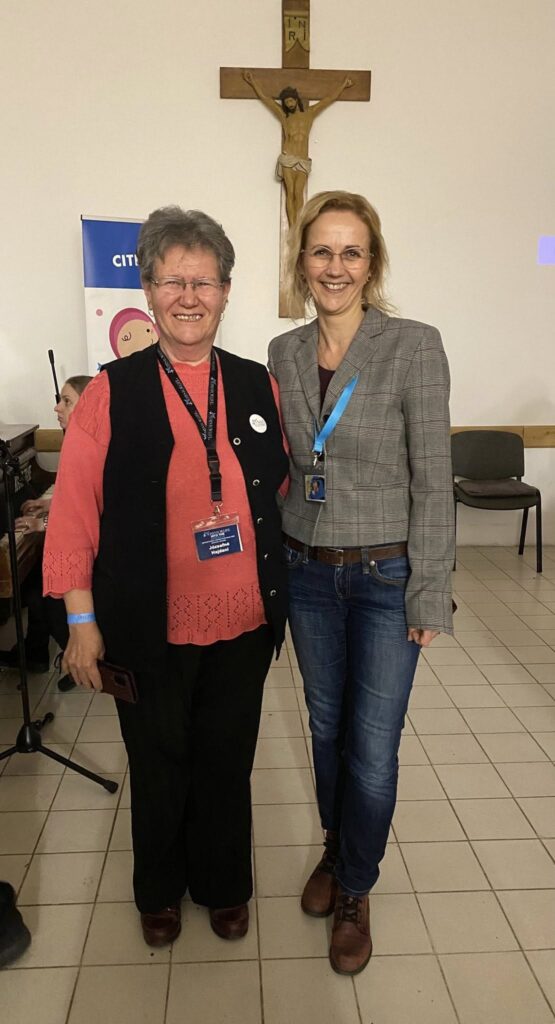
An encouraging video message by Petra Milković, national coordinator of 40 Days for Life in Croatia, followed (dubbed by pro-life activist Adrián Uracs, currently living in Serbia). We learned that Croatians began in 2014 with only six, but by now organize prayer vigils in 40 cities, having saved nearly 200 babies. ‘God has blessed everything we have undertaken,’ she said enthusiastically.
Croatia is a predominantly Catholic country with many parishes, so they use every Sunday to present the initiative after Mass. They’ve also established an association functioning as an umbrella organization for various pro-life initiatives: lectures, videos, podcasts, and publications, social media presence, conferences and networking, post-abortion healing weekends, infertility retreats, so-called life centers, and the organization of an annual national, and occasionally an international conference (next on 18 April 2026).
Following the inspiring Croatian presentation, two Hungarian local organizers reported on their results, which were just as diverse. Hajnalka Kissevichné Toldi (Székesfehérvár) listed at length the diocesan-level pro-life initiatives launched following the National Pro-Life Day in 2023, all of which ‘came through prayer’: a pro-life working group, lectures, discussions, workshops, publications, creative projects (plays, games, stories), prayer, baby rescue incubators, hospital exhibitions, Billings Method training, drug prevention. The local 40 Days for Life prayer vigil began in 2023 with 12 participants, during which masses are celebrated every day across the local parishes for the unborn.
Valéria Sréderné Devecz (Vác) shared that during their first 40-day campaign, the number of abortions dropped from an average of 15 to ten per week. Passers-by often ask for prayer, mostly on account of infertility. Many locals still don’t know about the initiative, but it’s generally received positively. Katalin Leinemann (also from Vác) spoke about misconceptions surrounding children born with disabilities—instead of the feared ‘lifelong unhappiness’, she testified to a joyful and full life—and about the significant support they personally received from the Down Dada Service led by Éva Steinbach.
Dr. Péter Ferencz, obstetrician-gynecologist and vice-president of the Hungarian Society of Christian Physicians (KOMT), began with a personal testimony. For 17 years, before his conversion, he worked as an obstetrician in the clinics of Pécs and Székesfehérvár. In the former, during the 70s, up to ten abortions were performed daily, even though 98 per cent of the doctors there hated carrying out the procedure. At that time, there was no freedom of conscience as there is today, and only at a certain level of seniority could he decide to stop performing abortions. As a believer, he later joined the movement initiated by Dr. Imre Téglásy, characterized as one of ‘forceful love’, openly identifying as a pro-life physician. He also addressed persistent myths surrounding abortion, shockingly still present even in medical circles, such as the claim that embryos under five weeks have no heartbeat and therefore no heart, blood, or life…
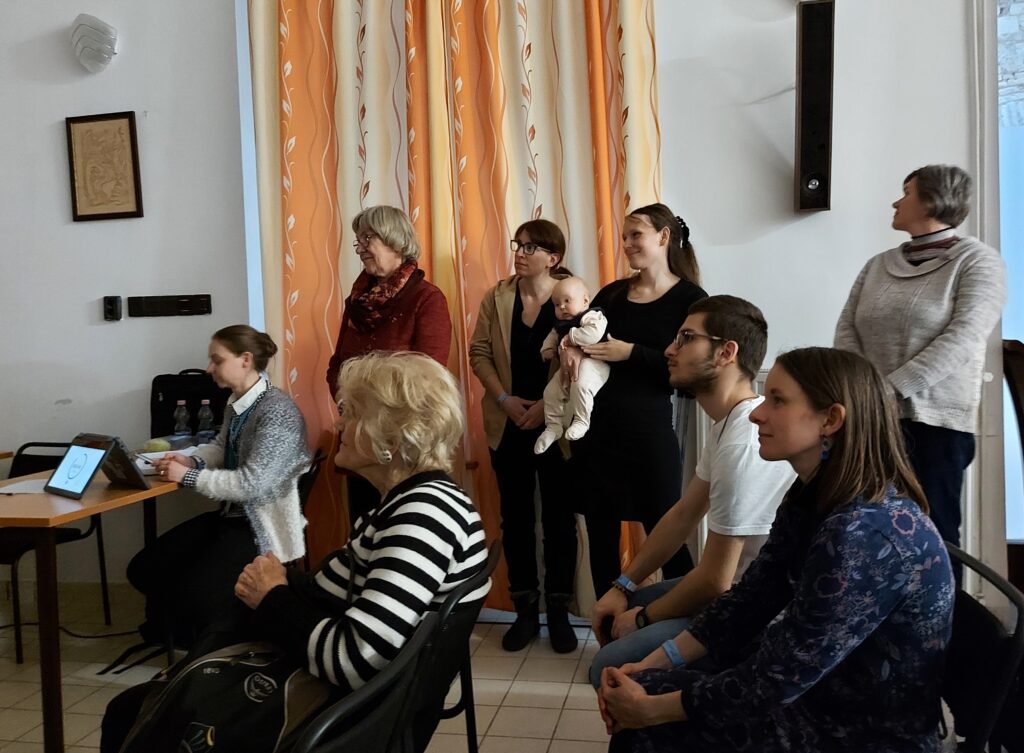
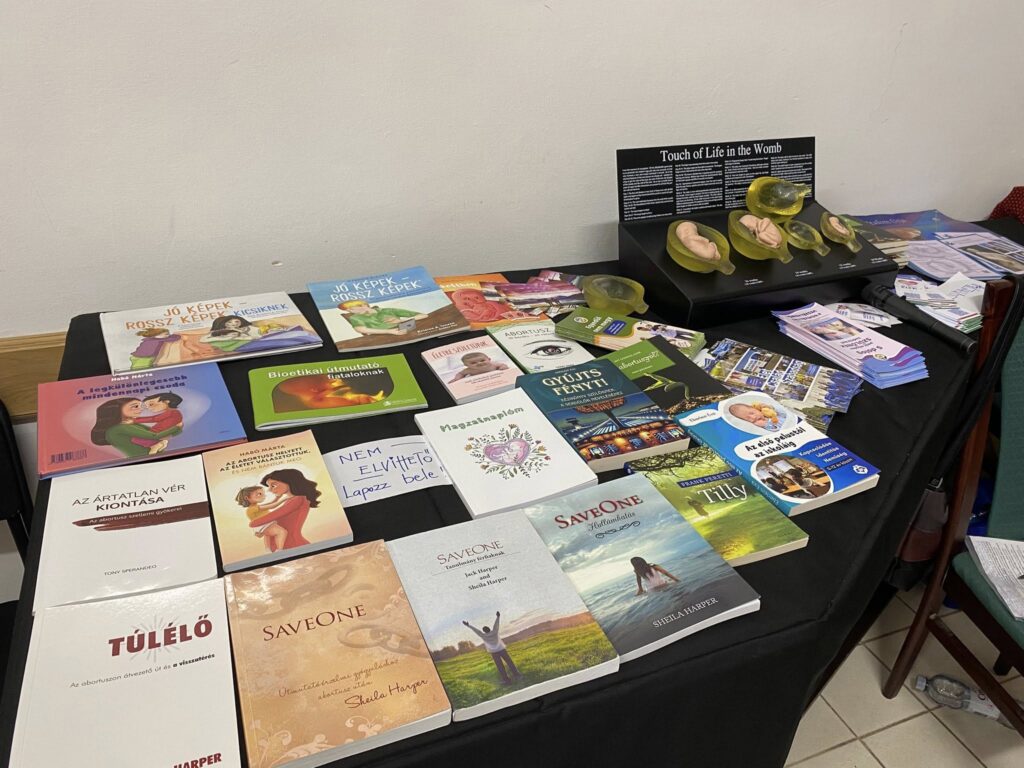
As the final speaker, Lutheran pastor Dániel Dobó (Vas County) introduced the Cry for Life Association and two international pro-life networks (Life International and SaveOne), of which both the Hungarian association and he himself are members. Finally, five more local organizers of 40 Days for Life were given the opportunity to introduce themselves and share testimonies: Levente Bodnár (Karcag), Zsuzsa Kurgyis (Kecskemét), Virág Bálint-Szedmák (Kistarcsa), Katalin Gyurisné Hutter (Szeged), and Anett Kosárné Varga (Szombathely).
Before his final blessing, Fr. Tihamér P. Papp said: ‘We know from the Bible that John the Baptist rejoiced in his mother’s womb in the presence of the pregnant Mary—and thus of Jesus also in his mother’s womb, so for Christians, there is really nothing to debate.’ He suggested replacing the term ‘termination of burden’ with ‘termination of life’—since pregnancy is not a burden but a gift—and proposed extending the 40 days into a continuous 365-day prayer vigil. Finally, he announced that the Holy Innocents Prayer Community meets biweekly to reflect on women’s dignity; the next meeting will take place on 13 February from 6pm, where everyone, including couples, is welcome.
Apparently, the main organizer, Magdi Hajdaniné’s, intentions with organizing this event were fully realized. Participants gained valuable information and strengthened communal and spiritual experiences, and were reassured that many around the world consider the protection of life to be of great importance. Additionally, local organizers of the 40 Days for Life were able to meet, share experiences, and confirm that they aren’t alone in their pro-life work. This is also reflected in the letter written after the event by international director Robert Colquhoun:
‘It is clear that this conference was not simply well run, but truly Spirit-led…The testimonies, the involvement of medical professionals, journalists, international speakers, and city leaders all point to a mature, integrated, and hopeful pro-life movement growing in Hungary. I was especially moved by the tangible fruits you shared—the lives saved, the families supported, the babies born because someone said “yes” to help and compassion. These are not statistics; they are eternal victories.’
Related articles: