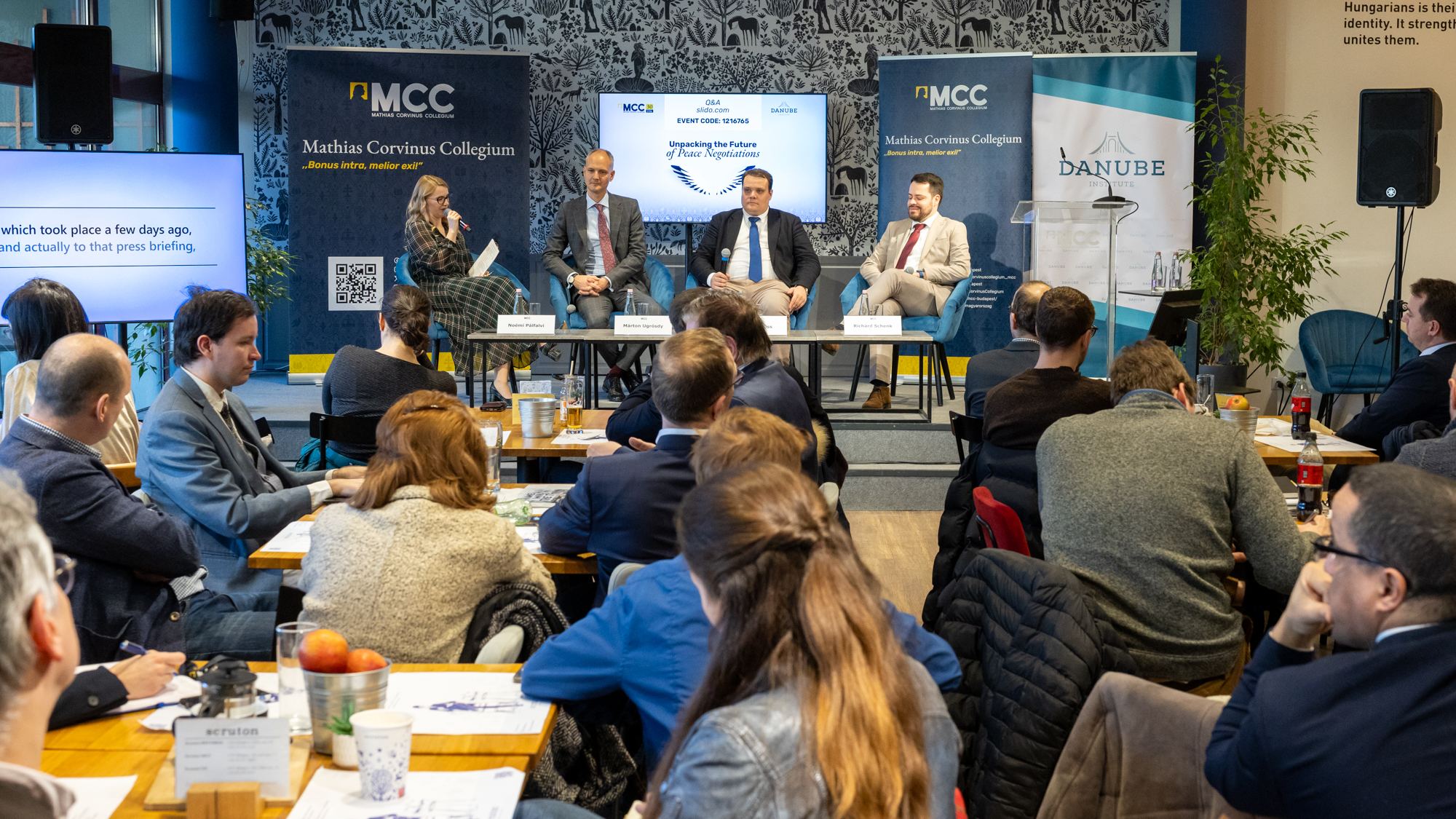
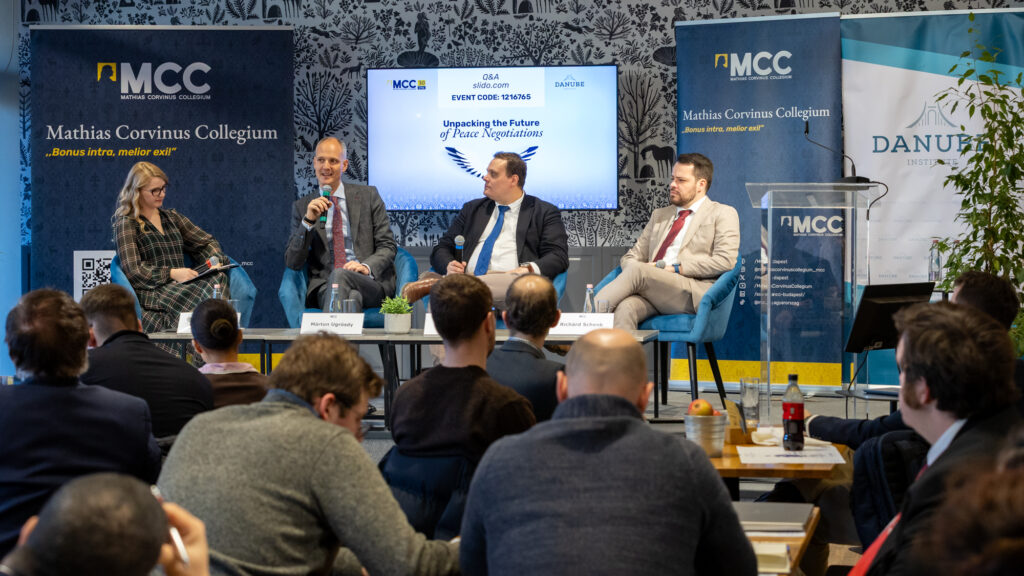
As the fourth anniversary of the war in Ukraine approaches, policymakers and analysts gathered in Budapest for the conference The Future of Peace Negotiations organized by the Mathias Corvinus Collegium and the Danube Institute. The event brought together experts to discuss the prospects for peace negotiations, the evolving geopolitical landscape, and the broader economic and political consequences of the conflict.
In his opening remarks, MCC’s Deputy Director General Péter Lánczi reflected on the often-quoted phrase ‘May you live in interesting times’, noting that while commonly attributed to a Chinese proverb, it is more accurately understood as a curse. He said many people today feel as though they have indeed been cast into such times.
Referring to the war in Ukraine, he emphasized that for nearly four years, a brutal conflict has been taking place in Hungary’s neighbourhood. According to him, Ukrainians have fought heroically despite initial expectations, but the human cost has been enormous, with an unusually high number of casualties and families mourning their losses. He added that Hungarians feel the reality of the war particularly strongly when speaking with colleagues in Transcarpathia, where children are growing up during what he described as ‘interesting times’. Lánczi underlined that one of MCC’s missions is to help people better understand the world around them through discussions like this conference.
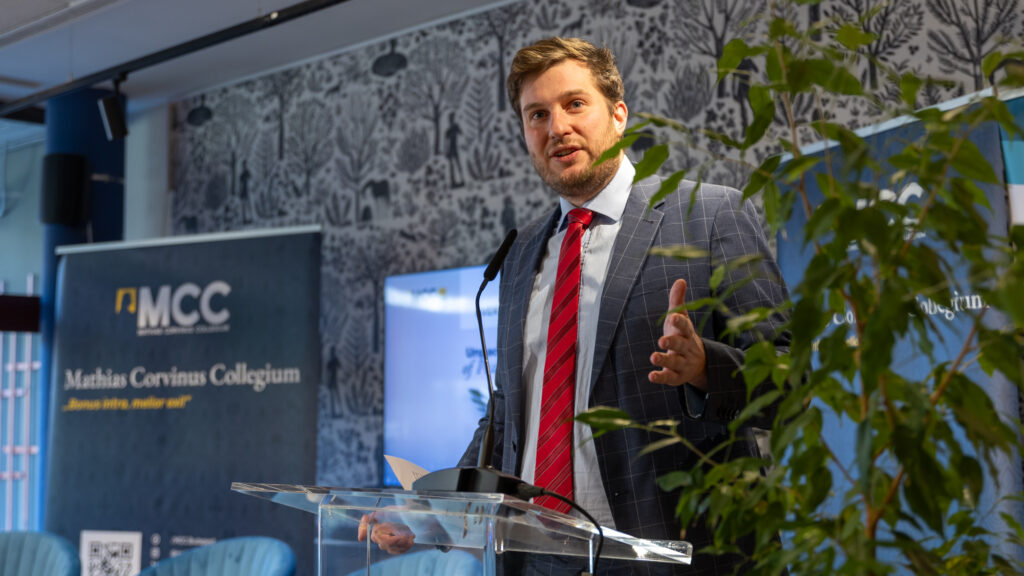
Executive Director of the Danube Institute István Kiss followed with welcoming remarks, noting that few would have expected such a bloody conflict to still be ongoing nearly four years after it began. He said he had long been sceptical about how the war could end in a peace acceptable to both sides. Hungary, he stressed, has a direct stake in the conflict, as ethnic Hungarians living in Transcarpathia are also affected, and Hungarian lives have been lost.
In addition to the human toll, he pointed to the economic consequences of the war, arguing that while Hungary weathered the COVID crisis relatively well, the challenges since then have been far more difficult. For these reasons, he said, Hungary has a clear interest in bringing the conflict to an end as soon as possible.
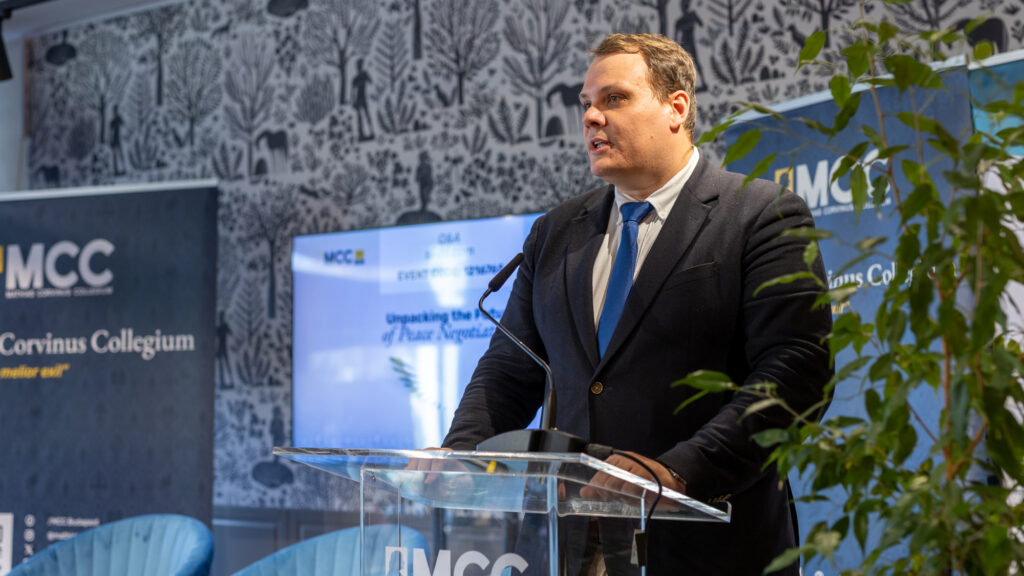
The first panel was moderated by Executive Senior Advisor at the Danube Institute Noémi Pálfalvi, and featured Deputy State Secretary at the Prime Minister’s Cabinet Office Márton Ugrósdy, Executive Director of the Danube Institute István Kiss, and Visiting Fellow at MCC Richárd Schenk.
The discussion began with a question about US–Hungarian relations and recent diplomatic developments. Responding, Kiss said that not much time had passed since the previous round of talks in November, so major breakthroughs should not yet be expected, but he nevertheless saw positive trends. He noted that earlier agreements had already produced results, including the continuation of Russian gas and oil supplies, which he said had been particularly important during a cold winter.
He also highlighted new agreements in the fields of nuclear energy and liquefied natural gas, adding that investments in small and medium-sized nuclear reactors were also expected following the recent visit of Rubio. According to Kiss, since Trump’s return, the United States has become one of Hungary’s largest investors, ranking third or fourth in 2025 after China and Singapore, with 17 economic projects announced in a single year.
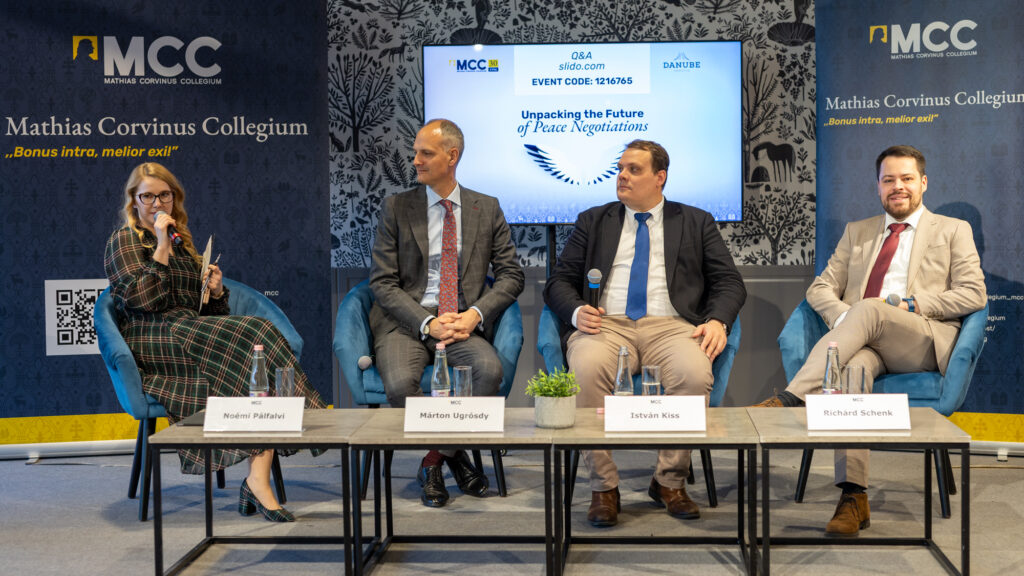
Asked about the details of the agreements and how they might affect Hungary, Ugrósdy said he could not discuss the specifics but emphasized that Hungary has always sought affordable and reliable energy supplies. He argued that closer political cooperation now makes it possible to conclude agreements with American companies that were previously unavailable. Hungary, he said, wants to keep as many options on the table as possible, particularly in nuclear energy, and in some cases, cooperation with the United States could be the most effective solution. Cheap energy, he added, remains one of the foundations of economic competitiveness.
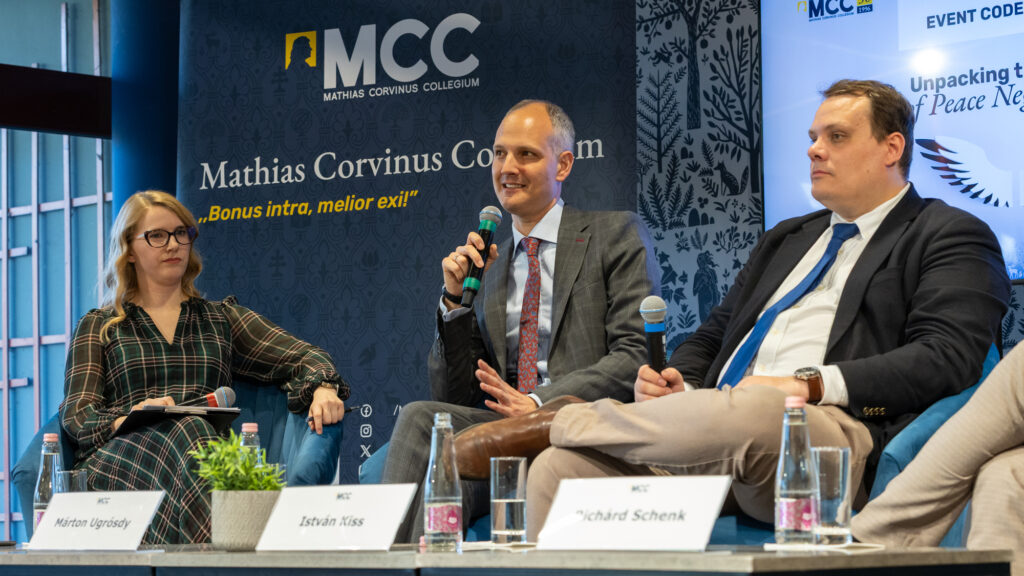
The discussion also touched on sanctions and the remarks made by Rubio. Ugrósdy said that while purchasing gas and energy may be possible, the challenge lies in bringing those supplies to Hungary, given the country’s reliance on neighbouring states for transit. Kiss added that opportunities for cooperation had emerged partly because of the personal relationship between the two leaders, noting that critics who had previously called for buying American LNG were now criticizing the same policy. Ugrósdy concluded that Hungary is working to diversify its energy sources because doing so strengthens the economy.
Schenk was asked about Rubio’s foreign policy positions and their implications. He argued that while Rubio’s speech differed in tone from that of Vance, there was little difference in substance. According to him, the United States wants Europe to rediscover itself, while Brussels has reacted by promoting narratives about foreign interference in European elections. He suggested that the next European election to be affected by such debates could be Hungary’s.
Turning to the ongoing diplomatic efforts, Kiss commented on recent negotiations in Geneva, noting that an agreement had not yet been reached but that he was not surprised. He said it was nevertheless positive that all parties were now present at the table and that ideas were being discussed. However, he added that some actors were not interested in ending the conflict quickly. In his view, Russia believes time is on its side, while Ukraine hopes for stronger support from Western allies. He argued that if Ukraine wants a sustainable peace, it may need to reach an agreement sooner rather than later.
Ugrósdy agreed that both sides appear to believe they are winning, which he said makes a solution more difficult. He noted that Russia’s war economy allows it to sustain the conflict, while Ukraine faces challenges in terms of finances, manpower, and weapons. These difficulties, he said, are not necessarily due to poor management but are linked to demographic and economic realities. At the same time, he suggested that while some actors may want to prolong the war, much of the population would prefer to see it end.
The panel also addressed the role of international institutions. Schenk argued that the international system created after the Cold War had shaped expectations, but earlier periods of peace in Europe had often relied more on statesmen than on institutions. Kiss similarly expressed scepticism that institutions alone could deliver peace, noting that they lack military power and that personal relationships between leaders have often played a decisive role in history.
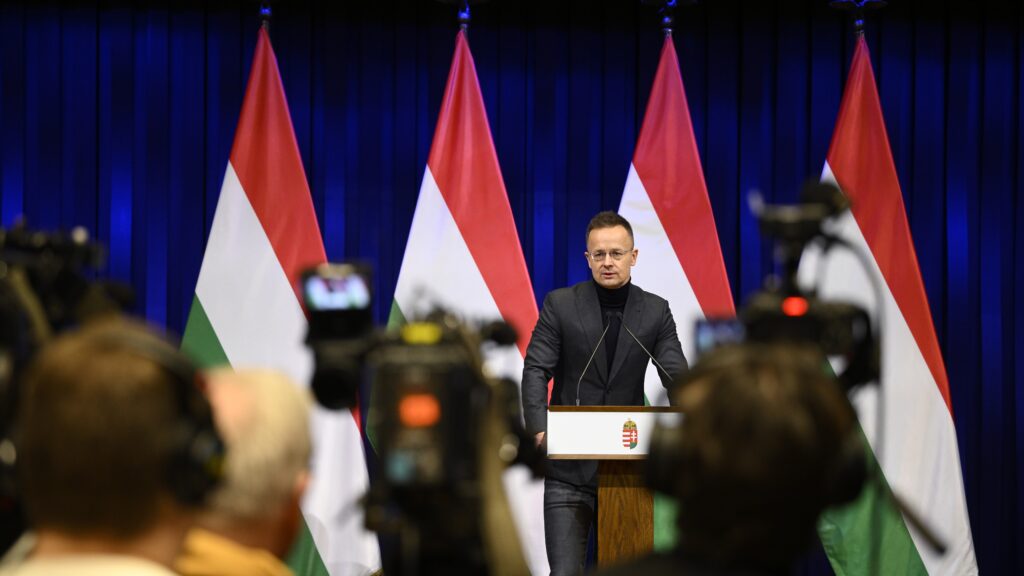
Asked about Hungary’s potential role, Ugrósdy said Hungary had been among the first to call for bringing the parties to the negotiating table and reiterated that Budapest would be willing to host talks if needed. He emphasized that Hungary does not support either side but instead represents its own national interests, while also describing Russia’s actions as unacceptable.
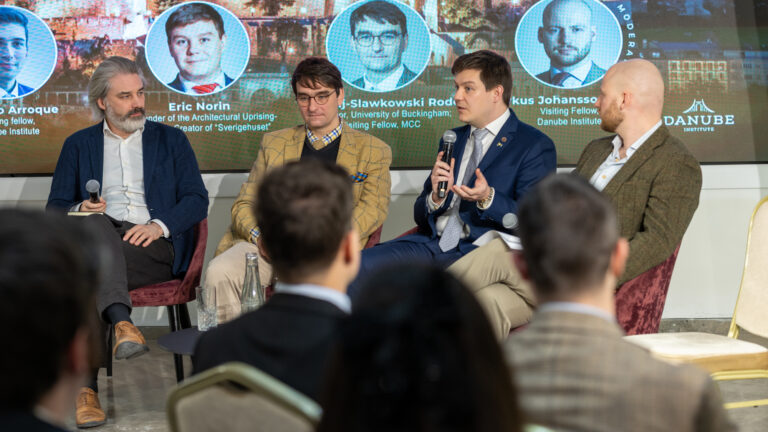
The second panel, moderated by MCC’s International Director László Krisztián, shifted the focus to the economic and financial implications of Ukraine’s potential EU accession. Participants included Head of the Center for Applied History and International Relations Theory Ralph Schoellhammer, Visiting Fellow at the Danube Institute Sean Nottoli, Deputy Director of Research at the Danube Institute Péter Szitás, and Deputy Director of Research at MCC Brussels Philipp Siegert.
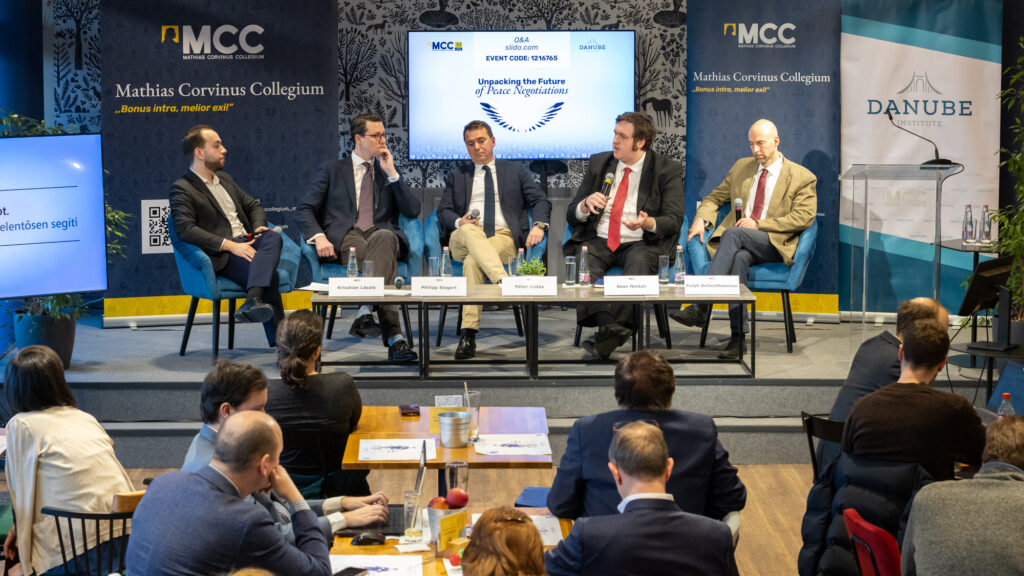
Opening the discussion, László Krisztián noted that many issues had already been addressed in the first panel but suggested examining them from a broader international perspective. One question concerned the significance of Rubio visiting only two countries—Slovakia and Hungary—which are exempt from certain tariffs on oil.
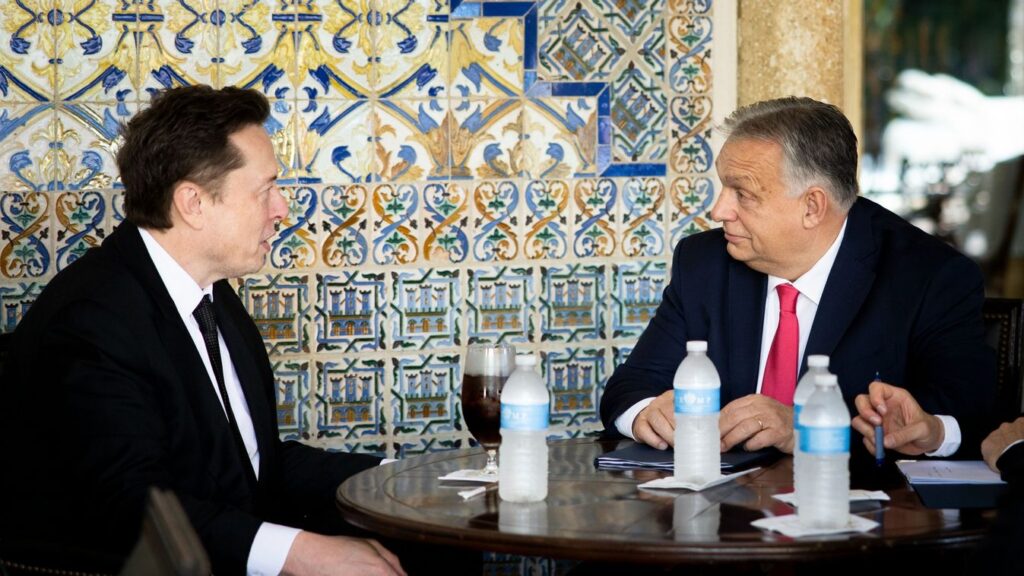
Nottoli argued that US policy under Trump prioritizes strategy over ideology and said Rubio had indicated that Washington increasingly views Central Europe through Hungary’s perspective. According to him, the strong personal relationship between Trump and Orbán has helped position Hungary as a realistic partner for the United States. He suggested that the visit demonstrated Washington’s intention to strengthen ties with the region.
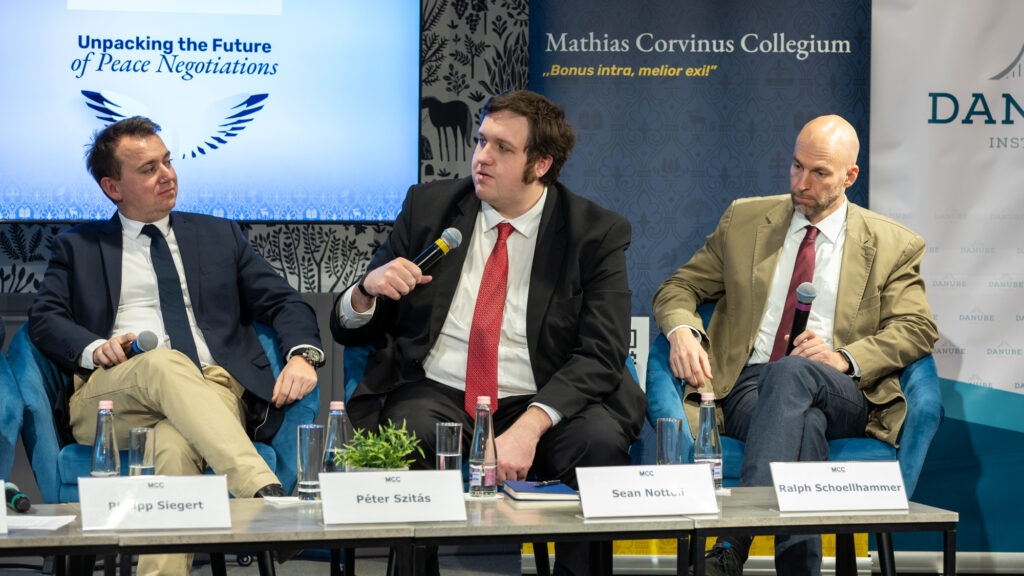
Szitás added that Hungary and Slovakia have recently played a special role within the European Union, describing them as voices of normality in what he called an abnormal environment. The visit, he said, amplified these voices and even led to speculation by Fico about involving the United States in the Visegrád cooperation.
Siegert linked the development to the emphasis on sovereign nationalism shared by the two countries. He recalled that during Trump’s first visit, both leaders highlighted a common approach centred on national interests.
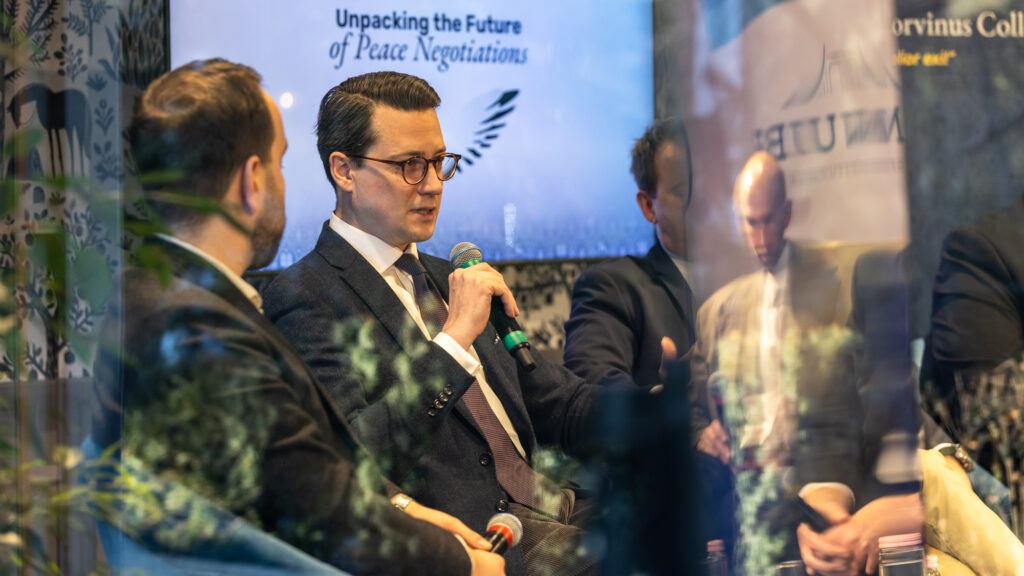
The panel also examined the significance of nuclear energy cooperation agreements. Schoellhammer noted that while the EU had introduced its 20th sanctions package, including measures affecting Rosatom, Hungary was beginning steps toward greater independence from Russian nuclear energy. However, he cautioned that building new reactors takes time.
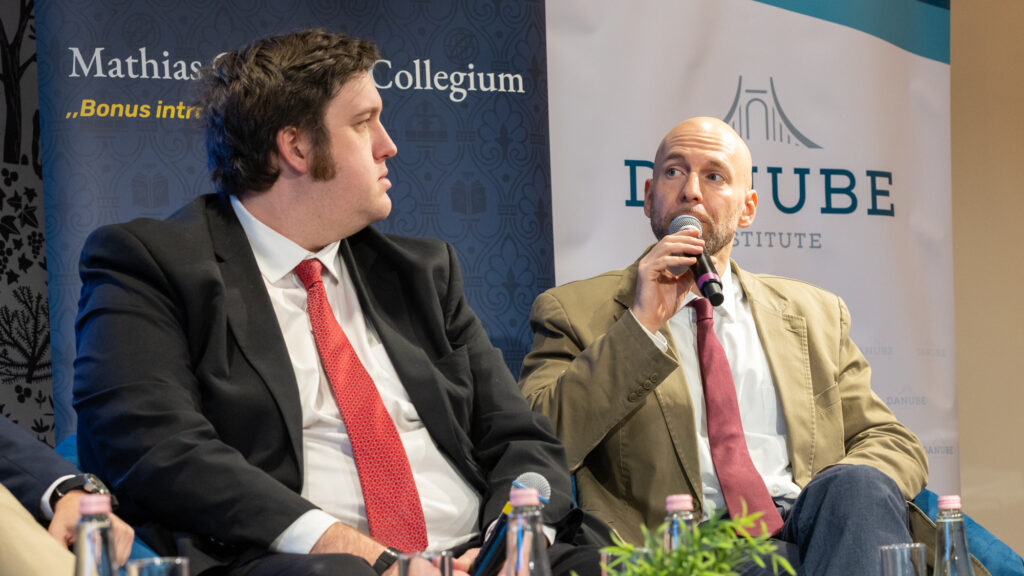
Nottoli highlighted the economic dimension, saying that US investment in Hungary reached approximately 650 million dollars in 2025 and that the visit signalled continued cooperation in trade and investment. According to him, American companies increasingly view Hungary as a gateway to the region.
Szitás also commented on sanctions, arguing that Europe had become dependent on cheap Russian energy and that repeated sanctions had harmed the continent’s own economy. He pointed out that companies such as BMW, Volkswagen, and Mercedes are present in Hungary partly because of access to relatively affordable energy.
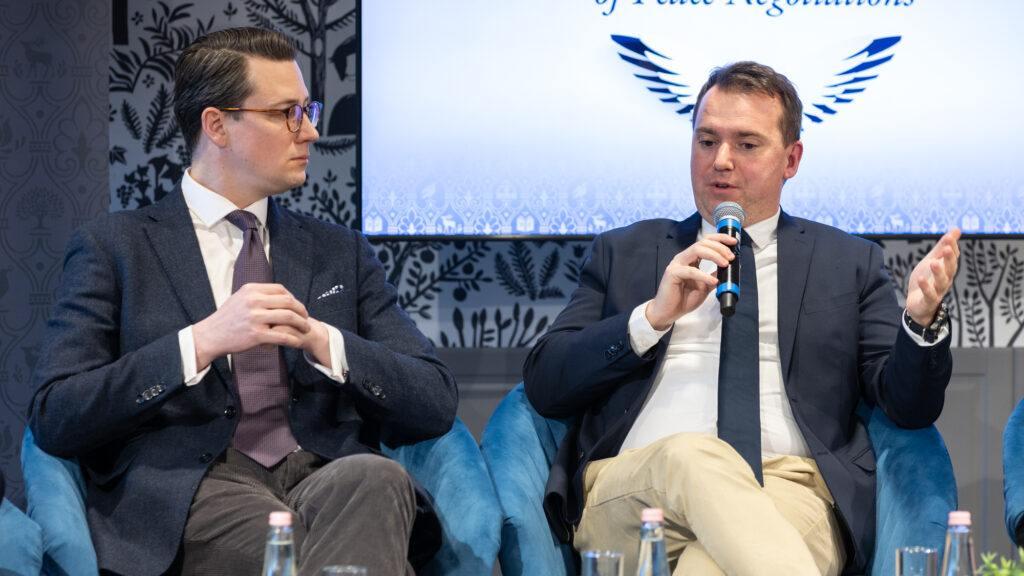
When asked how US relations with Hungary and Slovakia might influence their position within the EU, Siegert said the impact would depend on whether current parliamentary majorities remain in place, noting that while such relationships can shape developments, they may not fundamentally change long-standing geopolitical realities.
The discussion concluded with reflections on Ukraine’s possible EU accession. Siegert suggested that while some have proposed more flexible approaches to integration, the EU’s current administrative structure makes rapid accession difficult, particularly for a country as large as Ukraine and still affected by war. Szitás added that Ukraine received candidate status unusually quickly compared to previous applicants, raising questions about the criteria and processes involved.
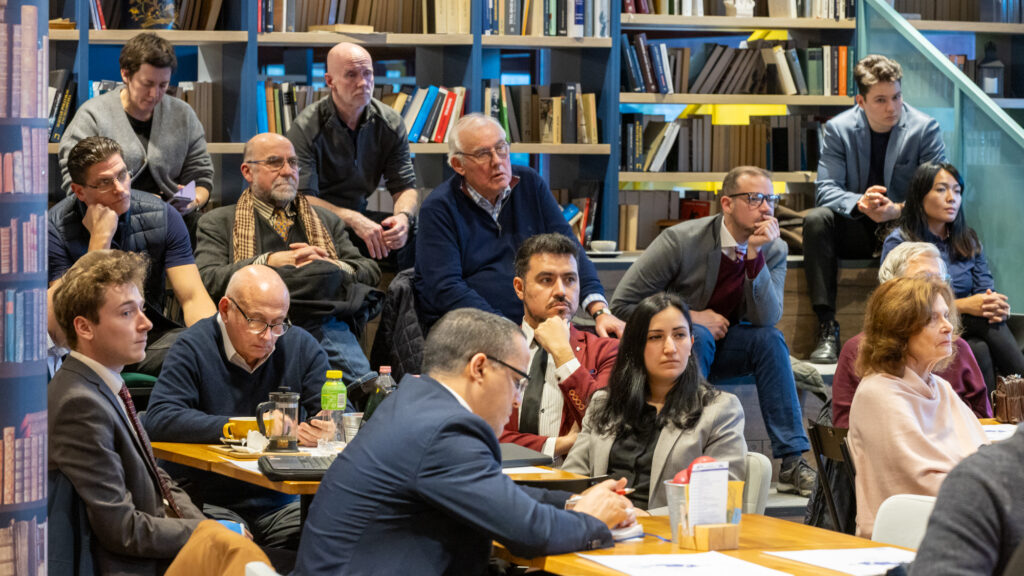
Overall, the conference highlighted the complexity of achieving peace in Ukraine while also revealing how geopolitical shifts, energy security, and institutional debates continue to shape discussions about the future of Europe and the region.
Related articles: