Today is the day to again celebrate the 45 men who got to serve as Presidents of the United States throughout the nation’s 250 years of history.
Last year, we marked the occasion with our ranking of the ten best and ten worst POTUSes. Given the interest that the article generated, here are five more of the best and five more of the worst in that ranking. Before we get into our expanded list, here is the ranking of the top and bottom ten Presidents—if you want to read the brief explanation for each entry, as well as the general principles of the ranking, click the article below.
- George Washington 2. Abraham Lincoln 3. Theodore Roosevelt 4. Ronald Reagan 5. Thomas Jefferson 6. Franklin D Roosevelt 7. Harry Truman 8. Dwight D Eisenhower 9. Ulysses S Grant 10. James Polk…36. Gerald Ford 37. Woodrow Wilson 38. Joe Biden 39. Jimmy Carter 40. Rutherford B Hayes 41. Warren Harding 42. Franklin Pierce 43. Herbert Hoover 44. James Buchanan 45. Andrew Johnson
Now, without further ado, let’s get into five more of the best and five more of the worst Presidents of the United States.
11. James Madison
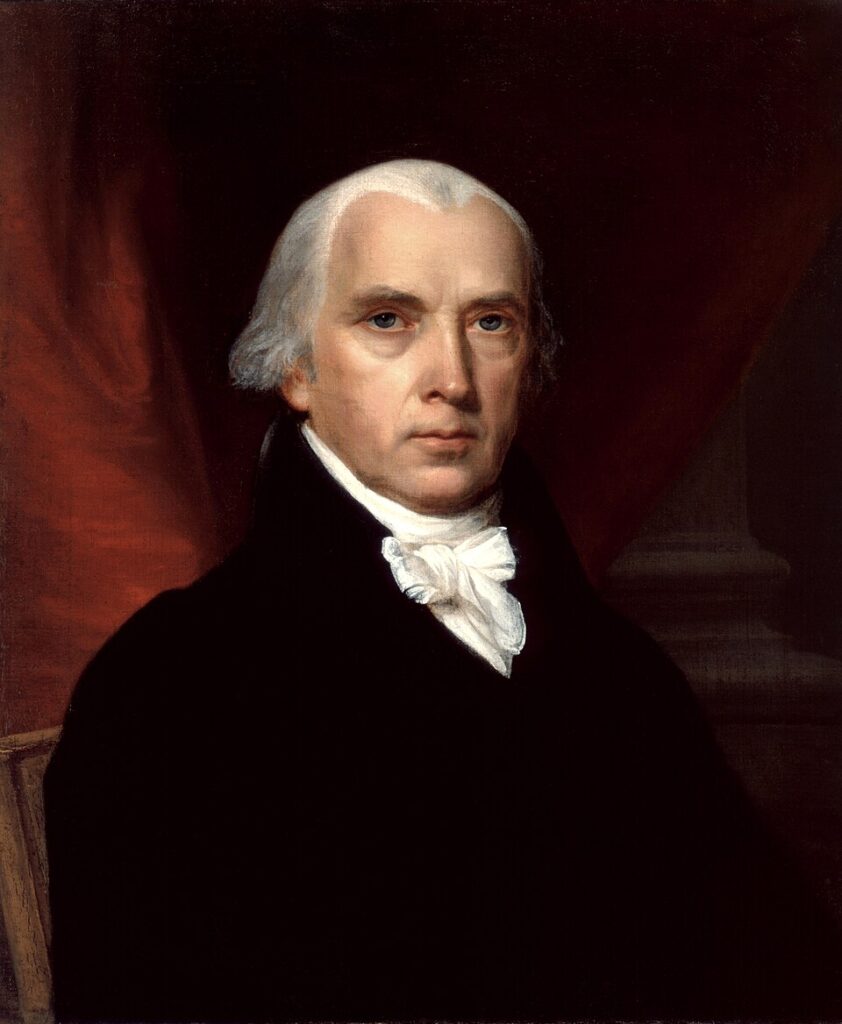
Madison was the primary author of the US Constitution, and thus one of the most influential of the Founding Fathers. He also co-founded the Democratic–Republican Party, which came to dominate American politics in his time.
During his presidency, he fought the War of 1812 against the British. This was a conflict that was primarily sparked by a practice called ‘impressment’, per which British officers at sea stopped American merchant ships, accused the men on board of being deserted navymen, and then forced them to join the Royal Navy. While the US did not get more North American territories from the United Kingdom as originally intended, it did force the enemy to a ‘draw’ and stopped the impressment of American sailors. After the war—during which the Executive Mansion and Washington DC was burnt down by the British—there was an increased sense of national pride among the people, which led to what is now simply called ‘the Era of Good Feelings’.
President Madison also broke with the traditional Democratic–Republican position by granting a charter to the Second Bank of the United States in 1816, recognizing its economic benefits for the country, and annexed West Florida in 1810.
12. James Monroe
President Monroe followed his fellow Founding Father in office, and he enjoyed the full benefits of the Era of Good Feelings, going on two national ‘goodwill tours’ where he was greeted with admiring crowds, even in the stronghold of his opposing Federalist Party, New England. The Federalists ended up dismantling during his presidency, and he won every state in the 1820 presidential election for his re-election bid.
The Monroe Doctrine, which declared the Western Hemisphere as the United States’ sphere of influence against European interests, is talked about in foreign policy to this day. In 1820, he signed into law the Missouri Compromise, which dictated that all new states north of the 36°30′ north parallel must be admitted as free states (meaning with no legal slavery), while new states south of that parallel must be admitted as slave states.
13. Barack Obama
Having the historic distinction of being the first African American President in US history, Obama assumed office in the midst of the 2008 financial crisis. By the end of his second term, unemployment dropped, and the primary stock index Dow Jones ended seven out of his eight years with growth, after turbulent economic times. In 2011, under his watch, US special forces killed Osama bin Laden, the leader of the al-Qaeda Islamist terror group responsible for the 9/11 attacks on the USA.
14. Andrew Jackson
Jackson is one of the founders of the modern Democratic Party. He was the first populist President, advocating for choosing electors by popular vote, as opposed to having them chosen by the state legislature, as well as the expansion of voting rights to white men who did not own property. Sticking true to his populist principles, he vetoed the renewed charter for the Second Bank over concerns that, under the terms laid out before him, it favoured the rich elite connected to the banking sector over the common man.
He came to the Presidency after making a national name for himself as a General in the US Army: he played significant roles on the battlefield in the War of 1812 (most notably, at the Battle of New Orleans) and in the annexation of Florida as well. However, he is also often criticized for the forced relocation of Native American tribes from the Eastern parts of the country.
15. William McKinley
The United States became a dominant military power under President McKinley. The country declared war on Spain under dubious circumstances, after the sinking of the USS Maine in Cuba. However, once entered, the US quickly overpowered the Spanish. For the first time, it also gained significant overseas territories: namely, Puerto Rico, Guam, and the Philippines.
McKinley continued his support for protectionist tariffs, which he championed while serving in the House of Representatives. Under his presidency, the US recovered from the Panic of 1893 and was experiencing great economic growth again.
31. John Tyler
President Tyler’s greatest impact is on presidential succession. After William Henry Harrison became the first American President to die in office, his VP Tyler adamantly asserted full presidential powers, rejecting the temporary ‘acting President’ title, despite the Constitution’s ambiguity on the matter at the time.
This stubbornness of his, however, was also a detriment in his leadership. He constantly clashed with his own party, vetoing bills passed by his fellow party members in Congress. This ultimately led to him being expelled from the Whig Party, making him one of the just two Presidents who served as an independent (the other being Washington). President Tyler opposed his own group on crucial matters such as the establishment of a new national bank and opposition to the annexation of Texas.
32. George W Bush
The younger President Bush won one of the most disputed elections in American history, the 2000 presidential election, which was eventually decided by just 500 votes in the crucial swing state of Florida. He also lost the popular vote by 0.5 points.
However, after the 9/11 terror attacks by the Islamist terror group al-Qaeda, the entire country rallied behind him. This pushed President Bush’s approval rating as high as 90 per cent (!), the highest ever recorded by the prestigious Gallup polling firm—by contrast, in October 2008, at the end of his second term after winning re-election in 2004, it measured only 25 per cent.
What caused the big drop in support? After military action in Afghanistan, where al-Qaeda was believed to be operating at the time, President Bush also sent ground troops to Iraq to depose the dictator Saddam Hussein. Both turned out to be drawn-out armed conflicts with many American casualties. While most people and allied foreign nations supported the war in Afghanistan, this was not the case for Iraq. The Bush administration’s main claim against Hussein, that he possessed weapons of mass destruction, was later debunked.
Also, in 2008, the subprime mortgage bubble burst, throwing the housing market and the US economy as a whole into a major crisis. Business bankruptcies and unemployment spiked, while the Dow Jones ended 2008 with a devastating 33.8-per-cent loss.
33. William Howard Taft
President Taft was the hand-picked successor of the widely popular President Theodore Roosevelt, after serving four years in his cabinet as Secretary of War. However, once Taft took office, he had a falling out with Roosevelt. The two POTUSes clashed over issues such as which company to go after for anti-trust violations, the role of the judiciary in government, and the removal of Roosevelt's friend as the head of the US Forest Service.
This prompted President Roosevelt to launch a third-party campaign against Taft, who was renominated by the Republican Party. Taft ended up with the worst showing for an incumbent President in US history, winning just eight electoral votes in the 1912 election. Roosevelt, running under the new Progressive Party banner, came in second, while Woodrow Wilson of the Democratic Party was elected President.
34. Benjamin Harrison
Benjamin Harrison, grandson of President William Henry Harrison, defeated the incumbent Grover Cleveland in 1888 but narrowly lost the popular vote. In his one term in office, he was described as someone who actually dreaded the job and preferred spending time with his grandchildren. Historians note he often quit work by noon. The high tariff rates set by the McKinley Tariff of 1890—named after future President William McKinley, who was the Chair of the Ways and Means Committee in the House of Representatives at the time—caused price hikes and an economic downturn for the country. The Wounded Knee Massacre of 1890 also happened under his watch. President Harrison was defeated by his predecessor-turned-successor, President Cleveland, in the 1892 election.
35. John Quincy Adams
John Quincy Adams was the son of President John Adams. Not only did he fail to win the popular vote in the 1824 election, but he is also the only president in US history who did not win the most electoral votes in his election either. That year, four candidates ran from the Democratic–Republican Party. None secured a majority in the Electoral College: Andrew Jackson finished first, while Adams came second. However, in the House of Representatives, Speaker Henry Clay persuaded the state delegations to choose Adams over Jackson. Adams later appointed Clay as Secretary of State, an arrangement that became known as the ‘corrupt bargain’.
President Adams favoured ‘elitist republicanism’ as opposed to Jackson's populism, supporting state legislatures picking electors over popular voting. He was also an advocate for Clay's ‘American system’, an economic policy with high protectionist tariffs and high federal investment into public infrastructure—back then, the federal government could not collect income taxes, thus tariffs were its primary source of revenue. President Adams' 1828 tariff hikes were successfully branded as ‘the Tariff of Abominations’ by the Jacksonian camp. Adams was handily defeated by Jackson in their rematch in the 1828 election.
Related articles: