

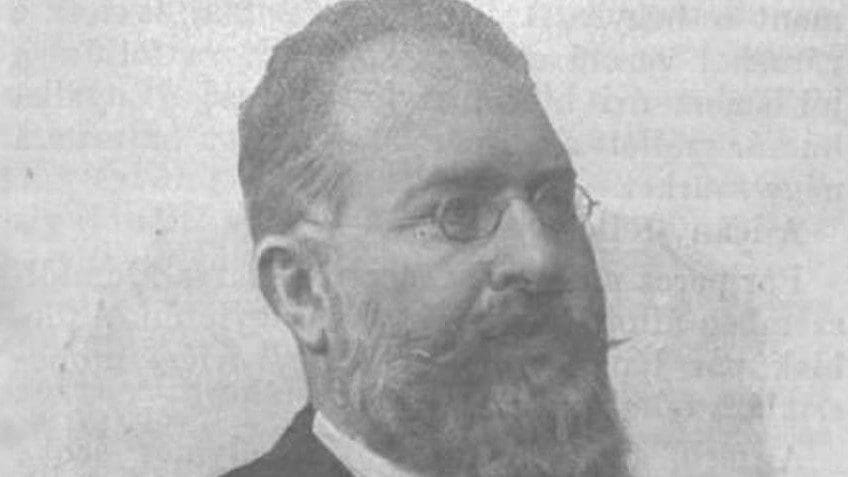



In 1869, the new statistical office of the capital was created, headed by Kőrösy. A few years later, he started to teach statistics in Budapest, the very first person to do so in Hungary. In 1896, he became a doctor of the University of Kolozsvár (today, Cluj in Romania), and was awarded nobility and the title of szántói, as well as the right to spell his name with a ‘y’ (indicating noble ancestry). The family never converted to Christianity, though, and the Kőrösy coat of arms included two stars of David.
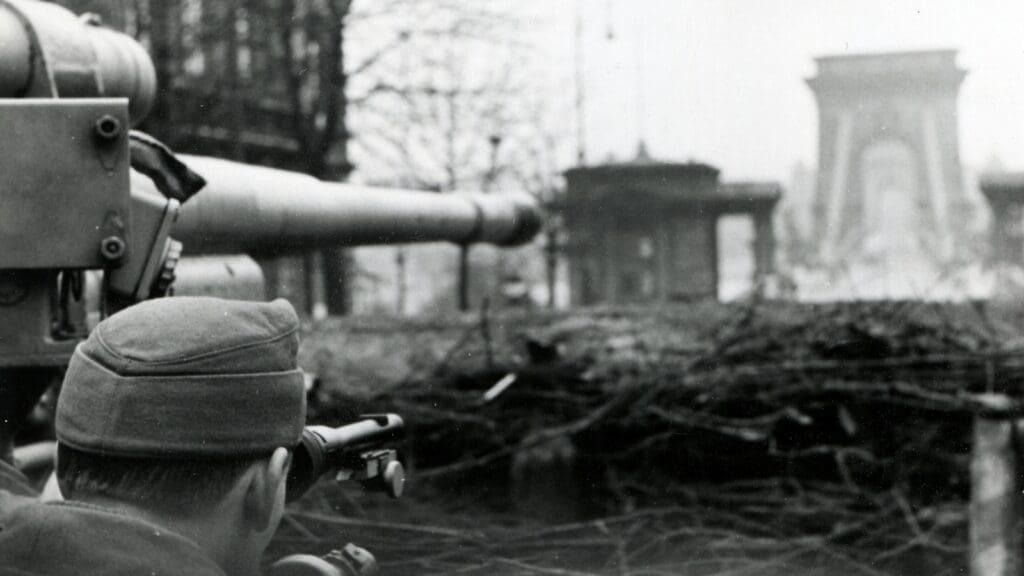
Beside serving as chief engineer during the construction of the Chain Bridge, Clark was also involved in the building of the tunnel under the Buda Castle, and was also a board member of the company building the first Hungarian steamer ship. Other projects that Clark supervised include the construction of the mental health institute of Lipótmező and the roofs of the Dohány street synagogue.
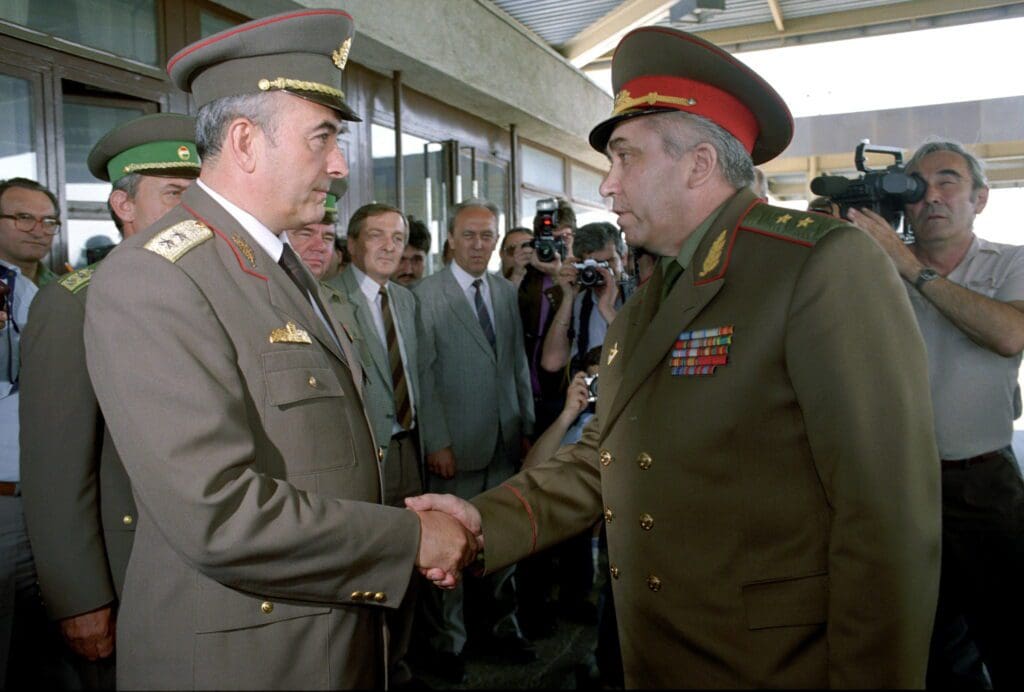
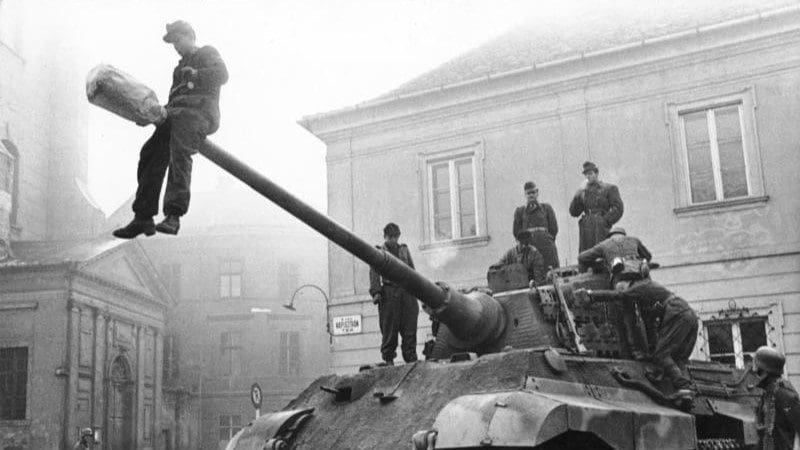
The presence of Soviet troops in Hungary was of course illegal. The Paris Peace Treaty of 1947, which ended the war, required them to be withdrawn from our country, and although the treaty allowed for the necessary number of soldiers to remain here to ‘maintain the lines of supply’, there were obviously many more than that. The ‘legalisation’ of the presence of the Soviet forces that crushed the 1956 revolution was carried out by the new, collaborationist Kádár government in 1957.
Reuven Hecht was a right-wing Zionist who worked with the revisionist movement’s founding father, Ze’ev Jabotinsky, and after the founding of the state, became an Israeli entrepreneur and right-wing politician. Today, a museum and park in the Jewish state bear his name. After trying to help the Horthy family obtain a Swiss visa, he remained in correspondence with them until his death in 1993.
The book’s greatest value can undoubtedly be found in its historiographical sections, which present the historical assessment of the Soviet Republic and the Horthy system. It is in these that the author utilises the largest literary material and provides the widest overview.
Nagy was a highly controversial figure in Hungarian history, whose assessment is still a source of intense debates…He did stand up for the Hungarian Revolution in 1956—for debatable reasons—; but to portray him as a convinced democrat, or a hero of Hungarian popular representation and individual freedom would be a serious distortion. His legacy must be treated in its proper place: his merits must not be denied, but his sins must not be forgotten.
As reported by the European Union Agency for Fundamental Rights (FRA), the Action and Protection Foundation, through its Brussels Institute, recorded 37 antisemitic acts in Hungary in 2021. By comparison, in France there were 589 recorded antisemitic actions and threats in the 2021. In the same year, in Germany 3027 incidents were recorded. In addition, as highlighted by FRA, when looking at 2013–2021, the overall trend in Hungary was that the number of recorded antisemitic incidents was decreasing.
Losing the World War and the experience of the Treaty of Trianon triggered a discourse in Hungarian public life that was not without precedent, but had never been so vehement before. Perhaps the opinion of many was reflected by the renowned writer Ferenc Herczeg, who declared that ‘Europe, free press, liberalism—all these are slogans that have deceived us.’
Bartha highlights that it is a painful phenomenon that the non-Communist Hungarian resisters ‘have been relegated to the no-man’s land in terms of memory politics in the 21st century.’ Hopefully, in the future, more attention will be devoted to the anti-Nazism not only of Endre Bajcsy-Zsilinszky or Lieutenant General János Kiss, but also that of István Lendvai, István Zadravecz or even Gyula Kornis.
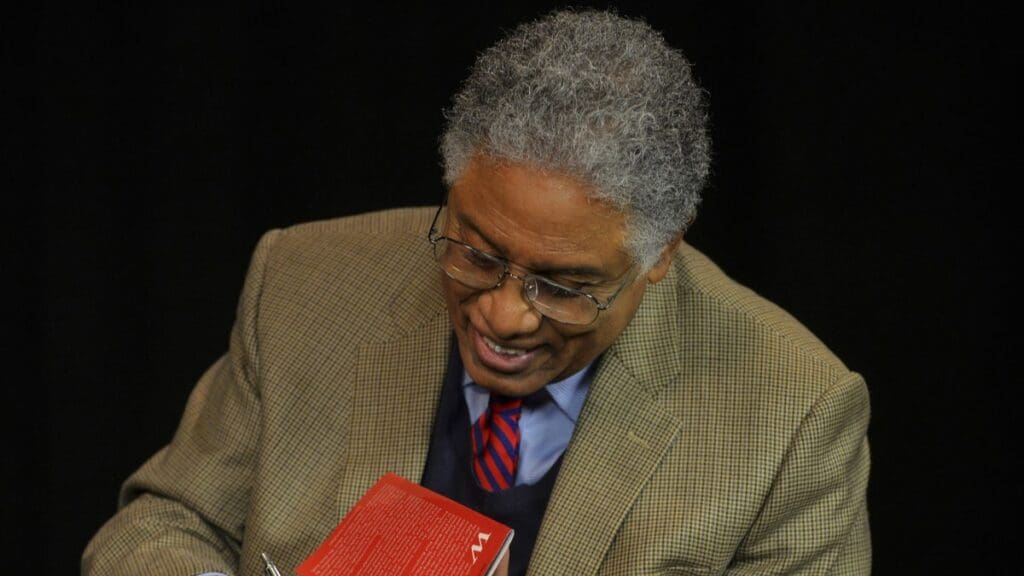
Sowell begins his book by stating that there are many explanations for inequalities, which broadly fall into two extreme categories: some believe that inequality is rooted in descent, in genetics, while others believe that the less well-off are exploited by the rich. Sowell believes in neither as an exclusive explanatory factor. Instead, he holds that success depends on certain preconditions, where even small differences can lead to big differences in outcomes.

At a time when public debate is increasingly polarized and superficial, Hungarian Conservative remains committed to depth and independent thought.
Donate Now
Please consider supporting our mission.