Grigory Karasin accused Prime Minister Péter Magyar on Friday of joining Europe’s ‘battalion of hatred and hostility towards Russia’, reacting to the new government’s instructions for its delegation to the UN General Assembly that described Russia as a ‘threat to Hungary, Europe and the global order’, breaking with the practice of Viktor Orbán.
Karasin, chairman of the Federation Council’s International Affairs Committee and a former deputy foreign minister, said Magyar was trying to integrate Hungary into Europe’s ‘Russophobic political elite’ and predicted the shift would fail to unite Hungarian society.
On Wednesday, 26 August, State Duma Defence Committee member Andrei Kolesnik warned that Russian oil and other energy deliveries to Hungary could now be ‘in question’. On the same day, Senator Vladimir Dzhabarov accused Hungary of historically posing a greater threat to Russia, pointing to Hungary’s participation in the Second World War alongside Nazi Germany. Dzhabarov similarly warned that Budapest’s rhetoric could change rapidly when Russian energy supplies were at stake.
Breaking from Orbán’s Russia Policy
The harsh Russian reactions were triggered by a government resolution published on 25 August, which sets Budapest’s instructions for its delegation to the 81st UN General Assembly. The document condemns Russian military aggression, fully supports Ukraine’s sovereignty and territorial integrity within its internationally recognized borders, recognizes Kyiv’s right to self-defence, and states that ‘Russia’s conduct poses a threat to Hungary, Europe and the global order’ while seriously endangering the Hungarian minority in Transcarpathia. Hungary nevertheless supports negotiations aimed at sustainable peace and long-term security guarantees.
The wording echoes the Tisza government’s diplomatic realignment towards the European Union after the 12 April election, which saw the end of former prime minister Viktor Orbán and Fidesz–KDNP’s 16 years in power. Throughout that period, relations between Budapest and Moscow grew increasingly close, especially on energy. Hungary, while increasing Russian gas and oil imports, launched the expansion of the Paks nuclear power plant with Russia’s Rosatom. The investment, planned to be operational this year but significantly behind schedule, mainly due to the Kremlin’s war in Ukraine and EU sanctions, had become one of the defining symbols of Hungarian–Russian relations during the Orbán era.
‘Pew polling found that 61 per cent of Hungarians held an unfavourable view of Russia’
These close ties proved to be among the decisive issues during the election. Magyar and the Tisza Party framed the vote as a referendum on the country’s trajectory towards Russia or the Western alliance system. A 2025 Policy Solutions survey found that 47 per cent of Hungarians regarded Russia as dangerous to Hungary, rising to 54 per cent among Tisza supporters but falling to 36 per cent among Fidesz voters. More recent Pew polling found that 61 per cent of Hungarians held an unfavourable view of Russia, while only 35 per cent viewed it positively.
The UN instructions follow a series of events that suggest rapid diplomatic rebalancing, alongside greater pragmatism on practical issues such as energy. On 13 May, Budapest summoned the Russian ambassador after a major Russian drone attack on western Ukraine, including Transcarpathia, the most serious diplomatic decision since February 2022. In June, Magyar reached an agreement with Kyiv over the rights of Transcarpathian Hungarians, removing a major obstacle to the opening of Ukraine’s first EU accession negotiating cluster. Volodymyr Zelenskyy subsequently thanked Hungary for supporting Ukrainian sovereignty and, on 20 August, invited Magyar to Kyiv. Anita Orbán recently said that the two leaders will meet when certain conditions are met.
Moscow Retains Energy Leverage
Meanwhile, Magyar’s government has deliberately hedged on energy. Economy and Energy Minister István Kapitány said during his 11 May parliamentary hearing that Hungary would not decouple from Russian energy, but instead diversify while continuing to use existing supply routes where they remain the cheapest and most reliable option. He also backed extending the life of the existing Paks reactors and reviewing, rather than abandoning, the Rosatom-led Paks II expansion, although the government has recently moved further towards abandoning it.
Foreign Minister Anita Orbán reinforced that approach on 4 August, telling Süddeutsche Zeitung that Budapest still sought a ‘pragmatic relationship’ with Moscow because of Hungary’s dependence on Russian oil and gas and continuing nuclear cooperation. That balancing act has now become more difficult after the government formally described Russia as a threat.
‘A Russian cutoff shortly before winter…would force Hungary to replace a large share of its gas supply at short notice’
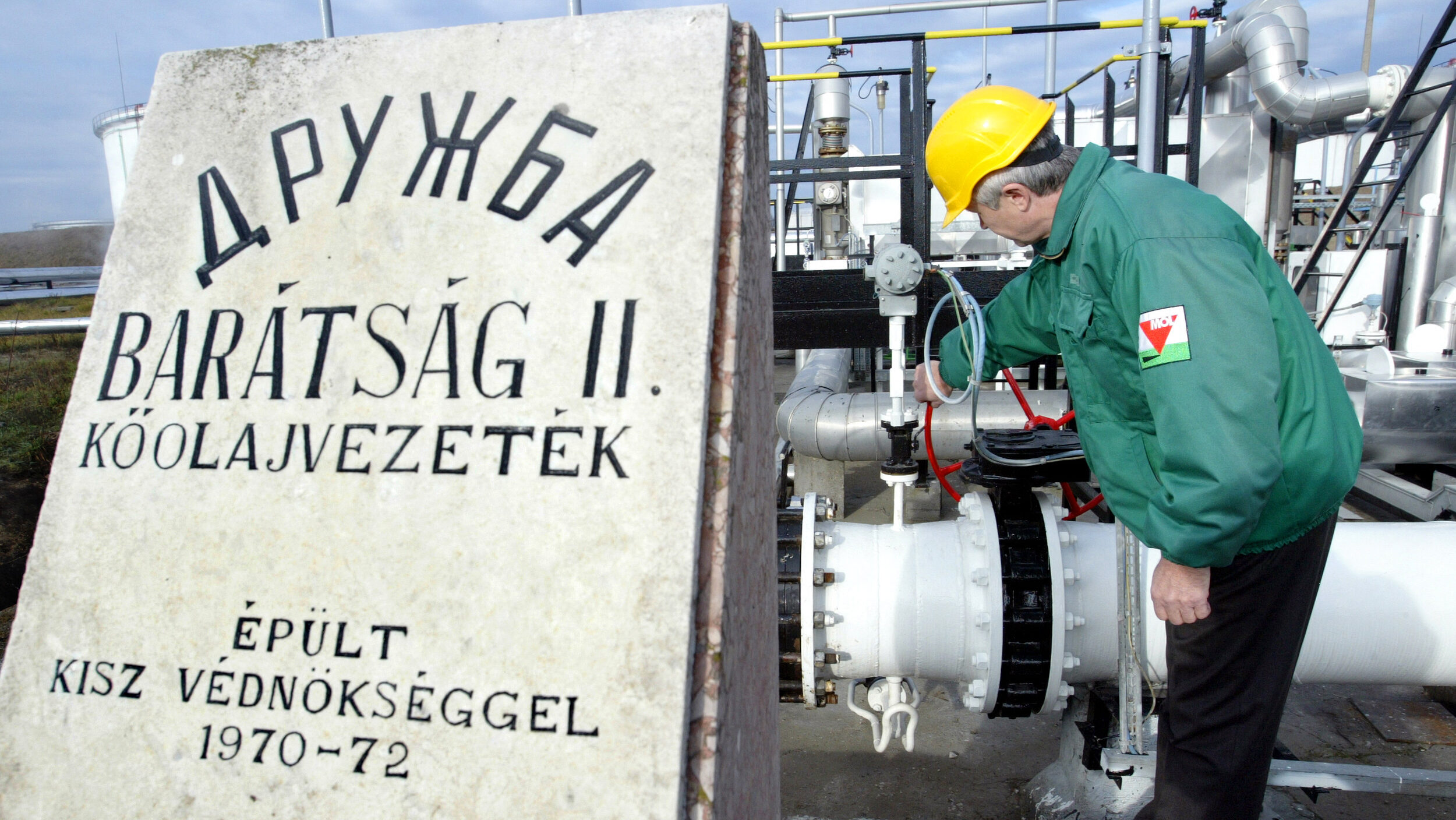
Hungary’s energy dependence, however, has not decreased significantly since April. The European Commission found that in 2025 more than 90 per cent of the country’s imported oil and 74 per cent of its imported gas came from Russia, with the Russian share actually increasing despite growing EU pressure to diversify. Russian gas reaches the country principally through TurkStream and Serbia, while Russian crude arrives through the Druzhba system; the Adriatic pipeline offers an alternative oil route.
That gives Moscow a potentially powerful pressure point as winter approaches. Hungary’s underground gas stocks currently hold about 45 TWh out of roughly 68 TWh of capacity—around two-thirds full. A Russian cutoff shortly before winter would not leave the country immediately without gas, but would force Hungary to replace a large share of its gas supply at short notice. Additional purchases from alternative suppliers during the heating season would expose the country to higher wholesale prices, greater industrial costs and additional pressure on the budget if the government sought to shield household utility prices.
The Kremlin has not reacted to the government resolution so far.
Related articles:
At a time when public debate is increasingly polarized and superficial, Hungarian Conservative remains committed to depth, intellectual honesty, and independent conservative thought.
Producing high-quality journalism requires resources. Your contribution helps us expand our coverage, reach new audiences, and keep our content accessible.

Please consider supporting our mission.