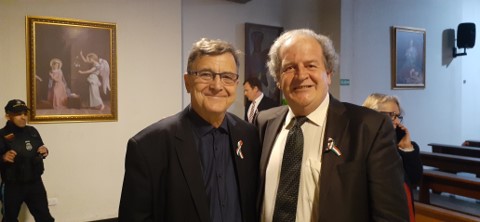
Julio, or Gyula, was born and raised in Colombia after his parents fled there from Hungary in 1956. As a child, he spoke Hungarian with his parents almost exclusively. Later, he practiced the language through occasional assignments requiring Hungarian skills, usually as an interpreter for Hungarians visiting Colombia. In recent years, he has launched several Hungarian initiatives for members of the Hungarian diaspora communities across South America. After a tour of Hungary, his Colombian wife asked the family to move, and since last year they have been living in Pécs together with their daughter’s family.
***
Why did your parents leave Hungary in 1956?
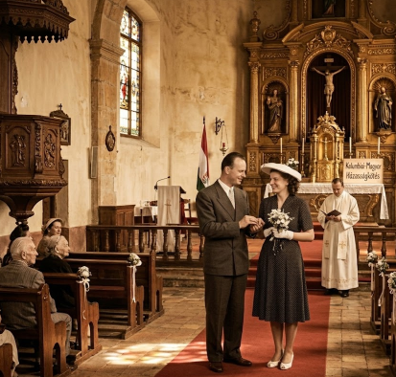
After the revolution, my father, Gyula Schmidt, who worked as a department head at the state sewerage works, was supposed to sign a document—a kind of declaration of loyalty—which he refused to do. He had two options: go to prison or leave the country. He and my mother, Éva Kósa, weren’t yet married; she was 14 years younger than him, only 20, but they managed to flee Hungary together. They lived in a refugee camp near Vienna before setting off for Colombia. They had no connections there at all; they simply liked what they saw on the map… My father used to say that, based on classic Tarzan movies, they thought they would arrive in the jungle… That was not the case, but a very different world greeted them: they arrived at a small airport, experienced considerable poverty, and didn’t speak a word of Spanish… Moreover, they moved from one revolution straight into another: an uprising against the military president Gustavo Rojas Pinilla broke out just as they arrived in Cartagena. Afterward, they reached Bogotá, where a Hungarian colony already existed and helped the newcomers find work. Three Hungarian couples married in Bogotá in May 1957, including them.
How large was the local Hungarian community?
Several other Hungarians traveled on the same ship, but many disembarked in Venezuela. Around ten of them ended up in Bogotá, and they helped each other greatly in everyday matters. At that time, about 200 Hungarians lived in Colombia who had arrived after the World Wars. After the 1956 revolution, reportedly, another approximately 180 Hungarians came to the country to settle, but most of them moved on to the U.S. or other South American countries within a few years. At most 40–50 56ers remained in Colombia; about 20–25 of them settled in Bogotá.
Why did your parents remain in Colombia?
Their good jobs kept them there. My father had been a football player in Hungary in his youth, so at first he was advised to become a coach for a team near Bogotá. However, the Hungarian president of a Bogotá football club discouraged him, saying that being a coach in Colombia wasn’t a good job: if the team lost, the coach was dismissed… He started to work in a pharmaceutical laboratory together with my mother and other Hungarians. My father handled accounting, and my mother became a secretary. My mother lost her first baby; I was the second, and my younger brother László the third—he still lives in Colombia today. At first, my parents received assistance from the International Organization for Migration to rent a flat. Later, they also opened a Hungarian confectionery.
The Colombian head of the pharmacy knew my father very well. When he was appointed president of a state-owned company, he asked my father to manage its company resort near Bogotá, in Real. My parents ended up running it until their retirement. We lived next to swimming pools and sports fields—many people thought we were millionaires, which of course was not true: my parents earned modest government salaries, but we lived and worked at a very nice place. In the meantime, like everyone else in the Hungarian colony, they also applied to immigrate to the U.S. We had lived at the resort when they received the permission. They had already established their lives in Colombia, had good jobs, and didn’t want to start all over again in another country.
What about the Hungarian community?
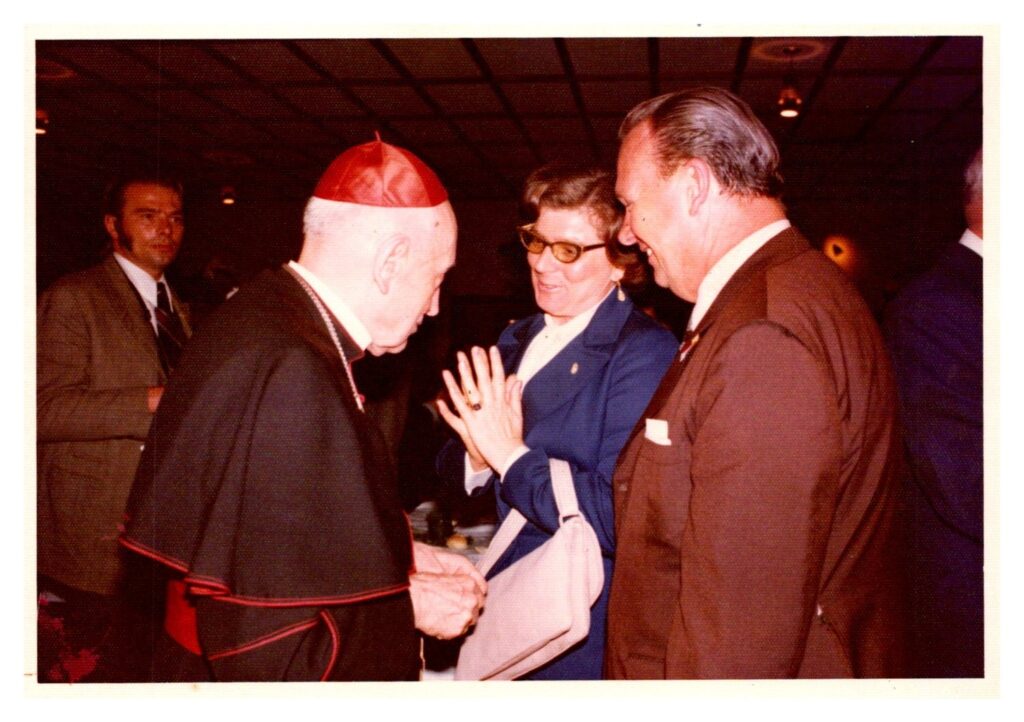
The Hungarian colony in Bogotá was rather peculiar: people from different waves of migration didn’t really mingle. At community events, groups with different backgrounds sat at separate tables—wealthy Jewish Hungarians at one, and ‘poorer’ Hungarians, such as the 56ers, at another—and they barely spoke to each other. The 56ers stuck together; my parents were mainly connected with them. After we moved to the resort, we rarely traveled back to Bogotá, except on special occasions, such as when Ferencváros or the Peruvian national team coached by Lajos Baróti played, or when Cardinal József Mindszenty held a mass. Otherwise, we didn’t visit often, though some Hungarian friends regularly came to visit us at the resort. During my teenage years, I had very few Hungarian connections beyond my immediate family members.
How did you manage to retain your Hungarian language skills?
At home, I learned Hungarian before Spanish, and while my parents were alive, we always spoke Hungarian with each other. We always lived close to them, even after we married. When my daughter was born, my parents spoke only Hungarian with her as well. However, I always spoke Spanish with my brother. I never studied in Hungary. There are some Hungarian words that are a bit difficult for me to pronounce, so I’m still learning Hungarian.
How did you maintain your language proficiency later?
After finishing school in the small resort village, I went to study in Bogotá and became a computer engineer. Once, someone told me about an international exhibition looking for doormen or ticket collectors. I applied; I think I was 18 at the time. As I was walking around, I noticed a sign: ‘Ungria’, meaning Hungary. I greeted them, and an older man came out. I told him I would gladly work for them in any capacity. He said no, and I was just about to leave the place when another man came out, Zoltán Halmi, who worked at the Hungarian Embassy at the time and had visited us before at the resort. He recognized me and offered me a job.
From then on, whenever a Hungarian group came to Bogotá, they reached out to me—very few people in Bogotá could speak Hungarian and could work with Hungarians. Later, I had my own business, which gave me more flexibility. Most often, the consulate or embassy contacted me, though they didn’t pay me for the service; Hungarian foreign trade companies—such as Medimpex or Chemolimpex—did, when exhibiting at international fairs in Bogotá, which were organized at least four times between 1978 and 1994. There was also a theater festival held every two years, where Hungarian performers sometimes appeared. That is how I became an interpreter, for example, for Mari Törőcsik, Gyula Maár, and Dezső Garas in 1992. The previous year, I had also met Hungarian President Árpád Göncz. Much later, in 2022, the Kaláka Ensemble, in 2023, Auxiliary Bishop Kornél Fábry of Budapest-Esztergom, the Szironta Ensemble, architect István Böszörményi, and in 2024, Deputy State Secretary Péter Szilágyi visited us.
Which encounters were the most memorable for you?
I’m not particularly religious, but when I saw Cardinal József Mindszenty pass next to me while I was taking photographs, I felt a shiver. Since I’m not able to use a formal address in Hungarian conversation, I asked Mari Törőcsik whether I might address her informally. She kindly said yes, and so did her husband. I didn’t see the great artist in her, but rather my grandmother. She never made a fuss about anything, ate and drank whatever she was given, and did what she was told. Dezső Garas was also modest, just like Árpád Göncz, whom I didn’t see as a politician, but as a kind Hungarian man who had a pleasant conversation with my father.
‘I’m not particularly religious, but when I saw Cardinal József Mindszenty pass next to me while I was taking photographs, I felt a shiver’
Are there any Hungarian organizations in Colombia today?
As far as I remember, the Hungarian colony’s organized community life in Bogotá ceased to exist sometime in the 1980s. There was never a Hungarian house, church, or scouting organization; events were held in the hall of a German church. After 1990, together with Colombian students who had studied in Hungary and returned, we formed a small group and invited others. It was good, but difficult to maintain, as everyone was working and there was no one to lead it, so it eventually dissolved. Later, only events organized by the Hungarian embassy remained. During COVID, the idea arose to revive Hungarian community life, so in 2020, we established the Hungarian Circle of Colombia (Círculo Húngaro de Colombia).
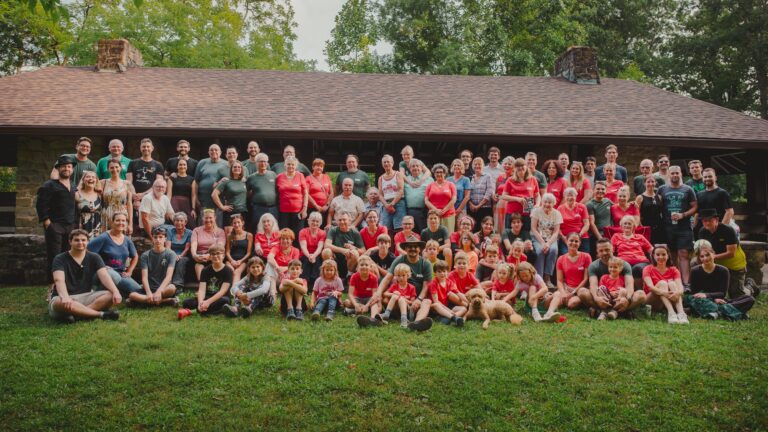
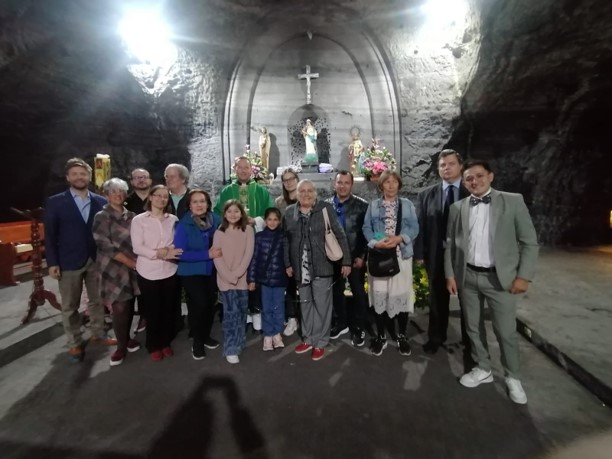
We began teaching Hungarian via Zoom to five or six small children—three or four in Colombia, one in Paraguay, and one in Panama. At that time, composer Tamás Schóber from Pécs joined us, and storyteller Ágnes Kiss also helped from Budapest. After the pandemic, thanks to support from the Bethlen Gábor Fund of the Hungarian government, we were able to meet in person, sometimes with up to 40 participants, reviving Hungarian traditions such as the Busó festival, egg dying, St. Nicholas’ Day, Mother’s Day, etc. We also tried to prepare and eat something Hungarian each time: we even had our own cauldron in which we cooked goulash soup or paprika potatoes, and we brought Hungarian pastries. Four or five of us organized these events. Not only Hungarians participated, but also people for whom Hungarian culture was important. Typically mixed-language families: Colombians who studied in Hungary, married Hungarians, and returned, or Hungarian students studying in Colombia. Very few second-generation Hungarians attended, though. Some years ago, we realized there were virtually no entirely Hungarian couples left in Colombia. I joined the Federation of Hungarian Organizations in Latin America (LÁMOSZSZ) and attended its general assembly in 2022.
Tell us about the Storytelling Circle!
Tamás Schóber, Ágnes Kiss, Éva Makovej and I founded it in 2023. Éva’s husband is Colombian, but they also moved to Hungary. We started it because many people said they had no one to speak Hungarian with. We have conversations on the first Thursday of every month; participants join from many countries: Colombia, Guatemala, Mexico, Peru, Venezuela, Bolivia, Uruguay, Argentina, Brazil, and Hungary. We invite no more than 12–14 participants—it’d be difficult to manage more contributions. Afterward, about 30–50 people watch it—it’s quite long: nearly two hours. Most recently, we talked about Ferenc Rákóczi II, Easter, Carnival, and we presented Budapest and Pécs. We have also had topics such as World Music Day, the Day of Hungarian Folk Tales, and the awarding of the Paraguayan diaspora. I reported on our tour of Hungary, and someone recounted their meeting with Pope Francis. Once, we asked participants to share memories from their family heritage. We also celebrated a 100-year-old Hungarian living in Guatemala, visited by a lady from Colombia and one from Mexico, who afterward shared with us their experiences—his mind was still clear, he was very happy to speak Hungarian.
What are the Anekdotikas about?
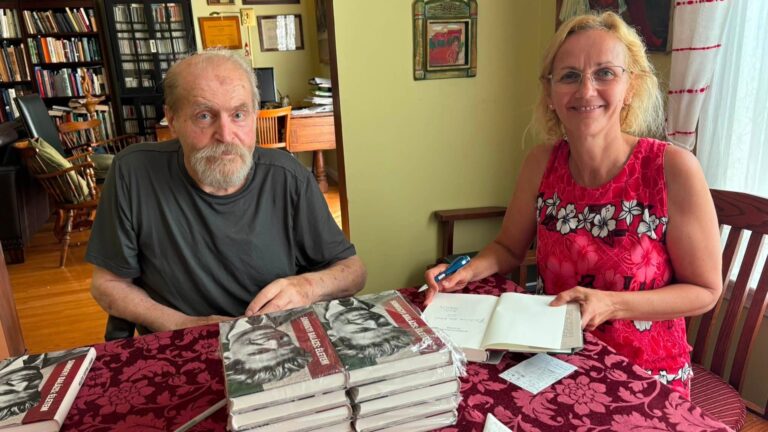
A former Hungarian consul in Bogotá, András Beck, now ambassador in Peru, once asked me why I didn’t write a book about my adventurous life. I replied: I’m an engineer, I don’t write, but I started to make videos in 2023. By now, I have almost 40 anecdotes. Some are about the visits of the well-known Hungarians mentioned earlier, but I also made one, for example, about the Hungarian cemetery in Paraguay. I have my own old video recordings and photographs; I show those and tell the stories alongside them, mostly available with Hungarian subtitles. Before my parents died, I recorded them on video as they shared many events of their lives. I still have all these recordings; I just haven’t revisited them yet. Since we moved to Hungary in June 2025, I haven’t had time for it, but I want to restart it.
Why did you move to Hungary?
My wife is Colombian, and so is my son-in-law; we have one grandchild, and our second grandchild will soon be born in Hungary. Two years ago, my wife and I visited 34 towns and villages in Hungary within a month, including my parents’ native village, where we found some relatives. It was her first time here; I had been in Hungary three times before, but long ago, last in 1978… After we returned to Colombia, she asked: What if we moved to Hungary? I hadn’t thought about it before, but I said yes. So did our daughter and her husband.
Why did they want to leave their homeland? How did it go? Why Pécs?
We thought about what a good life our grandchildren have here, where everything is so beautiful, calm, and safe. My son-in-law works for an American company; my daughter plans to work as a Spanish teacher at the University of Pécs. She had already been to Hungary twice before and liked it very much. My son-in-law had never been to Europe before, but feels excellent here: he likes running and going out into the hills with the dogs. When we travel, we very much like to visit village inns where we can eat proper Hungarian food. In Colombia, there is a great deal of fruit, but we don’t look for what is missing; we are happy about what’s available here. We found the big snowfalls beautiful. In Zipaquirá, where we lived before, it took 20–30 minutes to get anywhere; here it’s only five to ten minutes. In Pécs, everyone is helpful. I only had some problems with the railway company (MÁV). We chose Pécs because we liked it very much, and most of our friends live here.
Have you got in touch with South Americans here?
We know several people who came from Colombia to study here, then married and stayed, but most of them live in Budapest. We’ve already participated in some of their events. In addition, from time to time, we also visit the Colombian embassy for various gatherings. In Pécs, we found a Colombian girl, and there is a couple living nearby whose wife was born in Cartagena, but we haven’t met them yet. In September, a Colombian girl came to study in Pécs.
Once I asked at the embassy: perhaps 600–800 Colombians live in Hungary—they don’t know the exact number, as several don’t register with them. At one event we attended, there were about a hundred people present. At one lunch, which started as a small gathering, nearly thirty of us ended up coming together. These are only informal gatherings; we don’t have an official Colombian organization in Hungary.
What will happen to the Hungarian initiatives in Colombia now without you?
When we left, I asked whether I should step down from the Hungarian Circle of Colombia or from the LÁMOSZSZ, but they said no, I should stay. So I continue to help wherever I can; nowadays, a great deal can be done online.
Related articles:
At a time when public debate is increasingly polarized and superficial, Hungarian Conservative remains committed to depth, intellectual honesty, and independent conservative thought.
Producing high-quality journalism requires resources. Your contribution helps us expand our coverage, reach new audiences, and keep our content accessible.

Please consider supporting our mission.