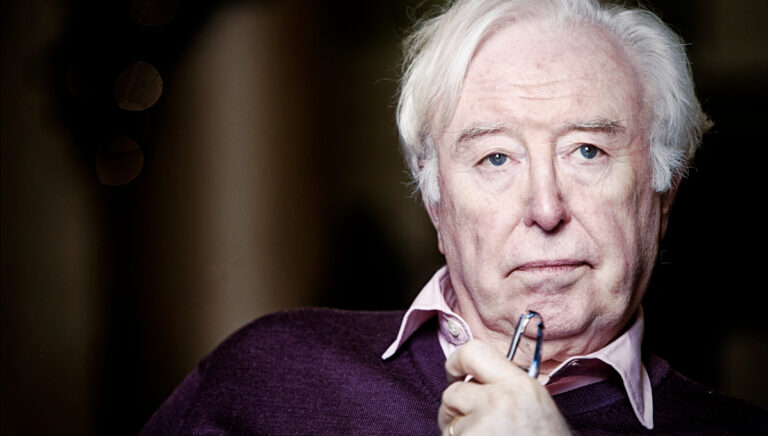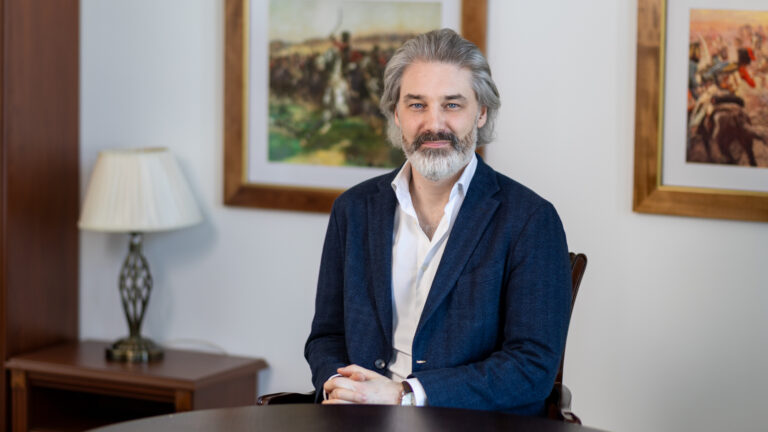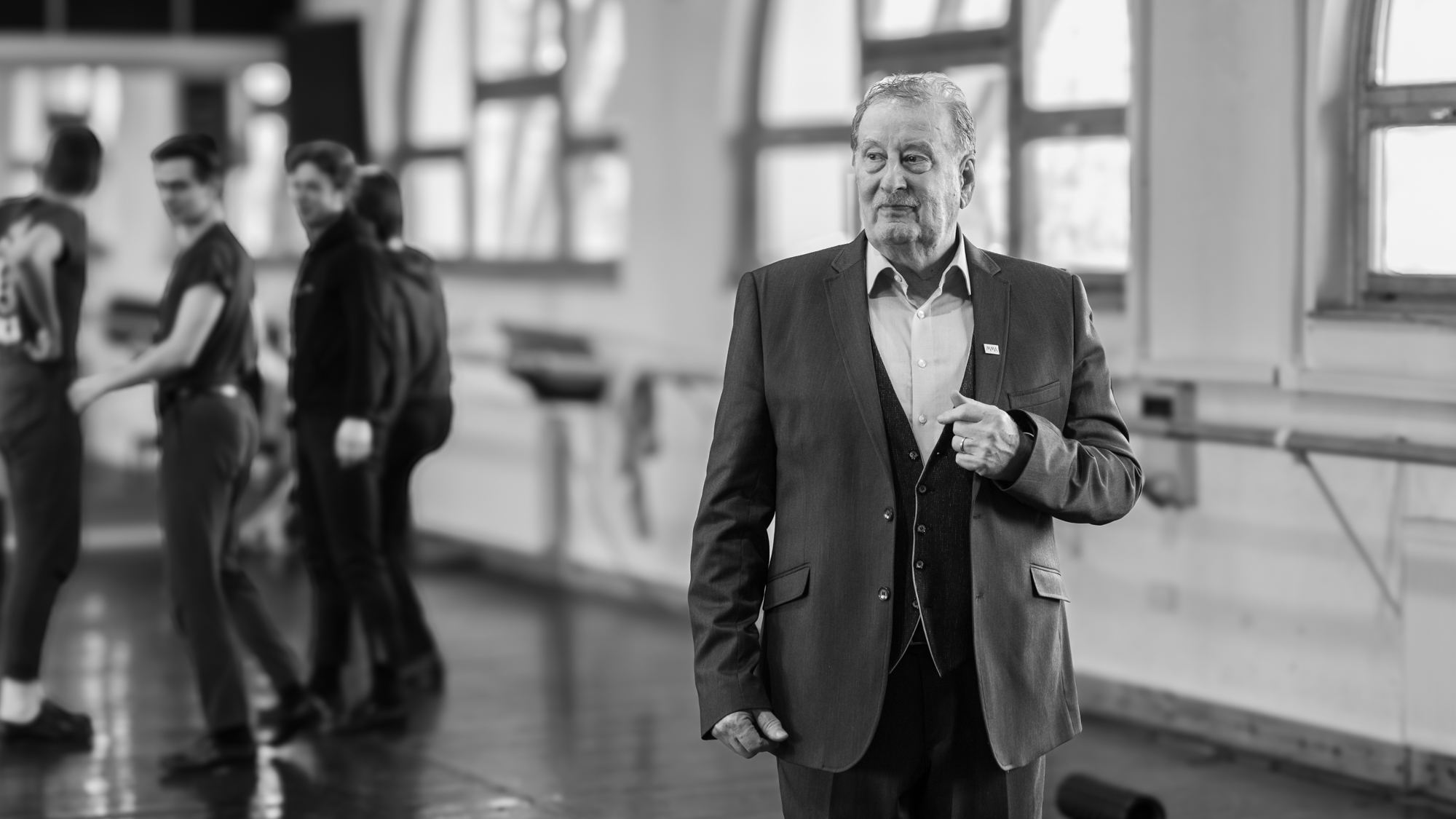
Zoltán Zsuráfszky is a defining figure in Hungarian folk dance. A Kossuth Prize holder, awarded the title of the Artist of the Nation, choreographer, dancer, and artistic director, he has dedicated his life to researching, preserving, and revitalizing the dance traditions of the Carpathian Basin. As the managing director of the Hungarian National Dance Ensemble, he leads one of the country’s most prominent cultural institutions alongside his wife, fellow Kossuth Prize-winner Zsuzsa Zs Vincze. Over a career spanning more than five decades, Zsuráfszky has bridged the gap between authentic village traditions and the grand stage, creating a rich oeuvre that ranges from folklore programmes to large-scale historical spectacles. In this interview, he reflects on his formative collecting trips, the philosophy behind his work, working together with director Csaba Káel on a dance movie, and the responsibility of leading a national ensemble.
***
You possess an encyclopaedic knowledge of folklore across the Carpathian Basin. Which collecting trips or encounters have been most defining for you?
It began with my studies at the Ballet Institute’s folk dance training programme from 1971 to 1975. After graduating as a professional dancer, I immediately began organizing serious collecting expeditions. I travelled extensively, among Roma communities, among the Gorals in the Tatras near Zakopane, and throughout Transylvania, Székelyföld, Kalotaszeg, Gyimes, and Moldva.
I was equally interested in the folklore of the nationalities within the Carpathian Basin. Any encounter with minority folklore was tremendously important to me. This also meant looking toward the Balkans and the Turks. For my work on Eclipse of the Crescent Moon (Egri Csillagok), for instance, I needed to research, teach, and choreograph Turkish material. I’ve also incorporated Greek and Macedonian elements into my choreography. Enriching your life’s work with South Slavic, Romanian, Roma, and even Jewish dance figures is invaluable; it’s a complementary part of teaching rhythm and dance methodology.
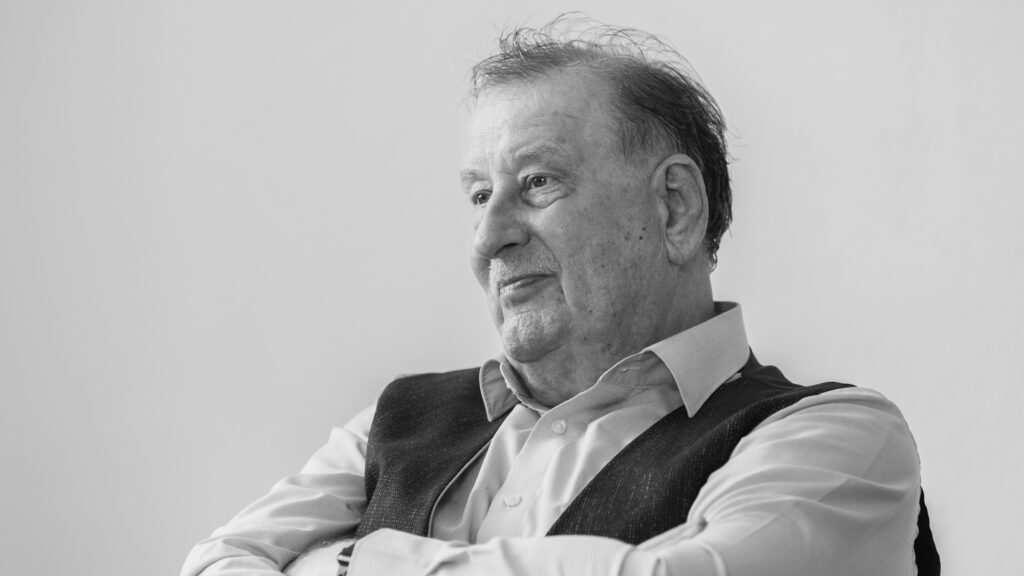
My wife, Zsuzsa Zs Vincze, and I taught extensively in America, and there too I sought out connections with Turkish, Macedonian, and Polish dance communities. But I actively pursued these opportunities myself, in Upper Hungary and Transylvania. I never managed to get to Subcarpathia; the border was still closed then. The Szatmár material, split by the border, is a good example of that: villages like Magosliget and Uszka connect to that Subcarpathian tradition, but it was incredibly difficult to access.
Later, for my shaman dance at the 1996–97 Szeged Open Air Festival, I even invited dancers from the Udmurt Republic in Asia. My travels have taken me further afield too, to Japan, where I encountered Ainu dances, and on tours in Asia, where I saw Tibetan material. All of it is inspiring. As a professional dancer, I’ve travelled the world and always made a point to watch and learn, whether it was Stomp or Riverdance in New York, Native American dance in Canada, or simply exchanging ideas with friends who were deeply interested in Native American culture. Today, young people can see dance from all over the world on social media, but for my generation, it was about direct encounter.
Programmes like the Kőrösi Csoma Sándor Programme, which supports teaching in the diaspora, are now crucial. In the years before such initiatives existed, I navigated the international dance teaching circuit on my own or with the help of the World Federation of Hungarians. Now, it’s easier, and it’s wonderful to see that Hungarian folk dance thrives not only within our borders but intensely throughout the Carpathian Basin and around the world. The number of Hungarian ensembles globally is remarkable, and people engage with this material with great joy and enthusiasm.
You have mentioned your wife. You lead the Hungarian National Dance Ensemble together, right?
Yes. The ensemble, formerly the Budapest Dance Theatre, became the Hungarian National Dance Ensemble. I’ve been its artistic director since 2007, and later also took on the role of managing director. I now lead the Honvéd Ensemble Artistic Non-Profit Ltd, which encompasses both the National Men’s Choir and the Hungarian National Dance Ensemble.
My wife, Zsuzsa Zs Vincze, is the ensemble’s professional director. We’ve been married for 40 years, have four children, and have collected and worked together our entire lives. We still do. We co-lead the ensemble, direct its work, and mentor the young dancers. It’s a massive undertaking: the Hungarian National Dance Ensemble performs 120 to 140 times a year.
This work demands your whole being, but we’ve dedicated our lives to it. I approach this path with great enthusiasm, joy, and attention. We are entrusted with 50 young people, to select them, to shape them. We carry the fame of Hungarian folk art out into the world, and it matters how we do it. We need a select team of beautiful girls and strapping young men to represent Hungarian character and youth on the global stage.
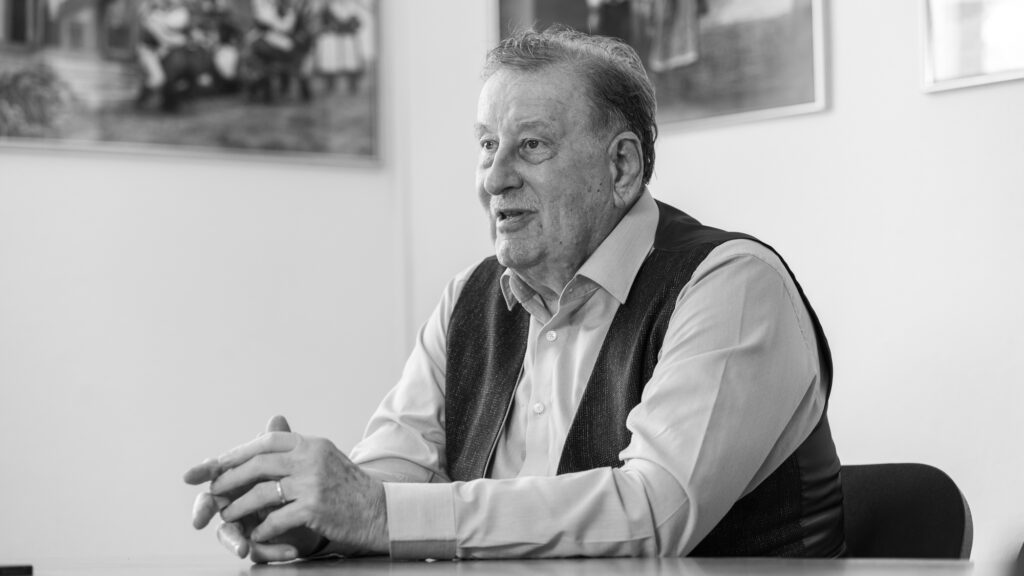
Working with my wife is a positive force, both personally and professionally. We don’t compete; we divide our tasks. Zsuzsa, who trained in ethnography and Hungarian studies and has danced since childhood, handles the dramaturgy and writes the scripts for our major productions. Right now, we are preparing a new piece, for the 500th anniversary of the battle of Mohács in two parts.We marked the Benyovszky and Dózsa anniversaries with dance plays as well. Alongside folklore performances, my ensemble addresses significant historical and cultural anniversaries, whether it’s a Pilinszky, János Arany, or 1956 anniversary. This year, for the 70th anniversary of the revolution, we will create a new work. I was born just before the revolution broke out, so these events feel personal.
I’ve also been the choreographer for numerous theatrical events, and I’ve brought my ensemble into those productions. Our folklore performances tour the world: last year we were at the Japan Expo in Osaka. Currently, Eclipse of the Crescent Moon is part of the National Theatre’s programme, and our ensemble participates in four of their productions. We have also been invited to a guest performance in South Korea. So, all these programmes are interconnected. Most recently, I was the lead choreographer for Csaba Káel’s film, Hungarian Wedding (Magyar Menyegző). Seeing its great success, with over 170,000 viewers already, brings tremendous joy to everyone involved.
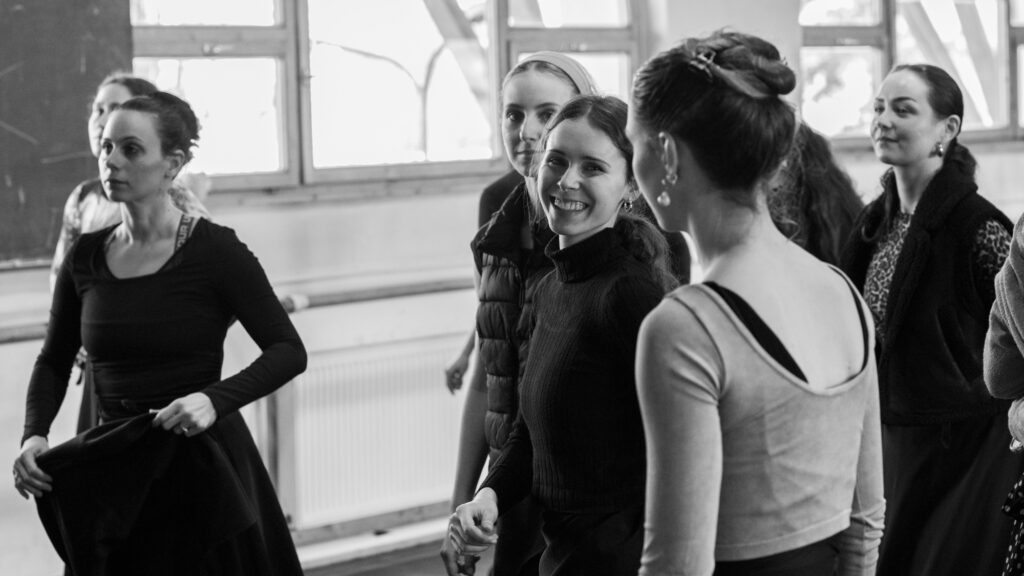
Our numbers are quite significant. For a traveling company with no fixed theatre, our rehearsal spaces are here on Kerepesi Road, though we hope to build a theatre after the current difficult period—after the war ends. We hold 60 to 80 performances in the countryside as well. Add to that the preparation, the creation of new pieces, and the rehearsals, and the intensity is enormous. We are the largest professional ensemble of our kind, with 150 employees and a serious technical crew. We perform in major venues and also in small villages, where we have to build our own stage and set up the sound and lighting. It’s a logistical puzzle, especially while adhering to labour codes. It’s a lot, but we manage.
Returning to Hungarian Wedding, how much free rein did you have in the choreography versus having to follow a pre-existing dramaturgy?
The film is fundamentally a wedding, with a charming storyline about urban university students in the 80s who stumble into a wedding in Transylvania. It’s somewhat autobiographical for director Csaba Káel. My generation had similar experiences.
So, the dramaturgy follows the arc of a wedding, the procession, the church ceremony, the dinner, the gift-giving, with a fictional story woven in for dramatic tension.
But consider the scale: it’s a serious documentary achievement that in 2025–26 we could still gather 100–200 people, dress them in authentic traditional costumes, and reconstruct these scenes. The director chose Kalotaszeg for its wonderful culture, costumes, and locations. That culture is a miracle, and it provides an excellent frame for the dance.
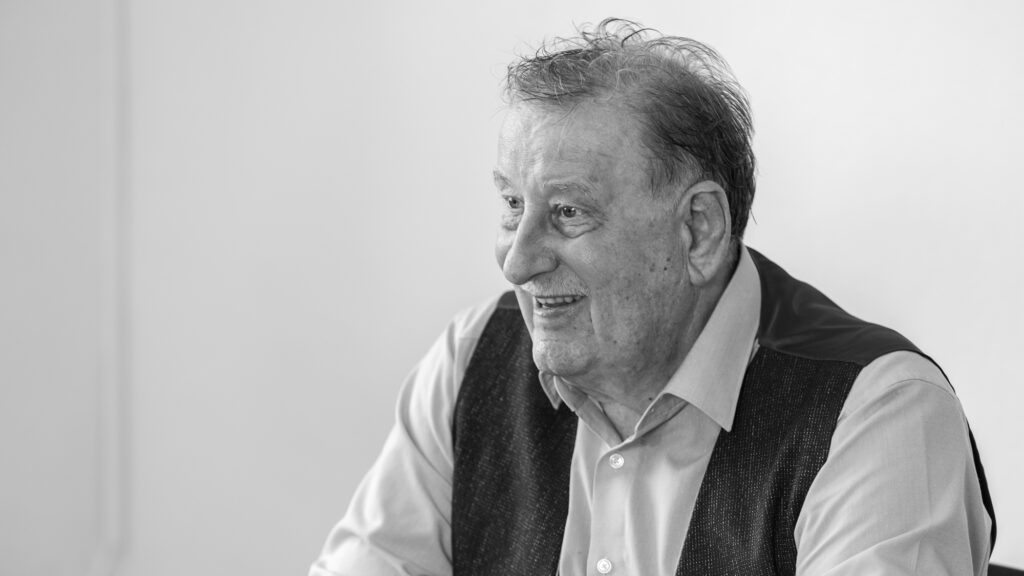
I was the lead choreographer, with Gábor Mihályi and my wife, Zsuzsa Zs Vincze, helping to stage certain sections. The film’s dramaturgy provides a cathartic arc: a young couple falls in love, and the urban young man must essentially ‘smuggle’ his Transylvanian bride back to Budapest through a kind of pseudo-wedding. The love story, the confrontations, the fights, all had to be choreographed alongside the dances. We had professional dancers and actual villagers from Méra, Bogártelke, and Vista dancing together. We had to teach the actors, like Franciska Törőcsik and Tamás Kovács, who dedicated themselves to learning the dances at a very high level. You see in the film: they dance just like the professionals and the locals.
Where the story allowed, I introduced creative elements; a group fight scene to heighten the drama, for instance. For the dance house sequence, I mainly arranged the order so the young men could showcase the legényes (lad’s dance), which is a beautiful and complex dance in its own right. The music is excellent. The film has many strengths, and audiences love it. A dance film of this kind, set in Kalotaszeg, hasn’t been made in perhaps a hundred years. It was long overdue, and its success is well-deserved.
And it exists in that space between documentary and fiction.
Exactly. It’s documentary-like in its reconstruction of a wedding with such authenticity, but it’s not a documentary. It’s a constructed, deliberately filmed fiction. The locations are documentary—the centuries-old Vista church, the village streets—but the storyline, the acting, the dramatic tension are fictional, though based on real experiences. This ‘pseudo-marriage’ was a real strategy for many Transylvanians in the 80s to escape the Ceaușescu dictatorship. It represents a historical reality.
You collected material there during that era. How accurately does the film capture that tense historical environment?
We truly lived through it. My friends and I experienced the hiding, the fear, the moments of helping each other. We’d siphon gas from our car to give to friends with Romanian plates so they could help us document material. You couldn’t cross the border with Hungarian plates or take film equipment or traditional costumes. The border was full of tension, and that’s in the film. Even now: I cross the border freely, but that old feeling lingers in my stomach; the expectation of being stopped and questioned. It was a difficult time, but it was also our youth, full of adventures and a sense of purpose. Our generation, guided by our mentors like György Martin, saw it as our task to document and help preserve the culture of Hungarians across the border. We helped seed the Transylvanian dance house movement, which does very serious work to this day.
To close; if you had to highlight one work from your career, and the most important message you want to convey, what would they be?
Dance is not a hobby for me; it’s my life. Working with dance, choreographing, creating, teaching, organizing, leading this large ensemble, demands my whole being. It means constant contact with ministries, institutions, and fellow artists. I’ve been honoured to serve as a judge on A Peacock Takes Its Perch, which allows me to see and support the work of young dancers from across the Carpathian Basin.
My path as a creator is tremendously exciting. Our repertoire includes children’s fairy tales, authentic folklore performances, and large-scale thematic works like the ones we’ve discussed. Presenting authentic dance to the world is a vital task, and I believe I’ve contributed significantly in that area. But my oeuvre also includes choreography for poems and literary works by Pilinszky, Ady, Attila József, and Petőfi. I’ve created for fellow musicians like Muzsikás and the Sebő Ensemble, and for the music of Kodály and Bartók. I’ve tried to open the scissors wide.
We tailor our programmes to the audience. Abroad, we mainly take authentic folklore, as that’s what foreigners seek. At home, our repertoire is rich and broad, from our work at the National Theatre and the Palace of Arts to the National Dance Theatre. This diversity is what captivates me.
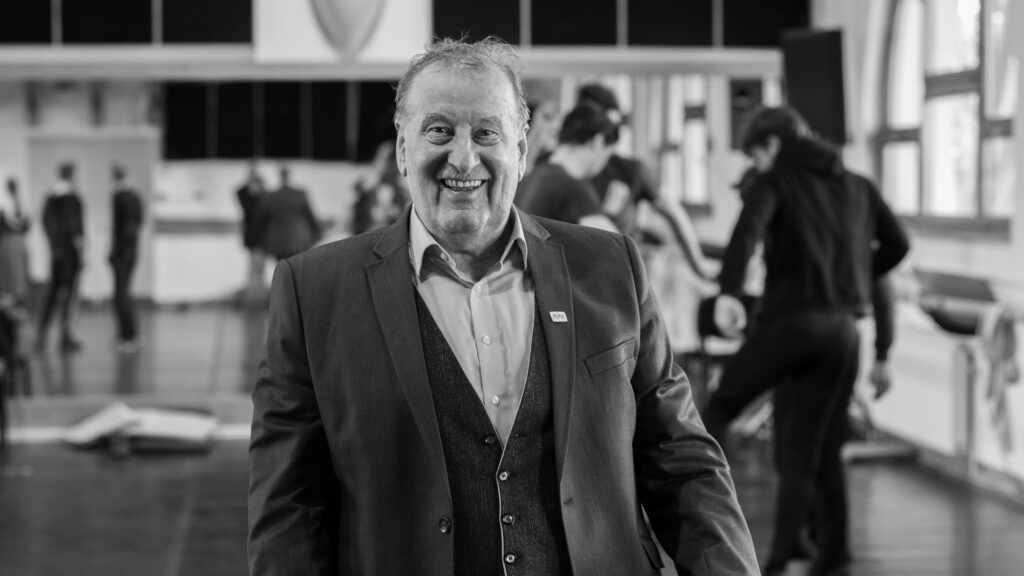
If I had to single out one message, it would be this: I hope my entire life’s work speaks for itself. I hope it’s not finished yet. As long as my health allows, I will continue to do this happily. There’s always something new to attend to. When the war ends, for instance, we have plans for a new theatre here. The work goes on.
Related articles:
At a time when public debate is increasingly polarized and superficial, Hungarian Conservative remains committed to depth, intellectual honesty, and independent conservative thought.
Producing high-quality journalism requires resources. Your contribution helps us expand our coverage, reach new audiences, and keep our content accessible.

Please consider supporting our mission.